
 A SCHOLARLY BOOK REPOSITORY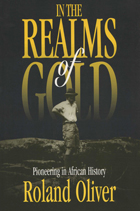
In the Realms of Gold is Oliver’s account of his life and work. He writes in a deft and lively style about the circumstances of his early life that shaped his education and outlook: his childhood on a river houseboat in Kashmir, the influential teachers and friends met at Stowe and Cambridge, and his service in World War II as a cryptographer in British intelligence, where he met his first wife, Caroline Linehan. His interest in church history while at Cambridge led him to study the historical effects of Christian missionaries in Africa, and thus his career began.
The core of the book is Oliver’s account of his research travels throughout tropical Africa from the 1940s to the 1980s; his efforts to train and foster African graduate students to teach in African universities; his role in establishing conferences and journals to bring together the work of historians and archaeologists from Europe and Africa; his encounters with political and religious leaders, scholars, soldiers, and storytellers; and the political and economic upheavals of the continent that he witnessed.
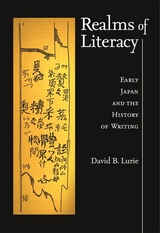
In the world history of writing, Japan presents an unusually detailed record of transition to literacy. Extant materials attest to the social, cultural, and political contexts and consequences of the advent of writing and reading, from the earliest appearance of imported artifacts with Chinese inscriptions in the first century BCE, through the production of texts within the Japanese archipelago in the fifth century, to the widespread literacies and the simultaneous rise of a full-fledged state in the late seventh and eighth centuries.
David B. Lurie explores the complex processes of adaptation and invention that defined the early Japanese transition from orality to textuality. Drawing on archaeological and archival sources varying in content, style, and medium, this book highlights the diverse modes and uses of writing that coexisted in a variety of configurations among different social groups. It offers new perspectives on the pragmatic contexts and varied natures of multiple simultaneous literacies, the relations between languages and systems of inscription, and the aesthetic dimensions of writing. Lurie’s investigation into the textual practices of early Japan illuminates not only the cultural history of East Asia but also the broader comparative history of writing and literacy in the ancient world.

Winner of the Tennessee History Book Award (Tennessee Historical Society and Tennessee Historical Commission), 2024
The Realms of Oblivion explores the complexities involved in reconciling competing versions of history, channeled through Davies Manor, a historic site near Memphis that once centered a wealthy slave-owning family’s sprawling cotton plantation. Interrogating the forces of memorialization that often go unquestioned in the stories we believe about ourselves and our communities, this book simultaneously tells an informative and engrossing bottom-up history—of the Davies family, of the Black families they enslaved and exploited across generations, and of Memphis and Shelby County—while challenging readers to consider just what upholds the survival of that history into the present day.
Written in an engaging and critical style, The Realms of Oblivion is grounded in a rich source base, ranging from nineteenth-century legal records to the personal papers of the Davies family to twentieth-century African American oral histories. Author Andrew C. Ross uses these sources to unearth the stark contrast between the version of Davies Manor’s history that was built out of nostalgia, and the version that records have proven to actually be true. As a result, Ross illuminates the ongoing need for a deep and honest reckoning with the history of the South and of the United States, on the part of both individuals and community institutions such as local historic sites and small museums.

READERS
Browse our collection.
PUBLISHERS
See BiblioVault's publisher services.
STUDENT SERVICES
Files for college accessibility offices.
RECENTLY PUBLISHED


UChicago Accessibility Resources
home | accessibility | search | about | contact us
BiblioVault ® 2001 - 2026
The University of Chicago Press