
 A SCHOLARLY BOOK REPOSITORY
6 start with U start with U
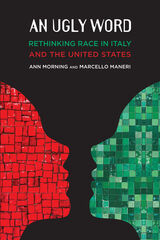
Morning and Maneri interviewed over 150 people across the two countries about differences among what they refer to as “descent-based groups.” Using this concept allowed them to sidestep the language of “race” and “ethnicity,” which can be unnecessarily narrow, poorly defined, or even offensive to some. Drawing on these interviews, the authors find that while ways of speaking about group difference vary considerably across the Atlantic, underlying beliefs about it do not. The similarity in American and Italian understandings of difference was particularly evident when discussing sports. Both groups relied heavily on traditional stereotypes of Black physicality to explain Black athletes’ overrepresentation in sports like U.S. football and their underrepresentation in sports like swimming – contradicting the claims that a biological notion of race is a distinctly American phenomenon.
While American and Italian concepts of difference may overlap extensively, they are not identical. Interviews in Italy were more likely to reveal beliefs about groups’ innate, unchangeable temperaments, such as friendly Senegalese and dishonest Roma. And where physical difference was seen by Italians as superficial and unimportant, cultural difference was perceived as deeply meaningful and consequential. In contrast, U.S. interviewees saw cultural difference as supremely malleable—and often ascribed the same fluidity to racial identity, which they believed stemmed from culture as well as biology. In light of their findings, Morning and Maneri propose a new approach to understanding cross-cultural beliefs about descent-based difference that includes identifying the traits people believe differentiate groups, how they believe those traits are acquired, and whether they believe these traits can change.
An Ugly Word is an illuminating, cross-national examination of the ways in which people around the world make sense of race and difference.

Under the Campus, the Land narrates the University of Michigan’s place in both Anishinaabe and settler history, tracing the university’s participation in the colonization of Anishinaabe homelands, Anishinaabe efforts to claim their right to an education, and the university’s history of disavowing, marginalizing, and minimizing its responsibilities and obligations to Anishinaabe people. Continuing the public conversations of the same name on U-M’s campus in 2023, Under the Campus, the Land provides a new perspective on the relationship between universities and settler colonialism in the US. Members of the U-M community, scholars of Midwest history, and those interested in Indigenous studies will find this book compelling.
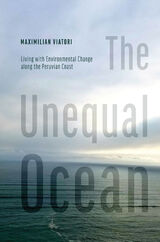
Tackling important subjects of global concern, the author presents a complex image of Peru’s global seascapes as historical spaces comprising precarious worlds that expose people, nonhuman species, and places to unequal levels of harm. He traces how powerful actors in Peru represent the ocean in ways that erase the systemic inequalities, histories of uneven development, and extractive violence that have shaped ocean life. These erasures underscore the need for alternative representations of the ocean that highlight the engagements and commitments that make oceanic ecologies possible, as well as the material relationships and unequal positions of different people and species within them.
The author analyzes a multitude of timely topics, including waves and coastal development, the circulation of ocean waste, El Niño warming events, and the extraction of jumbo squid. This book also addresses expanding scholarly interest in the world’s oceans as sites for thinking about social inequities, environmental politics, and multispecies relationships.
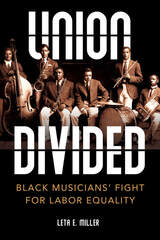
In the 1910s and 1920s, Black musicians organized more than fifty independent locals within the American Federation of Musicians (AFM) in an attempt to control audition criteria, set competitive wages, and secure a voice in national decision-making. Leta Miller follows the AFM’s history of Black locals, which competed directly with white locals in the same territories, from their origins and successes in the 1920s through Depression-era crises to the fraught process of dismantling segregated AFM organizations in the 1960s and 70s. Like any union, Black AFM locals sought to ensure employment and competitive wages for members with always-evolving solutions to problems. Miller’s account of these efforts includes the voices of the musicians themselves and interviews with former union members who took part in the difficult integration of Black and white locals. She also analyzes the fundamental question of how musicians benefitted from membership in a labor organization.
Broad in scope and rich in detail, Union Divided illuminates the complex working world of unionized Black musicians and the AFM’s journey to racial inclusion.
How the Great Recession revealed a system of school choice built on crisis, precarity, and exclusion
What do universal rights to public goods like education mean when codified as individual, private choices? Is the “problem” of school choice actually not about better choices for all but, rather, about the competition and exclusion that choice engenders—guaranteeing a system of winners and losers? Unsettling Choice addresses such questions through a compelling ethnography that illuminates how one path of neoliberal restructuring in the United States emerged in tandem with, and in response to, the Civil Rights movement.
Drawing on ethnographic research in one New York City school district, Unsettling Choice traces the contestations that surfaced when, in the wake of the 2007–2009 Great Recession, public schools navigated austerity by expanding choice-based programs. Ujju Aggarwal argues that this strategy, positioned as “saving public schools,” mobilized mechanisms rooted in market logics to recruit families with economic capital on their side, thereby solidifying a public sphere that increasingly resembled the private—where contingency was anticipated and rights for some were marked by intensified precarity for poor and working-class Black and Latinx families.
As Unsettling Choice shows, these struggles over public schools—one of the last remaining universal public goods in the United States—were entrapped within neoliberal regimes that exceeded privatization and ensured exclusion even as they were couched in language of equity, diversity, care, and rights. And yet this richly detailed and engaging book also tracks an architecture of expansive rights, care, and belonging built among poor and working-class parents at a Head Start center, whose critique of choice helps us understand how we might struggle for—and reimagine—justice, and a public that remains to be won.
Retail e-book files for this title are screen-reader friendly with images accompanied by short alt text and/or extended descriptions.
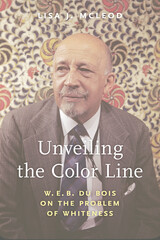
In The Souls of Black Folk, W. E. B. Du Bois brilliantly details the African American experience. Yet the renowned sociologist was also an astute chronicler of white people, particularly their racism. As Unveiling the Color Line demonstrates, Du Bois’s trenchant analysis of whiteness and white supremacy began in his earliest work—his 1890 speech on Jefferson Davis—and continued in every major book he published in his more than sixty-year career, up to The Black Flame Trilogy.
Lisa J. McLeod traces the development of Du Bois’s conception of whiteness, and the racism inherent to it, as an all-encompassing problem, whether predicated on ignorance, moral failure, or the inability to recognize the humanity in other people. In clear, elegant prose, McLeod investigates Du Bois’s complex and nuanced thinking, putting his insights into dialogue with contemporary racial theorists to demonstrate his continuing value to present-day critical thought and activism.
READERS
Browse our collection.
PUBLISHERS
See BiblioVault's publisher services.
STUDENT SERVICES
Files for college accessibility offices.
RECENTLY PUBLISHED



UChicago Accessibility Resources
home | accessibility | search | about | contact us
BiblioVault ® 2001 - 2024
The University of Chicago Press