
 A SCHOLARLY BOOK REPOSITORY
21 start with S start with S
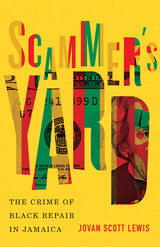
Tells the story of Jamaican “scammers” who use crime to gain autonomy, opportunity, and repair
There is romance in stealing from the rich to give to the poor, but how does that change when those perceived rich are elderly white North Americans and the poor are young Black Jamaicans? In this innovative ethnography, Jovan Scott Lewis tells the story of Omar, Junior, and Dwayne. Young and poor, they strive to make a living in Montego Bay, where call centers and tourism are the two main industries in the struggling economy. Their experience of grinding poverty and drastically limited opportunity leads them to conclude that scamming is the best means of gaining wealth and advancement. Otherwise, they are doomed to live in “sufferation”—an inescapable poverty that breeds misery, frustration, and vexation.
In the Jamaican lottery scam run by these men, targets are told they have qualified for a large loan or award if they pay taxes or transfer fees. When the fees are paid, the award never arrives, netting the scammers tens of thousands of U.S. dollars. Through interviews, historical sources, song lyrics, and court testimonies, Lewis examines how these scammers justify their deceit, discovering an ethical narrative that reformulates ideas of crime and transgression and their relationship to race, justice, and debt.
Scammer’s Yard describes how these young men, seeking to overcome inequality and achieve autonomy, come to view crime as a form of liberation. Their logic raises unsettling questions about a world economy that relegates postcolonial populations to deprivation even while expecting them to follow the rules of capitalism that exacerbate their dispossession. In this groundbreaking account, Lewis asks whether true reparation for the legacy of colonialism is to be found only through radical—even criminal—means.

“A powerful and extraordinarily important book.”
—James P. Comer, MD
“A marvelous personal journey that illuminates what it means to care for people of all races, religions, and cultures. The story of this man becomes the aspiration of all those who seek to minister not only to the body but also to the soul.”
—Jerome Groopman, MD, author of How Doctors Think
Growing up in Jim Crow–era Tennessee and training and teaching in overwhelmingly white medical institutions, Gus White witnessed firsthand how prejudice works in the world of medicine. While race relations have changed dramatically since then, old ways of thinking die hard. In this blend of memoir and manifesto, Dr. White draws on his experience as a resident at Stanford Medical School, a combat surgeon in Vietnam, and head orthopedic surgeon at one of Harvard’s top teaching hospitals to make sense of the unconscious bias that riddles medical care, and to explore how we can do better in a diverse twenty-first-century America.
“Gus White is many things—trailblazing physician, gifted surgeon, and freedom fighter. Seeing Patients demonstrates to the world what many of us already knew—that he is also a compelling storyteller. This powerful memoir weaves personal experience and scientific research to reveal how the enduring legacy of social inequality shapes America’s medical field. For medical practitioners and patients alike, Dr. White offers both diagnosis and prescription.”
—Jonathan L. Walton, Plummer Professor of Christian Morals, Harvard University
“A tour de force—a compelling story about race, health, and conquering inequality in medical care…Dr. White has a uniquely perceptive lens with which to see and understand unconscious bias in health care…His journey is so absorbing that you will not be able to put this book down.”
—Charles J. Ogletree, Jr., author of All Deliberate Speed

If you’re going to have a heart attack, an organ transplant, or a joint replacement, here’s the key to getting the very best medical care: be a white, straight, middle-class male. This book by a pioneering black surgeon takes on one of the few critically important topics that haven’t figured in the heated debate over health care reform—the largely hidden yet massive injustice of bias in medical treatment.
Growing up in Jim Crow–era Tennessee and training and teaching in overwhelmingly white medical institutions, Gus White witnessed firsthand how prejudice works in the world of medicine. And while race relations have changed dramatically, old ways of thinking die hard. In Seeing Patients White draws upon his experience in startlingly different worlds to make sense of the unconscious bias that riddles medical treatment, and to explore what it means for health care in a diverse twenty-first-century America.
White and coauthor David Chanoff use extensive research and interviews with leading physicians to show how subconscious stereotyping influences doctor–patient interactions, diagnosis, and treatment. Their book brings together insights from the worlds of social psychology, neuroscience, and clinical practice to define the issues clearly and, most importantly, to outline a concrete approach to fixing this fundamental inequity in the delivery of health care.
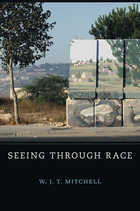
According to W. J. T. Mitchell, a “color-blind” post-racial world is neither achievable nor desirable. Against popular claims that race is an outmoded construct that distracts from more important issues, Mitchell contends that race remains essential to our understanding of social reality. Race is not simply something to be seen but is among the fundamental media through which we experience human otherness. Race also makes racism visible and is thus our best weapon against it.
The power of race becomes most apparent at times when pedagogy fails, the lesson is unclear, and everyone has something to learn. Mitchell identifies three such moments in America’s recent racial history. First is the post–Civil Rights moment of theory, in which race and racism have been subject to renewed philosophical inquiry. Second is the moment of blackness, epitomized by the election of Barack Obama and accompanying images of blackness in politics and popular culture. Third is the “Semitic Moment” in Israel-Palestine, where race and racism converge in new forms of anti-Semitism and Islamophobia. Mitchell brings visual culture, iconology, and media studies to bear on his discussion of these critical turning points in our understanding of the relation between race and racism.
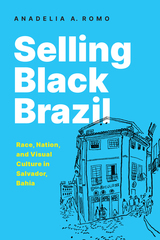
2023 Honorable Mention, Brazil Section Humanities Book Prize, Latin American Studies Association (LASA)
This book explores visual portrayals of blackness in Brazil to reveal the integral role of visual culture in crafting race and nation across Latin America.
In the early twentieth century, Brazil shifted from a nation intent on whitening its population to one billing itself as a racial democracy. Anadelia Romo shows that this shift centered in Salvador, Bahia, where throughout the 1950s, modernist artists and intellectuals forged critical alliances with Afro-Brazilian religious communities of Candomblé to promote their culture and their city. These efforts combined with a growing promotion of tourism to transform what had been one of the busiest slaving depots in the Americas into a popular tourist enclave celebrated for its rich Afro-Brazilian culture. Vibrant illustrations and texts by the likes of Jorge Amado, Pierre Verger, and others contributed to a distinctive iconography of the city, with Afro-Bahians at its center. But these optimistic visions of inclusion, Romo reveals, concealed deep racial inequalities. Illustrating how these visual archetypes laid the foundation for Salvador’s modern racial landscape, this book unveils the ways ethnic and racial populations have been both included and excluded not only in Brazil but in Latin America as a whole.
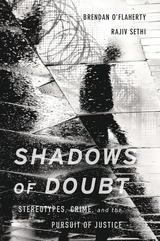
Shadows of Doubt reveals how deeply stereotypes distort our interactions, shape crime, and deform the criminal justice system.
If you’re a robber, how do you choose your victims? As a police officer, how afraid are you of the young man you’re about to arrest? As a judge, do you think the suspect in front of you will show up in court if released from pretrial detention? As a juror, does the defendant seem guilty to you? Your answers may depend on the stereotypes you hold, and the stereotypes you believe others hold. In this provocative, pioneering book, economists Brendan O’Flaherty and Rajiv Sethi explore how stereotypes can shape the ways crimes unfold and how they contaminate the justice system through far more insidious, pervasive, and surprising paths than we have previously imagined.
Crime and punishment occur under extreme uncertainty. Offenders, victims, police officers, judges, and jurors make high-stakes decisions with limited information, under severe time pressure. With compelling stories and extensive data on how people act as they try to commit, prevent, or punish crimes, O’Flaherty and Sethi reveal the extent to which we rely on stereotypes as shortcuts in our decision making. Sometimes it’s simple: Robbers tend to target those they stereotype as being more compliant. Other interactions display a complex and sometimes tragic interplay of assumptions: “If he thinks I’m dangerous, he might shoot. I’ll shoot first.”
Shadows of Doubt shows how deeply stereotypes are implicated in the most controversial criminal justice issues of our time, and how a clearer understanding of their effects can guide us toward a more just society.
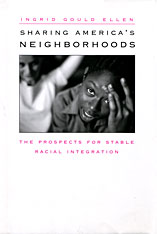
The first part of this book presents a fresh and encouraging report on the state of racial integration in America's neighborhoods. It shows that while the majority are indeed racially segregated, a substantial and growing number are integrated, and remain so for years.
Still, many integrated neighborhoods do unravel quickly, and the second part of the book explores the root causes. Instead of panic and "white flight" causing the rapid breakdown of racially integrated neighborhoods, the author argues, contemporary racial change is driven primarily by the decision of white households not to move into integrated neighborhoods when they are moving for reasons unrelated to race. Such "white avoidance" is largely based on the assumptions that integrated neighborhoods quickly become all black and that the quality of life in them declines as a result.
The author concludes that while this explanation may be less troubling than the more common focus on racial hatred and white flight, there is still a good case for modest government intervention to promote the stability of racially integrated neighborhoods. The final chapter offers some guidelines for policymakers to follow in crafting effective policies.
Despite the substantial economic and political strides that African-Americans have made in this century, welfare remains an issue that sharply divides Americans by race. Shifting the Color Line explores the historical and political roots of enduring racial conflict in American welfare policy, beginning with the New Deal.
Through Social Security and other social insurance programs, white workers were successfully integrated into a strong national welfare state. At the same time, African-Americans--then as now disproportionately poor--were relegated to the margins of the welfare state, through decentralized, often racist, public assistance programs.
Over the next generation, these institutional differences had fateful consequences for African-Americans and their integration into American politics. Owing to its strong national structure, Social Security quickly became the closest thing we have to a universal, color-blind social program. On the other hand, public assistance--especially Aid to Families with Dependent Children (AFDC)--continued to treat African-Americans badly, while remaining politically weak and institutionally decentralized.
Racial distinctions were thus built into the very structure of the American welfare state. By keeping poor blacks at arm's length while embracing white workers, national welfare policy helped to construct the contemporary political divisions--middle-class versus poor, suburb versus city, and white versus black--that define the urban underclass.
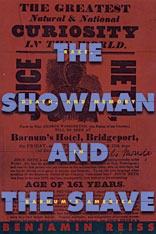
In this compelling story about one of the nineteenth century's most famous Americans, Benjamin Reiss uses P. T. Barnum's Joice Heth hoax to examine the contours of race relations in the antebellum North. Barnum's first exhibit as a showman, Heth was an elderly enslaved woman who was said to be the 161-year-old former nurse of the infant George Washington. Seizing upon the novelty, the newly emerging commercial press turned her act--and especially her death--into one of the first media spectacles in American history.
In piecing together the fragmentary and conflicting evidence of the event, Reiss paints a picture of people looking at history, at the human body, at social class, at slavery, at performance, at death, and always--if obliquely--at themselves. At the same time, he reveals how deeply an obsession with race penetrated different facets of American life, from public memory to private fantasy. Concluding the book is a piece of historical detective work in which Reiss attempts to solve the puzzle of Heth's real identity before she met Barnum. His search yields a tantalizing connection between early mass culture and a slave's subtle mockery of her master.
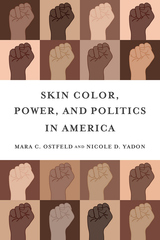
Ostfeld and Yadon surveyed over 1,300 people about their political views, including party affiliation, their opinions on welfare, and the importance of speaking English in the U.S. The authors created a matrix grounded in their “Roots of Race” framework, which predicts the relationship between skin color and political attitudes for each ethnoracial group based on the blurriness of the group’s boundaries and historical levels of privilege. They draw upon three distinct measures of skin color to conceptualize the relationship between skin color and political views: “Machine-Rated Skin Color,” measured with a light-reflectance meter; “Self-Assessed Skin Color,” using the Yadon-Ostfeld Skin Color Scale; and “Skin Color Discrepancy,” the difference between one’s Machine-Rated and Self-Assessed Skin Color.
Ostfeld and Yadon examine patterns that emerge among these measures, and their relationships with life experiences and political stances. Among Latinos, a group with relatively blurry group boundaries and low levels of historical privilege, the authors find a robust relationship between political views and Self-Assessed Skin Color. Latinos who overestimate the lightness of their skin color are more likely to hold conservative views on current racialized political issues, such as policing. Latinos who overestimate the darkness of their skin color, on the other hand, are more likely to hold liberal political views. As America’s major political parties remain divided on issues of race, this suggests that for Latinos, self-reported skin color is used as a means of aligning oneself with valued political coalitions.
African Americans, another group with low levels of historical privilege but with more clearly defined group boundaries, demonstrated no significant relationship between skin color and political attitudes. Thus, the lived experiences associated with being African American appeared to supersede the differences in life experiences due to skin color.
Whites, a group with more historical privilege and increasingly blurry group boundaries, showed a clear relationship between machine-assessed skin color and attitudes on political issues. Those with darker Machine-Rated Skin Color are more likely to hold conservative views, suggesting that they are responding to the threat of losing their privilege in a multicultural society.
At a time when the U.S. is both more diverse and politically divided, Skin Color, Power, and Politics in Americais a timely account of the ways in which skin color and politics are intertwined.

How does the notion of colorblind equality fit with the social and economic realities of black Americans? Challenging the increasingly popular argument that blacks should settle down, stop whining, and get jobs, Skin Trade insists that racism remains America's premier national story and its grossest national product. From Aunt Jemima Pancakes to ethnic Barbie dolls, corporate America peddles racial and gender stereotypes, packaging and selling them to us as breakfast food or toys for our kids.
Moving from the realm of child's play through the academy and the justice system, Ann duCille draws on icons of popular culture to demonstrate that it isn't just race and gender that matter in America but race and gender as reducible to skin color, body structure, and other visible signs of difference. She reveals that Mattel, Inc., uses stereotypes of gender, race, and cultural difference to mark--and market--its Barbie dolls as female, white, black, Asian, and Hispanic. The popularity of these dolls suggests the degree to which we have internalized dominant definitions of self and other.
In a similar move, Skin Trade interrogates the popular discourse surrounding the trial of O. J. Simpson, arguing that much of the mainstream coverage of the case was a racially coded message equally dependent on stereotypes. Focusing on Newsweek and Time in particular, duCille shows how the former All-American was depicted as un-American. She explores other collusions and collisions among race, gender, and capital as well. Especially concerned with superficial distinctions perpetuated within the academic community, the author argues that the academy indulges in its own skin trade in which both race and gender are hot properties.
By turns biting, humorous, and hopeful, Skin Trade is always riveting, full of strange connections and unexpected insights.

The written word and what the eye can see are brought together in this fascinating foray into the depiction of resistance to slavery through the modern medium of film. Natalie Zemon Davis, whose book The Return of Martin Guerre was written while she served as consultant to the French film of the same name, now tackles the large issue of how the moving picture industry has portrayed slaves in five major motion pictures spanning four generations. The potential of film to narrate the historical past in an effective and meaningful way, with insistence on loyalty to the evidence, is assessed in five films: Spartacus (1960), Burn! (1969), The Last Supper (1976), Amistad (1997), and Beloved (1998).
Davis shows how shifts in the viewpoints of screenwriters and directors parallel those of historians. Spartacus is polarized social history; the films on the Caribbean bring ceremony and carnival to bear on the origins of revolt; Amistad and Beloved draw upon the traumatic wounds in the memory of slavery and the resources for healing them. In each case Davis considers the intentions of filmmakers and evaluates the film and its techniques through historical evidence and interpretation. Family continuity emerges as a major element in the struggle against slavery.
Slaves on Screen is based in part on interviews with the Nobel prize–winning author of Beloved, Toni Morrison, and with Manuel Moreno Fraginals, the historical consultant for The Last Supper. Davis brings a new approach to historical film as a source of “thought experiments” about the past. While the five motion pictures are sometimes cinematic triumphs, with sound history inspiring the imagination, Davis is critical of fictive scenes and characters when they mislead viewers in important ways. Good history makes good films.
A pioneering exploration of the unexamined roots and effect of racial sympathy within American politics.
There is racial inequality in America, and some people are distressed over it while others are not. This is a book about white people who feel that distress. For decades, political scientists have studied the effects of white racial prejudice, but Jennifer Chudy shows that white racial sympathy for Black Americans’ suffering is also a potent force in modern American politics. Grounded in the history of Black-white relations in America, racial sympathy is unique. It is not equivalent to a low level of racial prejudice or sympathy for other marginalized groups. Some White Folks reveals how racial sympathy shapes a significant number of white Americans’ opinions on policy areas ranging from the social welfare state to the criminal justice system. Under certain circumstances, it can also spur action—although effects on political behavior are weaker and less consistent, for reasons Chudy examines.
Drawing on diverse quantitative and qualitative evidence and integrating insights from multiple disciplines, Chudy explores the origins, importance, and complexity of racial sympathy, as well as the practical implications for political and movement leaders. A companion to the rich literature on prejudice, Some White Folks demonstrates the multifaceted role of race in American politics and public opinion.
Drawing upon detailed observations and in-depth interviews, Chepp tells the story of a diverse group of young adults from Washington, D.C. who use spoken word to create a more just and equitable world. Outlining the contours of this approach, she interrogates spoken word activism’s emphasis on personal storytelling and “truth,” the strategic uses of aesthetics and emotions to politically engage across difference, and the significance of healing in sustainable movements for change. Weaving together their poetry and personally told stories, Chepp shows how poets tap into the beautiful, emotional, personal, and therapeutic features of spoken word to empathically connect with others, advance intersectional and systemic analyses of inequality, and make social justice messages relatable across a diverse public. By creating allies and forging connections based on friendship, professional commitments, lived experiences, emotions, artistic kinship, and political views, this activist approach is highly integrated into the everyday lives of its practitioners, online and face-to-face.
Chepp argues that spoken word activism is a product of, and a call to action against, the neoliberal era in which poets have come of age, characterized by widening structural inequalities and increasing economic and social vulnerability. She illustrates how this deeply personal and intimate activist approach borrows from, builds upon, and diverges from previous social movement paradigms. Spotlighting the complexity and mutual influence of modern-day activism and the world in which it unfolds, Speaking Truths contributes to our understanding of contemporary social change-making and how neoliberalism has shaped this political generation’s experiences with social injustice.
“Masterful…An indispensable warning for our own time.”
—Samuel Moyn
“Magisterial…Covers this dark history with insight and skill…A major intervention into our understanding of 20th-century Europe and the lessons we ought to take away from its history.”
—The Nation
For much of the last century, Europe was haunted by a threat of its own imagining: Judeo-Bolshevism. The belief that Communism was a Jewish plot to destroy the nations of Europe took hold during the Russian Revolution and quickly spread. During World War II, fears of a Judeo-Bolshevik conspiracy were fanned by the fascists and sparked a genocide. But the myth did not die with the end of Nazi Germany. A Specter Haunting Europe shows that this paranoid fantasy persists today in the toxic politics of revitalized right-wing nationalism.
“It is both salutary and depressing to be reminded of how enduring the trope of an exploitative global Jewish conspiracy against pure, humble, and selfless nationalists really is…A century after the end of the first world war, we have, it seems, learned very little.”
—Mark Mazower, Financial Times
“From the start, the fantasy held that an alien element—the Jews—aimed to subvert the cultural values and national identities of Western societies…The writers, politicians, and shills whose poisonous ideas he exhumes have many contemporary admirers.”
—Robert Legvold, Foreign Affairs

Written by scholars and theater professionals with a wide variety of historical and theoretical expertise, the chapters seek to explore the connections between the German discourse on national theater and emerging ideas about race, analyze how dramaturges deal with older representations of Blackness in current productions, and discuss the contributions Black German playwrights and dramaturges have made to this discourse. Historians question how these plays were staged in their time, while cultural studies scholars contemplate how to interpret the function of race in these plays and how they can continue to be staged today.
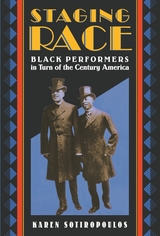
Staging Race casts a spotlight on the generation of black artists who came of age between 1890 and World War I in an era of Jim Crow segregation and heightened racial tensions. As public entertainment expanded through vaudeville, minstrel shows, and world's fairs, black performers, like the stage duo of Bert Williams and George Walker, used the conventions of blackface to appear in front of, and appeal to, white audiences. At the same time, they communicated a leitmotif of black cultural humor and political comment to the black audiences segregated in balcony seats. With ingenuity and innovation, they enacted racial stereotypes onstage while hoping to unmask the fictions that upheld them offstage.
Drawing extensively on black newspapers and commentary of the period, Karen Sotiropoulos shows how black performers and composers participated in a politically charged debate about the role of the expressive arts in the struggle for equality. Despite the racial violence, disenfranchisement, and the segregation of virtually all public space, they used America's new businesses of popular entertainment as vehicles for their own creativity and as spheres for political engagement.
The story of how African Americans entered the stage door and transformed popular culture is a largely untold story. Although ultimately unable to erase racist stereotypes, these pioneering artists brought black music and dance into America's mainstream and helped to spur racial advancement.
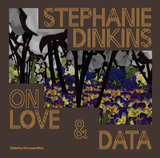
Stephanie Dinkins: On Love & Data brings together nationally renowned curators and theorists who draw from methodologies of art criticism, social practice, new media theory, and critical studies to offer an in-depth analysis of key installations in Dinkins’s survey exhibition. The book also includes an important essay by Stephanie Dinkins on her concept of Afro-now-ism in which she expands on her theoretical framework and positionality as a Black new media artist in the 21st century. Dinkins’s artistic research transcends the boundaries of visual art to challenge and expose the bias and inequities of caste, race, and gender, which are encoded within digital systems on which governance, healthcare, and security infrastructures in the United States are based.

Uncovering the pernicious narratives white people create to justify white supremacy and sustain racist oppression
The police murders of two Black men, Philando Castile and George Floyd, frame this searing exploration of the historical and fictional narratives that white America tells itself to justify and maintain white supremacy. From the country’s founding through the summer of Black Lives Matter in 2020, David Mura unmasks how white stories about race attempt to erase the brutality of the past and underpin systemic racism in the present.
Intertwining history, literature, ethics, and the deeply personal, Mura looks back to foundational narratives of white supremacy (Jefferson’s defense of slavery, Lincoln’s frequently minimized racism, and the establishment of Jim Crow) to show how white identity is based on shared belief in the pernicious myths, false histories, and racially segregated fictions that allow whites to deny their culpability in past atrocities and current inequities. White supremacy always insists white knowledge is superior to Black knowledge, Mura argues, and this belief dismisses the truths embodied in Black narratives.
Mura turns to literature, comparing the white savior portrayal of the film Amistad to the novelization of its script by the Black novelist Alexs Pate, which focuses on its African protagonists; depictions of slavery in Faulkner and Morrison; and race’s absence in the fiction of Jonathan Franzen and its inescapable presence in works by ZZ Packer, tracing the construction of Whiteness to willfully distorted portraits of race in America. In James Baldwin’s essays, Mura finds a response to this racial distortion and a way for Blacks and other BIPOC people to heal from the wounds of racism.
Taking readers beyond apology, contrition, or sadness, Mura attends to the persistent trauma racism has exacted and lays bare how deeply we need to change our racial narratives—what white people must do—to dissolve the myth of Whiteness and fully acknowledge the stories and experiences of Black Americans.

For decades, Marietta High was the flagship public school of a largely white suburban community in Cobb County, Georgia, just northwest of Atlanta. Today, as the school’s majority black and Latino students struggle with high rates of poverty and low rates of graduation, Marietta High has become a symbol of the wave of resegregation that is sweeping white students and students of color into separate schools across the American South.
Students of the Dream begins with the first generations of Marietta High desegregators authorized by the landmark Brown v. Board of Education ruling and follows the experiences of later generations who saw the dream of integration fall apart. Grounded in over one hundred interviews with current and former Marietta High students, parents, teachers, community leaders, and politicians, this innovative ethnographic history invites readers onto the key battlegrounds—varsity sports, school choice, academic tracking, and social activism—of Marietta’s struggle against resegregation. Well-intentioned calls for diversity and colorblindness, Ruth Carbonette Yow shows, have transformed local understandings of the purpose and value of school integration, and not always for the better.
The failure of local, state, or national policies to stem the tide of resegregation is leading activists—students, parents, and teachers—to reject traditional integration models and look for other ways to improve educational outcomes among African American and Latino students. Yow argues for a revitalized commitment to integration, but one that challenges many of the orthodoxies—including colorblindness—inherited from the mid-twentieth-century civil rights struggle.
READERS
Browse our collection.
PUBLISHERS
See BiblioVault's publisher services.
STUDENT SERVICES
Files for college accessibility offices.
RECENTLY PUBLISHED





UChicago Accessibility Resources
home | accessibility | search | about | contact us
BiblioVault ® 2001 - 2024
The University of Chicago Press