
 A SCHOLARLY BOOK REPOSITORY
13 start with M start with M
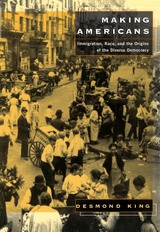
In the nineteenth century, virtually anyone could get into the United States. But by the 1920s, U.S. immigration policy had become a finely filtered regime of selection. Desmond King looks at this dramatic shift, and the debates behind it, for what they reveal about the construction of an "American" identity.
Specifically, the debates in the three decades leading up to 1929 were conceived in terms of desirable versus undesirable immigrants. This not only cemented judgments about specific European groups but reinforced prevailing biases against groups already present in the United States, particularly African Americans, whose inferior status and second-class citizenship--enshrined in Jim Crow laws and embedded in pseudo-scientific arguments about racial classifications--appear to have been consolidated in these decades. Although the values of different groups have always been recognized in the United States, King gives the most thorough account yet of how eugenic arguments were used to establish barriers and to favor an Anglo-Saxon conception of American identity, rejecting claims of other traditions. Thus the immigration controversy emerges here as a significant precursor to recent multicultural debates.
Making Americans shows how the choices made about immigration policy in the 1920s played a fundamental role in shaping democracy and ideas about group rights in America.
Shortlisted for the Nayef Al-Rodhan Book Prize.
A leading scholar explores what it means to dehumanize others—and how and why we do it.
“I wouldn’t have accepted that they were human beings. You would see an infant who’s just learning to smile, and it smiles at you, but you still kill it.” So a Hutu man explained to an incredulous researcher, when asked to recall how he felt slaughtering Tutsis in Rwanda in 1994. Such statements are shocking, yet we recognize them; we hear their echoes in accounts of genocides, massacres, and pogroms throughout history. How do some people come to believe that their enemies are monsters, and therefore easy to kill?
In Making Monsters David Livingstone Smith offers a poignant meditation on the philosophical and psychological roots of dehumanization. Drawing on harrowing accounts of lynchings, Smith establishes what dehumanization is and what it isn’t. When we dehumanize our enemy, we hold two incongruous beliefs at the same time: we believe our enemy is at once subhuman and fully human. To call someone a monster, then, is not merely a resort to metaphor—dehumanization really does happen in our minds. Turning to an abundance of historical examples, Smith explores the relationship between dehumanization and racism, the psychology of hierarchy, what it means to regard others as human beings, and why dehumanizing others transforms them into something so terrifying that they must be destroyed.
Meticulous but highly readable, Making Monsters suggests that the process of dehumanization is deeply seated in our psychology. It is precisely because we are all human that we are vulnerable to the manipulations of those trading in the politics of demonization and violence.

This textual ethnography embeds early college students’ writing in deep historical and theoretical contexts and looks for new ways that their writing contributes to and reshapes contemporary understandings of how US and global citizens are thinking about race. The book is a teaching narrative, tracing a teaching journey that considers student writing not only in the moments it is assigned but also in continual revisions of the course, making it a useful tool in helping college-age students see, explore, and articulate the role of race in determining their life experiences and opportunities.
Sophie Bell’s work narrates the experiences of a white teacher making mistakes in teaching about race and moving forward through those mistakes, considering that process valuable and, in fact, necessary. Providing a model for future scholars on how to carve out a pedagogically responsive identity as a teacher, Mapping Racial Literacies contributes to the scholarship on race and writing pedagogy and encourages teachers of early college classes to bring these issues front and center on the page, in the classroom, and on campus.
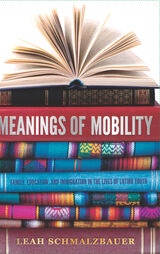
To better understand these experiences, Schmalzbauer draws on interviews with 60 low-income Latino youth who graduated or were set to graduate from Amherst College, one of the most selective private colleges in the United States. The vast majority of these students were the first in their immigrant families to go to college in the U.S. She finds that while most of the students believed attending Amherst provided them with previously unimaginable opportunities, adjusting to life on campus came with significant challenges. Many of the students Schmalzbauer spoke with had difficulties adapting to the cultural norms at Amherst as well as with relating to their non-Latino, non-low-income peers. The challenges these students faced were not limited to life on campus. As they attempted to adapt to Amherst, many felt distanced from the family and friends they left behind who could not understand the new challenges they faced.
The students credit their elite education for access to extraordinary educational and employment opportunities. However, their experiences while in college and afterward reveal that the relationship between educational and social mobility is much more complicated and less secure than popular conversations about the “American Dream” suggest. Many students found that their educational attainment was not enough to erase the core challenges of growing up in a marginalized immigrant family: many were still poor, faced racism, and those who were undocumented or had undocumented family members still feared deportation.
Schmalzbeauer suggests ways elite colleges can better support low-income Latino students and lower the emotional price of educational mobility, including the creation of immigration offices on campus to provide programming and support for undocumented students and their families. She recommends educating staff to better understand the centrality of family for these students and the challenges they face, as well as educating more privileged students about inequality and the life experiences of their marginalized peers.
Meanings of Mobility provides compelling insights into the difficulties faced by low-income Latinos pursuing educational and social mobility in America’s elite institutions.
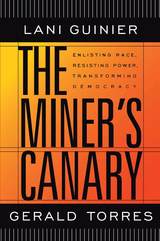
Like the canaries that alerted miners to a poisonous atmosphere, issues of race point to underlying problems in society that ultimately affect everyone, not just minorities. Addressing these issues is essential. Ignoring racial differences--race blindness--has failed. Focusing on individual achievement has diverted us from tackling pervasive inequalities. Now, in a powerful and challenging book, Lani Guinier and Gerald Torres propose a radical new way to confront race in the twenty-first century.
Given the complex relationship between race and power in America, engaging race means engaging standard winner-take-all hierarchies of power as well. Terming their concept "political race," Guinier and Torres call for the building of grass-roots, cross-racial coalitions to remake those structures of power by fostering public participation in politics and reforming the process of democracy. Their illuminating and moving stories of political race in action include the coalition of Hispanic and black leaders who devised the Texas Ten Percent Plan to establish equitable state college admissions criteria, and the struggle of black workers in North Carolina for fair working conditions that drew on the strength and won the support of the entire local community.
The aim of political race is not merely to remedy racial injustices, but to create truly participatory democracy, where people of all races feel empowered to effect changes that will improve conditions for everyone. In a book that is ultimately not only aspirational but inspirational, Guinier and Torres envision a social justice movement that could transform the nature of democracy in America.
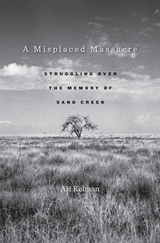
In the early morning of November 29, 1864, with the fate of the Union still uncertain, part of the First Colorado and nearly all of the Third Colorado volunteer regiments, commanded by Colonel John Chivington, surprised hundreds of Cheyenne and Arapaho people camped on the banks of Sand Creek in southeastern Colorado Territory. More than 150 Native Americans were slaughtered, the vast majority of them women, children, and the elderly, making it one of the most infamous cases of state-sponsored violence in U.S. history. A Misplaced Massacre examines the ways in which generations of Americans have struggled to come to terms with the meaning of both the attack and its aftermath, most publicly at the 2007 opening of the Sand Creek Massacre National Historic Site.
This site opened after a long and remarkably contentious planning process. Native Americans, Colorado ranchers, scholars, Park Service employees, and politicians alternately argued and allied with one another around the question of whether the nation’s crimes, as well as its achievements, should be memorialized. Ari Kelman unearths the stories of those who lived through the atrocity, as well as those who grappled with its troubling legacy, to reveal how the intertwined histories of the conquest and colonization of the American West and the U.S. Civil War left enduring national scars.
Combining painstaking research with storytelling worthy of a novel, A Misplaced Massacre probes the intersection of history and memory, laying bare the ways differing groups of Americans come to know a shared past.
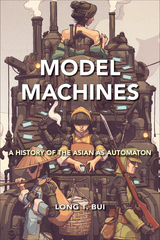
In the contemporary Western imagination, Asian people are frequently described as automatons, which disavows their humanity. In Model Machines, Long Bui investigates what he calls Asian roboticism or the ways Asians embody the machine and are given robotic characteristics.
Bui offers the first historical overview of the overlapping racialization of Asians and Asian Americans through their conflation with the robot-machine nexus. He puts forth the concept of the “model machine myth,” which holds specific queries about personhood, citizenship, labor, and rights in the transnational making of Asian/America.
The case studies in Model Machines chart the representation of Chinese laborers, Japanese soldiers, Asian sex workers, and other examples to show how Asians are reimagined to be model machines as a product of globalization, racism, and colonialism. Moreover, it offers examples of how artists and everyday people resisted that stereotype to consider different ways of being human. Starting from the early nineteenth century, the book ends in the present with the new millennium, where the resurgence of China presages the “rise of the machines” and all the doomsday scenarios this might spell for global humanity at large.
In modern states, John Lie argues, ideas of race, ethnicity, and nationality can be subsumed under the rubric of "peoplehood." He argues indeed, that the modern state has created the idea of peoplehood. That is, the seemingly primitive, atavistic feelings of belonging associated with ethnic, racial, and national identity are largely formed by the state. Not only is the state responsible for the development and nurturing of these feelings, it is also responsible for racial and ethnic conflict, even genocide. When citizens think of themselves in terms of their peoplehood identity, they will naturally locate the cause of all troubles--from neighborhood squabbles to wars--in racial, ethnic, or national attitudes and conflicts.
Far from being transhistorical and transcultural phenomena, race, ethnicity, and nation, Lie argues, are modern notions--modernity here associated with the rise of the modern state, the industrial economy, and Enlightenment ideas.
Engaging with theories of anti-Black racism, modernity, coloniality, and the Black diaspora, the book frames storytelling, and the circulation of narratives as performances deeply rooted in the everyday lives of Black people across the diaspora. Starting with an examination of the racial construction of movement during colonialism and slavery, the book traces how this history shapes contemporary interactions. With its exploration of how Black circulation transforms movement and space, the book introduces a forward-thinking approach to the Black diaspora, anchored in a politics of identification rather than being confined to the past or a specific location. Moving Blackness argues that the desire for homespace, a yearning for belonging that transcends any particular physical space, fuels this envisioned future, rooted in the historical and material conditions of racism and marginalization.
Reducing residential segregation is the best way to reduce racial inequality in the United States. African American employment rates, earnings, test scores, even longevity all improve sharply as residential integration increases. Yet far too many participants in our policy and political conversations have come to believe that the battle to integrate America’s cities cannot be won. Richard Sander, Yana Kucheva, and Jonathan Zasloff write that the pessimism surrounding desegregation in housing arises from an inadequate understanding of how segregation has evolved and how policy interventions have already set many metropolitan areas on the path to integration.
Scholars have debated for decades whether America’s fair housing laws are effective. Moving toward Integration provides the most definitive account to date of how those laws were shaped and implemented and why they had a much larger impact in some parts of the country than others. It uses fresh evidence and better analytic tools to show when factors like exclusionary zoning and income differences between blacks and whites pose substantial obstacles to broad integration, and when they do not.
Through its interdisciplinary approach and use of rich new data sources, Moving toward Integration offers the first comprehensive analysis of American housing segregation. It explains why racial segregation has been resilient even in an increasingly diverse and tolerant society, and it demonstrates how public policy can align with demographic trends to achieve broad housing integration within a generation.
Biological races do not exist—and never have. This view is shared by all scientists who study variation in human populations. Yet racial prejudice and intolerance based on the myth of race remain deeply ingrained in Western society. In his powerful examination of a persistent, false, and poisonous idea, Robert Sussman explores how race emerged as a social construct from early biblical justifications to the pseudoscientific studies of today.
The Myth of Race traces the origins of modern racist ideology to the Spanish Inquisition, revealing how sixteenth-century theories of racial degeneration became a crucial justification for Western imperialism and slavery. In the nineteenth century, these theories fused with Darwinism to produce the highly influential and pernicious eugenics movement. Believing that traits from cranial shape to raw intelligence were immutable, eugenicists developed hierarchies that classified certain races, especially fair-skinned “Aryans,” as superior to others. These ideologues proposed programs of intelligence testing, selective breeding, and human sterilization—policies that fed straight into Nazi genocide. Sussman examines how opponents of eugenics, guided by the German-American anthropologist Franz Boas’s new, scientifically supported concept of culture, exposed fallacies in racist thinking.
Although eugenics is now widely discredited, some groups and individuals today claim a new scientific basis for old racist assumptions. Pondering the continuing influence of racist research and thought, despite all evidence to the contrary, Sussman explains why—when it comes to race—too many people still mistake bigotry for science.
READERS
Browse our collection.
PUBLISHERS
See BiblioVault's publisher services.
STUDENT SERVICES
Files for college accessibility offices.
RECENTLY PUBLISHED





UChicago Accessibility Resources
home | accessibility | search | about | contact us
BiblioVault ® 2001 - 2024
The University of Chicago Press