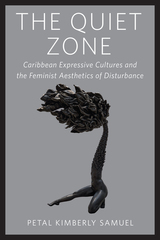
The Quiet Zone
Caribbean Expressive Cultures and the Feminist Aesthetics of Disturbance
Petal Kimberly Samuel
Rutgers University Press, 2026
A serene beach. The classroom of an elite private school. The still nights in an upscale residential neighborhood. An acclaimed poet with a quiet, dignified mode of address. The sonic etiquette and experience of quiet is integral to each of these scenes. The Quiet Zone examines what the emergence of quiet as an elite aesthetic, privilege, and entitlement means for minoritized people who are often narrated as loud, disruptive, and disturbing, sonically, visually, and otherwise. Taking the Caribbean and its diasporas as its key sites of study, the book explores what we can learn from efforts to transform the region into the quintessential site of quiet leisure, in part, through the enactment of regimes of sonic discipline and surveillance directed against its majority Black population. Analyzing the work of Afro-Caribbean artists that catalog and critique sonic surveillance, the book questions the ways that quiet gets produced both as a regulatory ideal of racial, gender, sexual, national, and civilizational belonging and as a universal object of desire
[more]