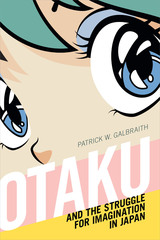
front cover of Otaku and the Struggle for Imagination in Japan
Otaku and the Struggle for Imagination in Japan
Patrick Galbraith
Duke University Press, 2019
From computer games to figurines and maid cafes, men called “otaku” develop intense fan relationships with “cute girl” characters from manga, anime, and related media and material in contemporary Japan. While much of the Japanese public considers the forms of character love associated with “otaku” to be weird and perverse, the Japanese government has endeavored to incorporate “otaku” culture into its branding of “Cool Japan.” In Otaku and the Struggle for Imagination in Japan, Patrick W. Galbraith explores the conflicting meanings of “otaku” culture and its significance to Japanese popular culture, masculinity, and the nation. Tracing the history of “otaku” and “cute girl” characters from their origins in the 1970s to his recent fieldwork in Akihabara, Tokyo (“the Holy Land of Otaku”), Galbraith contends that the discourse surrounding “otaku” reveals tensions around contested notions of gender, sexuality, and ways of imagining the nation that extend far beyond Japan. At the same time, in their relationships with characters and one another, “otaku” are imagining and creating alternative social worlds.
[more]


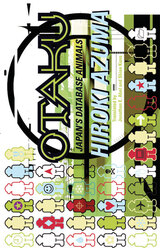
front cover of Otaku
Otaku
Japan's Database Animals
Hiroki Azuma
University of Minnesota Press, 2009
 In Japan, obsessive adult fans and collectors of manga and anime are known as otaku. When the underground otaku subculture first emerged in the 1970s, participants were looked down on within mainstream Japanese society as strange, antisocial loners. Today otaku have had a huge impact on popular culture not only in Japan but also throughout Asia, Europe, and the United States.

Hiroki Azuma’s Otaku offers a critical, philosophical, and historical inquiry into the characteristics and consequences of this consumer subculture. For Azuma, one of Japan’s leading public intellectuals, otaku culture mirrors the transformations of postwar Japanese society and the nature of human behavior in the postmodern era. He traces otaku’s ascendancy to the distorted conditions created in Japan by the country’s phenomenal postwar modernization, its inability to come to terms with its defeat in the Second World War, and America’s subsequent cultural invasion. More broadly, Azuma argues that the consumption behavior of otaku is representative of the postmodern consumption of culture in general, which sacrifices the search for greater significance to almost animalistic instant gratification. In this context, culture becomes simply a database of plots and characters and its consumers mere “database animals.” 

A vital non-Western intervention in postmodern culture and theory, Otaku is also an appealing and perceptive account of Japanese popular culture.
[more]


Send via email Share on Facebook Share on Twitter