
 A SCHOLARLY BOOK REPOSITORY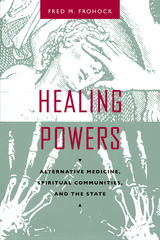
"Frohock goes beyond the often irreconcilable differences between scientific biomedicine and alternative care by clarifying the social and legal dilemmas they present. . . . A noteworthy contribution forcing us to rethink what medical care is all about."—Jeffrey Michael Clare, Journal of the American Medical Association
"The book does more and better than simply provide a social-scientific proposal. It also gives not only a hearing but a voice to those who follow alternative therapies. . . . Frohock's accounts of their stories—along with the stories of the medical professionals—are eloquent and fascinating."—Allen Verhey, Medical Humanities Review
"Contains a storehouse of valuable information about the historical, philosophical, and psychological bases of alternative approaches to healing."—Marshall B. Kapp, New England Journal of Medicine
"Frohock introduces us to the scientific naturopaths and to physicians who believe in the mind's power to heal, to charismatics who believe in but cannot explain their powers, to those who test God and those who merely accept. He writes so well that I felt I had met these people."—Arthur W. Frank, Christian Century
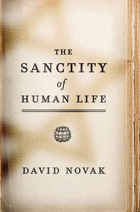
Heated debates are not unusual when confronting tough medical issues where it seems that moral and religious perspectives often erupt in conflict with philosophical or political positions. In The Sanctity of Human Life, Jewish theologian David Novak acknowledges that it is impossible not to take into account the theological view of human life, but the challenge is how to present the religious perspective to nonreligious people. In doing so, he shows that the two positions—the theological and the philosophical—aren't as far apart as they may seem.
Novak digs deep into Jewish scripture and tradition to find guidance for assessing three contemporary controversies in medicine and public policy: the use of embryos to derive stem cells for research, socialized medicine, and physician-assisted suicide. Beginning with thinkers like Plato, Aristotle, Kant, and Nietsche, and drawing on great Jewish figures in history—Maimonides, Rashi, and various commentators on the Torah (written law) and the Mishnah (oral law)—Novak speaks brilliantly to these modern moral dilemmas.
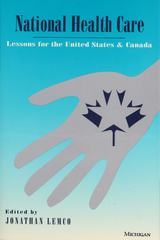
The Sanctity of Human Life weaves a rich and sophisticated tapestry of evidence to conclude that the Jewish understanding of the human being as sacred, as the image of God, is in fact compatible with philosophical claims about the rights of the human person—especially the right to life—and can be made intelligible to secular culture. Thus, according to Novak, the use of stem cells from embryos is morally unacceptable; the sanctity of the human person, and not capitalist or socialist approaches, should drive our understanding of national health care; and physician-assisted suicide violates humankind's fundamental responsibility for caring for one another.
Novak's erudite argument and rigorous scholarship will appeal to all scholars and students engaged in the work of theology and bioethics.
READERS
Browse our collection.
PUBLISHERS
See BiblioVault's publisher services.
STUDENT SERVICES
Files for college accessibility offices.
RECENTLY PUBLISHED


UChicago Accessibility Resources
home | accessibility | search | about | contact us
BiblioVault ® 2001 - 2026
The University of Chicago Press