
 A SCHOLARLY BOOK REPOSITORY
A bold new understanding of montage and French cinematic history
Amid the tumult of change that swept through French society in the wake of World War II, a trio of visionary filmmakers sought to make meaning of the chaos by revitalizing a common method: montage. Revealing Nicole Védrès, Alain Resnais, and Chris Marker as more than just groundbreaking auteurs, Ivan Cerecina shows how their collective infusion of montage with avant-garde aesthetics renewed the art of cinema while helping France reckon with its past and imagine its future.
Assembly Lines challenges a dominant story of postwar French film, championed by critics at important film journals like Cahiers du cinéma, that has generally centered realist film aesthetics. Working against this tendency, Cerecina shows how Védrès, Resnais, and Marker revitalized montage as a technique in response to the crises of the times, using it to process the ravages of the recent past, expose hidden connections, and uncover signs of coming catastrophe. Wedding insightful analyses of films and French cultural history with writings from lesser-heard voices like André Malraux, Jacques Brunius, and Henri Langlois, Assembly Lines illuminates obscured networks of critics, filmmakers, and historians to reshape our conception of French film and documentary. Meanwhile, Cerecina’s in-depth archival research unearths vital documents, including correspondence and production notes on Védrès’s Paris 1900 and Resnais’s Night and Fog.
More than a cinematic retrospective, Cerecina’s investigation of montage is also a call to action today as contemporary crises prompt reevaluation of our cultural histories. Assembly Lines exemplifies a powerful, future-oriented practice of historical reflection with implications that go well beyond the study of film.
Retail e-book files for this title are screen-reader friendly with images accompanied by short alt text and/or extended descriptions.
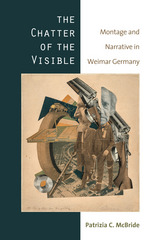
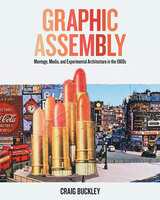
An innovative look at the contribution of montage to twentieth-century architecture
Graphic Assembly unearths the role played by montage and collage in the development of architectural culture over the past century, revealing their unexamined yet crucial significance. Craig Buckley brings together experimental architectural practices based in London, Paris, Vienna, and Florence, showing how breakthroughs in optical media and printing technologies enabled avant-garde architects to reimagine their field.
Graphic Assembly considers a range of architects and movements from the 1950s through the early ’70s, including Theo Crosby, Hans Hollein, and John McHale; the magazine Clip-Kit; and the groups Archigram, Superstudio, and Utopie. It gives a thorough account of how montage concepts informed the design of buildings, prototypes, models, exhibitions, and multimedia environments, accompanied by Buckley’s insightful interpretations of the iconic images, exhibitions, and buildings of the 1960s that mark how the decade is remembered.
Richly illustrated with never-before-published material from more than a dozen archives and private collections, Graphic Assembly offers a comparative overview of the network of experimental architectural practice in Europe. It provides a deep historical account of the cut-and-paste techniques now prevalent with architecture’s digital turn, demonstrating the great importance of montage to architecture past, present, and future.
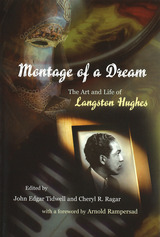
Over a forty-six-year career, Langston Hughes experimented with black folk expressive culture, creating an enduring body of extraordinary imaginative and critical writing. Riding the crest of African American creative energy from the Harlem Renaissance to the onset of Black Power, he commanded an artistic prowess that survives in the legacy he bequeathed to a younger generation of writers, including award winners Alice Walker, Paule Marshall, and Amiri Baraka.
Montage of a Dream extends and deepens previous scholarship, multiplying the ways in which Hughes’s diverse body of writing can be explored. The contributors, including such distinguished scholars as Steven Tracy, Trudier Harris, Juda Bennett, Lorenzo Thomas, and Christopher C. De Santis, carefully reexamine the significance of his work and life for their continuing relevance to American, African American, and diasporic literatures and cultures.
Probing anew among Hughes’s fiction, biographies, poetry, drama, essays, and other writings, the contributors assert fresh perspectives on the often overlooked “Luani of the Jungles” and Black Magic and offer insightful rereadings of such familiar pieces as “Cora Unashamed,” “Slave on the Block,” and Not without Laughter. In addition to analyzing specific works, the contributors astutely consider subjects either lightly explored by or unavailable to earlier scholars, including dance, queer studies, black masculinity, and children’s literature. Some investigate Hughes’s use of religious themes and his passion for the blues as the fabric of black art and life; others ponder more vexing questions such as Hughes’s sexuality and his relationship with his mother, as revealed in the letters she sent him in the last decade of her life.
Montage of a Dream richly captures the power of one man’s art to imagine an America holding fast to its ideals while forging unity out of its cultural diversity. By showing that Langston Hughes continues to speak to the fundamentals of human nature, this comprehensive reconsideration invites a renewed appreciation of Hughes’s work—and encourages new readers to discover his enduring relevance as they seek to understand the world in which we all live.
READERS
Browse our collection.
PUBLISHERS
See BiblioVault's publisher services.
STUDENT SERVICES
Files for college accessibility offices.
RECENTLY PUBLISHED



UChicago Accessibility Resources
home | accessibility | search | about | contact us
BiblioVault ® 2001 - 2026
The University of Chicago Press