
 A SCHOLARLY BOOK REPOSITORY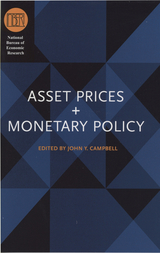
The contributors examine how central bankers determine their policy prescriptions with reference to the fluctuating housing market, the balance of debt and credit, changing beliefs of investors, the level of commodity prices, and other factors. At a time when the public has never been more involved in stocks, retirement funds, and real estate investment, this insightful book will be useful to all those concerned with the current state of the economy.
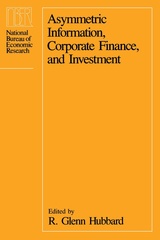
In this volume, specialists from traditionally separate areas in economics and finance investigate issues at the conjunction of their fields. They argue that financial decisions of the firm can affect real economic activity—and this is true for enough firms and consumers to have significant aggregate economic effects. They demonstrate that important differences—asymmetries—in access to information between "borrowers" and "lenders" ("insiders" and "outsiders") in financial transactions affect investment decisions of firms and the organization of financial markets. The original research emphasizes the role of information problems in explaining empirically important links between internal finance and investment, as well as their role in accounting for observed variations in mechanisms for corporate control.

Late one night in July 1832,Martin Van Buren rushed to the White House where he found an ailing President Andrew Jackson weakened but resolute. Thundering against his political antagonists, Jackson bellowed: “The Bank, Mr. Van Buren, is trying to kill me, but I shall kill it!”With those famous words, Jackson formally declared “war” against the Second Bank of the United States and its president Nicholas Biddle. The Bank of the United States, which held the majority of Federal monies, had been established as a means of centralizing and stabilizing American currency and the economy, particularly during the country’s vulnerable early years. Jackson and his allies viewed the bank as both elitist and a threat to states’ rights. Throughout his first term, Jackson had attacked the bank viciously but failed to take action against the institution. Congress’ decision to recharter the bank forced Jackson to either make good on his rhetoric and veto the recharter or sign the recharter bill and be condemned as a hypocrite.
In The Bank War: Andrew Jackson, Nicholas Biddle, and the Fight for American Finance, historian Paul Kahan explores one of the most important and dramatic events in American political and economic history, from the idea of centralized banking and the First Bank of the United States to Jackson’s triumph, the era of “free banking,” and the creation of the Federal Reserve System. Relying on a range of primary and secondary source material, the book also shows how the Bank War was a manifestation of the debates that were sparked at the Constitutional Convention—the role of the executive branch and the role of the federal government in American society—debates that endure to this day as philosophical differences that often divide the United States.
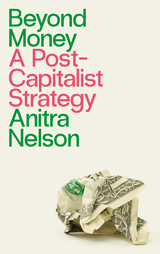
What would a world without money look like? This book is a lively thought experiment that deepens our understanding of how money is the driver of political power, environmental destruction and social inequality today, arguing that it has to be abolished rather than repurposed to achieve a postcapitalist future.
Grounded in historical debates about money, Anitra Nelson draws on a spectrum of political and economic thought and activism, including feminism, ecoanarchism, degrowth, permaculture, autonomism, Marxism and ecosocialism. Looking to Indigenous rights activism and the defense of commons, an international network of activists engaged in a fight for a money-free society emerges.
Beyond Money shows that, by organizing around post-money versions of the future, activists have a hope of creating a world that embodies their radical values and visions.

"A must-read, with key lessons for the future."—Thomas Piketty
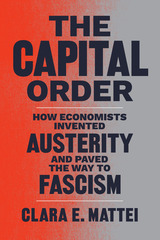
A groundbreaking examination of austerity’s dark intellectual origins.
For more than a century, governments facing financial crisis have resorted to the economic policies of austerity—cuts to wages, fiscal spending, and public benefits—as a path to solvency. While these policies have been successful in appeasing creditors, they’ve had devastating effects on social and economic welfare in countries all over the world. Today, as austerity remains a favored policy among troubled states, an important question remains: What if solvency was never really the goal?
In The Capital Order, political economist Clara E. Mattei explores the intellectual origins of austerity to uncover its originating motives: the protection of capital—and indeed capitalism—in times of social upheaval from below.
Mattei traces modern austerity to its origins in interwar Britain and Italy, revealing how the threat of working-class power in the years after World War I animated a set of top-down economic policies that elevated owners, smothered workers, and imposed a rigid economic hierarchy across their societies. Where these policies “succeeded,” relatively speaking, was in their enrichment of certain parties, including employers and foreign trade interests, who accumulated power and capital at the expense of labor. Here, Mattei argues, is where the true value of austerity can be observed: its insulation of entrenched privilege and its elimination of all alternatives to capitalism.
Drawing on newly uncovered archival material from Britain and Italy, much of it translated for the first time, The Capital Order offers a damning and essential new account of the rise of austerity—and of modern economics—at the levers of contemporary political power.
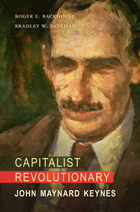
The Great Recession of 2008 restored John Maynard Keynes to prominence. After decades when the Keynesian revolution seemed to have been forgotten, the great British theorist was suddenly everywhere. The New York Times asked, “What would Keynes have done?” The Financial Times wrote of “the undeniable shift to Keynes.” Le Monde pronounced the economic collapse Keynes’s “revenge.” Two years later, following bank bailouts and Tea Party fundamentalism, Keynesian principles once again seemed misguided or irrelevant to a public focused on ballooning budget deficits. In this readable account, Backhouse and Bateman elaborate the misinformation and caricature that have led to Keynes’s repeated resurrection and interment since his death in 1946.
Keynes’s engagement with social and moral philosophy and his membership in the Bloomsbury Group of artists and writers helped to shape his manner of theorizing. Though trained as a mathematician, he designed models based on how specific kinds of people (such as investors and consumers) actually behave—an approach that runs counter to the idealized agents favored by economists at the end of the century.
Keynes wanted to create a revolution in the way the world thought about economic problems, but he was more open-minded about capitalism than is commonly believed. He saw capitalism as essential to a society’s well-being but also morally flawed, and he sought a corrective for its main defect: the failure to stabilize investment. Keynes’s nuanced views, the authors suggest, offer an alternative to the polarized rhetoric often evoked by the word “capitalism” in today’s political debates.
Historically, most developing nations have employed strict exchange rate controls and heavy protection of domestic industry-policies now thought to be at odds with sustainable and desirable rates of economic growth. By contrast, many East Asian nations maintained exchange rate regimes designed to achieve an attractive climate for exports and an "outer-oriented" development strategy. The result has been rapid and consistent economic growth over the past few decades.
Changes in Exchange Rates in Rapidly Developing Countries explores the impact of such diverse exchange control regimes in both historical and regional contexts, focusing particular attention on East Asia. This comprehensive, carefully researched volume will surely become a standard reference for scholars and policymakers.
Robert Lucas is one of the outstanding monetary theorists of the past hundred years. Along with Knut Wicksell, Irving Fisher, John Maynard Keynes, James Tobin, and Milton Friedman (his teacher), Lucas revolutionized our understanding of how money interacts with the real economy of production, consumption, and exchange.
Lucas’s contributions are both methodological and substantive. Methodologically, he developed dynamic, stochastic, general equilibrium models to analyze economic decision-makers operating through time in a complex, probabilistic environment. Substantively, he incorporated the quantity theory of money into these models and derived its implications for money growth, inflation, and interest rates in the long run. He also showed the different effects of anticipated and unanticipated changes in the stock of money on economic fluctuations, and helped to demonstrate that there was not a long-run trade-off between unemployment and inflation (the Phillips curve) that policy-makers could exploit.
The twenty-one papers collected in this volume fall primarily into three categories: core monetary theory and public finance, asset pricing, and the real effects of monetary instability. Published between 1972 and 2007, they will inspire students and researchers who want to study the work of a master of economic modeling and to advance economics as a pure and applied science.
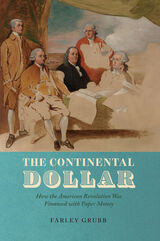
The Continental Dollar is a revelatory history of how the fledgling United States paid for its first war. Farley Grubb upends the common telling of this story, in which the United States printed cross-colony money, called Continentals, to serve as an early fiat currency—a currency that is not tied to a commodity like gold, but rather to a legal authority. As Grubb details, the Continental was not a fiat currency, but a “zero-coupon bond”—a wholly different species of money. As bond payoffs were pushed into the future, the money’s value declined, killing the Continentals’ viability years before the Revolutionary War would officially end.
Drawing on decades of exhaustive mining of eighteenth-century records, The Continental Dollar is an essential origin story of the early American monetary system, promising to serve as the benchmark for critical work for decades to come.
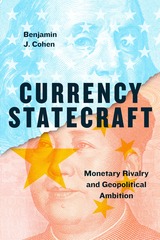
In a comprehensive review that ranges from World War II to the present, Cohen convincingly argues that one goal stands out as the primary motivation for currency statecraft: the extent of a country’s geopolitical ambition, or how driven it is to build or sustain a prominent place in the international community. When a currency becomes internationalized, it generally increases the power of the nation that produces it. In the persistent contestation that characterizes global politics, that extra edge can matter greatly, making monetary rivalry an integral component of geopolitics. Today, the major example of monetary rivalry is the emerging confrontation between the US dollar and the Chinese renminbi. Cohen describes how China has vigorously promoted the international standing of its currency in recent years, even at the risk of exacerbating relations with the United States, and explains how the outcome could play a major role in shaping the broader geopolitical engagement between the two superpowers.
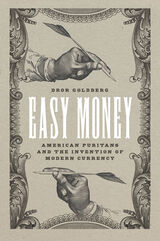
A sweeping history of the American invention of modern money.
Economists endlessly debate the nature of legal tender monetary systems—coins and bills issued by a government or other authority. Yet the origins of these currencies have received little attention.
Dror Goldberg tells the story of modern money in North America through the Massachusetts colony during the seventeenth century. As the young settlement transitioned to self-governance and its economy grew, the need to formalize a smooth exchange emerged. Printing local money followed.
Easy Money illustrates how colonists invented contemporary currency by shifting its foundation from intrinsically valuable goods—such as silver—to the taxation of the state. Goldberg traces how this structure grew into a worldwide system in which, monetarily, we are all Massachusetts. Weaving economics, law, and American history, Easy Money is a new touchstone in the story of monetary systems.
This is an auto-narrated audiobook edition of this book.
A sweeping history of the American invention of modern money.
Economists endlessly debate the nature of legal tender monetary systems—coins and bills issued by a government or other authority. Yet the origins of these currencies have received little attention.
Dror Goldberg tells the story of modern money in North America through the Massachusetts colony during the seventeenth century. As the young settlement transitioned to self-governance and its economy grew, the need to formalize a smooth exchange emerged. Printing local money followed.
Easy Money illustrates how colonists invented contemporary currency by shifting its foundation from intrinsically valuable goods—such as silver—to the taxation of the state. Goldberg traces how this structure grew into a worldwide system in which, monetarily, we are all Massachusetts. Weaving economics, law, and American history, Easy Money is a new touchstone in the story of monetary systems.
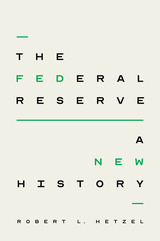
In The Federal Reserve: A New History, Robert L. Hetzel draws on more than forty years of experience as an economist in the central bank to trace the influences of the Fed on the American economy. Comparing periods in which the Fed stabilized the economy to those when it did the opposite, Hetzel tells the story of a century-long pursuit of monetary rules capable of providing for economic stability.
Recast through this lens and enriched with archival materials, Hetzel’s sweeping history offers a new understanding of the bank’s watershed moments since 1913. This includes critical accounts of the Great Depression, the Great Inflation, and the Great Recession—including how these disastrous events could have been avoided.
A critical volume for a critical moment in financial history, The Federal Reserve is an expert, sweeping account that promises to recast our understanding of the central bank in its second century.
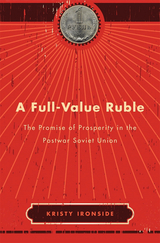
A new history shows that, despite Marxism’s rejection of money, the ruble was critical to the Soviet Union’s promise of shared prosperity for its citizens.
In spite of Karl Marx’s proclamation that money would become obsolete under Communism, the ruble remained a key feature of Soviet life. In fact, although Western economists typically concluded that money ultimately played a limited role in the Soviet Union, Kristy Ironside argues that money was both more important and more powerful than most histories have recognized. After the Second World War, money was resurrected as an essential tool of Soviet governance. Certainly, its importance was not lost on Soviet leaders, despite official Communist Party dogma. Money, Ironside demonstrates, mediated the relationship between the Soviet state and its citizens and was at the center of both the government’s and the people’s visions for the maturing Communist project. A strong ruble—one that held real value in workers’ hands and served as an effective labor incentive—was seen as essential to the economic growth that would rebuild society and realize Communism’s promised future of abundance.
Ironside shows how Soviet citizens turned to the state to remedy the damage that the ravages of the Second World War had inflicted upon their household economies. From the late 1940s through the early 1960s, progress toward Communism was increasingly measured by the health of its citizens’ personal finances, such as greater purchasing power, higher wages, better pensions, and growing savings. However, the increasing importance of money in Soviet life did not necessarily correlate to improved living standards for Soviet citizens. The Soviet government’s achievements in “raising the people’s material welfare” continued to lag behind the West’s advances during a period of unprecedented affluence. These factors combined to undermine popular support for Soviet power and confidence in the Communist project.
An Economist Best Book of the Year
A Financial Times Best Book of the Year
A Foreign Affairs Best Book of the Year
A ProMarket Best Political Economy Book of the Year
One of The Week’s Ten Best Business Books of the Year
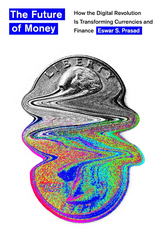
A cutting-edge look at how accelerating financial change, from the end of cash to the rise of cryptocurrencies, will transform economies for better and worse.
We think we’ve seen financial innovation. We bank from laptops and buy coffee with the wave of a phone. But these are minor miracles compared with the dizzying experiments now underway around the globe, as businesses and governments alike embrace the possibilities of new financial technologies. As Eswar Prasad explains, the world of finance is at the threshold of major disruption that will affect corporations, bankers, states, and indeed all of us. The transformation of money will fundamentally rewrite how ordinary people live.
Above all, Prasad foresees the end of physical cash. The driving force won’t be phones or credit cards but rather central banks, spurred by the emergence of cryptocurrencies to develop their own, more stable digital currencies. Meanwhile, cryptocurrencies themselves will evolve unpredictably as global corporations like Meta and Amazon join the game. The changes will be accompanied by snowballing innovations that are reshaping finance and have already begun to revolutionize how we invest, trade, insure, and manage risk.
Prasad shows how these and other changes will redefine the very concept of money, unbundling its traditional functions as a unit of account, medium of exchange, and store of value. The promise lies in greater efficiency and flexibility, increased sensitivity to the needs of diverse consumers, and improved market access for the unbanked. The risk is instability, lack of accountability, and erosion of privacy. A lucid, visionary work, The Future of Money shows how to maximize the best and guard against the worst of what is to come.
An Economist Book of the Year
A Financial Times Book of the Year
A Foreign Affairs Book of the Year
A ProMarket Book of the Year
One of The Week’s Ten Best Business Books of the Year
“A road map for money managers, market strategists, and others seeking to understand this new world.”—Barron’s
“Money shapes economies, economies shape nations, nations shape history. It follows that the future of money is profoundly important. Here is a definitive report on where we are and where we are going.”—Lawrence H. Summers, former Secretary of the Treasury
“Prasad manages to make the financial system intelligible and interesting without resorting to shortcuts and exaggeration…Previous overhauls mainly improved existing systems, he notes. The end of cash—likely within a decade or two—is revolutionary.”—The Economist
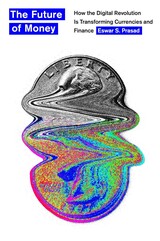
The world of finance is on the cusp of a major disruption that will affect corporations, bankers, states—indeed, all of us. As Eswar Prasad makes clear, the end of physical cash will fundamentally rewrite how we live. Bitcoin, Ethereum, and other cryptocurrencies are just the beginning: spurred by their emergence, central banks will increasingly develop their own, more stable digital currencies. Meanwhile, cryptocurrencies themselves will evolve dramatically as global corporations like Meta, Apple, and Amazon join the game.
Prasad shows how these innovations will redefine the very concept of money, unbundling its traditional functions. This transformation promises greater efficiency and flexibility, but also carries the risk of instability, lack of accountability, and erosion of privacy. A lucid, visionary work, The Future of Money shows how to maximize the best and guard against the worst of what is to come.

Moving away from state-centered and Marxist approaches to the study of the European monetary integration process, Karl Kaltenthaler offers a new analytical framework to assess the dynamics within and among the participating countries. Using official and unofficial documents as well as interviews with players ranging from presidents of the Bundesbank to functionaries in the trade unions, Kaltenthaler argues that the number of decision makers negotiating policy and their accountability to interest groups, political parties, government ministries, and Germany’s central bank have made Germany’s fluctuations in policy inevitable. Germany and the Politics of Europe’s Money examines twenty years of German policy through an analysis of four key episodes: the creation of the European Monetary System, the creation of the Franco-German Economic and Financial Council, the establishment of policy toward the European Monetary Union, and the institutional transformation of the EMS in the 1990s. It thus brings a new understanding to Germany’s dynamic policies and the political forces behind them.
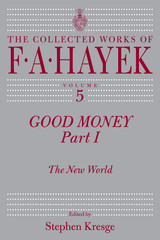
Good Money, Part I: The New World includes seven of Hayek's articles from the 1920s that were written largely in reaction to the work of Irving Fisher and W. C. Mitchell. Hayek encountered Fisher's work on the quantity theory of money and Mitchell's studies on business cycles during a U.S. visit in 1923-24. These articles attack the idea that price stabilization was consistent with the stabilization of foreign exchange and foreshadow Hayek's general critique that the whole of an economy is not simply the sum of its parts.
Good Money, Part II: The Standard offers five more of Hayek's articles that advance his ideas about money. In these essays, Hayek investigates the consequences of the "predicament of composition." This principle works on the premise that the entire society cannot simultaneously increase liquidity by selling property or services for cash. This analysis led Hayek to make what was perhaps his most controversial proposal: that governments should be denied a monopoly on the coining of money.
Taken together, these volumes present a comprehensive chronicle of Hayek's writings on monetary policy and offer readers an invaluable reference to some of his most profound thoughts about money.
"Each new addition to The Collected Works of F. A. Hayek, the University of Chicago's painstaking series of reissues and collections, is a gem."— Liberty on Volume IX of The Collected Works of F. A. Hayek
"Intellectually [Hayek] towers like a giant oak in a forest of saplings."—Chicago Tribune
"One of the great thinkers of our age who . . . revolutionized the world's intellectual and political life."—Former President George Herbert Walker Bush
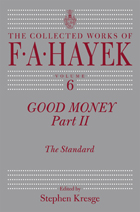
Good Money, Part I: The New World includes seven of Hayek's articles from the 1920s that were written largely in reaction to the work of Irving Fisher and W. C. Mitchell. Hayek encountered Fisher's work on the quantity theory of money and Mitchell's studies on business cycles during a U.S. visit in 1923-24. These articles attack the idea that price stabilization was consistent with the stabilization of foreign exchange and foreshadow Hayek's general critique that the whole of an economy is not simply the sum of its parts.
Good Money, Part II: The Standard offers five more of Hayek's articles that advance his ideas about money. In these essays, Hayek investigates the consequences of the "predicament of composition." This principle works on the premise that the entire society cannot simultaneously increase liquidity by selling property or services for cash. This analysis led Hayek to make what was perhaps his most controversial proposal: that governments should be denied a monopoly on the coining of money.
Taken together, these volumes present a comprehensive chronicle of Hayek's writings on monetary policy and offer readers an invaluable reference to some of his most profound thoughts about money.
"Each new addition to The Collected Works of F. A. Hayek, the University of Chicago's painstaking series of reissues and collections, is a gem."— Liberty on Volume IX of The Collected Works of F. A. Hayek
"Intellectually [Hayek] towers like a giant oak in a forest of saplings."—Chicago Tribune
"One of the great thinkers of our age who . . . revolutionized the world's intellectual and political life."—Former President George Herbert Walker Bush
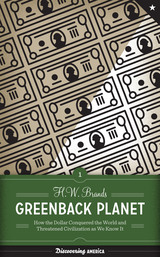
The world runs on the U.S. dollar. From Washington to Beijing, governments, businesses, and individuals rely on the dollar to conduct commerce and invest profitably and safely—even after the global financial meltdown in 2008 revealed the potentially catastrophic cost of the dollar's hegemony. But how did the greenback achieve this planetary dominance a mere century and a half after President Lincoln issued the first currency backed only by the credit—and credibility—of the federal government?
In Greenback Planet, acclaimed historian H. W. Brands charts the dollar's astonishing rise to become the world's principal currency. Telling the story with the verve of a novelist, he recounts key episodes in U.S. monetary history, from the Civil War debate over fiat money (greenbacks) to the recent worldwide financial crisis. Brands explores the dollar's changing relations to gold and silver and to other currencies and cogently explains how America's economic might made the dollar the fundamental standard of value in world finance. He vividly describes the 1869 Black Friday attempt to corner the gold market, banker J. P. Morgan's bailout of the U.S. treasury, the creation of the Federal Reserve, and President Franklin Roosevelt's handling of the bank panic of 1933. Brands shows how lessons learned (and not learned) in the Great Depression have influenced subsequent U.S. monetary policy, and how the dollar's dominance helped transform economies in countries ranging from Germany and Japan after World War II to Russia and China today. He concludes with a sobering dissection of the 2008 world financial debacle, which exposed the power—and the enormous risks—of the dollar's worldwide reign.
The first two chapters provide the most in-depth English-language discussion of the BOJ's operating procedures and policymaker's views about how BOJ actions affect the Japanese business cycle. Chapter three explores the impact of the BOJ's distinctive window guidance policy on corporate investment, while chapter four looks at how monetary policy affects the term structure of interest rates in Japan. The final two chapters examine the overall effect of monetary policy on real aggregate economic activity.
This volume will prove invaluable not only to economists interested in the technical operating procedures of the BOJ, but also to those interested in the Japanese economy and in the operation and outcome of monetary reform in general.
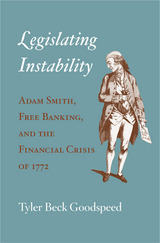
From 1716 to 1845, Scotland’s banks were among the most dynamic and resilient in Europe, effectively absorbing a series of adverse economic shocks that rocked financial markets in London and on the continent. Legislating Instability explains the seeming paradox that the Scottish banking system achieved this success without the government controls usually considered necessary for economic stability.
Eighteenth-century Scottish banks operated in a regulatory vacuum: no central bank to act as lender of last resort, no monopoly on issuing currency, no legal requirements for maintaining capital reserves, and no formal limits on bank size. These conditions produced a remarkably robust banking system, one that was intensely competitive and served as a prime engine of Scottish economic growth. Despite indicators that might have seemed red flags—large speculative capital flows, a fixed exchange rate, and substantial external debt—Scotland successfully navigated two severe financial crises during the Seven Years’ War.
The exception was a severe financial crisis in 1772, seven years after the imposition of the first regulations on Scottish banking—the result of aggressive lobbying by large banks seeking to weed out competition. While these restrictions did not cause the 1772 crisis, Tyler Beck Goodspeed argues, they critically undermined the flexibility and resilience previously exhibited by Scottish finance, thereby elevating the risk that another adverse economic shock, such as occurred in 1772, might threaten financial stability more broadly. Far from revealing the shortcomings of unregulated banking, as Adam Smith claimed, the 1772 crisis exposed the risks of ill-conceived bank regulation.
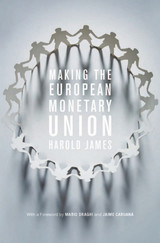
Europe’s financial crisis cannot be blamed on the Euro, Harold James contends in this probing exploration of the whys, whens, whos, and what-ifs of European monetary union. The current crisis goes deeper, to a series of problems that were debated but not resolved at the time of the Euro’s invention.
Since the 1960s, Europeans had been looking for a way to address two conundrums simultaneously: the dollar’s privileged position in the international monetary system, and Germany’s persistent current account surpluses in Europe. The Euro was created under a politically independent central bank to meet the primary goal of price stability. But while the monetary side of union was clearly conceived, other prerequisites of stability were beyond the reach of technocratic central bankers. Issues such as fiscal rules and Europe-wide banking supervision and regulation were thoroughly discussed during planning in the late 1980s and 1990s, but remained in the hands of member states. That omission proved to be a cause of crisis decades later.
Here is an account that helps readers understand the European monetary crisis in depth, by tracing behind-the-scenes negotiations using an array of sources unavailable until now, notably from the European Community’s Committee of Central Bank Governors and the Delors Committee of 1988–89, which set out the plan for how Europe could reach its goal of monetary union. As this foundational study makes clear, it was the constant friction between politicians and technocrats that shaped the Euro. And, Euro or no Euro, this clash will continue into the future.
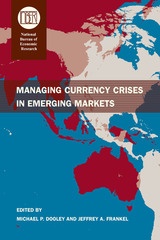
The contributions here explore the management process from the beginning of a crisis to the long-term effects of the techniques used to minimize it. The first three chapters focus on the earliest responses and the immediate defense of a currency under attack, exploring whether unnecessary damage to economies can be avoided by adopting the right response within the first few days of a financial crisis. Next, contributors examine the adjustment programs that follow, considering how to design these programs so that they shorten the recovery phase, encourage economic growth, and minimize the probability of future difficulties. Finally, the last four papers analyze the actual effects of adjustment programs, asking whether they accomplish what they are designed to do-and whether, as many critics assert, they impose disproportionate costs on the poorest members of society.
Recent high-profile currency crises have proven not only how harmful they can be to neighboring economies and trading partners, but also how important policy responses can be in determining their duration and severity. Economists and policymakers will welcome the insightful evaluations in this important volume, and those of its companion, Sebastian Edwards and Jeffrey A. Frankel's Preventing Currency Crises in Emerging Markets.
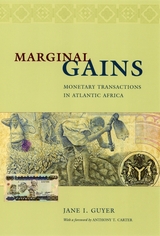
The answer is a rich diversity of economic practices responsive to both local and global circumstances. In Marginal Gains, Jane I. Guyer explores and explains these often bewildering practices, including trade with coastal capitalism and across indigenous currency zones, and within the modern popular economy. Drawing on a wide range of evidence, Guyer demonstrates that the region shares a coherent, if loosely knit, commercial culture. She shows how that culture actually works in daily practice, addressing both its differing scales of value and the many settings in which it operates, from crisis conditions to ordinary household budgets. The result is a landmark study that reveals not just how popular economic systems work in Africa, but possibly elsewhere in the Third World.
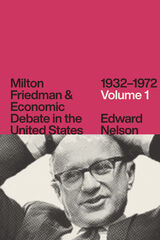
This two-volume account provides a foundational introduction to Friedman’s role in several major economic debates that took place in the United States between 1932 and 1972. The first volume, which takes the story through 1960, covers the period in which Friedman began and developed his research on monetary policy. It traces Friedman’s thinking from his professional beginnings in the 1930s as a combative young microeconomist, to his wartime years on the staff of the US Treasury, and his emergence in the postwar period as a leading proponent of monetary policy. The second volume covers the years between 1960 and 1972— years that saw the publication of Friedman and Anna Schwartz’s Monetary History of the United States. The book also covers Friedman’s involvement in a number of debates in the 1960s and 1970s, on topics such as unemployment, inflation, consumer protection, and the environment.
As a fellow monetary economist, Nelson writes from a unique vantage point, drawing on both his own expertise in monetary analysis and his deep familiarity with Friedman’s writings. Using extensive documentation, the book weaves together Friedman’s research contributions and his engagement in public debate, providing an unparalleled analysis of Friedman’s views on the economic developments of his day.
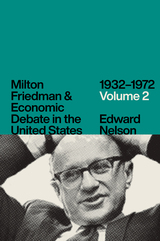
This two-volume account provides a foundational introduction to Friedman’s role in several major economic debates that took place in the United States between 1932 and 1972. The first volume, which takes the story through 1960, covers the period in which Friedman began and developed his research on monetary policy. It traces Friedman’s thinking from his professional beginnings in the 1930s as a combative young microeconomist, to his wartime years on the staff of the US Treasury, and his emergence in the postwar period as a leading proponent of monetary policy. The second volume covers the years between 1960 and 1972— years that saw the publication of Friedman and Anna Schwartz’s Monetary History of the United States. The book also covers Friedman’s involvement in a number of debates in the 1960s and 1970s, on topics such as unemployment, inflation, consumer protection, and the environment.
As a fellow monetary economist, Nelson writes from a unique vantage point, drawing on both his own expertise in monetary analysis and his deep familiarity with Friedman’s writings. Using extensive documentation, the book weaves together Friedman’s research contributions and his engagement in public debate, providing an unparalleled analysis of Friedman’s views on the economic developments of his day.
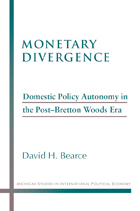
"In a meticulously researched study, David Bearce demonstrates that, contrary to predictions, financial globalization has not resulted in a systematic convergence of national monetary policies. The book is a must-read for students of the political economy of international finance. Highlighting the critical role of partisan politics in determining policy outcomes, Bearce adds a new and important dimension to our understanding of the impacts of international capital mobility in the contemporary era."
—Benjamin Jerry Cohen, University of California, Santa Barbara
"Bearce offers a compelling analysis of partisan economic policy in an open economy. By analyzing both fiscal and monetary policies, Bearce extends our understanding of how the electoral imperative conditions policy behavior. His conclusions will have to be addressed in any
future debate about the topic."
—William Bernhard, University of Illinois at Urbana-Champaign
"Interest group divisions over exchange rates and macroeconomic policy have been at the center of international political economy research for about 20 years. Political scientists have studied these cleavages, focusing on the policy interests of various industry groups. On a separate but parallel track, another group of researchers explored the relationship between partisan politics and macroeconomic policy choices. In this exceptionally well researched book, Bearce integrates these two analytical traditions. Noting that industry groups are typically important organized constituents in left-wing and right-wing political parties, Bearce demonstrates how macroeconomic policy outcomes in advanced countries vary systematically with the alternation of political parties in government."
—J. Lawrence Broz, University of California, San Diego
David H. Bearce is Assistant Professor of Political Science at the University of Pittsburgh.
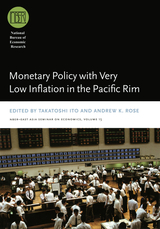
The editors of this volume attribute low inflation and deflation in the region to a number of recent phenomena. Some of these episodes, they argue, may be linked to rapid growth on the supply side of economies. Here, inadequate demand policy can produce what is referred to as a "liquidity trap" in which the expectation of falling prices encourages agents to defer costly purchases, thereby discouraging growth. Low inflation rates can also be traced to the presence of a "zero-lower bound" on interest rates, as well as the inflation-targeting phenomenon. Targets have been set so low, the editors argue, that in some cases a few bad shocks lead to deflation.

Money and finance have been among the most potent tools of colonial power. This study investigates the Japanese experiment with financial imperialism—or “yen diplomacy”—at several key moments between the acquisition of Taiwan in 1895 and the outbreak of the Sino–Japanese War in 1937. Through authoritarian monetary reforms and lending schemes, government officials and financial middlemen served as “money doctors” who steered capital and expertise to Japanese official and semi-official colonies in Taiwan, Korea, China, and Manchuria.
Michael Schiltz points to the paradox of acute capital shortages within the Japan’s domestic economy and aggressive capital exports to its colonial possessions as the inevitable but ultimately disastrous outcome of the Japanese government’s goal to exercise macroeconomic control over greater East Asia and establish a self-sufficient “yen bloc.” Through their efforts to implement their policies and contribute to the expansion of the Japanese empire, the “money doctors” brought to the colonies a series of banking institutions and a corollary capitalist ethos, which would all have a formidable impact on the development of the receiving countries, eventually affecting their geopolitical position in the postcolonial world.
In the papers in part I, dating from 1947 to the present, Dr. Schwartz examines money and banking in the United States and the United Kingdom from a historical perspective. Her investigation of the historical evidence linking economic instability to erratic monetary behavior—this behavior itself a product of discretionary monetary policy—has led her to argue for the importance of stable money, and her writings on these issues over the last two decades form part II. The volume concludes with four recent articles on international monetary arrangements, including Dr. Schwartz's well-known work on the gold standard.
This volume of classic essays by Anna Schwartz will be a useful addition to the libraries of scholars and students for its exemplary historical research and commentary on monetary systems.
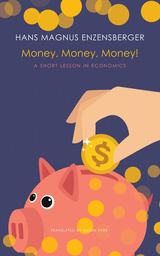
The Federmanns live a pleasant but painfully normal life in the Munich suburbs. All that the three children really know about money is that there’s never enough of it in their family.
Every so often, their impish Great-Aunt Fé descends on the city. After repeated cycles of boom and bust, profligacy and poverty, the grand old lady has become enormously wealthy and lives alone in a villa on the shore of Lake Geneva. But what does Great-Aunt Fé want from the Federmanns, her only surviving relatives? This time, she invites the children to tea at her luxury hotel where she spoils, flummoxes, and inspires them. Dismayed at their ignorance of the financial ways of the world, she gives them a crash course in economics that piques their curiosity, unsettles their parents, and throws open a whole new world. The young Federmanns are for once taken seriously and together they try to answer burning questions: Where does money come from? Why are millionaires and billionaires never satisfied? And why are those with the most always showered with more?
In this rich volume, the renowned poet, translator, and essayist Hans Magnus Enzensberger turns his gimlet eye on the mechanisms and machinations of banks and politicians—the human greed, envy, and fear that fuels the global economy. A modern, but moral-less fable, Money, Money, Money! is shot through with Enzensberger’s trademark erudition, wit, and humanist desire to cut through jargon and forearm his readers against obscurantism.
With expert knowledge and a wry sense of humor, Aliber demystifies international finance by breaking through the jargon barrier and presenting technical issues in a clear and concise manner. Aliber takes the reader on a tour of a multiplicity of international finance issues, included fixed and floating exchange rates, devaluations, money markets, monetary policy, and the concepts that lie behind the esoteric language of financial economists.
This sixth edition tracks the changes that have taken place in the world economy since the previous editions by exploring financial globalization, postcommunist transition, European integration, and the Asian economic crisis. It is an indispensable and highly readable guide to the complex and increasingly fragile system through which the world's business is financed.
Topics covered include exchange rate regimes, contagion (transmission of currency crises across countries), the current account of the balance of payments, the role of private sector investors and of speculators, the reaction of the official sector (including the multilaterals), capital controls, bank supervision and weaknesses, and the roles of cronyism, corruption, and large players (including hedge funds).
Ably balancing detailed case studies, cross-country comparisons, and theoretical concerns, this book will make a major contribution to ongoing efforts to understand and prevent international currency crises.
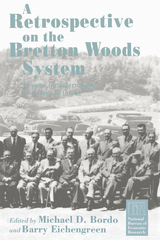
The contributors explore adjustment, liquidity, and transmission under the System; the way it affected developing countries; and the role of the International Monetary Fund in maintaining a stable rate. The authors examine the reasons for the System's success and eventual collapse, compare it to subsequent monetary regimes, such as the European Monetary System, and address the possibility of a new fixed exchange rate for today's world.
The volume includes a review of the literature on the classical gold standard; studies the experience with gold in England, Germany, Italy, Sweden, and Canada; and perspectives on international linkages and the stability of price-level trends under the gold standard. The articles and commentaries reflect strong, conflicting views among hte participants on issues of central bank behavior, purchasing-power an interest-rate parity, independent monetary policies, economic growth, the "Atlantic economy," and trends in commodity prices and long-term interest rates. This is a thoughtful and provocative book.
With $4.5 trillion in total assets, the People’s Bank of China now surpasses the U.S. Federal Reserve as the world’s biggest central bank. The Rise of the People’s Bank of China investigates how this increasingly authoritative institution grew from a Leninist party-state that once jealously guarded control of banking and macroeconomic policy. Relying on interviews with key players, this book is the first comprehensive and up-to-date account of the evolution of the central banking and monetary policy system in reform China.
Stephen Bell and Hui Feng trace the bank’s ascent to Beijing’s policy circle, and explore the political and institutional dynamics behind its rise. In the early 1990s, the PBC—benefitting from political patronage and perceptions of its unique professional competency—found itself positioned to help steer the Chinese economy toward a more liberal, market-oriented system. Over the following decades, the PBC has assumed a prominent role in policy deliberations and financial reforms, such as fighting inflation, relaxing China’s exchange rate regime, managing reserves, reforming banking, and internationalizing the renminbi. Today, the People’s Bank of China confronts significant challenges in controlling inflation on the back of runaway growth, but it has established a strong track record in setting policy for both domestic reform and integration into the global economy.
Several contributors evaluate the Dodd-Frank bill which mandated greater federal oversight of banks, increased regulation of credit rating agencies, and established the Consumer Financial Protection Bureau (CFPB), among other measures. Martin Baily and coauthors conclude that measures that require greater transparency and oversight in derivatives transactions have made financial institutions more resilient. Yet, the bill’s attempts to consolidate the fragmented financial regulatory system have not gone far enough.
Lauren Willis argues that instead of simply issuing disclosures, financial service providers should be required to meet more rigorous performance standards, such as proving through third-party testing that customers understand their fees and surcharges. John Macey advocates reforms that would afford home mortgage borrowers the same protections as investors in the securities market, including regulations that prevent brokers from encouraging borrowers to refinance their mortgages to collect fees.
The issue also addresses global financial regulation. Viral Achara examines the financial sectors in the U.S., Europe, and Asia, and assesses their vulnerability to capital shortfalls in the event of a future crisis. Niamh Moloney finds that institutions established in the wake of the crash, such as the European Supervisory Authorities, have improved European-level prudential and consumer financial regulations and have the potential to increase the EU’s influence in international financial governance.
The effects of the financial crisis continue to reverberate around the world today. Together, the articles in this issue document the steps necessary for creating a more robust financial system that works better for all consumers, investors and the financial system itself.
Diverted by the dramatic military and political events of July 1944, few Americans realized the significance of an international conference taking place at Bretton Woods, a mountain resort in New Hampshire, far from the battle zones. There United Nations experts were completing plans for a world monetary and financial system that they hoped would create a prosperous, efficient global economy and avert economic tensions that might lead to another world war. Until the dollar crisis of 1971, decisions made at Bretton Woods provided the institutions and rules for international finance. The conference ushered in an era of unprecedented expansion of world trade and prosperity.
Based on extensive research in previously unavailable sources, A Search for Solvency relates intriguing and often complicated issues of economic analysis and diplomatic history. It offers a succinct and comprehensive survey of international monetary development from the collapse of the pre–World War I gold standard to the devaluation of the dollar in 1971. In effect, it explains the origins of late twentieth-century global inflation and currency problems.
The author details how the ghost of the Great Depression, the failure of monetary reconstruction efforts after World War I, and the memory of the nineteenth-century gold standard guided efforts to construct the Bretton Woods system. This preoccupation with the past, as well as political constraints, produced a monetary system protected against past dangers—fluctuating currencies, controls, and deflation—but dangerously vulnerable to inflationary pressures. The weaknesses of Bretton Woods, a system geared to an era in which economic power was concentrated in the United States, became visible in the 1960s and painfully apparent by the mid-1970s.
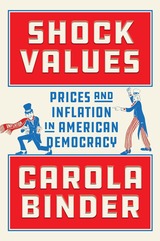
How inflation and deflation fears shape American democracy.
Many foundational moments in American economic history—the establishment of paper money, wartime price controls, the rise of the modern Federal Reserve—occurred during financial panics as prices either inflated or deflated sharply. The government’s decisions in these moments, intended to control price fluctuations, have produced both lasting effects and some of the most contentious debates in the nation’s history.
A sweeping history of the United States’ economy and politics, Shock Values reveals how the American state has been shaped by a massive, ever-evolving effort to insulate its economy from the real and perceived dangers of price fluctuations. Carola Binder narrates how the pains of rising and falling prices have brought lasting changes for every generation of Americans. And with each brush with price instability, the United States has been reinvented—not as a more perfect union, but as a reflection of its most recent failures.
Shock Values tells the untold story of prices and price stabilization in the United States. Expansive and enlightening, Binder recounts the interest-group politics, legal battles, and economic ideas that have shaped a nation from the dawn of the republic to the present.
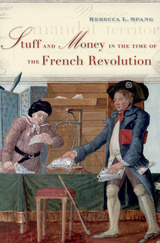
Winner of the Louis Gottschalk Prize, American Society for Eighteenth-Century Studies
A Financial Times Best History Book of the Year
A Choice Outstanding Academic Title of the Year
Rebecca L. Spang, who revolutionized our understanding of the restaurant, has written a new history of money. It uses one of the most infamous examples of monetary innovation, the assignats—a currency initially defined by French revolutionaries as “circulating land”—to demonstrate that money is as much a social and political mediator as it is an economic instrument. Following the assignats from creation to abandonment, Spang shows them to be subject to the same slippages between policies and practice, intentions and outcomes, as other human inventions.
“This is a quite brilliant, assertive book.”
—Patrice Higonnet, Times Literary Supplement
“Brilliant…What [Spang] proposes is nothing less than a new conceptualization of the revolution…She has provided historians—and not just those of France or the French Revolution—with a new set of lenses with which to view the past.”
—Arthur Goldhammer, Bookforum
“[Spang] views the French Revolution from rewardingly new angles by analyzing the cultural significance of money in the turbulent years of European war, domestic terror and inflation.”
—Tony Barber, Financial Times
The United States has a debt problem—we owe more than $18 trillion while our gross domestic product, the value of all goods and services produced in America, is only $17.5 trillion. To pay down the debt, some recommend austerity, cutting federal expenditures. Others suggest increasing taxes, especially on the wealthiest Americans. In Understanding the National Debt: What Every American Needs to Know, economic historian Carl Lane urges that the national debt must be addressed in ways beyond program cuts or tax increase alternatives, but change can only occur when more Americans understand what constitutes our debt and the problems it causes. The gross national debt is composed of two elements: the public debt and “intragovernment holdings.” The public debt consists of bonds, bills, and notes purchased by individuals, banks, insurance companies, hedge and retirement funds, foreign governments, and university endowments. Intragovernment holdings refers to money that the U.S. Treasury borrows from other parts of the government, principally Social Security and Medicare. This accounts for approximately a quarter of the gross national debt, but that is money that we owe to ourselves, not another entity. The more the government borrows, the less is available for private sector investment, creating a “squeeze” effect that inhibits economic growth. The most burdensome problem is the interest due each year on the debt. Every dollar spent on interest is a dollar less for other purposes. Those elements of the federal budget which are termed “discretionary” suffer. The mandatory elements of the budget—Social Security, Medicare, Medicaid, and the interest on the debt—must be provided for, but defense and national security, education, energy, infrastructure repair and development, and other needs wind up with less. By understanding the national debt we have an opportunity to address our real debt challenge—its principal and interest.
A damning portrait of the dire realities of retirement in the United States—and how we can fix it.
While the French went on strike in 2023 to protest the increase in the national retirement age, workers in the United States have all but given up on the notion of dignified retirement for all. Instead, Americans—whose elders face the highest risk of poverty compared to workers in peer nations—are fed feel-good stories about Walmart clerks who can finally retire because a customer raised the necessary funds through a GoFundMe campaign.
Many argue that the solution to the financial straits of American retirement is simple: people need to just work longer. Yet this call to work longer is misleading in a multitude of ways, including its endangering of the health of workers and its discrimination against people who work in lower-wage occupations. In Work, Retire, Repeat, Teresa Ghilarducci tells the stories of elders locked into jobs—not because they love to work but because they must.
But this doesn’t need to be the reality. Work, Retire, Repeat shows how relatively low-cost changes to how we finance and manage retirement will allow people to truly choose how they spend their golden years.
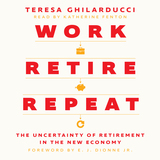
This is an audiobook version of this book.
A damning portrait of the dire realities of retirement in the United States—and how we can fix it.
While the French went on strike in 2023 to protest the increase in the national retirement age, workers in the United States have all but given up on the notion of dignified retirement for all. Instead, Americans—whose elders face the highest risk of poverty compared to workers in peer nations—are fed feel-good stories about Walmart clerks who can finally retire because a customer raised the necessary funds through a GoFundMe campaign.
Many argue that the solution to the financial straits of American retirement is simple: people need to just work longer. Yet this call to work longer is misleading in a multitude of ways, including its endangering of the health of workers and its discrimination against people who work in lower-wage occupations. In Work, Retire, Repeat, Teresa Ghilarducci tells the stories of elders locked into jobs—not because they love to work but because they must.
But this doesn’t need to be the reality. Work, Retire, Repeat shows how relatively low-cost changes to how we finance and manage retirement will allow people to truly choose how they spend their golden years.
READERS
Browse our collection.
PUBLISHERS
See BiblioVault's publisher services.
STUDENT SERVICES
Files for college accessibility offices.
RECENTLY PUBLISHED







UChicago Accessibility Resources
home | accessibility | search | about | contact us
BiblioVault ® 2001 - 2024
The University of Chicago Press