
 A SCHOLARLY BOOK REPOSITORY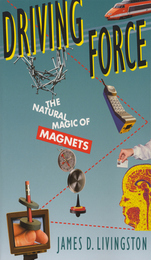
Driving Force unfolds the long and colorful history of magnets: how they guided (or misguided) Columbus; mesmerized eighteenth-century Paris but failed to fool Benjamin Franklin; lifted AC power over its rival, DC, despite all the animals, one human among them, executed along the way; led Einstein to the theory of relativity; helped defeat Hitler's U-boats; inspired writers from Plato to Dave Barry. In a way that will delight and instruct even the nonmathematical among us, James Livingston shows us how scientists today are creating magnets and superconductors that can levitate high-speed trains, produce images of our internal organs, steer high-energy particles in giant accelerators, and--last but not least--heat our morning coffee.
From the "new" science of materials to everyday technology, Driving Force makes the workings of magnets a matter of practical wonder. The book will inform and entertain technical and nontechnical readers alike and will give them a clearer sense of the force behind so much of the working world.


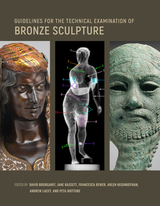
Since the fourth millennium BCE, bronze has been the preferred medium for some of the most prestigious and sacred works of art. But only through interdisciplinary research can the fabrication of these extraordinary objects be properly investigated, interpreted, and documented. This innovative publication bridges the expertise of myriad art-technological specialists to create a new framework for advancing the understanding of bronze sculpture.
Essential reading for curators, conservators, scientists, archaeologists, sculptors, metallurgists, founders, dealers, collectors, and anyone interested in the life cycle of a bronze, this volume explains how to identify the evidence of process steps, metals used, casting defects, and surface work and alterations before moving on to address analytical techniques ranging from visual exams to imaging, material analyses, and dating. The guidelines are accompanied by detailed illustrations, including videos, charts, and animations; a robust vocabulary, ensuring precision across English, German, French, Italian, and Chinese; a diverse selection of case studies; and a comprehensive bibliography.
The free online edition of this open-access publication is available at getty.edu/publications/bronze-guidelines/ and includes videos and zoomable illustrations. Also available are free PDF and EPUB downloads of the book.
READERS
Browse our collection.
PUBLISHERS
See BiblioVault's publisher services.
STUDENT SERVICES
Files for college accessibility offices.
RECENTLY PUBLISHED




UChicago Accessibility Resources
home | accessibility | search | about | contact us
BiblioVault ® 2001 - 2024
The University of Chicago Press