
 A SCHOLARLY BOOK REPOSITORY


This expanded edition includes four new chapters, covering recent ideas about human capital, fertility and economic growth, the division of labor, economic considerations within the family, and inequality in earnings.
"Critics have charged that Mr. Becker's style of thinking reduces humans to economic entities. Nothing could be further from the truth. Mr. Becker gives people credit for having the power to reason and seek out their own best destiny."—Wall Street Journal
Common misconceptions about Japan begin with the notion that it is a “small” country (it's actually lager than Great Britain, Germany or Italy) and end with pronouncements that the Japanese think differently and have different values-they do things differently because that's the way they are.
Steven Reed takes on the task of demystifying Japanese culture and behavior. Through examples that are familiar to an American audience and his own personal encounters with the Japanese, he argues that the apparent oddity of Japanese behavior flows quite naturally from certain objective conditions that are different from those in the United States.
Mystical allegations about national character are less useful for understanding a foreign culture than a close look at specific situations and conditions. Two aspects of the Japanese economy have particularly baffled Americans: that Japanese workers have “permanent employment” and that the Japanese government cooperates with big business. Reed explains these phenomena in common sense terms. He shows how they developed historically, why they continue, and why they helped produce economic growth. He concludes that these practices are not as different from what happens in the United States as they may appear.
This volume constitutes an achievement nowhere duplicated in the three related and critical areas of education, work, and manpower policy. It is the mature production of over a dozen years of research-endeavors by the dean of manpower studies.
In Part I Eli Ginzberg warns against simplistic reliance on prevailing models—economic, psychological, or political. There is only tenuous evidence that enormous expenditure leads to increased social benefit. Rather, we need a more appropriate framework for analyzing human resources, and we ought to be skeptical of a theory that predicates an underlying rationalism for much, if not all, human behavior. Specifically, the author doubts that education can be a substitute for the family, cure poverty or racism, assure an individual a job, give a person a decent income, or control crime and delinquency. What it can do is help students acquire basic skills and thereby help them to live and manage their lives better. The author suggests that we ought to set realistic goals for our schools and insist on accountability.
Part II turns to work and its discontents. Ginzberg examines the changing role of women, the position of blue-collar workers, labor reforms suggested in America and abroad, and the place of the work ethic.
Part III focuses mostly on public employment policy, which can improve the manpower system but can only be a minor instrument for promoting economic growth, redistributing income, shifting consumer demand to public services, or eliminating substandard jobs. The discussion will be eagerly read by those seeking to generate jobs for the unemployed.

A Nation at Work addresses the fundamental economic, demographic, policy, and business facts about how the workforce and workplace are changing in the early twenty-first century. Illustrated with over thirty-five graphs, Part I covers essential topics about the American workforce and workers. Part II gathers essays and speeches from the nation's outstanding journalists and workplace analysts. The book incorporates facts and data, including invaluable tables and listings for useful Internet sites, books, and organizations.
Comprehensive in scope, A Nation at Work will help readers reach a better understanding about their own work and the world of work around them.
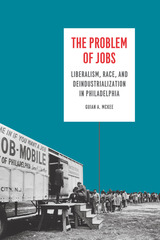
With a focus on Philadelphia, this volume illuminates the central role of these local political and policy struggles in shaping the fortunes of city and citizen alike. In the process, it tells the remarkable story of how Philadelphia’s policymakers and community activists energetically worked to challenge deindustrialization through an innovative series of job retention initiatives, training programs, inner-city business development projects, and early affirmative action programs. Without ignoring the failure of Philadelphians to combat institutionalized racism, Guian McKee's account of their surprising success draws a portrait of American liberalism that evinces a potency not usually associated with the postwar era. Ultimately interpreting economic decline as an arena for intervention rather than a historical inevitability, The Problem of Jobs serves as a timely reminder of policy’s potential to combat injustice.


From the traditional craft hiring hall to the Web site Monster.com, a multitude of institutions exist to facilitate the matching of workers with firms. The diversity of such Labor Market Intermediaries (LMIs) encompasses criminal records providers, public employment offices, labor unions, temporary help agencies, and centralized medical residency matches. Studies of Labor Market Intermediation analyzes how these third-party actors intercede where workers and firms meet, thereby aiding, impeding, and, in some cases, exploiting the matching process.
By building a conceptual foundation for analyzing the roles that these understudied economic actors serve in the labor market, this volume develops both a qualitative and quantitative sense of their significance to market operation and worker welfare. Cross-national in scope, Studies of Labor Market Intermediation is distinctive in coalescing research on a set of market institutions that are typically treated as isolated entities, thus setting a research agenda for analyzing the changing shape of employment in an era of rapid globalization and technological change.

READERS
Browse our collection.
PUBLISHERS
See BiblioVault's publisher services.
STUDENT SERVICES
Files for college accessibility offices.
RECENTLY PUBLISHED







UChicago Accessibility Resources
home | accessibility | search | about | contact us
BiblioVault ® 2001 - 2024
The University of Chicago Press