
 A SCHOLARLY BOOK REPOSITORY
Results by Title
2 books about Lilley, Gary Copel
2 books about Lilley, Gary Copel

Raven on the Moaners' Bench
Gary Copeland Lilley
Four Way Books, 2025
With its titular nod to the most ominous bird in literature, perched on that first pew reserved for mourners, Raven on the Moaners' Bench locates itself within the oceanic canon that grapples with loss and within the rich history of Black letters, marking a staggering achievement in both. Simultaneously generational and personal, these poems encompass the boundless record of racial injustice in the United States while honoring the particular stories — the irreplaceable personalities, memories, and voices — of each individual life. Lilley memorializes familiar figures, martyrs, and strangers as he speaks to his dead younger brother, to Trayvon Martin, to Freddie Gray, and to two men he is "grateful for but [has] never / had the occasion to know" — two men whom he remains aware of because they are, like him, among "the only four black men / driving these Victorian streets" where "the same cop" pulls them over repeatedly. The sundown specter here takes form as an officer of the law, but these lyrics inventory the many shadows twining over the long road Black Americans have walked in the last four centuries. Lilley casts his words between realms, turning back for Jeff, the brother disabled by a drunk driver at 19 who spent an estranged and troubled adulthood away from his family, who "died long before he actually did," vaulted into a maelstrom of mental illness and structural neglect after his accident. Laying these poems at the moaners' bench as "audible expressions / of spiritual need," "of bodily reaching / toward the lifting away," Lilley testifies to the burden of suffering he, his loved ones, his ancestors, and his peers have carried. And then he releases it from where he stands, graveside in his psychological landscape, beside his brother lain down "against / a wilderness of hope."
Raven on the Moaners' Bench writes into grace, opening an exit from a violent cycle, making possible a lighter future while refusing to forget this country's incalculable debt. The inward searching and cross-country migration that Lilley's family, and many other African Americans, have experienced several times in their own histories form the desire for a livable place where safety and opportunity coincide. Jeff walked across America, all the way to the Pacific Ocean, only to die sleeping outside in Los Angeles; this book bears witness to that desperate pilgrimage. Addressing Jeff, Lilley pens a requiem for roadkill he encountered "in a Northwest pathway of [his] own / migration, far from [their] Southern roots": "I offer up the sacrifice of one doe sprawled / in the what-was-left-of-her on the pathway / where I had to meet her and bring her away / to show you I understood something of how / you bore a terrible cost for our family, / for this unholy country, a cost for which / I won't allow any repayment / by words, not mine or anyone's, / on any unstained page."
Raven on the Moaners' Bench writes into grace, opening an exit from a violent cycle, making possible a lighter future while refusing to forget this country's incalculable debt. The inward searching and cross-country migration that Lilley's family, and many other African Americans, have experienced several times in their own histories form the desire for a livable place where safety and opportunity coincide. Jeff walked across America, all the way to the Pacific Ocean, only to die sleeping outside in Los Angeles; this book bears witness to that desperate pilgrimage. Addressing Jeff, Lilley pens a requiem for roadkill he encountered "in a Northwest pathway of [his] own / migration, far from [their] Southern roots": "I offer up the sacrifice of one doe sprawled / in the what-was-left-of-her on the pathway / where I had to meet her and bring her away / to show you I understood something of how / you bore a terrible cost for our family, / for this unholy country, a cost for which / I won't allow any repayment / by words, not mine or anyone's, / on any unstained page."
[more]
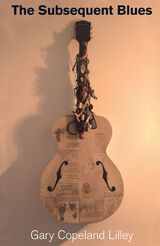
The Subsequent Blues
Gary Copeland Lilley
Four Way Books, 2004
Gary Copeland Lilley writes sonnets and he writes scat, applying traditional forms to untraditional subjects, achieving great grace and insight via ‘high’ and ‘low’ cultural fusions. He examines the DC ghetto and an assortment of its players (voodoo priests, junkies, soldiers, mothers…) through the lenses of both a sonnet’s crucial turn and the jazz riff’s apparent, adamant stream-of-consciousness. E. Ethelbert Miller writes of The Subsequent Blues, “Gary Copeland Lilley writes like a man who owns a Stetson hat. Is he Stagolee? The Subsequent Blues is a book filled with a sinner’s honesty. Lilley captures life with all its blue tones and shades. From cigarette smoke, to drinks and drugs, a few of the poems are as seductive as a woman’s thighs. Lilley has seen enough bad times and death that each poem he writes has that flicker of light we once called soul. Put this book in your mojo bag.”
[more]
READERS
Browse our collection.
PUBLISHERS
See BiblioVault's publisher services.
STUDENT SERVICES
Files for college accessibility offices.
RECENTLY PUBLISHED




UChicago Accessibility Resources
home | accessibility | search | about | contact us
BiblioVault ® 2001 - 2025
The University of Chicago Press