logo for Tupelo Press
AutoPortrait (as flotsam)
Kirsten Kaschock
Tupelo Press, 2026

An investigation of identity as prompted by art and artists. 

In AutoPortrait (as flotsam), Kirsten Kaschock uses the words, lives, and images of other artists as springboards into the self. Arranged almost as a gallery walk, AutoPortrait alternates between masque-like encounters with art and reflective passages engaging memory and desire. Influenced by photographers Francesca Woodman and Cindy Sherman, Kaschock walks a tightrope between vulnerability and artifice—using lines and shapes provided by the many artists referenced here (painters, musicians, and poets) to sketch an impression of a woman artist.

The struggle she chronicles is familiar to any storyteller: an effort to piece together minor episodes to create some semblance of a whole. The question is whether such a project can ever be accomplished. Can the fragments gathered on the shore of memory be tied together, brought to life? Other artists, perhaps especially the abstract expressionists, serve her as both guide and glue. The result is an intimate travelogue—the poet’s own narrow road to an interior where she finds a meditative balance between rage and regret, sorrow and joy.

[more]

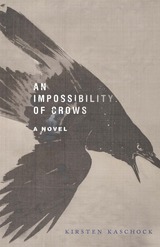
front cover of An Impossibility of Crows
An Impossibility of Crows
A Novel
Kirsten Kaschock
University of Massachusetts Press, 2026

A story of mothers, monsters, and the science of longing

In this daring and evocative tale, Agnes Krahn, a chemist trained in Philadelphia, returns to her childhood home after the death of her father. Just a stone's throw from the haunted fields of Gettysburg, the small town of Letort, Pennsylvania is where the Krahn family has lived for six generations—bound by twisted folk wisdom and an uncanny kinship with the crows that loom over their land.

Back in the grim farmhouse of her youth, Agnes is drawn into the strange legacy she tried to leave behind. When she discovers an abandoned nest in the barn, she becomes consumed by a scientific—and deeply personal—experiment: to breed a crow large and intelligent enough to carry her daughter, Mina, to a freedom Agnes has never known herself. As the bird grows, so does its terrifying potential—manifest in language, cunning, and a violent will of its own. What begins as a gesture of love and liberation turns darkly obsessive, echoing the dangerous ambition of Frankenstein’s monster and the generational trauma buried in the soil of her family’s past.

A thoroughly modern, feminist novel, this is a story of mothers and daughters, inheritance and isolation, and the thin line between care and control. It confronts themes of self-harm and self-preservation, as well as memory and myth, in a narrative as visceral and uncanny as the bird that rises at its heart.

[more]


Send via email Share on Facebook Share on Twitter