
 A SCHOLARLY BOOK REPOSITORY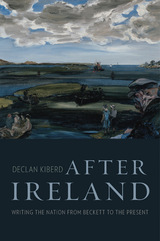
Ireland is suffering from a crisis of authority. Catholic Church scandals, political corruption, and economic collapse have shaken the Irish people’s faith in their institutions and thrown the nation’s struggle for independence into question. While Declan Kiberd explores how political failures and economic globalization have eroded Irish sovereignty, he also sees a way out of this crisis. After Ireland surveys thirty works by modern writers that speak to worrisome trends in Irish life and yet also imagine a renewed, more plural and open nation.
After Dublin burned in 1916, Samuel Beckett feared “the birth of a nation might also seal its doom.” In Waiting for Godot and a range of powerful works by other writers, Kiberd traces the development of an early warning system in Irish literature that portended social, cultural, and political decline. Edna O’Brien, Frank O’Connor, Seamus Heaney, and Michael Hartnett lamented the loss of the Irish language, Gaelic tradition, and rural life. Nuala Ní Dhomhnaill and Eavan Boland grappled with institutional corruption and the end of traditional Catholicism. These themes, though bleak, led to audacious experimentation, exemplified in the plays of Brian Friel and Tom Murphy and the novels of John Banville. Their achievements embody the defiance and resourcefulness of Ireland’s founding spirit—and a strange kind of hope.
After Ireland places these writers and others at the center of Ireland’s ongoing fight for independence. In their diagnoses of Ireland’s troubles, Irish artists preserve and extend a humane culture, planting the seeds of a sound moral economy.
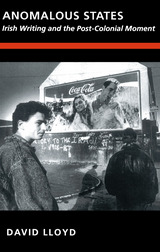
Beginning with Heaney and Beckett, Lloyd shows how in these authors the question of identity connects with the dominance of conservative cultural nationalism and argues for the need to understand Irish culture in relation to the wider experience of colonized societies. A central essay reads Yeats's later works as a profound questioning of the founding of the state. Final essays examine the gradual formation of the state and nation as one element in a cultural process that involves conflict between popular cultural forms and emerging political economies of nationalism and the colonial state. Modern Ireland is thus seen as the product of a continuing process in which, Lloyd argues, the passage to national independence that defines Ireland's post-colonial status is no more than a moment in its continuing history.
Anomalous States makes an important contribution to the growing body of work that connects cultural theory with post-colonial historiography, literary analysis, and issues in contemporary politics. It will interest a wide readership in literary studies, cultural studies, anthropology, and history.

Never before has there been a single-volume anthology of modern Irish poetry so significant and groundbreaking as An Anthology of Modern Irish Poetry.
Collected here is a comprehensive representation of Irish poetic achievement in the twentieth and twenty-first centuries, from poets such as Austin Clarke and Samuel Beckett who were writing while Yeats and Joyce were still living; to those who came of age in the turbulent ’60s as sectarian violence escalated, including Seamus Heaney and Michael Longley; to a new generation of Irish writers, represented by such diverse, interesting voices as David Wheatley (born 1970) and Sinéad Morrissey (born 1972). Scholar and editor Wes Davis has chosen work by more than fifty leading modern and contemporary Irish poets. Each poet is represented by a generous number of poems (there are nearly 800 poems in the anthology). The editor’s selection includes work by world-renowned poets, including a couple of Nobel Prize winners, as well as work by poets whose careers may be less well known to the general public; by poets writing in English; and by several working in the Irish language (Gaelic selections appear in translation). Accompanying the selections are a general introduction that provides a historical overview, informative short essays on each poet, and helpful notes—all prepared by the editor.

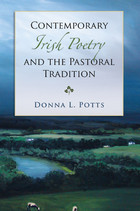
In Contemporary Irish Poetry and the Pastoral Tradition, Donna L. Potts closely examines the pastoral genre in the work of six Irish poets writing today. Through the exploration of the poets and their works, she reveals the wide range of purposes that pastoral has served in both Northern Ireland and the Republic: a postcolonial critique of British imperialism; a response to modernity, industrialization, and globalization; a way of uncovering political and social repercussions of gendered representations of Ireland; and, more recently, a means for conveying environmentalism’s more complex understanding of the value of nature.
In an important distinction from other studies of Irish poetry, Potts moves beyond the influence of history and politics on contemporary Irish pastoral poetry to consider the relatively recent influence of ecology. Contemporary Irish poets often rely on the motif of the pastoral retreat to highlight various environmental threats to those retreats—whether they be high-rises, motorways, global warming, or acid rain. Potts concludes by speculating on the future of pastoral in contemporary Irish poetry through her examination of more recent poets—including Moya Cannon and Paula Meehan—as well as other genres such as film, drama, and fiction.

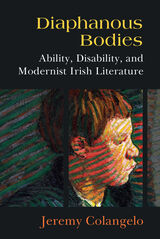
Diaphanous Bodies: Ability, Disability, and Modernist Irish Literature examines ability, as a category of embodiment and embodied experience, and in the process opens up a new area of inquiry in the growing field of literary disability studies. It argues that the construction of ability arises through a process of exclusion and forgetting, in which the depiction of sensory information and epistemological judgment subtly (or sometimes un-subtly) elide the fact of embodied subjectivity. The result is what Colangelo calls “the myth of the diaphanous abled body,” a fiction that holds that an abled body is one which does not participate in or situate experience. The diaphanous abled body underwrites the myth that abled and disabled constitute two distinct categories of being rather than points on a constantly shifting continuum.
In any system of marginalization, the dominant identity always sets itself up as epistemologically and experientially superior to whichever group it separates itself from. Indeed, the norm is always most powerful when it is understood as an empty category or a view from nowhere. Diaphanous Bodies explores the phantom body that underwrites the artificial dichotomy between abled and disabled, upon which the representation of embodied experience depends.
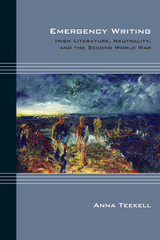
Taking seriously Ireland’s euphemism for World War II, “the Emergency,” Anna Teekell’s Emergency Writing asks both what happens to literature written during a state of emergency and what it means for writing to be a response to an emergency.
Anchored in close textual analysis of works by Samuel Beckett, Elizabeth Bowen, Flann O’Brien, Louis MacNeice, Denis Devlin, and Patrick Kavanagh, and supported by archival material and historical research, Emergency Writing shows how Irish late modernism was a response to the sociopolitical conditions of a newly independent Irish Free State and to a fully emerged modernism in literature and art. What emerges in Irish writing in the wake of Independence, of the Gaelic Revival, of Yeats and of Joyce, is a body of work that invokes modernism as a set of discursive practices with which to counter the Free State’s political pieties.
Emergency Writing provides a new approach to literary modernism and to the literature of conflict, considering the ethical dilemma of performing neutrality—emotionally, politically, and rhetorically—in a world at war.
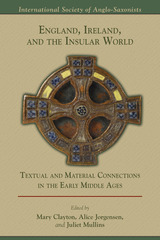
ISAS Dublin 2013. England, Ireland and the Insular World: Textual and Material Connections in the Early Middle Ages is a collection of twelve essays related to the theme of the 2013 conference of the International Society of Anglo-Saxonists, ‘Insular Cultures’. Contributors cover a broad range of topics, from early medieval agriculture in Ireland and England, to sculpture, manuscript illumination and script, homilies, hagiography, aristocratic gift-giving, relics, calendars, Beowulf, and Anglo-Saxon perceptions of the Celtic peoples, considering connections, parallels and differences between Anglo-Saxon England and its insular neighbors. The volume will be of interest to all those working on Early Medieval history, literature, archaeology, liturgy, art, and manuscripts.
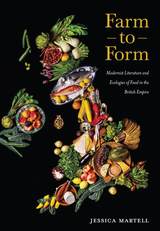
Deeply informed by Martell’s extensive knowledge of modern British, Irish, American, and World Literatures, this progressive work positions modernism as central to the study of narratives of resistance against social and environmental degradation. Analyzed works include those of Thomas Hardy, E. M. Forster, Virginia Woolf, Joseph Conrad, George Russell, and James Joyce.
In light of climate change, fossil fuel supremacy, nutritional dearth, and other pressing food issues, modernist texts bring to life an era of crisis and anxiety similar to our own. In doing so, Martell summons the past as a way to employ the modernist term of “defamiliarizing” the present so that entrenched perceptions can be challenged. Our current food regime is both new and constantly evolving with the first industrial food trades. Studying earlier cultural responses to them invites us to return to persistent problems with new insights and renewed passion.

Kelleher begins with a critical reading of the novels and short stories written about the Irish famine over the last 150 years, from the novels of William Carleton and Anthony Trollope to the writings of Liam O’Flaherty and John Banville. She then moves on to unveil a lesser-known body of literature—works written by women. This literature is read in the context of a rich variety of other sources, including eye-witness accounts, memoirs, journalistic accounts, and famine historiography. Concluding with a reading of the twentieth-century accounts of the famine in Bengal, this book reveals how gendered representations have played a crucial role in defining notions of famine.
Liam O'Flaherty, Kate O'Brien, Elizabeth Bowen, Sean O'Faolain, and Frank O'Connor--theirs were among the most distinctive voices in Irish fiction in the twentieth century. Born within a few years of each other near the turn of the century, they represented the first literary generation to come of age in the shadow of Ireland's twin monuments, Joyce's Ulysses and the poetry of William Butler Yeats, and their work has too long remained in that shadow.
Raised in different parts of Ireland and in widely differing milieux, all five lived through the turmoil of the revolution and civil war that gave birth to the Irish Republic and on into the disappointments of the thirties and forties. As their talents matured, each developed a unique vision of Ireland, comic or homely, angry or despairing. Despite its diversity, their fiction shares a sense of disillusionment, loneliness, and radical detachment from both culture and self.
John Hildebidle offers the first serious critical assessment of these writers. He examines the common themes and concerns that run through their work, among them family, war, the Troubles, myth, death, and exile. As he demonstrates, all five authors saw in the Ireland that grew out of the events of 1916-1923 a nation that stifled the creative energies and bright hopes of its youth, and their fiction can be seen as responding in diverse ways to that reality. Hildebidle's perceptive analysis of their works should do much to win these authors a place in the canon of modern fiction in English.
The extensive annotated bibliography includes writings by and about not only these five authors but also the Irish fiction writers who succeeded them.
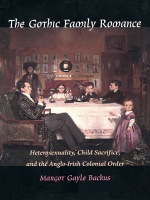
Backus uses contemporary theory, including that of Michel Foucault and Eve Kosofsky Sedgwick, to analyze texts by authors ranging from Richardson, Swift, Burke, Edgeworth, Stoker, and Wilde to contemporary Irish novelists and playwrights.
By charting the changing relations between the family and the British state, she shows how these authors dramatized a legacy of violence within the family cell and discusses how disturbing themes of child sacrifice and colonial repression are portrayed through irony, satire, “paranoid” fantasy, and gothic romance. In a reconceptualization of the Freudian family romance, Backus argues that the figures of the Anglo-Irish gothic embody the particular residue of childhood experiences within a settler colonial society in which biological reproduction represented an economic and political imperative.
Backus’s bold positioning of the nuclear family at the center of post-Enlightenment class and colonial power relations in England and Ireland will challenge and provoke scholars in the fields of Irish literature and British and postcolonial studies. The book will also interest students and scholars of women’s studies, and it has important implications for understanding contemporary conflicts in Ireland.
Just as Ireland has produced many brilliant writers in the past century, so these writers have produced a new Ireland. In a book unprecedented in its scope and approach, Declan Kiberd offers a vivid account of the personalities and texts, English and Irish alike, that reinvented the country after centuries of colonialism. The result is a major literary history of modern Ireland, combining detailed and daring interpretations of literary masterpieces with assessments of the wider role of language, sport, clothing, politics, and philosophy in the Irish revival.
In dazzling comparisons with the experience of other postcolonial peoples, the author makes many overdue connections. Rejecting the notion that artists such as Wilde, Shaw, Yeats, Joyce, and Beckett became modern to the extent that they made themselves "European," he contends that the Irish experience was a dramatic instance of experimental modernity and shows how the country's artists blazed a trail that led directly to the magic realism of a García Márquez or a Rushdie. Along the way, he reveals the vital importance of Protestant values and the immense contributions of women to the enterprise. Kiberd's analysis of the culture is interwoven with sketches of the political background, bringing the course of modern Irish literature into sharp relief against a tragic history of conflict, stagnation, and change.
Inventing Ireland restores to the Irish past a sense of openness that it once had and that has since been obscured by narrow-gauge nationalists and their polemical revisionist critics. In closing, Kiberd outlines an agenda for Irish Studies in the next century and detects the signs of a second renaissance in the work of a new generation of authors and playwrights, from Brian Friel to the younger Dublin writers.
A celebration of the tenacious life of the enduring Irish classics, this book by one of Irish writing's most eloquent readers offers a brilliant and accessible survey of the greatest works since 1600 in Gaelic and English, which together have shaped one of the world's most original literary cultures.
In the course of his discussion of the great seventeenth- and eighteenth-century Gaelic poems of dispossession, and of later work in that language that refuses to die, Declan Kiberd provides vivid and idiomatic translations that bring the Irish texts alive for the English-speaking reader.
Extending from the Irish poets who confronted modernity as a cataclysm, and who responded by using traditional forms in novel and radical ways, to the great modern practitioners of such paradoxically conservative and revolutionary writing, Kiberd's work embraces three sorts of Irish classics: those of awesome beauty and internal rigor, such as works by the Gaelic bards, Yeats, Synge, Beckett, and Joyce; those that generate a myth so powerful as to obscure the individual writer and unleash an almost superhuman force, such as the Cuchulain story, the lament for Art O'Laoghaire, and even Dracula; and those whose power exerts a palpable influence on the course of human action, such as Swift's Drapier's Letters, the speeches of Edmund Burke, or the autobiography of Wolfe Tone. The book closes with a moving and daring coda on the Anglo-Irish agreement, claiming that the seeds of such a settlement were sown in the works of Irish literature.
A delight to read throughout, Irish Classics is a fitting tribute to the works it reads so well and inspires us to read, and read again.
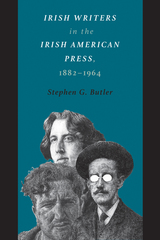
Irish Writers in the Irish American Press spans the period from Oscar Wilde's 1882 American lecture tour to the months following JFK's assassination and covers the century in which Irish American identity was shaped by immigration, religion, politics, and economic advancement. Through a close engagement with Irish American periodicals, Butler offers a more nuanced understanding of the connections between Irish literary studies and Irish American culture during this period.
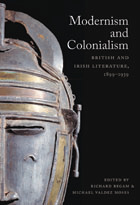
Ranging over poetry, fiction, and criticism, the essays provide fresh appraisals of Joseph Conrad, T. S. Eliot, Ezra Pound, Virginia Woolf, D. H. Lawrence, Wyndham Lewis, E. M. Forster, W. B. Yeats, James Joyce, Elizabeth Bowen, Hugh MacDiarmid, and Evelyn Waugh, as well as Robert Louis Stevenson and H. Rider Haggard. The essays that bookend the collection connect the modernists to their Victorian precursors, to postwar literary critics, and to postcolonial poets. The rest treat major works written or published between 1899 and 1939, the boom years of literary modernism and the period during which the British empire reached its greatest geographic expanse. Among the essays are explorations of how primitivism figured in the fiction of Lawrence and Lewis; how, in Ulysses, Joyce used modernist techniques toward anticolonial ends; and how British imperialism inspired Conrad, Woolf, and Eliot to seek new aesthetic forms appropriate to the sense of dislocation they associated with empire.
Contributors. Nicholas Allen, Rita Barnard, Richard Begam, Nicholas Daly, Maria DiBattista, Ian Duncan, Jed Esty, Andrzej Gąsiorek, Declan Kiberd, Brian May, Michael Valdez Moses, Jahan Ramazani, Vincent Sherry
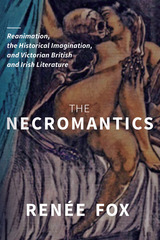
The Necromantics dwells on the literal afterlives of history. Reading the reanimated corpses—monstrous, metaphorical, and occasionally electrified—that Mary Shelley, Robert Browning, Charles Dickens, W. B. Yeats, Bram Stoker, and others bring to life, Renée Fox argues that these undead figures embody the present’s desire to remake the past in its own image. Fox positions “necromantic literature” at a nineteenth-century intersection between sentimental historiography, medical electricity, imperial gothic monsters, and the Irish Literary Revival, contending that these unghostly bodies resist critical assumptions about the always-haunting power of history.
By considering Irish Revival texts within the broader scope of nineteenth-century necromantic works, The Necromantics challenges Victorian studies’ tendency to merge Irish and English national traditions into a single British whole, as well as Irish studies’ postcolonial efforts to cordon off a distinct Irish canon. Fox thus forges new connections between conflicting political, formal, and historical traditions. In doing so, she proposes necromantic literature as a model for a contemporary reparative reading practice that can reanimate nineteenth-century texts with new aesthetic affinities, demonstrating that any effective act of reading will always be an effort of reanimation.

Bringing a diverse range of material into play, from fifteenth-century Japanese Zen Buddhism to how we look at paintings, and from the nature of a briefcase to the ancient nest-sites of gyrfalcons, Chris Arthur reveals the extraordinary dimensions woven invisibly into the ordinary things around us. Compared to Loren Eiseley, George Eliot, Seamus Heaney, Aldo Leopold, V. S. Naipaul, W. G. Sebald, W. B. Yeats, and other literary luminaries, he is a master essayist whose work has quietly been gathering an impressive cargo of critical acclaim. Arthur speaks with an Irish accent, rooting the book in his own unique vision of the world, but he addresses elemental issues of life and death, love and loss, that circle the world and entwine us all.
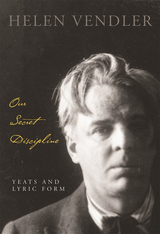
The fundamental difference between rhetoric and poetry, according to Yeats, is that rhetoric is the expression of one’s quarrels with others while poetry is the expression (and sometimes the resolution) of one’s quarrel with oneself. This is where Helen Vendler’s Our Secret Discipline begins. Through exquisite attention to outer and inner forms, Vendler explores the most inventive reaches of the poet’s mind. This book is a space-clearing gesture, an attempt to write about lyric forms in Yeats in unprecedented and comprehensive ways. The secret discipline of the poet is his vigilant attention to forms—whether generic, structural, or metrical. Yeats explores the potential of such forms to give shape and local habitation to volatile thoughts and feelings.
Helen Vendler remains focused on questions of singular importance: Why did Yeats cast his poems into the widely differing forms they ultimately took? Can we understand Yeats’s poetry better if we pay attention to inner and outer lyric form? Chapters of the book take up many Yeatsian ventures, such as the sonnet, the lyric sequence, paired poems, blank verse, and others. With elegance and precision, Vendler offers brilliant insights into the creative process and speculates on Yeats’s aims as he writes and rewrites some of the most famous poems in modern literature.
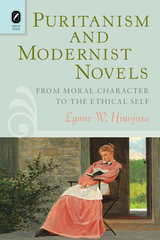
Puritanism and Modernist Novels offers new formal and contextual readings of early modernist novels by Oscar Wilde, E. M. Forster, James Joyce, and Ford Madox Ford. Hinojosa demonstrates that, while they long for escape, these authors still question the value of the novelistic narrative of confinement and escape. Bridging modernist and novel studies, Puritanism and Modernist Novels contributes to conversations about secularization and religion in both fields, highlighting the limitations created by the secularization narrative of modernity.
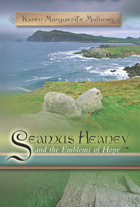
A rich body of mythology and literature has grown around the Celtic ritual known as the Feis of Tara or “marriage of sovereignty”—ancient ceremonies in which the future king pledges to care for the land and serve the goddess of sovereignty. Seamus Heaney, whose writing has attracted the overwhelming share of critical attention directed toward contemporary Irish poetry, has engaged this symbolic tradition in some of his most significant—and controversial—work.
Seamus Heaney and the Emblems of Hope explores Heaney’s use of the family of sovereignty motifs and redresses the imbalance of criticism that has overemphasized the theme of sacrifice to the detriment of more optimistic symbols. Moreover, Moloney reviews the development of the marriage motif in Irish poetry from the ninth to the twenty-first centuries with a focus on Heaney’s adaptations from The Frenzy of Sweeney and The Midnight Court and on the work of such poets as Kinsella, Montague, Boland, and Ní Dhomhnaill. Karen Marguerite Moloney examines the central role that Heaney assigns the Feis of Tara in his response to the crisis of Ulster and to the general spiritual bankruptcy of our times, showing in his verse how the relationship of the male lover to the goddess—particularly in her more repugnant guises—serves as prototype for the humility and deference needed to repair the effects of English colonization of Ireland and, by extension, centuries of worldwide patriarchal abuse.
Through close, sustained readings of poems previously overlooked or misinterpreted, such as “Ocean’s Love to Ireland,” “Come to the Bower,” and “Bone Dreams”—poems that Irish feminist critics have deemed flawed and distressingly sexist—Moloney refutes views that have long stood unchallenged. She also considers the direction of Heaney’s more recent poems, which continue to resonate to the twin demands of conscience and artistic integrity.
An impeccably researched and immensely readable work, Seamus Heaney and the Emblems of Hope reveals that Heaney’s poetry offers a reverence for archetypal femininity and Dionysian energy that can counter the sterility and violence of postcolonial Irish life. Moloney shows us that, in the tradition of poets who preceded him, Heaney turns to the marriage of sovereignty to encode a message for our times—and to offer up emblems of hope on behalf of us all.
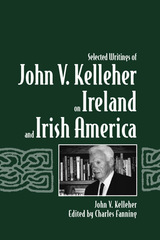
A collection of eighteen critical essays and twenty-six translations spanning the career of one of the founding intellects of Irish Studies, the Selected Writings of John V. Kelleher on Ireland and Irish America consists of five accessible sections. The first gathers Kelleher’s essays on the most widely known Irish cultural phenomenon—the literary renaissance of the early twentieth century. Part two contains his judicious assessments of Irish literature in its post-Revolutionary phase. The third section includes Kelleher’s insightful essays on the experience of the Irish in America. The fourth section contains essays that examine early Irish literature and culture, opening with a benchmark essay for Irish Studies, “Early Irish History and Pseudo-History,” which was read at the inaugural meeting of the American Conference for Irish Studies in 1961. The collection concludes with Kelleher’s translations and adaptations of poems in Old, Middle, and Modern Irish, illustrating his command of the language at every stage.
Published by Bucknell University Press. Distributed worldwide by Rutgers University Press.
READERS
Browse our collection.
PUBLISHERS
See BiblioVault's publisher services.
STUDENT SERVICES
Files for college accessibility offices.
RECENTLY PUBLISHED


UChicago Accessibility Resources
home | accessibility | search | about | contact us
BiblioVault ® 2001 - 2024
The University of Chicago Press