
 A SCHOLARLY BOOK REPOSITORY
The incidence and mortality of occupational injury and illness were assessed by reviewing data from national surveys and applied an attributable-risk-proportion method. Costs were assessed using the human capital method that decomposes costs into direct categories such as medical costs and insurance administration expenses, as well as indirect categories such as lost earnings and lost fringe benefits. The total is estimated to be $155 billion and is likely to be low as it does not include costs associated with pain and suffering or of home care provided by family members.
Invaluable as an aid in the analysis of policy issues, Costs of Occupational Injuryand Illness will serve as a resource and reference for economists, policy analysts, public health researchers, insurance administrators, labor unions and labor lawyers, benefits managers, and environmental scientists, among others.
J. Paul Leigh is Professor in the School of Medicine, Department of Epidemiology and Preventive Medicine, University of California, Davis. Stephen Markowitz, M.D., is Professor in the Department of Community Health and Social Medicine, City University of New York Medical School. Marianne Fahs is Director of the Health Policy Research Center, Milano Graduate School of Management and Urban Policy, New School University. Philip Landrigan, M.D., is Wise Professor and Chair of the Department of Community Medicine, Mount Sinai Medical Center, New York.
From anthrax to asbestos to pesticides, industrial toxins and pollutants have troubled the world for the past century and longer. Environmental hazards from industry remain one of the world's foremost killers.Dangerous Trade establishes historical groundwork for a better understanding of how and why these hazards continue to threaten our shrinking world.
In this timely collection, an international group of scholars casts a rigorous eye towards efforts to combat these ailments. Dangerous Trade contains a wide range of case studies that illuminate transnational movements of risk—from the colonial plantations of Indonesia to compensation laws in late 19th century Britain, and from the occupational medicine clinics of 1960s New York City to the burning of electronic waste in early twenty-first century Uruguay.
The essays in Dangerous Trade provide an unprecedented broad perspective of the dangers stirred up by industrial activity across the globe, as well as the voices rasied to remedy them.

The safety of the work place is now a highly visible public issue. Many are calling for tighter regulation to reduce worker risk, while others feel government intervention is ineffective and costly. Here Kip Viscusi explores how well markets for hazardous jobs actually work. According to classical economics, other things being equal, a worker will demand more pay for a hazardous job than a safe one. However, this assumes that job related hazards are known, when often they are not. Using recent advances in the economics of information, Viscusi develops a theory of individual responses to job hazards under conditions of uncertainty.
His assumptions are that hazards are uncertain events and that learning about them is a process that takes place over time. He then employs this analysis to study the performance of job markets in matching persons and jobs and in compensating persons for exposure to hazards. Finally he tests his adaptive model of the decision to quit and finds substantial evidence that risks are indeed reflected in wage differentials and quit behavior.
Gambling with Lives examines the work, hazards, and health and safety programs from the early building of the railroad through the construction of the Hoover Dam, chemical manufacturing during World War II, nuclear testing, and dense megaresort construction on the Las Vegas Strip. In doing so, this comprehensive chronicle reveals the long and unfortunate history of exposing workers, residents, tourists, and the environment to dangerous work—all while exposing the present and future to crises in the region. Complex interactions and beliefs among the actors involved are emphasized, as well as how the medical community interpreted and responded to the risks posed.
Updated through 2020, this second edition includes new and expanded discussions on:
- Union activity, sexual harassment and misconduct, and race and employment
- The change to Las Vegas’ “What happens here, stays here” slogan
- The MGM Grand Fire and 1918 influenza pandemic
- Work-related musculoskeletal disorders in the service industry
- Legionnaire’s Disease outbreaks at resorts
- Effects of the Route 91 Harvest Festival Shooting
- The COVID-19 pandemic
A new model of health emerged in Britain between 1870 and 1939. Centered on the working body, organized around the concept of efficiency, and grounded in scientific understandings of human labor, scientists, politicians, and capitalists of the era believed that national economic productivity could be maximized by transforming the body of the worker into a machine. At the core of this approach was the conviction that worker productivity was intimately connected to worker health.
Under this new “science of work,” fatigue was seen as the ultimate pathology of the working-class body, reducing workers’ capacity to perform continued physical or mental labor. As Steffan Blayney shows, the equation between health and efficiency did not go unchallenged. While biomedical and psychological experts sought to render the body measurable, governable, and intelligible, ordinary men and women found ways to resist the logics of productivity and efficiency imposed on them, and to articulate alternative perspectives on work, health, and the body.
To that end, this book draws on new data-an extensive longitudinal survey of Union Army veterans born between 1820 and 1850-to examine the factors that affected health and labor force participation in nineteenth-century America. Contributors consider the impacts of a variety of conditions-including social class, wealth, occupation, family, and community-on the morbidity and mortality of the group. The papers investigate and address a number of special topics, including the influence of previous exposure to infectious disease, migration, and community factors such as lead in water mains. They also analyze the roles of income, health, and social class in retirement decisions, paying particular attention to the social context of disability.
Economists and historians who specialize in demography or labor, as well as those who study public health, will welcome the unique contributions offered by this book, which offers a clearer view than ever before of the workings and complexities of life, death, and labor during the nineteenth century.
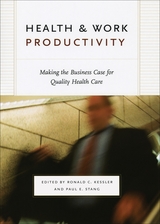
Health and Work Productivity presents state-of-the-art health and productivity research that suggests interventions aimed at prevention, early detection, and best-practice treatment of workers along with an informed allocation strategy can produce significant cost-benefits for employers. Contributors cover all the major aspects of this new area of research: approaches to studying the effects of health on productivity, ways for employers to estimate the costs of productivity loss, concrete suggestions for future research developments in the area, and the implications of this research for public policy.
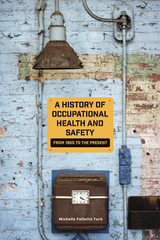
A History of Occupational Health and Safety examines the work, hazards, and health and safety programs from the early building of the railroad through the construction of the Hoover Dam, chemical manufacturing during World War II, nuclear testing, and dense megaresort construction on the Las Vegas Strip. In doing so, this comprehensive chronicle reveals the long and unfortunate history of exposing workers, residents, tourists, and the environment to dangerous work—all while exposing the present and future to crises in the region. Complex interactions and beliefs among the actors involved are emphasized, as well as how the medical community interpreted and responded to the risks posed.
Few places in the United States contain this mixture of industrial and postindustrial sites, the Las Vegas area offers unique opportunities to evaluate American occupational health during the twentieth century, and reminds us all about the relevancy of protecting our workers.
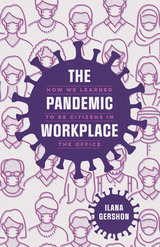
In The Pandemic Workplace, anthropologist Ilana Gershon turns her attention to the US workplace and how it changed—and changed us—during the pandemic. She argues that the unprecedented organizational challenges of the pandemic forced us to radically reexamine our attitudes about work and to think more deeply about how values clash in the workplace. These changes also led us as workers to engage more with the contracts that bind us as we rethought when and how we allow others to tell us what to do.
Based on over two hundred interviews, Gershon’s book reveals how negotiating these tensions during the pandemic made the workplace into a laboratory for democratic living—the key place where Americans are learning how to develop effective political strategies and think about the common good. Exploring the explicit and unspoken ways we are governed (and govern others) at work, this accessible book shows how the workplace teaches us to be democratic citizens.
Whose life is worth how much? To some people it seems immoral even to ask, but to others—to the worker, say, who is offered a dangerous but lucrative job—it is a practical question. Should government interfere with a worker's decision, a personal negotiation with destiny? If so, when and how?
Risk by Choice presents a comprehensive, nontechnical analysis of these questions and of government risk regulation policies in general. W. Kip Viscusi shows that the goal of a risk-free workplace is a chimera, leading to expensive regulatory programs that do little to lessen health and safety risks. He argues that when workers are aware of the hazards they face, market forces operate to promote efficient levels of risk. Government should intervene only when these forces fail to work—principally when workers do not understand the risks—and then should design policies that complement market forces rather than supplant them. Based in part on the author's experience as a member of the White House group that reviewed government regulations in many areas, this book offers the most extensive discussion available of the economic foundations of risk regulation, as well as new information on OSHA and the White House regulatory oversight process.
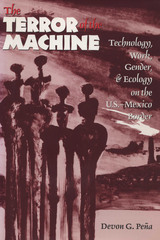
Born of thirteen years of field research, this interdisciplinary work explores the complex intersections of technology, class, gender, and ecology in the transnational milieu of Mexico's maquiladoras, foreign-owned assembly plants located along the U.S. border.
Devon Peña examines workplace and community struggles from the perspective of the women who work in the maquiladoras. He describes the workers' struggles for workplace democracy, social justice, and sustainable development. He also observes the circulation of struggle from the factory to the community, highlighting the efforts to establish worker-owned cooperatives in the border region during the 1970s and 1980s.
Female maquila workers are typically portrayed as passive, apolitical, and easily exploited. This book, however, presents an opposing view, investigating the "subaltern life of the shop floor"—the workers' informal methods of resistance to hazardous conditions, sexual harassment, and managerial tyranny. Using survey research, oral history, discourse analysis, and site ethnography, the author develops a cogent critique of labor-process theory, a critique grounded on his extensive study of actual workplace politics in the maquiladoras.
The Terror of the Machine is a trenchant analysis of the political, cultural, and environmental effects of maquila industrialization and an eloquent and persuasive call for alternatives in the direction of ecologically sustainable and culturally appropriate modes of development.
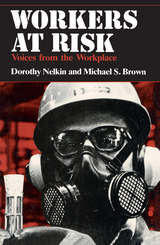
More than seventy of them speak here of their jobs, their health, and the difficult choices they face in coming to grips with the responsibilities, risks, fears, and satisfactions of their work. Some struggle for information and acknowledgment of their health risks; others struggle to put out of their minds the dangers they know too well. Through extensive interviews, the authors have captured in these voices that double bind of the chemical worker: "If I had known that it would be that lethal, that it could give me or one of my children cancer, I would have refused to work. But it's a matter of survival and we just don't consider all these things. Meanwhile, we've got to make money to survive."
READERS
Browse our collection.
PUBLISHERS
See BiblioVault's publisher services.
STUDENT SERVICES
Files for college accessibility offices.
RECENTLY PUBLISHED



UChicago Accessibility Resources
home | accessibility | search | about | contact us
BiblioVault ® 2001 - 2024
The University of Chicago Press