
 A SCHOLARLY BOOK REPOSITORY
The purpose of the 1986-1987 excavations was to provide a more detailed picture of the individual occupation and other layers at Badanj, to define the faunal assemblages of these layers as indicators of the changing ecology of the site, and to place the site within its regional cultural context. The excavations exposed a sequence of some ten occupation levels, seven activity or refuse levels, covering a period from approximately 16,000 to 13,000 cal BP, from the latter part of the Oldest Dryas to the end of the Bølling-Allerød late glacial climatic phases.
Over this period, two phases of lithic typology were identified, as well as parallel changes in a specific kind of decorative beads. In terms of ecology, red deer (Cervus elaphus) consistently provided by far the majority of the meat consumed at the site, but secondary fauna shows a clear, gradual replacement of colder-climate species such as ibex and chamois by warmer-climate roe deer and wild pig. Combining both qualitative and quantitative aspects of lithic technology and typology, the reconstruction of the potential foraging areas around Badanj, and estimates of supportable population allows the site to be placed in a clear regional context, which can be extended to suggest a hypothetical regional organization of similar sites over the eastern coast of the Adriatic Sea.

Following the imposition of Habsburg rule on Ottoman Bosnia in 1878, a new garrison was constructed in the old citadel of Trebinje. By using a micro-historical approach, this innovative book tells the story of the garrison in times of peace and war, describing the way in which the Austro-Hungarian administration rapidly transformed Trebinje into a tree-lined city dominated by the army.
Yet, the Habsburg "civilizing mission," marked by the building of hospitals, schools, roads, and railways was accompanied by ruthless violence against those who resisted the new foreign occupiers, especially after 1914. The tragic violence is described in the book alongside accounts of daily life. By personalizing historical events, the narrative reveals the perspective of people who found themselves in Trebinje and its garrison complex: the ordinary soldier, the condemned “insurgent,” the career officer, the cook, the shepherdess, the hotelier, or the journalist—all willing or unwilling participants in an extra-European style colonial project in the heart of Europe.
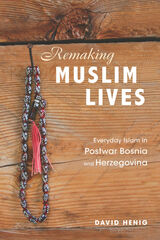
Provocative and laden with eyewitness detail, Remaking Muslim Lives offers a rare sustained look at what it means to be Muslim and live a Muslim life in contemporary Bosnia and Herzegovina.
READERS
Browse our collection.
PUBLISHERS
See BiblioVault's publisher services.
STUDENT SERVICES
Files for college accessibility offices.
RECENTLY PUBLISHED



UChicago Accessibility Resources
home | accessibility | search | about | contact us
BiblioVault ® 2001 - 2025
The University of Chicago Press