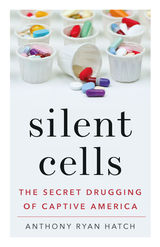
A critical investigation into the use of psychotropic drugs to pacify and control inmates and other captives in the vast U.S. prison, military, and welfare systems
For at least four decades, U.S. prisons and jails have aggressively turned to psychotropic drugs—antidepressants, antipsychotics, sedatives, and tranquilizers—to silence inmates, whether or not they have been diagnosed with mental illnesses. In Silent Cells, Anthony Ryan Hatch demonstrates that the pervasive use of psychotropic drugs has not only defined and enabled mass incarceration but has also become central to other forms of captivity, including foster homes, military and immigrant detention centers, and nursing homes.
Silent Cells shows how, in shockingly large numbers, federal, state, and local governments and government-authorized private agencies pacify people with drugs, uncovering patterns of institutional violence that threaten basic human and civil rights. Drawing on publicly available records, Hatch unearths the coercive ways that psychotropics serve to manufacture compliance and docility, practices hidden behind layers of state secrecy, medical complicity, and corporate profiteering.
Psychotropics, Hatch shows, are integral to “technocorrectional” policies devised to minimize public costs and increase the private profitability of mass captivity while guaranteeing public safety and national security. This broad indictment of psychotropics is therefore animated by a radical counterfactual question: would incarceration on the scale practiced in the United States even be possible without psychotropics?