
 A SCHOLARLY BOOK REPOSITORY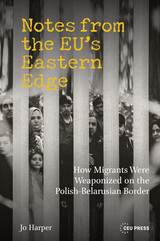

Written by a Brit who has lived in Poland for more than twenty years, this book challenges some accepted thinking in the West about Poland and about the rise of Law and Justice (PiS) as the ruling party in 2015. It is a remarkable account of the Polish post-1989 transition and contemporary politics, combining personal views and experience with careful fact and material collections. The result is a vivid description of the events and scrupulous explanations of the political processes, and all this with an interesting twist – a perspective of a foreigner and insider at the same time. Settled in the position of participant observer, Jo Harper combines the methods of macro and micro analysis with CDA, critical discourse analysis. He presents and interprets the constituent elements and issues of contemporary Poland: the main political forces, the Church, the media, issues of gender, the Russian connection, the much-disputed judicial reform and many others.
A special feature of the book is the detailed examination of the coverage of the Poland’s latest two elections, one in 2019 (parliamentary) and the other in 2020 (presidential) in the British media, an insightful and witty specimen of comparative cultural and political analysis.
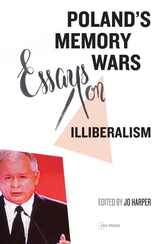
This volume of essays and interviews by Polish, British, and American academics and journalists provides an overview of current Polish politics for both informed and non-specialist readers. The essays consider why and how PiS, Law and Justice, the party of Jarosław Kaczynski, returned to power, and the why and how of its policies while in power. They help to make sense of how “history” plays a key role in Polish public life and politics.
The descriptions of PiS in Western media tend to rework old stereotypes about Eastern Europe that had lain dormant for some time. The book addresses the underlying question whether PiS was simply successful in understanding its electorate, and just helped Poland to revert to its normal state. This new Normal seems quite similar to the old one: insular, conservative, xenophobic, and statist.
The book looks at the current struggle between one ‘Poland’ and another; between a Western-looking Poland and an inward-looking Poland, the former more interested in opening to the world, competing in open markets, and working within the EU, and the latter more concerned with holding onto tradition.
The question of illiberalism has gone from an ‘Eastern’ problem (Russia, Turkey, Hungary, etc.) to a global one (Brexit and the U.S. elections). This makes the very specific analysis of Poland’s illiberalism applicable on a broader scale.
READERS
Browse our collection.
PUBLISHERS
See BiblioVault's publisher services.
STUDENT SERVICES
Files for college accessibility offices.
RECENTLY PUBLISHED




UChicago Accessibility Resources
home | accessibility | search | about | contact us
BiblioVault ® 2001 - 2026
The University of Chicago Press