
 A SCHOLARLY BOOK REPOSITORY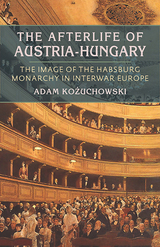
The Afterlife of Austria-Hungary examines histories, journalism, and literature in the period between world wars to expose both the positive and the negative treatment of the Habsburg monarchy following its dissolution and the powerful influence of fiction and memory over history. Originally published in Polish, Adam Kozuchowski’s study analyzes the myriad factors that contributed to this phenomenon. Chief among these were economic depression, widespread authoritarianism on the continent, and the painful rise of aggressive nationalism. Many authors of these narratives were well-known intellectuals who yearned for the high culture and peaceable kingdom of their personal memory.
Kozuchowski contrasts these imaginaries with the causal realities of the empire’s failure. He considers the aspirations of Czechs, Poles, Romanians, Hungarians, and Austrians, and their quest for autonomy or domination over their neighbors, coupled with the wave of nationalism spreading across Europe. Kozuchowski then dissects the reign of the legendary Habsburg monarch, Franz Joseph, and the lasting perceptions that he inspired.
To Kozuchowski, the interwar discourse was a reaction to the monumental change wrought by the dissolution of Austria-Hungary and the fear of a history lost. Those displaced at the empire’s end attempted, through collective (and selective) memory, to reconstruct the vision of a once great multinational power. It was an imaginary that would influence future histories of the empire and even became a model for the European Union.
Winner, Premio Flora Tristán Al Mejor Libro, Peru Section, Latin American Studies Association, 2019
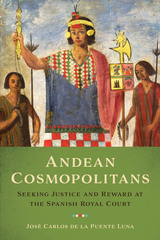
After the Spanish victories over the Inca claimed Tawantinsuyu for Charles V in the 1530s, native Andeans undertook a series of perilous trips from Peru to the royal court in Spain. Ranging from an indigenous commoner entrusted with delivering birds of prey for courtly entertainment to an Inca prince who spent his days amid titles, pensions, and other royal favors, these sojourners were both exceptional and paradigmatic. Together, they shared a conviction that the sovereign’s absolute authority would guarantee that justice would be done and service would receive its due reward. As they negotiated their claims with imperial officials, Amerindian peoples helped forge the connections that sustained the expanding Habsburg realm’s imaginary and gave the modern global age its defining character.
Andean Cosmopolitans recovers these travelers’ dramatic experiences, while simultaneously highlighting their profound influences on the making and remaking of the colonial world. While Spain’s American possessions became Spanish in many ways, the Andean travelers (in their cosmopolitan lives and journeys) also helped to shape Spain in the image and likeness of Peru. De la Puente brings remarkable insights to a narrative showing how previously unknown peoples and ideas created new power structures and institutions, as well as novel ways of being urban, Indian, elite, and subject. As indigenous people articulated and defended their own views regarding the legal and political character of the “Republic of the Indians,” they became state-builders of a special kind, cocreating the colonial order.
Recasting the birth of fascism, nationalism, and the fall of empire after World War I, Dominique Kirchner Reill recounts how the people of Fiume tried to recreate empire in the guise of the nation.
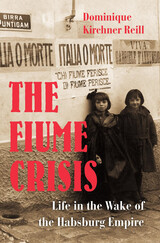
The Fiume Crisis recasts what we know about the birth of fascism, the rise of nationalism, and the fall of empire after World War I by telling the story of the three-year period when the Adriatic city of Fiume (today Rijeka, in Croatia) generated an international crisis.
In 1919 the multicultural former Habsburg city was occupied by the paramilitary forces of the flamboyant poet-soldier Gabriele D’Annunzio, who aimed to annex the territory to Italy and became an inspiration to Mussolini. Many local Italians supported the effort, nurturing a standard tale of nationalist fanaticism. However, Dominique Kirchner Reill shows that practical realities, not nationalist ideals, were in the driver’s seat. Support for annexation was largely a result of the daily frustrations of life in a “ghost state” set adrift by the fall of the empire. D’Annunzio’s ideology and proto-fascist charisma notwithstanding, what the people of Fiume wanted was prosperity, which they associated with the autonomy they had enjoyed under Habsburg sovereignty. In these twilight years between the world that was and the world that would be, many across the former empire sought to restore the familiar forms of governance that once supported them. To the extent that they turned to nation-states, it was not out of zeal for nationalist self-determination but in the hope that these states would restore the benefits of cosmopolitan empire.
Against the too-smooth narrative of postwar nationalism, The Fiume Crisis demonstrates the endurance of the imperial imagination and carves out an essential place for history from below.
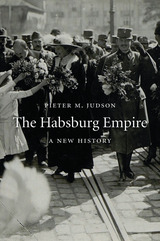
A EuropeNow Editor’s Pick
A Choice Outstanding Academic Title of the Year
“Pieter M. Judson’s book informs and stimulates. If his account of Habsburg achievements, especially in the 18th century, is rather starry-eyed, it is a welcome corrective to the black legend usually presented. Lucid, elegant, full of surprising and illuminating details, it can be warmly recommended to anyone with an interest in modern European history.”
—Tim Blanning, Wall Street Journal
“This is an engaging reappraisal of the empire whose legacy, a century after its collapse in 1918, still resonates across the nation-states that replaced it in central Europe. Judson rejects conventional depictions of the Habsburg empire as a hopelessly dysfunctional assemblage of squabbling nationalities and stresses its achievements in law, administration, science and the arts.”
—Tony Barber, Financial Times
“Spectacularly revisionist… Judson argues that…the empire was a force for progress and modernity… This is a bold and refreshing book… Judson does much to destroy the picture of an ossified regime and state.”
—A. W. Purdue, Times Higher Education
“Judson’s reflections on nations, states and institutions are of broader interest, not least in the current debate on the future of the European Union after Brexit.”
—Annabelle Chapman, Prospect
READERS
Browse our collection.
PUBLISHERS
See BiblioVault's publisher services.
STUDENT SERVICES
Files for college accessibility offices.
RECENTLY PUBLISHED



UChicago Accessibility Resources
home | accessibility | search | about | contact us
BiblioVault ® 2001 - 2024
The University of Chicago Press