
 A SCHOLARLY BOOK REPOSITORY
81 start with A start with A
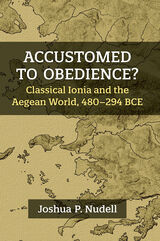
This book offers a clear and accessible narrative of the period between the Persian Wars and the wars of the early Hellenistic period, two nominal liberations of the region. The volume complements existing histories of Classical Greece. Close inspection reveals that the Ionians were active partners in the imperial endeavor, even as imperial competition constrained local decision-making and exacerbated local and regional tensions. At the same time, the book offers interventions on critical issues related to Ionia such as the Athenian conquest of Samos, rhetoric about the freedom of the Greeks, the relationship between Ionian temple construction and economic activity, the status of the Panionion, Ionian poleis and their relationship with local communities beyond the circle of the dodecapolis, and the importance of historical memory to our understanding of ancient Greece. The result is a picture of an Aegean world that is more complex and less beholden narratives that give primacy to the imperial actors at the expense of local developments.
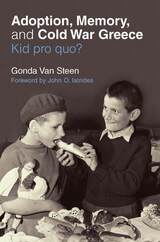
This book presents a committed quest to unravel and document the postwar adoption networks that placed more than 3,000 Greek children in the United States, in a movement accelerated by the aftermath of the Greek Civil War and by the new conditions of the global Cold War. Greek-to-American adoptions and, regrettably, also their transactions and transgressions, provided the blueprint for the first large-scale international adoptions, well before these became a mass phenomenon typically associated with Asian children. The story of these Greek postwar and Cold War adoptions, whose procedures ranged from legal to highly irregular, has never been told or analyzed before. Adoption, Memory, and Cold War Greece answers the important questions: How did these adoptions from Greece happen? Was there any money involved? Humanitarian rescue or kid pro quo? Or both? With sympathy and perseverance, Gonda Van Steen has filled a decades-long gap in our understanding, and provided essential information to the hundreds of adoptees and their descendants whose lives are still affected today.

Three tactical treatises.
Aeneas was perhaps a general, and certainly author of several didactic military works of which the sole survivor is that on defense against siege. From it we can deduce that he was a Peloponnesian of the fourth century BC who served in the Aegean and in Asia Minor and composed the work from direct knowledge and from oral and some literary tradition, possibly in 357–6 BC. It is devoted entirely to defense of fortified places and deals specially with use of defending troops; defensive positions; morale; resistance to attacks and to actual assault; guards; obviation of treachery and revolution; and other subjects.
Asclepiodotus, philosopher and pupil of the Stoic Posidonius, wrote a rather dry but ordered work on tactics as if a subject of the lecture room, based not on personal experience but on earlier manuals. His main subjects were the branches of a military force; infantry; cavalry; chariots; elephants; arms; maneuvers; military evolutions; marching formation. The work ends with words of command.
Onasander (Onasandros), a Platonic philosopher, dedicated his work “The General” to the Roman Veranius, who was a consul in AD 49. The work deals in plain style with the sort of morals and social and military qualities and attitudes expected of a virtuous and militarily successful general. It is also concerned with such matters as his choice of staff; attitude to war; religious duties; military formations; conduct in allied and hostile lands; difficult terrains; camps; drill; spies; guards; deserters; battle formations and maneuvers; and other matters, ending with conduct after victory.
The premier scholar-poet of the Hellenistic age.
Callimachus (ca. 303–ca. 235 BC), a proud and well-born native of Cyrene in Libya, came as a young man to the court of the Ptolemies at Alexandria, where he composed poetry for the royal family; helped establish the Library and Museum as a world center of literature, science, and scholarship; and wrote an estimated 800 volumes of poetry and prose on an astounding variety of subjects, including the Pinakes, a descriptive bibliography of the Library’s holdings in 120 volumes. Callimachus’ vast learning richly informs his poetry, which ranges broadly and reworks the language and generic properties of his predecessors in inventive, refined, and expressive ways. The “Callimachean” style, combining learning, elegance, and innovation and prizing brevity, clarity, lightness, and charm, served as an important model for later poets, not least at Rome for Catullus, Virgil, Horace, Ovid, and the elegists, among others.
This edition, which replaces the earlier Loeb editions by A. W. Mair (1921) and C. A. Trypanis (1954, 1958), presents all that currently survives of and about Callimachus and his works, including the ancient commentaries (Diegeseis) and scholia. Volume I contains Aetia, Iambi, and lyric poems; Volume II Hecale, Hymns, and Epigrams; and Volume III miscellaneous epics and elegies, other fragments, and testimonia, together with concordances and a general index. The Greek text is based mainly on Pfeiffer’s but enriched by subsequently published papyri and the judgment of later editors, and its notes and annotation are fully informed by current scholarship.

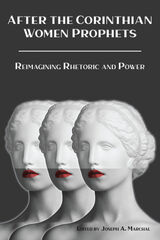
Rhetoric, Power, and Possibilities
Thirty years after the publication of Antoinette Clark Wire’s groundbreaking The Corinthian Women Prophets, an interdisciplinary, international, and intergenerational group of scholars reflects upon Wire’s impact on New Testament scholarship. Essays pursue further historical and theoretical possibilities, often in search of marginalized people, including the women of Corinth, using feminist, rhetorical, materialist, decolonizing, queer, and posthumanist approaches to interpret Paul’s letters and the history of ancient Mediterranean assemblies. Contributions from Cavan Concannon, Arminta Fox, Joseph A. Marchal, Shelly Matthews, Anna Miller, Jorunn Økland, and Antoinette Clark Wire reconsider how both the methods and results of Wire’s work reveal the possibilities of other people beside Paul who are worth our attention and effort. The essays in this collection introduce students and scholars to the possibilities of interdisciplinary and intersectional approaches for engaging the broader Pauline corpus.
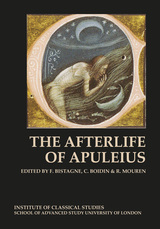
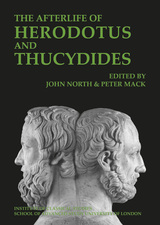
The volume gathers the proceedings of an international conference held in March 2016 at the Warburg Institute in London, in association with the Institute of Classical Studies. It includes both diachronic overviews and specific case-studies. A first series of papers focuses on The Golden Ass and its historical and geographical diffusion, from High Medieval Europe to early modern Mexico. The oriental connections of the book are also taken into account. The second part of the book examines the textual and visual destiny of Psyche’s story from the Apuleian fabula to allegorical retellings, in poetical or philosophical books and on stage. As the third series of essays indicates, the fortunes of the book led many ancient and early modern writers and translators to use it as a canonical model for reflections about the status of fiction. It also became, mostly around the beginning of the fifteenth century, a major linguistic and stylistic reference for lexicographers and neo-Latin writers. The last papers of the book deal with Renaissance polemics about "‘Apuleianism" and the role of editors and commentators.
This is the sixth and last of the volumes in the series of ‘Afterlives’ of the Classics, which is being produced jointly by the Institute of Classical Studies and the Warburg Institute.
A suspicious mind.
Sextus Empiricus (ca. AD 160–210), exponent of scepticism and critic of the Dogmatists, was a Greek physician and philosopher, pupil and successor of the medical sceptic Herodotus (not the historian) of Tarsus. He probably lived for years in Rome and possibly also in Alexandria and Athens. His three surviving works are Outlines of Pyrrhonism (three books on the practical and ethical scepticism of Pyrrho of Elis, ca. 360–275 BC, as developed later, presenting also a case against the Dogmatists); Against the Dogmatists (five books dealing with the Logicians, the Physicists, and the Ethicists); and Against the Professors (six books: Grammarians, Rhetors, Geometers, Arithmeticians, Astrologers, and Musicians). These two latter works might be called a general criticism of professors of all arts and sciences. Sextus’ work is a valuable source for the history of thought especially because of his development and formulation of former sceptic doctrines.
The Loeb Classical Library edition of Sextus Empiricus is in four volumes.
A suspicious mind.
Sextus Empiricus (ca. AD 160–210), exponent of scepticism and critic of the Dogmatists, was a Greek physician and philosopher, pupil and successor of the medical sceptic Herodotus (not the historian) of Tarsus. He probably lived for years in Rome and possibly also in Alexandria and Athens. His three surviving works are Outlines of Pyrrhonism (three books on the practical and ethical scepticism of Pyrrho of Elis, ca. 360–275 BC, as developed later, presenting also a case against the Dogmatists); Against the Dogmatists (five books dealing with the Logicians, the Physicists, and the Ethicists); and Against the Professors (six books: Grammarians, Rhetors, Geometers, Arithmeticians, Astrologers, and Musicians). These two latter works might be called a general criticism of professors of all arts and sciences. Sextus’ work is a valuable source for the history of thought especially because of his development and formulation of former sceptic doctrines.
The Loeb Classical Library edition of Sextus Empiricus is in four volumes.
A suspicious mind.
Sextus Empiricus (ca. AD 160–210), exponent of scepticism and critic of the Dogmatists, was a Greek physician and philosopher, pupil and successor of the medical sceptic Herodotus (not the historian) of Tarsus. He probably lived for years in Rome and possibly also in Alexandria and Athens. His three surviving works are Outlines of Pyrrhonism (three books on the practical and ethical scepticism of Pyrrho of Elis, ca. 360–275 BC, as developed later, presenting also a case against the Dogmatists); Against the Dogmatists (five books dealing with the Logicians, the Physicists, and the Ethicists); and Against the Professors (six books: Grammarians, Rhetors, Geometers, Arithmeticians, Astrologers, and Musicians). These two latter works might be called a general criticism of professors of all arts and sciences. Sextus’ work is a valuable source for the history of thought especially because of his development and formulation of former sceptic doctrines.
The Loeb Classical Library edition of Sextus Empiricus is in four volumes.
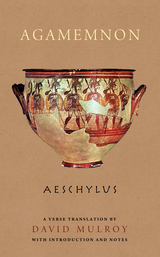
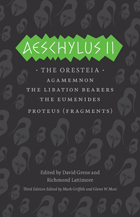
Aeschylus (525/4–456/5 B.C.E.) was the first of the three great tragic dramatists of ancient Greece, a forerunner of Sophocles and Euripides. His early tragedies were largely choral pageants with minimal plots. In Agamemnon, choral songs still predominate, but Aeschylus infuses them with such dramatic feeling that the spectator or reader is constantly spellbound.
Translator David Mulroy brings this ancient tragedy to life for modern readers and audiences. Using end rhyme and strict metrics, he combines the buoyant lyricism of the Greek text with a faithful rendering of its meaning in lucid English.
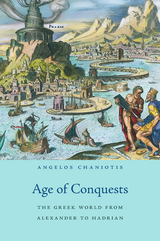
The world that Alexander remade in his lifetime was transformed once more by his death in 323 BCE. His successors reorganized Persian lands to create a new empire stretching from the eastern Mediterranean as far as present-day Afghanistan, while in Greece and Macedonia a fragile balance of power repeatedly dissolved into war. Then, from the late third century BCE to the end of the first, Rome’s military and diplomatic might successively dismantled these post-Alexandrian political structures, one by one.
During the Hellenistic period (c. 323–30 BCE), small polities struggled to retain the illusion of their identity and independence, in the face of violent antagonism among large states. With time, trade growth resumed and centers of intellectual and artistic achievement sprang up across a vast network, from Italy to Afghanistan and Russia to Ethiopia. But the death of Cleopatra in 30 BCE brought this Hellenistic moment to a close—or so the story goes.
In Angelos Chaniotis’s view, however, the Hellenistic world continued to Hadrian’s death in 138 CE. Not only did Hellenistic social structures survive the coming of Rome, Chaniotis shows, but social, economic, and cultural trends that were set in motion between the deaths of Alexander and Cleopatra intensified during this extended period. Age of Conquests provides a compelling narrative of the main events that shaped ancient civilization during five crucial centuries. Many of these developments—globalization, the rise of megacities, technological progress, religious diversity, and rational governance—have parallels in our world today.
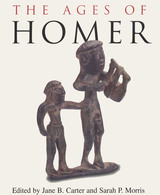
Homer’s Iliad and Odyssey have fascinated listeners and readers for over twenty-five centuries. In this volume of original essays, collected to honor the distinguished career of Emily T. Vermeule, thirty-four leading experts in Homeric studies and related fields provide up-to-date, multidisciplinary accounts of the most current issues in the study of Homer.
The book is divided into three sections. The first section treats the Bronze Age setting of the poems (around 1200 B.C.), using archaeological evidence to reveal how poetic memory preserves, distorts, and invents the past. The second section explores the early Iron Age, in which the poems were written (c. 800-500 B.C.), using the strategies of comparative philology and mythology, literary theory, historical linguistics, anthropology, and iconography to determine how the poems took shape. The final section traces the use of Homer for literary and artistic inspiration by classical Greece and Rome.
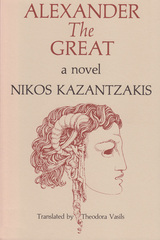
Nikos Kazantzakis is no stranger to the heroes of Greek antiquity. In this historical novel based on the life of Alexander the Great, Kazantzakis has drawn on both the rich tradition of Greek legend and the documented manuscripts from the archives of history to recreate an Alexander in all his many-faceted images—Alexander the god; Alexander the descendant of Heracles performing the twelve labors; Alexander the mystic, the daring visionary destined to carry out a divine mission; Alexander the flesh-and-blood mortal who, on occasion, is not above the common soldier’s brawling and drinking.
The novel, which resists the temptation to portray Alexander in the mantle of purely romantic legend, covers his life from age fifteen to his death at age thirty-two. It opens with Alexander’s first exploit, the taming of the horse, Bucephalas, and is seen in great part through the eyes of his young neighbor who eventually becomes an officer in his army and follows him on his campaign to conquer the world.
The book, which was written primarily as an educational adjunct for young readers, is intended for the adult mind as well, and like the legends of old, is entertaining as well as instructive for readers of all ages. It was originally published in Greece in serial form in 1940, and was republished in a complete volume in 1979.
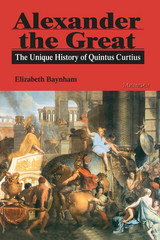
The reign and personality of Alexander the Great---one of the most romantic and powerful kings in history---have remained a source of fascination from antiquity to the present. But because the ancient information surrounding the conqueror is rich, contradictory, and complex, every historian of this near-mythical ruler-whether ancient or modern-invariably creates his or her own Alexander.
The unique work of one such ancient historian, Quintus Curtius, is the subject of Elizabeth Baynham's book. She mines Curtius' study of power for his contemporary perspective, historical methodology, and his portrait of the famous king and presents us with a brilliant, multifaceted study of this unique account regarding one of the most fascinating rulers in history.
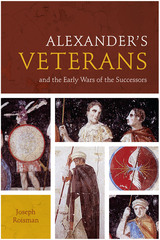
This first focused analysis of veterans’ experiences in ancient Greece offers a fresh, “bottom-up” perspective on important military and political aspects of early Hellenistic history.
Runner-up, PROSE Award, Classics and Ancient History, 2013
From antiquity until now, most writers who have chronicled the events following the death of Alexander the Great have viewed this history through the careers, ambitions, and perspectives of Alexander’s elite successors. Few historians have probed the experiences and attitudes of the ordinary soldiers who followed Alexander on his campaigns and who were divided among his successors as they fought for control of his empire after his death. Yet the veterans played an important role in helping to shape the character and contours of the Hellenistic world.
This pathfinding book offers the first in-depth investigation of the Macedonian veterans’ experience during a crucial turning point in Greek history (323–316 BCE). Joseph Roisman discusses the military, social, and political circumstances that shaped the history of Alexander’s veterans, giving special attention to issues such as the soldiers’ conduct on and off the battlefield, the army assemblies, the volatile relationship between the troops and their generals, and other related themes, all from the perspective of the rank-and-file. Roisman also reexamines the biases of the ancient sources and how they affected ancient and modern depictions of Alexander’s veterans, as well as Alexander’s conflicts with his army, the veterans’ motives and goals, and their political contributions to Hellenistic history. He pays special attention to the Silver Shields, a group of Macedonian veterans famous for their invincibility and martial prowess, and assesses whether or not they deserved their formidable reputation.
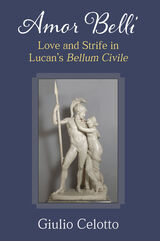
Compelled by the emperor Nero to commit suicide at age 25 after writing uncomplimentary poems, Latin poet Lucan nevertheless left behind a significant body of work, including the Bellum Civile (Civil War). Sometimes also called the Pharsalia, this epic describes the war between Julius Caesar and Pompey.Author Giulio Celotto provides an interpretation of this civil war based on the examination of an aspect completely neglected by previous scholarship: Lucan’s literary adaptation of the cosmological dialectic of Love and Strife.
According to a reading that has found favor over the last three decades, the poem is an unconventional epic that does not conform to Aristotelian norms: Lucan composes a poem characterized by fragmentation and disorder, lacking a conventional teleology, and whose narrative flow is constantly delayed. Celotto’s study challenges this interpretation by illustrating how Lucan invokes imagery of cosmic dissolution, but without altogether obliterating epic norms. The poem transforms them from within, condemning the establishment of the Principate and the Julio-Claudian dynasty.

The boys and men who left their Greek valley and mountain villages in the early 1900s for America came with amulets their mothers had made for them. Some were miniature sacks attached to a necklace; more often they were merely a square of fabric enclosing the values of their lives: a piece of a holy book or a sliver of the True Cross representing their belief in Greek Orthodoxy; a thyme leaf denoting their wild terrain; a blue bead to ward off the Evil Eye; and a pinch of Greek earth.
In her evocative and meticulously researched book An Amulet of Greek Earth, author Helen Papanikolas explains and examines the vibrant culture these immigrants brought with them to the new world. The Romiosini culture, as it was called, provided the foundation for their new lives and was oftentimes the cause of strife as they passed on their beliefs and traditions to successive generations of Greek Americans.
In the tradition of her fictional accounts of Greek immigrant life, Helen Papanikolas unearths the cultural beliefs and passions that compelled the Greek-American community to make its own way into the broader culture of America. Based on extensive study, personal interviews, and a lifetime of experience, An Amulet of Greek Earth is a revealing and informative chronicle of the immigrant’s experience in becoming an American.
Greek mercenaries on the march.
Xenophon (ca. 430 to ca. 354 BC) was a wealthy Athenian and friend of Socrates. He left Athens in 401 and joined an expedition including ten thousand Greeks led by the Persian governor Cyrus against the Persian king. After the defeat of Cyrus, it fell to Xenophon to lead the Greeks from the gates of Babylon back to the coast through inhospitable lands. Later he wrote the famous vivid account of this “March Up-Country” (Anabasis); but meanwhile he entered service under the Spartans against the Persian king, married happily, and joined the staff of the Spartan king, Agesilaus. But Athens was at war with Sparta in 394 and so exiled Xenophon. The Spartans gave him an estate near Elis where he lived for years writing and hunting and educating his sons. Reconciled to Sparta, Athens restored Xenophon to honor, but he preferred to retire to Corinth.
Xenophon’s Anabasis is a true story of remarkable adventures. Hellenica, a history of Greek affairs from 411 to 362, begins as a continuation of Thucydides’ account. There are four works on Socrates (collected in LCL 168). In Memorabilia Xenophon adds to Plato’s picture of Socrates from a different viewpoint. The Apology is an interesting complement to Plato’s account of Socrates’ defense at his trial. Xenophon’s Symposium portrays a dinner party at which Socrates speaks of love; and Oeconomicus has him giving advice on household management and married life. Cyropaedia, a historical romance on the education of Cyrus (the Elder), reflects Xenophon’s ideas about rulers and government; the Loeb edition is in two volumes.
We also have his Hiero, a dialogue on government; Agesilaus, in praise of that king; Constitution of Lacedaemon (on the Spartan system); Ways and Means (on the finances of Athens); Manual for a Cavalry Commander; a good manual of Horsemanship; and a lively Hunting with Hounds. The Constitution of the Athenians, though clearly not by Xenophon, is an interesting document on politics at Athens. These eight books are collected in the last of the seven volumes of the Loeb Classical Library edition of Xenophon.
On the march to greatness.
Arrian (Flavius Arrianus), of the period ca. AD 95–175, was a Greek historian and philosopher of Nicomedia in Bithynia. Both a Roman and an Athenian citizen, he was governor of the Roman province of Cappadocia 132–137, and repelled an invasion of the Alani in 134. He retired then to Athens (where he was archon in 148–149) and later to Nicomedia.
Arrian’s Anabasis of Alexander in seven books is the best account we have of Alexander’s adult life. Indica (a description of India and of Nearchus’ voyage therefrom) was to be a supplement.
A student of Epictetus, Arrian took notes at his lectures and published them (in eight books, of which we have four, The Discourses) and also the Encheiridion or Manual of Epictetus. Both works are available in the Loeb edition of Epictetus (LCL 131, 218).
The Loeb Classical Library edition of Arrian is in two volumes.
On the march to greatness.
Arrian (Flavius Arrianus), of the period ca. AD 95–175, was a Greek historian and philosopher of Nicomedia in Bithynia. Both a Roman and an Athenian citizen, he was governor of the Roman province of Cappadocia 132–137, and repelled an invasion of the Alani in 134. He retired then to Athens (where he was archon in 148–149) and later to Nicomedia.
Arrian’s Anabasis of Alexander in seven books is the best account we have of Alexander’s adult life. Indica (a description of India and of Nearchus’ voyage therefrom) was to be a supplement.
A student of Epictetus, Arrian took notes at his lectures and published them (in eight books, of which we have four, The Discourses) and also the Encheiridion or Manual of Epictetus. Both works are available in the Loeb edition of Epictetus (LCL 131, 218).
The Loeb Classical Library edition of Arrian is in two volumes.
THIS EBOOK IS NO LONGER AVAILABLE.
The ancient Greeks invented written law. Yet, in contrast to later societies in which law became a professional discipline, the Greeks treated laws as components of social and political history, reflecting the daily realities of managing society. To understand Greek law, then, requires looking into extant legal, forensic, and historical texts for evidence of the law in action. From such study has arisen the field of ancient Greek law as a scholarly discipline within classical studies, a field that has come into its own since the 1970s.
This edited volume charts new directions for the study of Greek law in the twenty-first century through contributions from eleven leading scholars. The essays in the book’s first section reassess some of the central debates in the field by looking at questions about the role of law in society, the notion of “contracts,” feuding and revenge in the court system, and legal protections for slaves engaged in commerce. The second section breaks new ground by redefining substantive areas of law such as administrative law and sacred law, as well as by examining sources such as Hellenistic inscriptions that have been comparatively neglected in recent scholarship. The third section evaluates the potential of methodological approaches to the study of Greek law, including comparative studies with other cultures and with modern legal theory. The volume ends with an essay that explores pedagogy and the relevance of teaching Greek law in the twenty-first century.
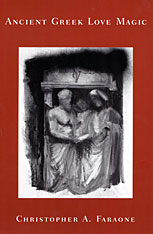
The ancient Greeks commonly resorted to magic spells to attract and keep lovers--as numerous allusions in Greek literature and recently discovered "voodoo dolls," magical papyri, gemstones, and curse tablets attest. Surveying and analyzing these various texts and artifacts, Christopher Faraone reveals that gender is the crucial factor in understanding love spells. There are, he argues, two distinct types of love magic: the curselike charms used primarily by men to torture unwilling women with fiery and maddening passion until they surrender sexually; and the binding spells and debilitating potions generally used by women to sedate angry or philandering husbands and make them more affectionate.
Faraone's lucid analysis of these spells also yields a number of insights about the construction of gender in antiquity, for example, the "femininity" of socially inferior males and the "maleness" of autonomous prostitutes. Most significantly, his findings challenge the widespread modern view that all Greek men considered women to be naturally lascivious. Faraone reveals the existence of an alternate male understanding of the female as "naturally" moderate and chaste, who uses love magic to pacify and control the "naturally" angry and passionate male. This fascinating study of magical practices and their implications for perceptions of male and female sexuality offers an unusual look at ancient Greek religion and society.
2022 PROSE Award Finalist in Classics
Although the era of the Enlightenment witnessed the rise of philosophical debates around benevolent social practice, the origins of European humane discourse date further back, to Classical Athens. The Ancient Greek Roots of Human Rights analyzes the parallel confluences of cultural factors facing ancient Greeks and eighteenth-century Europeans that facilitated the creation and transmission of humane values across history. Rachel Hall Sternberg argues that precursors to the concept of human rights exist in the ancient articulation of emotion, though the ancient Greeks, much like eighteenth-century European societies, often failed to live up to those values.
Merging the history of ideas with cultural history, Sternberg examines literary themes upholding empathy and human dignity from Thucydides’s and Xenophon’s histories to Voltaire’s Candide, and from Greek tragic drama to the eighteenth-century novel. She describes shared impacts of the trauma of war, the appeal to reason, and the public acceptance of emotion that encouraged the birth and rebirth of humane values.
An esteemed teacher offers a major reassessment of the history of Greece from prehistoric times to the rise of Alexander. This is a work of prodigious scholarship written in grand style.
John Fine surveys the archaeological work that has revealed so much about the civilization of Crete and Mycenaean Greece, and discusses the age of colonization during which Greek colonies were established from the Crimea to the Nile, from the Caucasus to Spain. Analyzing social and economic developments, as well as foreign and inter-city affairs, he assesses the history, culture, and democracy of Athens, and Sparta’s institutions and military exploits; recounts the Greeks’ relations and then war with the Persian empire; details alliances, struggles, and the varying fortunes of the Greek city-states; and relates the rise of Macedon. Fine treats the Greeks’ story in the context of events elsewhere in the eastern Mediterranean. Throughout he indicates the nature of the evidence on which our present knowledge is based, masterfully explaining the problems and pitfalls in interpreting ancient accounts. The Ancient Greeks is a splendid narrative history and a refreshing reinterpretation that will please students of ancient history, and everyone interested in early civilizations.
Essays cover topics such as using collective sanctions to enforce legal norms; the Greek elite’s marriage strategies for amassing financial resources essential for a public career; defenses against murder charges under Athenian criminal law, particularly in cases where the victim put his own life in peril; the interplay between Roman law and provincial institutions in regulating water rights; the Severan-age Greek author Aelian’s notions of justice and their influence on late-classical Roman jurisprudence; Roman jurists’ approach to the contract of mandate in balancing the changing needs of society against respect for upper-class concepts of duty and reciprocity; whether the Roman legal authorities developed the law exclusively to serve the Roman elite’s interests or to meet the needs of the Roman Empire’s broader population as well; and an analysis of the Senatus Consultum Claudianum in the Code of Justinian demonstrating how the late Roman government adapted classical law to address marriage between free women and men classified as coloni bound to their land.
In addition to volume editors Dennis P. Kehoe and Thomas A. J. McGinn, contributors include Adriaan Lanni, Michael Leese, David Phillips, Cynthia Bannon, Lauren Caldwell, Charles Pazdernik, and Clifford Ando.
How many people could read and write in the ancient world of the Greeks and Romans?
No one has previously tried to give a systematic answer to this question. Most historians who have considered the problem at all have given optimistic assessments, since they have been impressed by large bodies of ancient written material such as the graffiti at Pompeii. They have also been influenced by a tendency to idealize the Greek and Roman world and its educational system.
In Ancient Literacy W. V. Harris provides the first thorough exploration of the levels, types, and functions of literacy in the classical world, from the invention of the Greek alphabet about 800 B.C. down to the fifth century A.D. Investigations of other societies show that literacy ceases to be the accomplishment of a small elite only in specific circumstances. Harris argues that the social and technological conditions of the ancient world were such as to make mass literacy unthinkable. Noting that a society on the verge of mass literacy always possesses an elaborate school system, Harris stresses the limitations of Greek and Roman schooling, pointing out the meagerness of funding for elementary education.
Neither the Greeks nor the Romans came anywhere near to completing the transition to a modern kind of written culture. They relied more heavily on oral communication than has generally been imagined. Harris examines the partial transition to written culture, taking into consideration the economic sphere and everyday life, as well as law, politics, administration, and religion. He has much to say also about the circulation of literary texts throughout classical antiquity.
The limited spread of literacy in the classical world had diverse effects. It gave some stimulus to critical thought and assisted the accumulation of knowledge, and the minority that did learn to read and write was to some extent able to assert itself politically. The written word was also an instrument of power, and its use was indispensable for the construction and maintenance of empires. Most intriguing is the role of writing in the new religious culture of the late Roman Empire, in which it was more and more revered but less and less practiced.
Harris explores these and related themes in this highly original work of social and cultural history. Ancient Literacy is important reading for anyone interested in the classical world, the problem of literacy, or the history of the written word.

Combining a wide variety of papyrological, epigraphic, and legal evidence, Peter Candy’s framework illustrates the significance of these contracts in both their economic and legal context. By using an interdisciplinary approach, Ancient Maritime Loan Contracts addresses important questions about how maritime trade was financed in the context of the ancient economy; the response of individual legal cultures to maritime loan contracts; and the relationship between international commercial practice and legal development in the ancient world.
Hippocrates, said to have been born in Cos in or before 460 BCE, learned medicine and philosophy; travelled widely as a medical doctor and teacher; was consulted by King Perdiccas of Macedon and Artaxerxes of Persia; and died perhaps at Larissa. Apparently he rejected superstition in favour of inductive reasoning and the study of real medicine as subject to natural laws, in general and in individual people as patients for treatment by medicines and surgery. Of the roughly 70 works in the “Hippocratic Collection,” many are not by Hippocrates; even the famous oath may not be his. But he was undeniably the “Father of Medicine.”
The works available in the Loeb Classical Library edition of Hippocrates are:
Volume I: Ancient Medicine. Airs, Waters, Places. Epidemics 1 and 3. The Oath. Precepts. Nutriment.
Volume II: Prognostic. Regimen in Acute Diseases. The Sacred Disease. The Art. Breaths. Law. Decorum. Physician (Ch. 1). Dentition.
Volume III: On Wounds in the Head. In the Surgery. On Fractures. On Joints. Mochlicon.
Volume IV: Nature of Man. Regimen in Health. Humours. Aphorisms. Regimen 1–3. Dreams.
Volume V: Affections. Diseases 1–2.
Volume VI: Diseases 3. Internal Affections. Regimen in Acute Diseases.
Volume VII: Epidemics 2 and 4–7.
Volume VIII: Places in Man. Glands. Fleshes. Prorrhetic 1–2. Physician. Use of Liquids. Ulcers. Haemorrhoids and Fistulas.
Volume IX: Anatomy. Nature of Bones. Heart. Eight Months’ Child. Coan Prenotions. Crises. Critical Days. Superfetation. Girls. Excision of the Fetus. Sight.
Volume X: Generation. Nature of the Child. Diseases 4. Nature of Women. Barrenness.
Volume XI: Diseases of Women 1–2.
(Volume IV also contains the fragments of Heracleitus’ On the Universe.)
The present volume includes the author's thoughts on Greek and Roman religions, early Christianity, Greek and Roman psychology and morals, and magic and the occult. Luck's main findings explore generally neglected areas of ancient civilization, locating magic and philosophy with religion as vehicles for moral and psychological guidance. Throughout this study, one finds meaning in "superstitious" and conflicting patterns of behavior and learns much about the nature of the human soul. This collection will serve as a valuable reference for those interested in the driving motivations of ancient man.
"The topics of the individual articles in this volume are very central and of great humanistic appeal, and they indeed form a thematic unity concerning man and religion in Greek and Roman society." --Ludwig Koenen, Herbert C. Youtie Distinguished University Professor of Papyrology, University of Michigan
Georg Luck is Professor of Classics, emeritus, The Johns Hopkins University.
This book is a study of the variable perceptions of Greek collective identity, discussing ancient categories such as blood- and mythically-related primordiality, language, religion, and culture. With less emphasis on dichotomies between Greeks and others, the book considers complex middle grounds of intra-Hellenic perceptions, oppositional identities, and outsiders’ views. Although the authors do not seek to provide a litmus test of Greek identity, they do pay close attention to modern theories of ethnicity, its construction, function, and representation, and assess their applicability to views of Greekness in antiquity.
From the Archaic period through the Roman Empire, archaeological, anthropological, historical, historiographical, rhetorical, artistic, and literary aspects are studied. Regardless of the invented aspects of ethnicity, the book illustrates its force and validity in history.
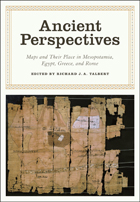
Ancient Perspectives encompasses a vast arc of space and time—Western Asia to North Africa and Europe from the third millennium BCE to the fifth century CE—to explore mapmaking and worldviews in the ancient civilizations of Mesopotamia, Egypt, Greece, and Rome. In each society, maps served as critical economic, political, and personal tools, but there was little consistency in how and why they were made. Much like today, maps in antiquity meant very different things to different people.
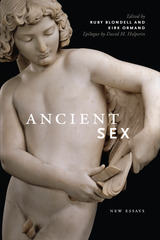
Rather than reopening old debates, Ancient Sex takes up Foucault’s call for discursive analysis and elucidates some of the ways that ancient Greek and Roman texts and visual arts articulate a culturally specific discourse about sexual matters. Each contributor presupposes that sexual and gendered identities are discursively produced, and teases out some of the ways that the Greeks and Romans spoke and thought about these issues. Comprising essays by emerging and established scholars, this volume emphasizes in particular: sexual discourses about women; the interaction between sexual identities and class status; gender as an unstable discursive category (even in antiquity); and the relationships between ancient and modern sexual categories.
This collection of essays represents Vogt's personal contribution to the collective enterprise; the English edition is translated from the second German edition of 1972, which included three additional papers and a supplement bringing his earlier work up to date.
The distinctive features of Vogt's approach to ancient slavery are his social awareness and sympathetic commitment, and his refusal either to ignore or be dominated by the dogmas of the left and the structures of sociology. His systematic investigation of ancient slave wars, which is the centre of this collection, is a reasoned refutation of more extreme Marxist interpretations, and a brilliant demonstration that a pragmatic approach to the analysis of a general phenomenon can lead to conclusions as far-reaching as any a priori system. Other outstanding essays investigate with subtlety and insight the position of slaves in literature and in utopian theory, the concept of the slave of God in early Christian thought, and the extent to which rigid distinctions between slave and free were eroded by the daily contact between individuals in different social roles, and by their inability to forget that both masters and slaves were human beings, with personal loyalties and friendships. The volume ends with two essays on the interrelationship between ancient and modern attitudes to slavery since the Renaissance.
David Mulroy’s translation of Antigone faithfully reproduces the literal meaning of Sophocles’ words while also reflecting his verbal pyrotechnics. Using fluid iambic pentameters for the spoken passages and rhyming stanzas for the songs, it is true to the letter and the spirit of the great Greek original.
Winner, Friends of the Dallas Public Library Award from the Texas Institute of Letters, 2003
Antiphon was a fifth-century Athenian intellectual (ca. 480-411 BCE) who created the profession of speechwriting while serving as an influential and highly sought-out adviser to litigants in the Athenian courts. Three of his speeches are preserved, together with three sets of Tetralogies (four hypothetical paired speeches), whose authenticity is sometimes doubted. Fragments also survive of intellectual treatises on subjects including justice, law, and nature (physis), which are often attributed to a separate Antiphon the Sophist. Were these two Antiphons really one and the same individual, endowed with a wide-ranging mind ready to tackle most of the diverse intellectual interests of his day?
Through an analysis of all these writings, this book convincingly argues that they were composed by a single individual, Antiphon the Athenian. Michael Gagarin sets close readings of individual works within a wider discussion of the fifth-century Athenian intellectual climate and the philosophical ferment known as the sophistic movement. This enables him to demonstrate the overall coherence of Antiphon's interests and writings and to show how he was a pivotal figure between the sophists and the Attic orators of the fourth century. In addition, Gagarin's argument allows us to reassess the work of the sophists as a whole, so that they can now be seen as primarily interested in logos (speech, argument) and as precursors of fourth-century rhetoric, rather than in their usual role as foils for Plato.
The life and miracles of a pagan holy man.
This biography of a first-century AD holy man has become one of the most widely discussed literary works of later antiquity. In a grandly baroque style style Philostratus portrays a charismatic teacher and religious reformer from Tyana in Cappadocia (modern central Turkey) who travels the length of the known world, from the Atlantic to the river Ganges. His miracles, which include extraordinary cures and mysterious disappearances, together with his apparent triumph over death, caused pagans to make Apollonius a rival to Jesus of Nazareth.
In his three-volume Loeb edition of this third-century work, Christopher Jones gives a much improved Greek text and an elegant translation with full explanatory notes. The Life of Apollonius is formally a biography (by far the longest that survives from antiquity), but in reality a combination of travel narrative, rhetorical showpiece, and much else. In the introduction, Jones addresses the question of how far the Life is history and how far fiction. He also discusses the survival and reception of the work through Late Antiquity and up to modern times, and the role that it continues to play in controversies about Christianity.
The life and miracles of a pagan holy man.
This biography of a first-century AD holy man has become one of the most widely discussed literary works of later antiquity. In a grandly baroque style style Philostratus portrays a charismatic teacher and religious reformer from Tyana in Cappadocia (modern central Turkey) who travels the length of the known world, from the Atlantic to the river Ganges. His miracles, which include extraordinary cures and mysterious disappearances, together with his apparent triumph over death, caused pagans to make Apollonius a rival to Jesus of Nazareth.
In his three-volume Loeb edition of this third-century work, Christopher Jones gives a much improved Greek text and an elegant translation with full explanatory notes. The Life of Apollonius is formally a biography (by far the longest that survives from antiquity), but in reality a combination of travel narrative, rhetorical showpiece, and much else. In the introduction, Jones addresses the question of how far the Life is history and how far fiction. He also discusses the survival and reception of the work through Late Antiquity and up to modern times, and the role that it continues to play in controversies about Christianity.
The life and miracles of a pagan holy man.
Philostratus' colorful biography of Apollonius of Tyana, recounting the sayings and miracles of a Pythagorean sage, incidentally provoked a long-lasting debate between pagans and Christians. This volume, which completes the Loeb Classical Library edition of the Life of Apollonius of Tyana, provides full context for that much discussed third-century portrayal of a charismatic religious teacher.
Here is a new translation of the surviving letters of Apollonius, augmented and illuminated by recent discoveries. These letters reveal Apollonius' personality and his religious and philosophical ideas. New for this edition is a selection of ancient reports about Apollonius from authors such as St. Jerome and St. Augustine.
Philostratus' biography was quickly caught up in the religious struggles that marked the rise of Christianity. An official in Diocletian's empire named Hierocles used it as ammunition in an anti-Christian polemic, initiating a controversy that lasted well into modern times. The reply by Eusebius, the fourth-century bishop of Caesarea, was originally included in editions of the Life of Apollonius in order to serve as a spiritual antidote and to provide cover for the publishers; today it is an essential chapter in the history of Philostratus' masterpiece.
Sahlins begins by confronting Thucydides' account of the Peloponnesian War with an analogous "Polynesian War," the fight for the domination of the Fiji Islands (1843-55) between a great sea power (like Athens) and a great land power (like Sparta). Sahlins draws parallels between the conflicts with an eye to their respective systems of power and sovereignty as well as to Thucydides' alternation between individual (Pericles, Themistocles) and collective (the Athenians, the Spartans) actors in the making of history. Characteristic of most histories ever written, this alternation between the agency of "Great Men" and collective entities leads Sahlins to a series of incisive analyses ranging in subject matter from Bobby Thomson's "shot heard round the world" for the 1951 Giants to the history-making of Napoleon and certain divine kings to the brouhaha over Elián Gonzalez. Finally, again departing from Thucydides, Sahlins considers the relationship between cultural order and historical contingency through the recounting of a certain royal assassination that changed the course of Fijian history, a story of fratricide and war worthy of Shakespeare.
In this most convincing presentation yet of his influential theory of culture, Sahlins experiments with techniques for mixing rich narrative with cultural explication in the hope of doing justice at once to the actions of persons and the customs of people. And he demonstrates the necessity of taking culture into account in the creation of history—with apologies to Thucydides, who too often did not.

The Archaeology of the Olympics presents a stirring reevaluation of the Olympic Games (and related festivals) as they actually were, not as the ancient Greeks wished—and we still wish—they might have been. Historians, archaeologists, and classicists examine the evidence to ask such questions as, How did the athletes train? What did they eat? Can we trace the roots of the games as far back as the Bronze Age of Crete and Mycenae? Or even to Anatolia, where similar athletic activities occurred? Were the ancient games really so free of political overtones as modern Olympic rhetoric urges us to believe?
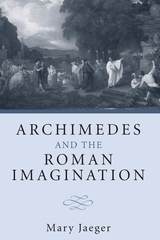
The great mathematician Archimedes, a Sicilian Greek whose machines defended Syracuse against the Romans during the Second Punic War, was killed by a Roman after the city fell, yet it is largely Roman sources, and Greek texts aimed at Roman audiences, that preserve the stories about him. Archimedes' story, Mary Jaeger argues, thus becomes a locus where writers explore the intersection of Greek and Roman culture, and as such it plays an important role in Roman self-definition. Jaeger uses the biography of Archimedes as a hermeneutic tool, providing insight into the construction of the traditional historical narrative about the Roman conquest of the Greek world and the Greek cultural invasion of Rome.
By breaking down the narrative of Archimedes' life and examining how the various anecdotes that comprise it are embedded in their contexts, the book offers fresh readings of passages from both well-known and less-studied authors, including Polybius, Cicero, Livy, Vitruvius, Plutarch, Silius Italicus, Valerius Maximus, Johannes Tzetzes, and Petrarch.
---Helen King, Times Literary Supplement
"An absolutely wonderful book on a truly original and important topic. As Jaeger explores neglected texts that together tell an important story about the Romans' views of empire and their relationship to Greek cultural accomplishments, so she has written an important new chapter in the history of science. A genuine pleasure to read, from first page to last."
---Andrew Feldherr, Associate Professor of Classics, Princeton University
"This elegantly written and convincingly argued project analyzes Archimedes as a vehicle for reception of the Classics, as a figure for loss and recovery of cultural memory, and as a metaphorical representation of the development of Roman identity. Jaeger's fastening on the still relatively obscure figure of the greatest ancient mathematician as a way of understanding cultural liminality in the ancient world is nothing short of a stroke of genius."
---Christina S. Kraus, Professor and Chair of Classics, Yale University
"Archimedes and the Roman Imagination forms a useful addition to our understanding of Roman culture as well as of the reception of science in antiquity. It will make a genuine contribution to the discipline, not only in terms of its original interpretative claims but also as a fascinating example of how we may follow the cultural reception of historical figures."
---Reviel Netz, Professor of Classics, Stanford University
Cover art: Benjamin West. Cicero Discovering the Tomb of Archimedes. Yale University Art Gallery. John Hill Morgan, B.A. 1893, LL.B. 1898, M.A. (Hon.) 1929, Fund.
Galileo, Leonardo, Newton, and Tesla revered him: Archimedes of Syracuse—an engineer who single-handedly defied the world’s most powerful army and a mathematician who knew more in 212 BCE than all of Europe would know for the next seventeen centuries. In this bold reimagining, modern polymath Nicholas Nicastro shines a new light on Archimedes’ life and work. Far from the aloof, physically inept figure of historical myth, Archimedes is revealed to be an ambitious, combative, and fiercely competitive man. A genius who challenged an empire, Archimedes emerges in this book as the world’s first fully modern scientist—millennia before his intellectual descendants transformed our world.
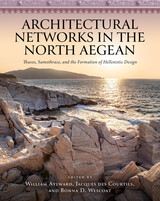
Employing the idea of networks to effectively describe the interconnectedness of design, materials, technology, religion, and politics, the contributors to this volume establish the need to understand this important region holistically and on its own terms. Taking a close look at major buildings and monuments—while considering technique, design, and decoration as elements of a vigorous web—this volume offers important insights about the area’s significance in the history of Hellenistic architecture, including lasting innovations in architectural illusion, Ionic entablature, and groundbreaking uses of marble and plaster. From the North Aegean, such principles and tactics were transmitted to the rest of the Hellenistic world, influencing Roman architecture and, from there, Western architectural history.
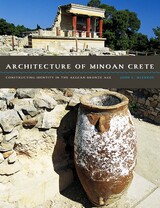
Ever since Sir Arthur Evans first excavated at the site of the Palace at Knossos in the early twentieth century, scholars and visitors have been drawn to the architecture of Bronze Age Crete. Much of the attraction comes from the geographical and historical uniqueness of the island. Equidistant from Europe, the Middle East, and Africa, Minoan Crete is on the shifting conceptual border between East and West, and chronologically suspended between history and prehistory. In this culturally dynamic context, architecture provided more than physical shelter; it embodied meaning. Architecture was a medium through which Minoans constructed their notions of social, ethnic, and historical identity: the buildings tell us about how the Minoans saw themselves, and how they wanted to be seen by others.
Architecture of Minoan Crete is the first comprehensive study of the entire range of Minoan architecture—including houses, palaces, tombs, and cities—from 7000 BC to 1100 BC. John C. McEnroe synthesizes the vast literature on Minoan Crete, with particular emphasis on the important discoveries of the past twenty years, to provide an up-to-date account of Minoan architecture. His accessible writing style, skillful architectural drawings of houses and palaces, site maps, and color photographs make this book inviting for general readers and visitors to Crete, as well as scholars.
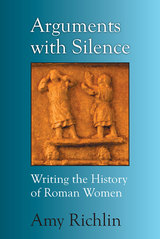
Women in ancient Rome challenge the historian. Widely represented in literature and art, they rarely speak for themselves. Amy Richlin, among the foremost pioneers in ancient studies, gives voice to these women through scholarship that scours sources from high art to gutter invective.
In Arguments with Silence, Richlin presents a linked selection of her essays on Roman women’s history, originally published between 1981 and 2001 as the field of “women in antiquity” took shape, and here substantially rewritten and updated. The new introduction to the volume lays out the historical methodologies these essays developed, places this process in its own historical setting, and reviews work on Roman women since 2001, along with persistent silences. Individual chapter introductions locate each piece in the social context of Second Wave feminism in Classics and the academy, explaining why each mattered as an intervention then and still does now.
Inhabiting these pages are the women whose lives were shaped by great art, dirty jokes, slavery, and the definition of adultery as a wife’s crime; Julia, Augustus’ daughter, who died, as her daughter would, exiled to a desert island; women wearing makeup, safeguarding babies with amulets, practicing their religion at home and in public ceremonies; the satirist Sulpicia, flaunting her sexuality; and the praefica, leading the lament for the dead.
Amy Richlin is one of a small handful of modern thinkers in a position to consider these questions, and this guided journey with her brings surprise, delight, and entertainment, as well as a fresh look at important questions.
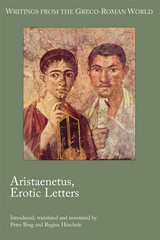
The first complete English translation of Aristaenetus in nearly three centuries
Through allusion and adaption of earlier authors, Aristaenetus recounts tales that are the stuff of comedy, erotic poetry, and ancient novel. Here we read of lovers who use every trope of erotic literature to praise their beloveds in over-the-top speeches. Aristaenetus amazes us with tales of paramours hatching complicated schemes to achieve their desires, while wily go-betweens help smooth their way. He presents us with accounts of unfaithful spouses who barely avoid capture in the midst of hair-raising and amusing infidelities. This sixth century collection is perfect for anyone interested in classical and postclassical literature.
Features:
- English translation and Greek text on facing pages
- Introduction with history of the text
- Discussion of intertextual connections with Greco-Roman authors
This is the first substantial commentary on Clouds since Dover’s 1968 edition. Intended for intermediate Greek students at undergraduate and graduate levels, the commentary pays careful attention to the basic characteristics of ancient Greek syntax, as well as to how Greek words are formed and can be analyzed. It offers robust staging notes, information about daily life in late 5th-century Athens, and constant reference to the rhetorical and dramatic strategies of the text. Full support is offered for those interested in the metrical structure of the songs, but in a way that allows instructors to leave such issues aside, should they choose to do so. The first and second appendices offer a basic means of entry into the rich but complex world of the comic fragments. An English-language bibliography is provided. The edition will interest professional classicists of all sorts seeking an accessible introduction to one of Aristophanes’ greatest plays, to philosophers concerned with Socrates and the sophistic movement, and to theater professionals who wish to stage the play.
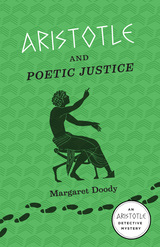
Stephanos and his teacher return in Aristotle and Poetic Justice, when a party given by wealthy Athenian silver miners leads to kidnapping, a ghost, a road trip to Delphi, and, of course, murder. More historical fiction than a detective novel, this sequel runs the gamut of Athenian social customs, myth, politics, and economics—from the trials of virgin love to the dangers of silver lust.
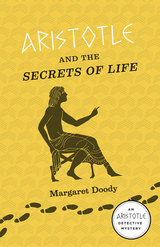
With Aristotle and the Secrets of Life, tensions between the Athenians and the Makedonians—followers of another of Aristotle’s former students, Alexander the Great—draw our heroes across the Aegean Sea. Even as Aristotle and Stephanos escape from pirates, uncover conspiracy, and face the horrors of war, Aristotle finds time to discuss his studies of the natural world in this gripping tale of their quest into darkness.
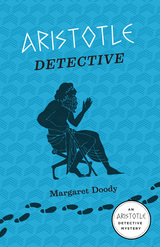
In Aristotle Detective, we first meet Stephanos—naive Watson to Aristotle’s learned Holmes—a young landed Athenian and student of Aristotle. With the aid of his cunning, olive-loving teacher, Stephanos must clear his exiled cousin of murder and save his family’s honor in a tense public trial. Will Stephanos survive to cinch the case?
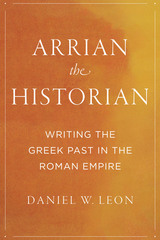
During the first centuries of the Roman Empire, Greek intellectuals wrote a great many texts modeled on the dialect and literature of Classical Athens, some 500 years prior. Among the most successful of these literary figures were sophists, whose highly influential display oratory has been the prevailing focus of scholarship on Roman Greece over the past fifty years. Often overlooked are the period’s historians, who spurned sophistic oral performance in favor of written accounts. One such author is Arrian of Nicomedia.
Daniel W. Leon examines the works of Arrian to show how the era's historians responded to their sophistic peers’ claims of authority and played a crucial role in theorizing the past at a time when knowledge of history was central to defining Greek cultural identity. Best known for his history of Alexander the Great, Arrian articulated a methodical approach to the study of the past and a notion of historical progress that established a continuous line of human activity leading to his present and imparting moral and political lessons. Using Arrian as a case study in Greek historiography, Leon demonstrates how the genre functioned during the Imperial Period and what it brings to the study of the Roman world in the second century.
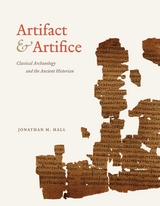
The Ascension of Authorship traces the history of the idea of the author in the ancient world, beginning with the attribution practices of Second Temple and Rabbinic Judaism. Jed Wyrick explores the testimony of Josephus on the succession of prophetic scribes and their superiority to Greek historiographers, and interprets the formation of the biblical canon in this light.
The Ascension of Authorship also examines the Greek scholarly methodology that questioned traditional connections between names and texts, a methodology perfected by Hellenistic grammarians and inherited by early Christian scholars. Wyrick argues that the fusion of Jewish and Hellenistic approaches toward attribution helped lead to St. Augustine’s reinvention of the writer of scripture as an author whose texts were governed by both divine will and human intent.
Blending historical fact and classical myth, the author of Zorba the Greek and The Last Temptation of Christ transports the reader 3,000 years into the past, to a pivotal point in history: the final days before the ancient kingdom of Minoan Crete is to be conquered and supplanted by the emerging city-state of Athens. Translated by Theodora Vasils and Themi Vasils.
The familiar figures who peopled that ancient world—King Minos, Theseus and Ariadne, the Minotaur, Diadalos and Ikaros—fill the pages of this novel with lifelike immediacy.
Written originally for an Athenian youth periodical, At the Palaces of Knossos functions on several levels. Fundamentally, it is a gripping and vivid adventure story, recounted by one of this century’s greatest storytellers, and peopled with freshly interpreted figures of classical Greek mythology. We see a new vision of the Minotaur, portrayed here as a bloated and sickly green monster, as much to be pitied as dreaded. And we see a grief-stricken and embittered Diadalos stomping on the homemade wax wings that have caused the drowning of his son, Ikaros.
On another level, At the Palaces of Knossos is an allegory of history, showing the supplanting of a primitive culture by a more modern civilization. Shifting the setting back and forth from Crete to Athens, Kazantzakis contrasts the languid, decaying life of the court of King Minos with the youth and vigor of the newly emerging Athens.
Protected by bronze swords, by ancient magic and ritual, and by ferocious-but-no-longer-invincible monsters, the kingdom of Crete represents the world that must perish if classical Greek civilization is to emerge into its golden age of reason and science. In the cataclysmic final scene in which the Minotaur is killed and King Minos’s sumptuous palace burned, Kazantzakis dramatizes the death of the Bronze Age, with its monsters and totems, and the birth of the Age of Iron.
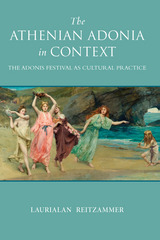
Reitzammer uncovers correlations of the Adonia to Athenian wedding rituals and civic funeral oration and provides illuminating evidence that the festival was a significant cultural template for such diverse works as Aristophanes’ drama Lysistrata and Plato’s dialogue Phaedrus. Her fresh approach is a timely contribution to studies of the ways gender and sexuality intersect with religion and ritual in ancient Greece.
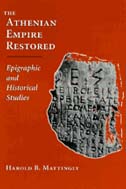
This volume collects Harold B. Mattingly's most important essays on the question, and offers them in updated form together with a new introduction and notes, and a concordance of inscriptions. A preface by Mortimer Chambers helps place the volume amid the decades- long controversy about events in and around Athens, and describes the scientific technique that has proven Mattingly's argument.
In the process of establishing a sounder methodology for investigating this crucial period of Greek--and Western--history, Mattingly in these groundbreaking essays turns a beacon of light on many aspects of Greek and Athenian society and history.
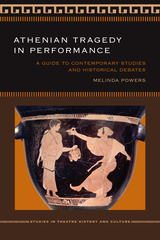
A case study of Euripides’s Bacchae, which provides more information about performance than any other extant tragedy, demonstrates possible methods for reconstructing the play’s historical performance and also the inevitable challenges inherent in that task, from the limited sources and the difficulty of interpreting visual material, to the risks of conflating actor with character and extrapolating backward from contemporary theatrical experience.
As an inquiry into the study of theatre and performance, an introduction to historical writing, a reference for further reading, and a clarification of several general misconceptions about Athenian tragedy and its performance, this historiographical analysis will be useful to specialists, practitioners, and students alike.
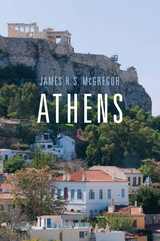
Revered as the birthplace of Western thought and democracy, Athens is much more than an open-air museum filled with crumbling monuments to ancient glory. Athens takes readers on a journey from the classical city-state to today’s contemporary capital, revealing a world-famous metropolis that has been resurrected and redefined time and again.
Although the Acropolis remains the city’s anchor, Athens’ vibrant culture extends far beyond the Greek city’s antique boundaries. James H. S. McGregor points out how the cityscape preserves signs of the many actors who have crossed its historical stage. Alexander the Great incorporated Athens into his empire, as did the Romans. Byzantine Christians repurposed Greek temples, the Parthenon included, into churches. From the thirteenth to fifteenth centuries, the city’s language changed from French to Spanish to Italian, as Crusaders and adventurers from different parts of Western Europe took turns sacking and administering the city. An Islamic Athens took root following the Ottoman conquest of 1456 and remained in place for nearly four hundred years, until Greek patriots finally won independence in a blood-drenched revolution.
Since then, Athenians have endured many hardships, from Nazi occupation and military coups to famine and economic crisis. Yet, as McGregor shows, the history of Athens is closer to a heroic epic than a Greek tragedy. Richly supplemented with maps and illustrations, Athens paints a portrait of one of the world’s great cities, designed for travelers as well as armchair students of urban history.
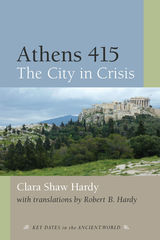
On a summer night in 415 BCE, unknown persons systematically mutilated most of the domestic “herms”—guardian statues of the god Hermes—in Athens. The reaction was immediate and extreme: the Athenians feared a terrifying conspiracy was underway against the city and its large fleet—and possibly against democracy itself. The city established a board of investigators, which led to informants, accusations, and flight by many of the accused. Ultimately, dozens were exiled or executed, their property confiscated.
This dramatic period offers the opportunity to observe the city in crisis. Sequential events allow us to see the workings of the major institutions of the city (assembly, council, law courts, and theater, as well as public and private religion). Remarkably, the primary sources for these tumultuous months name conspirators and informants from a very wide range of status-groups: citizens, women, slaves, and free residents. Thus the incident provides a particularly effective entry-point into a full multifaceted view of the way Athens worked in the late fifth century.
Designed for classroom use, Athens 415 is no potted history, but rather a source-based presentation of ancient urban life ideal for the study of a people and their institutions and beliefs. Original texts—all translated by poet Robert B. Hardy—are presented along with thoughtful discussion and analyses by Clara Shaw Hardy in an engaging narrative that draws students into Athens’ crisis.
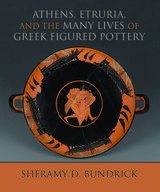
Thousands of Greek painted vases have emerged from excavations of tombs, sanctuaries, and settlements throughout Etruria, from southern coastal centers to northern communities in the Po Valley. Using documented archaeological assemblages, especially from tombs in southern Etruria, Bundrick challenges the widely held assumption that Etruscans were hellenized through Greek imports. She marshals evidence to show that Etruscan consumers purposefully selected figured pottery that harmonized with their own local needs and customs, so much so that the vases are better described as etruscanized. Athenian ceramic workers, she contends, learned from traders which shapes and imagery sold best to the Etruscans and employed a variety of strategies to maximize artistry, output, and profit.
Refined midnight oil.
Aulus Gellius (ca. AD 123–170) is known almost wholly from his Noctes Atticae, “Attic Nights,” so called because it was begun during the nights of an Attic winter. The work collects in twenty books (of Book VIII only the index is extant) interesting notes covering philosophy, history, biography, all sorts of antiquities, points of law, literary criticism, and lexicographic matters, explanations of old words, and questions of grammar. The work is valuable because of its many excerpts from other authors whose works are lost, and because of its evidence for people’s manners and occupations. At least some of the dramatic settings may be genuine occasions.
The Loeb Classical Library edition of Attic Nights is in three volumes.
Refined midnight oil.
Aulus Gellius (ca. AD 123–170) is known almost wholly from his Noctes Atticae, “Attic Nights,” so called because it was begun during the nights of an Attic winter. The work collects in twenty books (of Book VIII only the index is extant) interesting notes covering philosophy, history, biography, all sorts of antiquities, points of law, literary criticism, and lexicographic matters, explanations of old words, and questions of grammar. The work is valuable because of its many excerpts from other authors whose works are lost, and because of its evidence for people’s manners and occupations. At least some of the dramatic settings may be genuine occasions.
The Loeb Classical Library edition of Attic Nights is in three volumes.
Refined midnight oil.
Aulus Gellius (ca. AD 123–170) is known almost wholly from his Noctes Atticae, “Attic Nights,” so called because it was begun during the nights of an Attic winter. The work collects in twenty books (of Book VIII only the index is extant) interesting notes covering philosophy, history, biography, all sorts of antiquities, points of law, literary criticism, and lexicographic matters, explanations of old words, and questions of grammar. The work is valuable because of its many excerpts from other authors whose works are lost, and because of its evidence for people’s manners and occupations. At least some of the dramatic settings may be genuine occasions.
The Loeb Classical Library edition of Attic Nights is in three volumes.
Pagans’ advocate.
A professing pagan in an aggressively Christian empire, a friend of the emperor Julian and acquaintance of St. Basil, a potent spokesman for private and political causes—Libanius can tell us much about the tumultuous world of the fourth century.
Born in Antioch to a wealthy family steeped in the culture and religious traditions of Hellenism, Libanius rose to fame as a teacher of the classics in a period of rapid social change. In his lifetime Libanius was an acknowledged master of the art of letter writing. Today his letters—about 1550 of which survive—offer an enthralling self-portrait of this combative pagan publicist and a vivid picture of the culture and political intrigues of the eastern empire. A. F. Norman selects one eighth of the extant letters, which come from two periods in Libanius’ life, AD 355–365 and 388–393, letters written to Julian, churchmen, civil officials, scholars, and his many influential friends. The Letters are complemented, in this two-volume edition, by Libanius’ Autobiography (Oration 1), a revealing narrative that begins as a scholar’s account and ends as an old man’s private journal.
Also available in the Loeb Classical Library is a two-volume edition of Libanius’ Orations.
Pagans’ advocate.
A professing pagan in an aggressively Christian empire, a friend of the emperor Julian and acquaintance of St. Basil, a potent spokesman for private and political causes—Libanius can tell us much about the tumultuous world of the fourth century.
Born in Antioch to a wealthy family steeped in the culture and religious traditions of Hellenism, Libanius rose to fame as a teacher of the classics in a period of rapid social change. In his lifetime Libanius was an acknowledged master of the art of letter writing. Today his letters—about 1550 of which survive—offer an enthralling self-portrait of this combative pagan publicist and a vivid picture of the culture and political intrigues of the eastern empire. A. F. Norman selects one eighth of the extant letters, which come from two periods in Libanius’ life, AD 355–365 and 388–393, letters written to Julian, churchmen, civil officials, scholars, and his many influential friends. The Letters are complemented, in this two-volume edition, by Libanius’ Autobiography (Oration 1), a revealing narrative that begins as a scholar’s account and ends as an old man’s private journal.
Also available in the Loeb Classical Library is a two-volume edition of Libanius’ Orations.
READERS
Browse our collection.
PUBLISHERS
See BiblioVault's publisher services.
STUDENT SERVICES
Files for college accessibility offices.
RECENTLY PUBLISHED




UChicago Accessibility Resources
home | accessibility | search | about | contact us
BiblioVault ® 2001 - 2024
The University of Chicago Press