
 A SCHOLARLY BOOK REPOSITORY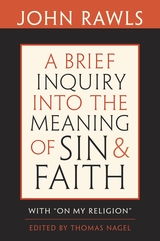
John Rawls never published anything about his own religious beliefs, but after his death two texts were discovered which shed extraordinary light on the subject. A Brief Inquiry into the Meaning of Sin and Faith is Rawls’s undergraduate senior thesis, submitted in December 1942, just before he entered the army. At that time Rawls was deeply religious; the thesis is a significant work of theological ethics, of interest both in itself and because of its relation to his mature writings. “On My Religion,” a short statement drafted in 1997, describes the history of his religious beliefs and attitudes toward religion, including his abandonment of orthodoxy during World War II.
The present volume includes these two texts, together with an Introduction by Joshua Cohen and Thomas Nagel, which discusses their relation to Rawls’s published work, and an essay by Robert Merrihew Adams, which places the thesis in its theological context.
The texts display the profound engagement with religion that forms the background of Rawls’s later views on the importance of separating religion and politics. Moreover, the moral and social convictions that the thesis expresses in religious form are related in illuminating ways to the central ideas of Rawls’s later writings. His notions of sin, faith, and community are simultaneously moral and theological, and prefigure the moral outlook found in Theory of Justice.
Divine Love and Wisdom has been called the most profound work of the Enlightenment scientist and seer Emanuel Swedenborg. It demonstrates how God’s love, wisdom, and humanity are reflected in creation and in ourselves, and suggests that the act of Creation is not a mystery of the past, but a miracle ongoing in every instant of the present. Like a blueprint of things unseen, Divine Love and Wisdom makes visible the hidden design of the universe, as well as the qualities of its Architect. Its vivid depiction of the spiritual mechanism of the world has impressed thinkers such as William Blake, Samuel Taylor Coleridge, Ralph Waldo Emerson, and Henry James, Sr.
The New Century Edition of the Works of Emanuel Swedenborg is a modern-language, scholarly translation of Swedenborg’s theological works. The series’ easy-to-read style retains the dignity, variety, clarity, and gender-inclusive language of Swedenborg’s original Latin, bringing his thought to life.
This portable edition contains the text of the New Century Edition translation, but not the introduction, annotations, or other supplementary materials found in the deluxe edition.
Divine Love and Wisdom has been called the most profound work of the Enlightenment scientist and seer Emanuel Swedenborg. It demonstrates how God’s love, wisdom, and humanity are reflected in creation and in ourselves, and suggests that the act of Creation is not a mystery of the past, but a miracle ongoing in every instant of the present. Like a blueprint of things unseen, Divine Love and Wisdom makes visible the hidden design of the universe, as well as the qualities of its Architect. Its vivid depiction of the spiritual mechanism of the world has impressed thinkers such as William Blake, Samuel Taylor Coleridge, Ralph Waldo Emerson, and Henry James, Sr.
The New Century Edition of the Works of Emanuel Swedenborg is a modern-language, scholarly translation of Swedenborg’s theological works. The series’ easy-to-read style retains the dignity, variety, clarity, and gender-inclusive language of Swedenborg’s original Latin, bringing his thought to life.
This portable edition contains the text of the New Century Edition translation, but not the introduction, annotations, or other supplementary materials found in the deluxe edition.

Divine Providence is one of the major works of the Enlightenment scientist and religious seer Emanuel Swedenborg. It provides a coherent and satisfying solution to what has been called “the problem of evil”: How are God’s goodness and power reconcilable with evil’s presences in the larger world and in the human mind and heart? By tackling an array of issues that commonly undermine belief in God, including war, suffering, and inequality—and by revealing the wise and loving laws that lie hidden behind these seemingly senseless phenomena—Divine Providence aims to restore our faith in the meaningfulness of the world. Despite its universal focus, Divine Providence is also a highly practical book on the personal level, demonstrating how we can put aside negative attitudes and behaviors and grow into positive thought and action.
The New Century Edition of the Works of Emanuel Swedenborg is a modern-language, scholarly translation of Swedenborg’s theological works. The series’ easy-to-read style retains the dignity, variety, clarity, and gender-inclusive language of Swedenborg’s original Latin, bringing his thought to life.
This portable edition contains the text of the New Century Edition translation, but not the introduction, annotations, or other supplementary materials found in the deluxe editions.
Divine Providence is one of the major works of the Enlightenment scientist and religious seer Emanuel Swedenborg. It provides a coherent and satisfying solution to what has been called “the problem of evil”: How are God’s goodness and power reconcilable with evil’s presences in the larger world and in the human mind and heart? By tackling an array of issues that commonly undermine belief in God, including war, suffering, and inequality—and by revealing the wise and loving laws that lie hidden behind these seemingly senseless phenomena—Divine Providence aims to restore our faith in the meaningfulness of the world. Despite its universal focus, Divine Providence is also a highly practical book on the personal level, demonstrating how we can put aside negative attitudes and behaviors and grow into positive thought and action.
The New Century Edition of the Works of Emanuel Swedenborg is a modern-language, scholarly translation of Swedenborg’s theological works. The series’ easy-to-read style retains the dignity, variety, clarity, and gender-inclusive language of Swedenborg’s original Latin, bringing his thought to life.
This portable edition contains the text of the New Century Edition translation, but not the introduction, annotations, or other supplementary materials found in the deluxe editions.

Paradise haunts the Biblical West. At once the place of origin and exile, utopia and final destination, it has shaped our poetic and religious imagination and informed literary and theological accounts of man’s relation with his creator, with language and history. For Kant, Paradise was the inaugural moment for the rise and progress of reason as the agency of human history, slowly but certainly driving humanity away from error and superstition. Nietzsche described it more somberly as the very embodiment of the conflict between humanity and its beliefs.
In Earthly Paradise, Milad Doueihi contemplates key moments in the philosophical reception and uses of Paradise, marked by the rise of critical and historical methods in the Early Modern period. How do modern debates around the nature of evil, free will, and the origin of language grow out of the philosophical interpretations of Paradise as the site of human history? How do the reflections of Spinoza, Pierre Bayle, Leibniz, and their contemporaries inform our current ideas about the Biblical narrative of the Fall? Is Paradise the source of human error or an utopian vision of humanity itself?
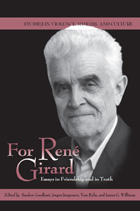
In his explorations of the relations between the sacred and violence, René Girard has hit upon the origin of culture—the way culture began, the way it continues to organize itself. The way communities of human beings structure themselves in a manner that is different from that of other species on the planet.
Like Albert Einstein, Sigmund Freud, Émile Durkheim, Martin Buber, or others who have changed the way we think in the humanities or in the human sciences, Girard has put forth a set of ideas that have altered our perceptions of the world in which we function. We will never be able to think the same way again about mimetic desire, about the scapegoat mechanism, and about the role of Jewish and Christian scripture in explaining sacrifice, violence, and the crises from which our culture has been born.
The contributions fall into roughly four areas of interpretive work: religion and religious study; literary study; the philosophy of social science; and psychological studies.
The essays presented here are offered as "essays" in the older French sense of attempts (essayer) or trials of ideas, as indeed Girard has tried out ideas with us. With a conscious echo of Montaigne, then, this hommage volume is titled Essays in Friendship and in Truth.
Is there really a hell? Should we be good simply to avoid punishment in the life hereafter? Just asking these questions theoretically doesn't get us far, George F. Dole suggests, but examining the works of someone who has been there may help. Dole refers to Emanuel Swedenborg, the eighteenth-century Swedish scientist and statesman who over the last twenty-seven years of his life had the privileged status of an observer of non-physical worlds, including hell. Swedenborg wrote that we are unconscious residents of the spiritual world as well as the material world, and the hells he encountered have mirrors in our everyday lives.
Within this framework, Dole examines questions about evil and hell that have plagued thinkers for centuries: Do we have freedom of choice? Do our spirits exist after death? Does an all-loving God condemn us to hell? If not, can we ourselves become irredeemably evil? What distinguishes Dole's approach to these questions is his open-mindedness and his hopefulness. Freedom and Evil brings us face to face with a God of mercy, and it is easy to believe, with Dole, that the gates of hell are not to keep people in but to keep people out.
This agenda-setting reader brings together both classic and new writings to demonstrate how concerns arising from the Nazi genocide shaped contemporary literary and cultural theory. Wide in its thematic scope, it covers such vital questions as:
- Authenticity and experience
- Memory and trauma
- Historiography and the philosophy of history
- Fascism and Nazi anti-Semitism
- Representation and identity formation
- Race, gender, and genocide
- Implications of the Holocaust for theories of the unconscious, ethics, politics, and aesthetics
The readings, which are fully contextualized by a general introduction, section introductions, and bibliographical notes, represent the work of many influential writers and theorists, including Theodor Adorno, Giorgio Agamben, Hannah Arendt, Jean Baudrillard, Zygmunt Bauman, Walter Benjamin, Cathy Caruth, Jacques Derrida, Shoshana Felman, Saul Friedlander, Paul Gilroy, Lawrence Langer, Emmanuel Levinas, Primo Levi, Jean-François Lyotard, Hayden White, and James E. Young. This multidisciplinary anthology will be welcomed by students and scholars of the Holocaust.
A Washington Post Notable Work of Nonfiction
A Chronicle of Higher Education Best Scholarly Book
“A deeply insightful and thought-enriching work by one of the most original philosophers writing today. Imagining the End is acutely aware of the danger we stand in of finding ourselves on an uninhabitable planet. But Lear is also aware of how the consciousness of impending loss can bring out the illumination inherent in meaningful life, often occluded in day-to-day living.”
–Charles Taylor, author of A Secular Age
“Lear is a lovely and subtle writer, someone who has a rare capacity to introduce ways of seeing and interrogating the world that dignify our confusion and pain while also opening up new possibilities for moving forward.”–Daniel Oppenheimer, Washington Post
The range of Jonathan Lear’s abilities—as a philosopher and psychoanalyst who draws from ancient and modern thought, personal history, and everyday experience to help us think about how we can flourish in a world of flux and finitude—is on full display in Imagining the End. Lear masterfully explores how we respond to loss, crisis, and hope, considering our bewilderment in the face of planetary catastrophe. He examines the role of the humanities in expanding our imaginative and emotional repertoire.
How might we live, he asks, when we realize just how vulnerable the cultures to which we traditionally turn for solace might be? He addresses how mourning can help us thrive, the role of moral exemplars in shaping our sense of the good, and the place of gratitude in human life. Along the way, he touches on figures as diverse as Aristotle, Abraham Lincoln, Sigmund Freud, and the British royals Harry and Meghan. Written with Lear’s characteristic elegance, philosophical depth, and psychological perceptiveness, Imagining the End is a powerful meditation on persistence in an age of turbulence and anxiety.
"Every culture needs to appropriate the universal truth of human suffering," says Fernando Escalante, ". . . to give its own meaning to this suffering, so that human existence is bearable." Originally published in Spanish as La mirada de Dios: Estudios sobre la cultura del sufrimiento, this book is a remarkable study of the evolution of the culture of suffering and the different elements that constitute it, beginning with a reading of Rousseau and ending with the appearance of the Shoah in the Western consciousness—"The memory endures, and this constitutes a fundamental transition for the Western conscience: we have witnessed."
Drawing on writings from the Greeks to Cervantes, Voltaire to Nietzsche, and Freud to William James, Escalante combines his considerable knowledge of politics and political theory with a vast array of literary examples to arrive at an intellectual understanding of the history and meaning of suffering. His investigation encompasses the rise of popular politics, the role of messianism in modern nationalism, and the contemporary implications of the Shoah.
This book will appeal to a wide audience: students of political theory, humanism, and philosophy, as well as the general reader interested in a glimpse into the mind of a highly original Latin American thinker.
Shortlisted for the Nayef Al-Rodhan Book Prize.
A leading scholar explores what it means to dehumanize others—and how and why we do it.
“I wouldn’t have accepted that they were human beings. You would see an infant who’s just learning to smile, and it smiles at you, but you still kill it.” So a Hutu man explained to an incredulous researcher, when asked to recall how he felt slaughtering Tutsis in Rwanda in 1994. Such statements are shocking, yet we recognize them; we hear their echoes in accounts of genocides, massacres, and pogroms throughout history. How do some people come to believe that their enemies are monsters, and therefore easy to kill?
In Making Monsters David Livingstone Smith offers a poignant meditation on the philosophical and psychological roots of dehumanization. Drawing on harrowing accounts of lynchings, Smith establishes what dehumanization is and what it isn’t. When we dehumanize our enemy, we hold two incongruous beliefs at the same time: we believe our enemy is at once subhuman and fully human. To call someone a monster, then, is not merely a resort to metaphor—dehumanization really does happen in our minds. Turning to an abundance of historical examples, Smith explores the relationship between dehumanization and racism, the psychology of hierarchy, what it means to regard others as human beings, and why dehumanizing others transforms them into something so terrifying that they must be destroyed.
Meticulous but highly readable, Making Monsters suggests that the process of dehumanization is deeply seated in our psychology. It is precisely because we are all human that we are vulnerable to the manipulations of those trading in the politics of demonization and violence.
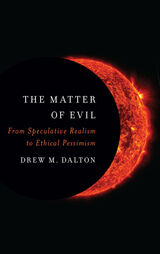
In this radical reconsideration of ethical reasoning in contemporary European philosophy, Drew M. Dalton makes the case for an absolutely grounded account of ethical normativity developed from a scientifically informed and purely materialistic metaphysics. Expanding on speculative realist arguments, Dalton argues that the limits placed on the nature of ethical judgments by Kant’s critique can be overcome through a moral evaluation of the laws of nature—specifically, the entropic principle that undergirds the laws of physics, chemistry, and biology. In order to extract a moral meaning from this simple material fact, Dalton scrutinizes the presumptions of classical accounts and traditional understandings of good and evil within the history of Western philosophy and ultimately asserts that ethical normativity can be reestablished absolutely without reverting to dogmatism.
By overturning our assumptions about the nature and value of reality, The Matter of Evil: From Speculative Realism to Ethical Pessimism presents a provocative new model of ethical responsibility that is both logically justifiable and scientifically sound. Dalton argues for “ethical pessimism,” a position previously marginalized in the West, as a means to cultivate an account of ethical responsibility and political activism that takes seriously the unbecoming of being and the moral horror of existence.
Is it more dangerous to call something evil or not to? This fundamental question deeply divides those who fear that the term oversimplifies grave problems and those who worry that, to effectively address such issues as terrorism and genocide, we must first acknowledge them as evil. Recognizing that the way we approach this dilemma can significantly affect both the harm we suffer and the suffering we inflict, a distinguished group of contributors engages in the debate with this series of timely and original essays.
Drawing on Western conceptions of evil from the Middle Ages to the present, these pieces demonstrate that, while it may not be possible to definitively settle moral questions, we are still able—and in fact are obligated—to make moral arguments and judgments. Using a wide variety of approaches, the authors raise tough questions: Why is so much evil perpetrated in the name of good? Could evil ever be eradicated? How can liberal democratic politics help us strike a balance between the need to pass judgment and the need to remain tolerant? Their insightful answers exemplify how the sometimes rarefied worlds of political theory, philosophy, theology, and history can illuminate pressing contemporary concerns.
Stuart Sim starts with the proposition that pessimists simply have a more realistic world view. Tracing how pessimism has developed over time and exploring its multifaceted nature, he shows that many thinkers throughout history—including philosophers, theologians, authors, artists, and even scientists—have been pessimists at heart, challenging us to face up to the desperations that define human existence. Spanning cultures and moving across eras, he assembles a grand discourse of pessimism. Ultimately he offers the provocative argument that pessimism should be cultivated and vigorously defended as one of our most useful and ever-relevant dispositions.
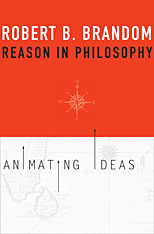
Transcendentalism never came to an end in America. It just went underground for a stretch, but is back in full force in Robert Brandom’s new book. Brandom takes up Kant and Hegel and explores their contemporary significance as if little time had expired since intellectuals gathered around Emerson in Concord to discuss reason and idealism, selves, freedom, and community. Brandom’s discussion belongs to a venerable tradition that distinguishes us as rational animals, and philosophy by its concern to understand, articulate, and explain the notion of reason that is thereby cast in that crucial demarcating role.
An emphasis on our capacity to reason, rather than merely to represent, has been growing in philosophy over the last thirty years, and Robert Brandom has been at the center of this development. Reason in Philosophy is the first book that gives a succinct overview of his understanding of the role of reason as the structure at once of our minds and our meanings—what constitutes us as free, responsible agents. The job of philosophy is to introduce concepts and develop expressive tools for expanding our self-consciousness as sapients: explicit awareness of our discursive activity of thinking and acting, in the sciences, politics, and the arts. This is a paradigmatic work of contemporary philosophy.
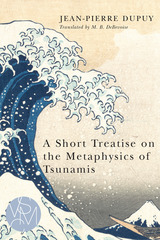
Jean-Pierre Dupuy asks whether, from Lisbon to Sumatra, mankind has really learned nothing about evil. When moral crimes are unbearably great, he argues, our ability to judge evil is gravely impaired, and the temptation to regard human atrocity as an attack on the natural order of the world becomes irresistible. This impulse also suggests a kind of metaphysical ruse that makes it possible to convert evil into fate, only a fate that human beings may choose to avoid. Postponing an apocalyptic future will depend on embracing this paradox and regarding the future itself in a radically new way.
The American edition of Dupuy’s classic essay, first published in 2005, also includes a postscript on the 2011 nuclear accident that occurred in Japan, again as the result of a tsunami.
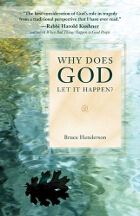
In the wake of life-changing events—whether as global in reach as the terrorist attacks on September 11 or as personal as the death of a child—the first question that springs to mind is “Why?” Why do good people suffer pain and loss? Why does God allow these things to happen?
In this simple, straightforward book, Bruce Henderson tackles some of the most difficult questions that people of faith face in their lives. Drawing from the wisdom of visionary Emanuel Swedenborg, who wrestled with these same questions more than two hundred years ago, Henderson describes a universe in which God allows us free will and choice, subtly guiding the course of our lives with an insight no mortal can comprehend. Pain and suffering ultimately lead to good, and as we walk the path, we draw ever closer to heaven.
In the end, the question is not why these things happen, but what good can come of them, and how we can use our gift of free will to create a better world for ourselves and others. In this, Henderson says, God is our partner and guiding hand, turning pain to hope and trust.
READERS
Browse our collection.
PUBLISHERS
See BiblioVault's publisher services.
STUDENT SERVICES
Files for college accessibility offices.
RECENTLY PUBLISHED


UChicago Accessibility Resources
home | accessibility | search | about | contact us
BiblioVault ® 2001 - 2024
The University of Chicago Press