
 A SCHOLARLY BOOK REPOSITORY
11 start with R start with R
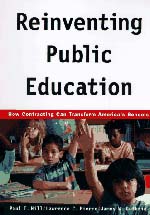
Reinventing Public Education shows how contracting would radically change the way we operate our schools, while keeping them public and accessible to all, and making them better able to meet standards of achievement and equity. Using public funds, local school boards would select private providers to operate individual schools under formal contracts specifying the type and quality of instruction.
In a hands-on, concrete fashion, the authors provide a thorough explanation of the pros and cons of school contracting and how it would work in practice. They show how contracting would free local school boards from operating schools so they can focus on improving educational policy; how it would allow parents to choose the best school for their children; and, finally, how it would ensure that schools are held accountable and academic standards are met.
While retaining a strong public role in education, contracting enables schools to be more imaginative, adaptable, and suited to the needs of children and families. In presenting an alternative vision for America’s schools, Reinventing Public Education is too important to be ignored.
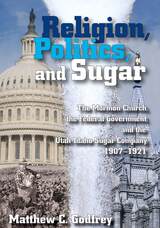
Utah-Idaho bridged the cooperative, theocratic, self-sufficient economic model of nineteenth-century Mormonism and the integration of the Mormon West into the national market economy. Religion, Politics, and Sugar shows, through the example of an important western business, how national commercial, political, and legal forces in the
early twentieth century came west and, more specifically, how they affected the important role the Mormon church played in economic affairs in the region.

Beginning with the economic theory of nonprofits, the essays examine current budgeting systems in both theoretical and practical terms. Resource allocation systems from other domains such as health care are explored for relevant insights. Throughout, decentralization remains a major theme. Topics range from the eminently practical--how to establish a global accounting system or choose an endowment spending rate--to the more abstract--the theory of how various nonprofit enterprises balance academic values against market pressures. The volume ends by proposing value responsibility budgeting, which offers institutions a potentially better way of pursuing their academic values while remaining responsive to market pressures.
Those within higher education institutions who are responsible for resource allocation, such as provosts, chief financial officers, or budget directors, will find much that speaks to them. While mostly in the domain of higher education economics, management, and planning, the essays are written for any serious reader concerned with the problem of reform in higher education.
William F. Massy is Professor of Education and Business Administration at Stanford University.
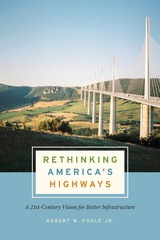
In Rethinking America’s Highways, Poole examines how our current model of state-owned highways came about and why it is failing to satisfy its customers. He argues for a new model that treats highways themselves as public utilities—like electricity, telephones, and water supply. If highways were provided commercially, Poole argues, people would pay for highways based on how much they used, and the companies would issue revenue bonds to invest in facilities people were willing to pay for. Arguing for highway investments to be motivated by economic rather than political factors, this book makes a carefully-reasoned and well-documented case for a new approach to highways that is sure to inform future decisions and policies for U.S. infrastructure.
Each contributor provides a retrospective on Shoup’s various contributions to the field, reviewing the literature and assessing its relevance to current problems in public finance theory and policy. The essays highlight and analyze fiscal theory and public policy developments from the 1930s to the present in four areas: the Shoup tax missions to Japan, Venezuela, and Liberia; the tax mix; the expenditure mix; and macro public finance.
Contributors. Lorraine Eden, Carl S. Shoup, Malcolm Gillis, Minoru Nakazato, Charles E. McLure Jr., John Bossons, Richard Goode, William Vickery, Wayne Thirsk, John Graham, Stanley Winer, W. Irwin Gillespie, Melville L. McMillan, Cliff Walsh, John G. Head, Enid Slack, Edwin G. West, Richard M. Bird, Peggy B. Musgrave, Douglas A. L. Auld, John B. Burbidge, Jack M. Mintz, John Sargent, Richard A. Musgrave
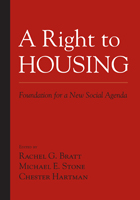
The contributors to A Right to Housing consider the key issues related to America's housing crisis, including income inequality and insecurity, segregation and discrimination, the rights of the elderly, as well as legislative and judicial responses to homelessness. The book offers a detailed examination of how access to adequate housing is directly related to economic security.
With essays by leading activists and scholars, this book presents a powerful and compelling analysis of the persistent inability of the U.S. to meet many of its citizens' housing needs, and a comprehensive proposal for progressive change.
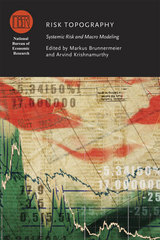
Markus Brunnermeier and Arvind Krishnamurthy have assembled contributions from leading academic researchers, central bankers, and other financial-market experts to explore the possibilities for advancing macroeconomic modeling in order to achieve more accurate economic measurement. Essays in this volume focus on the development of models capable of highlighting the vulnerabilities that leave the economy susceptible to adverse feedback loops and liquidity spirals. While these types of vulnerabilities have often been identified, they have not been consistently measured. In a financial world of increasing complexity and uncertainty, this volume is an invaluable resource for policymakers working to improve current measurement systems and for academics concerned with conceptualizing effective measurement.
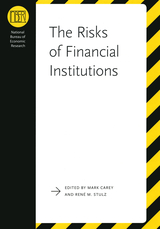
Until about twenty years ago, the consensus view on the cause of financial-system distress was fairly simple: a run on one bank could easily turn to a panic involving runs on all banks, destroying some and disrupting the financial system. Since then, however, a series of events—such as emerging-market debt crises, bond-market meltdowns, and the Long-Term Capital Management episode—has forced a rethinking of the risks facing financial institutions and the tools available to measure and manage these risks.
The Risks of Financial Institutions examines the various risks affecting financial institutions and explores a variety of methods to help institutions and regulators more accurately measure and forecast risk. The contributors--from academic institutions, regulatory organizations, and banking--bring a wide range of perspectives and experience to the issue. The result is a volume that points a way forward to greater financial stability and better risk management of financial institutions.

READERS
Browse our collection.
PUBLISHERS
See BiblioVault's publisher services.
STUDENT SERVICES
Files for college accessibility offices.
RECENTLY PUBLISHED





UChicago Accessibility Resources
home | accessibility | search | about | contact us
BiblioVault ® 2001 - 2024
The University of Chicago Press