
 A SCHOLARLY BOOK REPOSITORY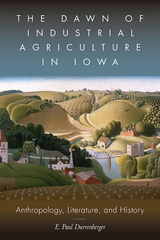
Durrenberger tells the story that Corey aimed to record and preserve of the industrialization of Iowa’s agriculture and the death of its family farms. He analyzes Corey’s regionalist focus on Iowa farming and regionalism’s contemporaneous association in Europe with rising fascism. He explores Corey’s adoption of naturalism, evident in his resistance to heroes and villains, to plot structure and resolution, and to moral judgment, as well as his ethnographic tendency to focus on groups rather than individuals.
An unusual and wide-ranging study, The Dawn of Industrial Agriculture in Iowa offers important insight into the relationships among fiction, individual lives, and anthropological practice, as well as into a pivotal period in American history.
The story of starting and running an organic farm—told by the woman who owned one of the first Community-Supported Agriculture operations in the Upper Midwest
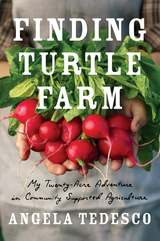
On a twenty-acre farm in Iowa in 1995, Angela Tedesco planted the seeds (quite literally) of a quiet revolution. While American agriculture had strayed so far afield, her farm would raise food that served the earth and the community as well as the palate. In Finding Turtle Farm, Tedesco recounts this adventure in all its down-and-dirty work and wonder, from plan and plot to harvest, with nods along the way to the vagaries of weather, pests, and human nature.
Introducing Community-Supported Agriculture to Iowa, Tedesco’s Turtle Farm educated its customers along with providing seasonal boxes of produce—an undertaking that continues here, as Tedesco describes what it takes to establish and run an organic operation, bringing to bear all her experience growing up on a family farm, studying chemistry and horticulture, and shepherding a religious education program. From ordering seeds and tending greenhouses to surviving floods and a personal health crisis, Tedesco tells a story of transforming a piece of land and the life within it. She includes practical information about harvesting and preserving food, the discoveries of research conducted on the farm and bonds established between farmers, and even recipes to make delicious use of the produce in your CSA box.
Looking forward to a healthier, happier future when crops are more than mere commodities and food feeds the soul of a community, Finding Turtle Farm is an enlightening, hard-won, and ultimately hopeful account of what it means to meet the most basic of human needs.
In Investment, Profit, and Tenancy Dennis P. Kehoe defines the economic mentality of upper-class Romans by analyzing the assumptions that Roman jurists in the Digest of Justinian made about investment and profit in agriculture as they addressed legal issues involving private property. In particular the author analyzes the duties of guardians in managing the property of their wards, and the bequeathing of agricultural property. He bases his analysis on Roman legal sources, which offer a comprehensive picture of the economic interests of upper-class Romans. Farm tenancy was crucial to these interests, and Kehoe carefully examines how Roman landowners contended with the legal, social, and economic institutions surrounding farm tenancy as they pursued security from their agricultural investments.
Kehoe argues that Roman jurists offer a consistent picture of agriculture as a form of investment that was grounded in upper-class conceptions of the Roman economy. In the eyes of the jurists, agriculture represented the only form of investment capable of providing upper-class Romans with economic security, and this situation had important implications for the relationship between landowners and tenants. Landowners who sought economic stability from their agricultural holdings preferred to simplify the task of managing their estates by delegating the work and costs to their tenants. This tended to make landowners depend on the expertise and resources of tenants, which in turn gave the tenants significant bargaining power. This dynamic relationship is traced in the jurists' regulation of farm tenancy, as the jurists adapted Roman law to the economic realities of the Roman empire.
Investment, Profit, and Tenancy will be of interest to classicists as well as to scholars of preindustrial comparative economics.
Dennis P. Kehoe is Professor of Classical Studies, Tulane University.
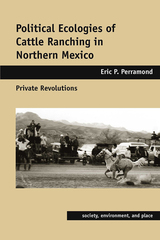
In this study of the Río Sonora region of northern Mexico, where ranchers own anywhere from several hundred to tens of thousands of acres, Eric Perramond evaluates management techniques, labor expenditures, gender roles, and decision-making on private ranches of varying size. By examining the economic and ecological dimensions of daily decisions made on and off the ranch he shows that, contrary to prevailing notions, ranchers rarely collude as a class unless land titles are at issue, and that their decision-making is as varied as the landscapes they oversee.
Through first-hand observation, field measurements, and intimate ethnographies, Perramond sheds light on a complex set of decisions made, avoided, and confronted by these land managers and their families. He particularly shows that ranching has endured because of its extended kinship network, its reliance on all household members, and its close ties to local politics.
Perramond follows ranchers caught between debt, drought, and declining returns to demonstrate the novel approaches they have developed to adapt to changing economies and ecologies alike—such as strategically marketing the ranches for wild-game hunting or establishing small businesses that subsidize their lifestyles and livelihoods. Even more importantly, he reveals the false dichotomy between private and communal ranching. Political Ecologies of Cattle Ranching in Northern Mexico is essential reading for anyone interested in the future of ranching in western North America.
READERS
Browse our collection.
PUBLISHERS
See BiblioVault's publisher services.
STUDENT SERVICES
Files for college accessibility offices.
RECENTLY PUBLISHED



UChicago Accessibility Resources
home | accessibility | search | about | contact us
BiblioVault ® 2001 - 2026
The University of Chicago Press