
 A SCHOLARLY BOOK REPOSITORY
This book will be of interest to scholars studying the judiciary, bureaucracies, and international trade law and administration.
Isaac Unah is Assistant Professor of Political Science, University of North Carolina.
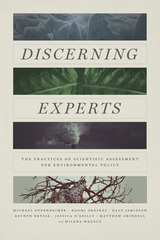
Discerning Experts uncovers factors that can generate systematic bias and error, and recommends how the process can be improved. As the first study of the internal workings of large environmental assessments, this book reveals their strengths and weaknesses, and explains what assessments can—and cannot—be expected to contribute to public policy and the common good.

The chapters in this volume, organized around the leitmotif of expertise, demonstrate the thematic importance and specific utility of in-depth and broad-ranging knowledge in shaping the understanding of architecture in the Islamic world from the nineteenth century to the present. Specific case studies include European gardeners in Ottoman courts, Polish architects in Kuwait, Israeli expertise in Iran, monument archiving in India, religious spaces in Swedish suburbs, and more.
This is the latest title in Critical Studies in Architecture of the Middle East, a series devoted to the most recent scholarship concerning architecture, landscape, and urban design of the Middle East and of regions shaped by diasporic communities more globally.

In this study of the farm safety movement in the Corn Belt, historian Derek Oden examines why agriculture was so dangerous and why improvements were so difficult to achieve. Because farmers were self-employed business owners whose employees were mainly family members; because they lived far from aid such as hospitals and fire stations; and because they had to manage such a diverse array of new technologies, they could not easily adopt the workplace safety and public health reforms designed for factories and urban settings. In response, beginning in the 1940s, farmers and a new breed of farm safety specialists relied upon an increasingly elaborate educational campaign to lessen injuries and illnesses on the farm.
Several government, business, and nonprofit organizations—from the US Department of Agriculture to the National Safety Council and 4-H and the Future Farmers of America—worked together to publicize both the dangers of farming and the information farmers needed to stay safe while driving tractors, applying anhydrous ammonia, or repairing machinery. By the 1960s, however, the partnership began to break down, and by the 1970s the safety movement became increasingly contested as professional and policy divisions emerged. This groundbreaking study incorporates agriculture into the histories of occupational safety and public health.
Winner, 2019 CHOICE Awards Outstanding Academic Title
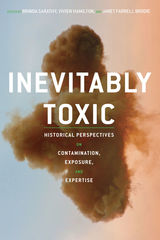
Not a day goes by that humans aren’t exposed to toxins in our environment—be it at home, in the car, or workplace. But what about those toxic places and items that aren’t marked? Why are we warned about some toxic spaces' substances and not others? The essays in Inevitably Toxic consider the exposure of bodies in the United States, Canada and Japan to radiation, industrial waste, and pesticides. Research shows that appeals to uncertainty have led to social inaction even when evidence, e.g. the link between carbon emissions and global warming, stares us in the face. In some cases, influential scientists, engineers and doctors have deliberately "manufactured doubt" and uncertainty but as the essays in this collection show, there is often no deliberate deception. We tend to think that if we can’t see contamination and experts deem it safe, then we are okay. Yet, having knowledge about the uncertainty behind expert claims can awaken us from a false sense of security and alert us to decisions and practices that may in fact cause harm.
In the epilogue, Hamilton and Sarathy interview Peter Galison, a prominent historian of science whose recent work explores the complex challenge of long term nuclear waste storage.

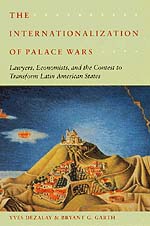
Based on more than 300 extensive interviews with major players in governments, foundations, law firms, universities, and think tanks, Dezalay and Garth examine both the production of northern exports such as neoliberal economics and international human rights law and the ways they are received south of the United States. They find that the content of what is exported and how it fares are profoundly shaped by domestic struggles for power and influence—"palace wars"—in the nations involved. For instance, challenges to the eastern intellectual establishment influenced the Reagan-era export of University of Chicago-style neoliberal economics to Chile, where it enjoyed a warm reception from Pinochet and his allies because they could use it to discredit the previous regime.
Innovative and sophisticated, The Internationalization of Palace Wars offers much needed concrete information about the transnational processes that shape our world.

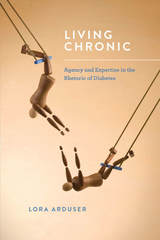
Diabetes, referred to as an epidemic for more than a decade, remains one of our most significant health issues in the twenty-first century. Because self-management is an important component of living with the disease, the biomedical concept of patient agency has long stressed notions of individual responsibility and autonomy. However, dramatic shifts in both health care and cultural practices call for a reassessment of traditional definitions of patient agency.
Lora Arduser’s Living Chronic: Agency and Expertise in the Rhetoric of Diabetes answers this call with a unique rhetorical examination of one of the most critical issues in contemporary health: how we live and work with being chronic. Through her perceptive analysis of the discourse of both people with diabetes and health care providers, Arduser presents a new model for patient agency—one that advocates for a relational, fluid concept of agency that blurs the boundaries between medical experts and patients. Her thought-provoking use of bodily and rhetorical plasticity crafts a multidimensional picture of patient agency that profoundly affects how rhetorical scholars, people living with chronic illness, and health care providers can forge patient-centered discourse and practices.
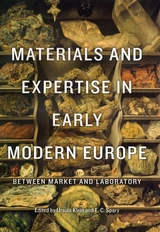
It is often assumed that natural philosophy was the forerunner of early modern natural sciences. But where did these sciences’ systematic observation and experimentation get their starts? In Materials and Expertise in Early Modern Europe, the laboratories, workshops, and marketplaces emerge as arenas where hands-on experience united with higher learning. In an age when chemistry, mineralogy, geology, and botany intersected with mining, metallurgy, pharmacy, and gardening, materials were objects that crossed disciplines.
Here, the contributors tell the stories of metals, clay, gunpowder, pigments, and foods, and thereby demonstrate the innovative practices of technical experts, the development of the consumer market, and the formation of the observational and experimental sciences in the early modern period. Materials and Expertise in Early Modern Europe showcases a broad variety of forms of knowledge, from ineffable bodily skills and technical competence to articulated know-how and connoisseurship, from methods of measuring, data gathering, and classification to analytical and theoretical knowledge. By exploring the hybrid expertise involved in the making, consumption, and promotion of various materials, and the fluid boundaries they traversed, the book offers an original perspective on important issues in the history of science, medicine, and technology.
Governments throughout the industrialized world make decisions that fundamentally affect the quality and accessibility of medical care. In the United States, despite the absence of universal health insurance, these decisions have great influence on the practice of medicine.
In Medical Governance, David Weimer explores an alternative regulatory approach to medical care based on the delegation of decisions about the allocation of scarce medical resources to private nonprofit organizations. He investigates the specific development of rules for the U.S. organ transplant system and details the conversion of a voluntary network of transplant centers to one private rulemaker: the Organ Procurement and Transplantation Network (OPTN).
As the case unfolds, Weimer demonstrates that the OPTN is more efficient, nimble, and better at making evidence-based decisions than a public agency; and the OPTN also protects accountability and the public interest more than private for-profit organizations. Weimer addresses similar governance arrangements as they could apply to other areas of medicine, including medical records and the control of Medicare expenditures, making this timely and useful case study a valuable resource for debates over restructuring the U.S. health care system.
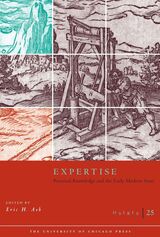
This newest annual edition of Osiris brings together a variety of scholars to consider a topic of increasing interest in the history of science: expertise. Focusing specifically on the role expertise has played in the support, legitimation, and growth of the state since early modern times, Expertise and the Early Modern State reveals how scientific expertise and practical knowledge were crucial to the construction of early modern empires and economies. The state, on the other hand, performed a similar function for scientists, giving them much of the status and resources they needed to further their work. A penetrating, multifaceted investigation, Osiris 25 will be required reading for historians of science and early modern political development.
More than mere touts for the interests of Washington insiders, these groups encourage Congress to enact policies that are likely to succeed while avoiding those that have too great of a risk of failure. The surprising result is greater legislative efficiency. The Political Economy of Expertise illustrates that this system actually favors effective and informed decision making, thereby increasing the likelihood that new policies will benefit the American public.
Drawing on insights from sociology, political science, and institutional theory, Sending challenges theories centered on particular actors’ authority, whether it is the authority of so-called epistemic communities, the moral authority of advocacy groups, or the rational-legal authority of international organizations. Using in-depth and historically oriented case studies of population and peacebuilding, he demonstrates that authority is not given nor located in any set of particular actors. Rather, continuous competition for recognition as an authority to determine what is to be governed, by whom, and for what purpose shapes global governance in fundamental ways.
Advancing a field-based approach, Sending highlights the political stakes disguised by the technical language of professionals and thus opens a broader public debate over the key issues of our time.
Unlike autonomous professionals in Western industrialized democracies, professionals in a socialist, bureaucratic setting operate as employees of the state. The change in environment has important Implications not only for the practice of professions but also for the concept of professionalism itself. This collection of nine essays is the first to survey the major professions In the USSR, Czechoslovakia, and Poland. The contributors investigate the implications of professional experience in a socialist economy as well as relating changes in professional organization and power to reform movements in general and perestroika in particular.
In the series Labor and Social Change, edited by Paula Rayman and Carmen Sirianni.
What does it mean to be an expert? In Rethinking Expertise, Harry Collins and Robert Evans offer a radical new perspective on the role of expertise in the practice of science and the public evaluation of technology.
Collins and Evans present a Periodic Table of Expertises based on the idea of tacit knowledge—knowledge that we have but cannot explain. They then look at how some expertises are used to judge others, how laypeople judge between experts, and how credentials are used to evaluate them. Throughout, Collins and Evans ask an important question: how can the public make use of science and technology before there is consensus in the scientific community? This book has wide implications for public policy and for those who seek to understand science and benefit from it.
“Starts to lay the groundwork for solving a critical problem—how to restore the force of technical scientific information in public controversies, without importing disguised political agendas.”—Nature
“A rich and detailed ‘periodic table’ of expertise . . . full of case studies, anecdotes and intriguing experiments.”—Times Higher Education Supplement (UK)
Anne M. Khademian addresses the significance of the SEC for securities policy and uses the agency as a model for the study of bureaucracy and bureaucratic theory. She examines the interaction of bureaucrats, politicians and the White House, and connects early debates in the field of public administration with the contemporary arguments of rational choice scholars concerning independence.
The classic tension within U.S. federal agencies is between the need to hold bureaucrats politically accountable to elected officials and the need to delegate complex decision making to officials with “independent” expertise. In the SEC this tension is especially pronounced because of the agency's dependence on attorneys and economists. Khademian traces the development of a regulatory strategy from the creation of the SEC by FDR in 1934 to the present, examines the roles of SEC experts and their political overseers in Congress as they create policy, and evaluates the stability of that policy. Her study reveals how the tug-of-war between demands for accountability and giving freedom to expertise has affected the agency's evolution and its regulatory activities.
Government “of the people, by the people, for the people” expresses an ideal that resonates in all democracies. Yet poll after poll reveals deep distrust of institutions that seem to have left “the people” out of the governing equation. Government bureaucracies that are supposed to solve critical problems on their own are a troublesome outgrowth of the professionalization of public life in the industrial age. They are especially ill-suited to confronting today’s complex challenges.
Offering a far-reaching program for innovation, Smart Citizens, Smarter State suggests that public decisionmaking could be more effective and legitimate if government were smarter—if our institutions knew how to use technology to leverage citizens’ expertise. Just as individuals use only part of their brainpower to solve most problems, governing institutions make far too little use of the skills and experience of those inside and outside of government with scientific credentials, practical skills, and ground-level street smarts. New tools—what Beth Simone Noveck calls technologies of expertise—are making it possible to match the supply of citizen expertise to the demand for it in government.
Drawing on a wide range of academic disciplines and practical examples from her work as an adviser to governments on institutional innovation, Noveck explores how to create more open and collaborative institutions. In so doing, she puts forward a profound new vision for participatory democracy rooted not in the paltry act of occasional voting or the serendipity of crowdsourcing but in people’s knowledge and know-how.
In this rich ethnographic study, Vogler reveals how different legal arenas take dramatically different approaches to classifying sexuality and use those classifications to legitimate different forms of social control. By delving into the histories behind these diverging classification practices and analyzing their contemporary reverberations, Vogler shows how the science of sexuality is far more central to state power than we realize.
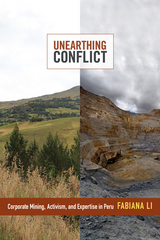

The public has voiced concern over the adverse effects of vaccines from the moment Dr. Edward Jenner introduced the first smallpox vaccine in 1796. The controversy over childhood immunization intensified in 1998, when Dr. Andrew Wakefield linked the MMR vaccine to autism. Although Wakefield’s findings were later discredited and retracted, and medical and scientific evidence suggests routine immunizations have significantly reduced life-threatening conditions like measles, whooping cough, and polio, vaccine refusal and vaccine-preventable outbreaks are on the rise. This book explores vaccine hesitancy and refusal among parents in the industrialized North. Although biomedical, public health, and popular science literature has focused on a scientifically ignorant public, the real problem, Maya J. Goldenberg argues, lies not in misunderstanding, but in mistrust. Public confidence in scientific institutions and government bodies has been shaken by fraud, research scandals, and misconduct. Her book reveals how vaccine studies sponsored by the pharmaceutical industry, compelling rhetorics from the anti-vaccine movement, and the spread of populist knowledge on social media have all contributed to a public mistrust of the scientific consensus. Importantly, it also emphasizes how historical and current discrimination in health care against marginalized communities continues to shape public perception of institutional trustworthiness. Goldenberg ultimately reframes vaccine hesitancy as a crisis of public trust rather than a war on science, arguing that having good scientific support of vaccine efficacy and safety is not enough. In a fraught communications landscape, Vaccine Hesitancy advocates for trust-building measures that focus on relationships, transparency, and justice.
Never before have so many scholars produced so much work--and never before have they seemed to have so little to say to one another, or to the public at large. This is the dilemma of the modern university, which today sets the pattern for virtually all scholarship. In his eloquent book, David Damrosch offers a lucid, often troubling assessment of the state of scholarship in our academic institutions, a look at how these institutions acquired their present complexion, and a proposal for reforms that can promote scholarly communication and so, perhaps, broader, more relevant scholarship.
We Scholars explores an academic culture in which disciplines are vigorously isolated and then further divided into specialized fields, making for a heady mix of scholarly alienation and disciplinary territorialism, a wealth of specialized inquiry and a poverty of general discussion. This pattern, however, is not necessary and immutable; rather, it stems from decisions made a century ago, when the American university assumed its modern form. Damrosch traces the political and economic assumptions behind these decisions and reveals their persisting effects on academic structures despite dramatic changes in the larger society. We Scholars makes a compelling case for a scholarly community more reflective of and attuned to today's needs. The author's call for cooperation as the basis for intellectual endeavor, both within and outside the academy, will resonate for anyone concerned with the present complexities and future possibilities of academic work.
READERS
Browse our collection.
PUBLISHERS
See BiblioVault's publisher services.
STUDENT SERVICES
Files for college accessibility offices.
RECENTLY PUBLISHED





UChicago Accessibility Resources
home | accessibility | search | about | contact us
BiblioVault ® 2001 - 2024
The University of Chicago Press