
front cover of 1989
1989
Revolutionary Ideas and Ideals
Krishan Kumar
University of Minnesota Press, 2001

In 1989, from East Berlin to Budapest and Bucharest to Moscow, communism was falling. The walls were coming down and the world was being changed in ways that seemed entirely new. The conflict of ideas and ideals that began with the French Revolution of 1789 culminated in these revolutions, which raised the prospects of the "return to Europe" of East and Central European nations, the "restarting of their history," even, for some, the "end of history." What such assertions and aspirations meant, and what the larger events that inspired them mean-not just for the world of history and politics, but for our very understanding of that world-are the questions Krishan Kumar explores in 1989.


A well-known and widely respected scholar, Kumar places these revolutions of 1989 in the broadest framework of political and social thought, helping us see how certain ideas, traditions, and ideological developments influenced or accompanied these movements-and how they might continue to play out. Asking questions about some of the central dilemmas facing modern society in the new century, Kumar offers critical insight into how these questions might be answered and how political, social, and historical ideas and ideals can shape our destiny.       

Contradictions Series, volume 12
[more]

front cover of Administrative Law in Central and Eastern Europe
Administrative Law in Central and Eastern Europe
Denis J. Galligan
Central European University Press, 1998
Following the constitutional and political reforms in Central and Eastern Europe of the last decade, the time has now come for the whole-scale reform of public administration and the creation of a professional civil service. What is needed is a clear sense of the objectives to be achieved by the administration; and the provision of adequate resources to perform the tasks of public administration. In addition, and perhaps most importantly of all, there must be a sound legal basis for public administration. Recognizing these realities, this book examines administrative law and administrative institutions in Central and Eastern Europe. In a series of case studies, discussing each country in the region in turn, it looks at the ways in which a range of administrative decisions are reached and at how the citizens affected by them are treated. The material for each of the fourteen chapters was collected by a person or persons native to the respective country.
[more]

front cover of Anti-modernism
Anti-modernism
Radical Revisions of Collective Identity
Ahmet Ersoy
Central European University Press, 2014
The last volume of the Discourses of Collective Identity in Central and Southeast Europe 1770–1945 series presents 46 texts under the heading of "antimodernism". In a dynamic relationship with modernism, from the 1880s to the 1940s, and especially during the interwar period, the antimodernist political discourse in the region offered complex ideological constructions of national identification. These texts rejected the linear vision of progress and instead offered alternative models of temporality, such as the cyclical one as well as various narratives of decline. This shift was closely connected to the rejection of liberal democratic institutionalism, and the preference for organicist models of social existence, emphasizing the role of the elites (and charismatic leaders) shaping the whole body politic. Along these lines, antimodernist authors also formulated alternative visions of symbolic geography: rejecting the symbolic hierarchies that focused on the normativity of Western European models, they stressed the cultural and political autarchy of their own national community, which in some cases was also coupled with the reevaluation of the Orient. At the same time, this antimodernist turn should not be confused with rightwing radicalism—in fact, the dialogue with the modernist tradition was often very subtle and the anthology also contains texts which offered a criticism of 'modern' totalitarianism in an antimodernist key.
[more]

front cover of Art beyond Borders
Art beyond Borders
Artistic Exchange in Communist Europe (1945-1989)
Jérôme Bazin
Central European University Press, 2016
This book presents and analyzes artistic interactions both within the Soviet bloc and with the West between 1945 and 1989. During the Cold War the exchange of artistic ideas and products united Europe’s avant-garde in a most remarkable way. Despite the Iron Curtain and national and political borders there existed a constant flow of artists, artworks, artistic ideas and practices. The geographic borders of these exchanges have yet to be clearly defined. How were networks, centers, peripheries (local, national and international), scales, and distances constructed? How did (neo)avant-garde tendencies relate with officially sanctioned socialist realism? The literature on the art of Eastern Europe provides a great deal of factual knowledge about a vast cultural space, but mostly through the prism of stereotypes and national preoccupations. By discussing artworks, studying the writings on art, observing artistic evolution and artists’ strategies, as well as the influence of political authorities, art dealers and art critics, the essays in Art beyond Borders compose a transnational history of arts in the Soviet satellite countries in the post war period.
[more]

front cover of A Biographical Dictionary of Women's Movements and Feminisms
A Biographical Dictionary of Women's Movements and Feminisms
Central, Eastern, and South Eastern Europe, 19th and 20th Centuries
Anna Loutfi
Central European University Press, 2006
This Biographical Dictionary describes the lives, works and aspirations of more than 150 women and men who were active in, or part of, women’s movements and feminisms in Central, Eastern and South Eastern Europe. Thus, it challenges the widely held belief that there was no historical feminism in this part of Europe. These innovative and often moving biographical portraits not only show that feminists existed here, but also that they were widespread and diverse, and included Romanian princesses, Serbian philosophers and peasants, Latvian and Slovakian novelists, Albanian teachers, Hungarian Christian social workers and activists of the Catholic women’s movement, Austrian factory workers, Bulgarian feminist scientists and socialist feminists, Russian radicals, philanthropists, militant suffragists and Bolshevik activists, prominent writers and philosophers of the Ottoman era, as well as Turkish republican leftist political activists and nationalists, internationally recognized Greek feminist leaders, Estonian pharmacologists and science historians, Slovenian ‘literary feminists,’ Czech avant-garde painters, Ukrainian feminist scholars, Polish and Czech Senate Members, and many more. Their stories together constitute a rich tapestry of feminist activity and redress a serious imbalance in the historiography of women’s movements and feminisms.
[more]

front cover of Blood and Homeland
Blood and Homeland
Eugenics and Racial Nationalism in Central and Southeast Europe, 1900-1940
Paul J. Weindling
Central European University Press, 2007
The history of eugenics and racial nationalism in Central and Southeast Europe is a neglected topic of analysis in contemporary scholarship. The 20 essays in this volume, written by distinguished scholars of eugenics and fascism alongside a new generation of scholars, excavate the hitherto unknown eugenics movements in Central and Southeast Europe, including Austria and Germany. Eugenics and racial nationalism are topics that have constantly been marginalized and rated as incompatible with local national traditions in Central and Southeast Europe. These topics receive a new treatment here. On the one hand, the historiographic perspective connects developments in the history of anthropology and eugenics with political ideologies such as racial nationalism and anti-Semitism; on the other hand, it contests the 'Sonderweg' approach adopted by scholars dealing with these issues.
[more]

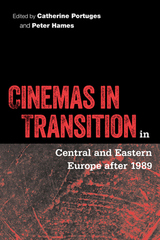
front cover of Cinemas in Transition in Central and Eastern Europe after 1989
Cinemas in Transition in Central and Eastern Europe after 1989
Catherine Portuges
Temple University Press, 2013
The cinemas of Eastern and Central Europe have been moving away from earlier Cold War perspectives and iconographies toward identifications more closely linked to a redefined Europe. Cinemas in Transition in Central and Eastern Europe after 1989 studies the shifts in the dynamics between film production, exhibition, and reception in Eastern bloc countries as they moved from state-sponsored systems toward the free market.
 
The contributors and editors of this exciting volume examine the interrelations between thematic, aesthetic, and infrastructural changes; the globalization of the international cinema marketplace; and the problems and promises arising from the privatization of national cinemas. 

Cinemas in Transition in Central and Eastern Europe after 1989 also addresses the strategies employed for preserving national cinemas and cultures through an analysis of films from the Czech and Slovak republics, the former German Democratic Republic, Hungary, Poland, Romania, Ukraine, and the former Yugoslavia. The study provides a picture of Eastern European cinema at a critical juncture as well as its connections to the emergent world of transnational media.

Contributors include Barton Byg, Alexandra Foamente, Andrew Horton, Dina Iordanova, Ewa Mazierska, Bohdan Y. Nebesio, and Bogdan Stefanescu,
[more]

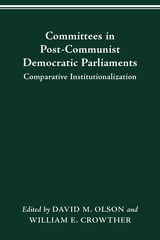
front cover of COMMITTEES IN POST-COMMUNIST DEMOCRATIC PARLIAMENTS
COMMITTEES IN POST-COMMUNIST DEMOCRATIC PARLIAMENTS
COMPARATIVE INSTITUTIONALIZATION
DAVID M. OLSON
The Ohio State University Press, 2002

The former Communist countries of Eastern Europe provide a treasure-trove of data on the development of democratic institutions. The contributors to this volume use the recent experiences of these countries to identify how the various committee systems are structured and tie the relative strength of the committee system in each country to the relative strength of its legislature. A uniform theoretical framework connects the work of each essay and ties the parts into an informative whole.

Comparative analysis based on seven indicators of institutionalization suggests that the committee systems of Hungary, Poland, and the Czech Republic are more institutionalized than those found elsewhere. Bulgaria is a middle case, while the parliaments of Moldova, Lithuania, and Estonia are the least. Of the indicators, stability in committee membership and extent of committee activity are among the most important for post-communist parliaments in their first decade.

This examination of legislative committees in their beginning stages suggests that the processes of institutionalization are sequenced: expertise in a policy sector is the basis of both the assertion of jurisdictional autonomy by committees and the motive for party control of their membership and officer positions. Basic to these developments, however, is the emergence of a stable and consistent structure of the committee system as a whole. More broadly, committee attributes are closely linked to the condition and functioning of both parliamentary party groups and the government.
[more]

front cover of Contesting Copyright
Contesting Copyright
A History of Intellectual Property in East Central Europe and the Balkans
Augusta Dimou
Central European University Press, 2026
The creative sector, including the cultural industry, is key for today’s economy. Copyright has the capacity to x the roles and tasks of the actors involved and determine the direction of cash ows within this sector. The study of the evolution of copyright helps understand and adjust the regulation and commercialization of creative labor. Augusta Dimou provides a thoroughly researched, interdisciplinary and comparative study of the historical development of copyright regimes in three countries – Czechoslovakia, Yugoslavia, and Bulgaria. She examines the function and signi cance of copyright in the institutionalization, development, and regulation of modern culture in East Central Europe and the Balkans during the diverse political regimes of the modern era, and at the interface between the various nationalization and globalization processes of the 20th century.
[more]

front cover of Corporate Governance in Central Europe and Russia
Corporate Governance in Central Europe and Russia
Banks, Funds, and Foreign Investors
Roman Frydman
Central European University Press, 1996
The studies in this two-volume work shed new light on the range and viability of the emerging corporate governance institutions in the transitional economies of Central Europe. Regional specialists and experts on corporate governance in advanced economies examine the emerging forms of ownership and complementary monitoring institutions in leading transition companies.
[more]

front cover of Corporate Governance in Central Europe and Russia
Corporate Governance in Central Europe and Russia
Insiders and the State
Andrzej Rapaczynski
Central European University Press, 1996
The studies in this two-volume work shed new light on the range and viability of the emerging corporate governance institutions in the transitional economies of Central Europe. Regional specialists and experts on corporate governance in advanced economies examine the emerging forms of ownership and complementary monitoring institutions in leading transition companies.
[more]

front cover of Court, Cloister, and City
Court, Cloister, and City
The Art and Culture of Central Europe, 1450-1800
Thomas DaCosta Kaufmann
University of Chicago Press, 1995
The collapse of Communism in Central and Eastern Europe opened the doors to cultural treasures that for decades had been hidden, forgotten, or misinterpreted. Thomas DaCosta Kaufmann looks at Central Europe as a cultural entity while chronicling more than three hundred years of painting, sculpture, and architecture in Germany, Poland, the Czech Republic, Slovakia, Hungary, Austria, Ukraine, Lithuania and western parts of the Russian Federation. Kaufmann surveys a remarkable range of art and artifacts created from the coming of the Renaissance through to the Enlightenment.

"Kaufmann throws considerable light on one of the more neglected and least understood periods in art history."—Philadelphia Inquirer

"A wonderful book which does justice both to a formal analysis of the art and to an explanation of broader political and economic forces at work."—Virginia Quarterly Review

"Important and stimulating, Kaufmann's study examines the cultural legacy of a region too little known and understood."—Choice

"Peaks of the creative heritage which [Kaufmann] describes reserve their message—and their surprises—for those who visit them in situ. But invest in Kaufmann's volume before you go."—R. J. W. Evans, New York Review of Books
[more]

front cover of Deficit and Debt in Transition
Deficit and Debt in Transition
The Political Economy of Public Finances in Central and Eastern Europe
Istvan Benczes
Central European University Press, 2014
The adjustment problems of public finance in countries of Central and Eastern Europe (CEE) are often misunderstood and misinterpreted by western scholars. This book contributes to the bridging of the gap between what is being thought by external observers and what the actual public finance reality is, as described by competent local scholars. Popular political economy research has remained biased towards advanced countries and has neglected developing and transition economies. Publications on CEE countries' public finances seem to be reluctant to apply the conceptual framework of standard political economy to these countries because of the assumption that CEE economies are different from their Western peers. But is this really the case? Are CEE economies so much different that none of the well-known "Western" political economy concepts or models can be applied to the analysis of fiscal performance in the region? Benczes demonstrates that they can be safely applied in the context of CEE economies as well. He sees no need to develop a separate or unique theory designed for the study and understanding of (one-time) transition economies.
[more]

front cover of The Dilemmas of Dissidence in East-Central Europe
The Dilemmas of Dissidence in East-Central Europe
Citizen Intellectuals and Philosopher Kings
Barbara J. Falk
Central European University Press, 2003
Discusses one of the major currents leading to the fall of communism. Falk examines the intellectual dissident movements in Poland, Czechoslovakia and Hungary from the late 1960s through to 1989. In spite of its historic significance, no other comprehensive survey has appeared on the subject. In addition to the huge list of written sources from samizdat works to recent essays, Falks sources include interviews with many personalities of those events as well as videos and films (including Oscar winners).
[more]

front cover of Divide and Pacify
Divide and Pacify
Strategic Social Policies and Political Protests in Post-Communist Democracies
Pieter Vanhuysse
Central European University Press, 2006

Despite dramatic increases in poverty, unemployment, and social inequalities, the Central and Eastern European transitions from communism to market democracy in the 1990s have been remarkably peaceful. This book proposes a new explanation for this unexpected political quiescence. It shows how reforming governments in Poland, Hungary and the Czech Republic have been able to prevent massive waves of strikes and protests by the strategic use of welfare state programs such as pensions and unemployment benefits.

Divide and Pacify explains how social policies were used to prevent massive job losses with softening labor market policies, or to split up highly aggrieved groups of workers in precarious jobs by sending some of them onto unemployment benefits and many others onto early retirement and disability pensions. From a narrow economic viewpoint, these policies often appeared to be immensely costly or irresponsibly populist. Yet a more inclusive social-scientific perspective can shed new light on these seemingly irrational policies by pointing to deeper political motives and wider sociological consequences.

[more]

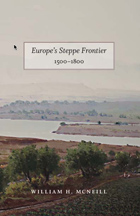
front cover of Europe's Steppe Frontier, 1500-1800
Europe's Steppe Frontier, 1500-1800
William H. McNeill
University of Chicago Press, 1964
In Europe’s Steppe Frontier, acclaimed historian William H. McNeill analyzes the process whereby the thinly occupied grasslands of southeastern Europe were incorporated into the bodies-social of three great empires: the Ottoman, the Austrian, and the Russian. McNeill benefits from a New World detachment from the bitter nationality quarrels of the late nineteenth and early twentieth century which inspired but also blinded most of the historians of the region. Moreover, the unique institutional adjustments southeastern Europeans made to the frontier challenge cast indirect light upon the peculiarities of the North American frontier experience.
[more]

front cover of The Fiume Crisis
The Fiume Crisis
Life in the Wake of the Habsburg Empire
Dominique Kirchner Reill
Harvard University Press, 2020

Recasting the birth of fascism, nationalism, and the fall of empire after World War I, Dominique Kirchner Reill recounts how the people of Fiume tried to recreate empire in the guise of the nation.

The Fiume Crisis recasts what we know about the birth of fascism, the rise of nationalism, and the fall of empire after World War I by telling the story of the three-year period when the Adriatic city of Fiume (today Rijeka, in Croatia) generated an international crisis.

In 1919 the multicultural former Habsburg city was occupied by the paramilitary forces of the flamboyant poet-soldier Gabriele D’Annunzio, who aimed to annex the territory to Italy and became an inspiration to Mussolini. Many local Italians supported the effort, nurturing a standard tale of nationalist fanaticism. However, Dominique Kirchner Reill shows that practical realities, not nationalist ideals, were in the driver’s seat. Support for annexation was largely a result of the daily frustrations of life in a “ghost state” set adrift by the fall of the empire. D’Annunzio’s ideology and proto-fascist charisma notwithstanding, what the people of Fiume wanted was prosperity, which they associated with the autonomy they had enjoyed under Habsburg sovereignty. In these twilight years between the world that was and the world that would be, many across the former empire sought to restore the familiar forms of governance that once supported them. To the extent that they turned to nation-states, it was not out of zeal for nationalist self-determination but in the hope that these states would restore the benefits of cosmopolitan empire.

Against the too-smooth narrative of postwar nationalism, The Fiume Crisis demonstrates the endurance of the imperial imagination and carves out an essential place for history from below.
[more]

front cover of Fragile Dreams
Fragile Dreams
Tales of Liberalism and Power in Central Europe
John A. Gould
University of Michigan Press, 2021

In Fragile Dreams, John A. Gould examines Central European communism, why it failed, and what has come since. Moving loosely chronologically from 1989 to the present, each chapter focuses on topics of importance to the fields of comparative politics, sociology, and feminist and gender studies. He draws heavily from his own research and experience as well as case studies of the former Czechoslovakia, Western Balkans, and Hungary—but much of the analysis has general applicability to the broader postcommunist region.

Broad in its coverage, this academically rigorous book is ideal for students, travelers, and general readers. Gould writes in the first person and seamlessly blends theory with stories both from the existing literature and from 30 years of regional personal experience with family and friends. Throughout, Gould introduces key concepts, players, and events with precise definitions. Wherever possible, he emphasizes marginalized narratives, centering theory and stories that are often overlooked in standard comparative political science literature.
[more]

front cover of Free Market in Its Twenties
Free Market in Its Twenties
Modern Business Decision Making in Central and Eastern Europe
George Soros
Central European University Press, 2014
This book provides a broadly managerial perspective on key trends that affect business decision-making in Central and Eastern Europe twenty years after the beginning of the region's transition to market economy. Reflecting different viewpoints, including economic, social, and political approaches, the essays helps managers of the region to understand better both regional and the global forces influencing their businesses – as well as to bring to their attention relevant cutting-edge approaches to business thinking and decision-making.
[more]

front cover of Freedom for Publishing, Publishing for Freedom
Freedom for Publishing, Publishing for Freedom
Timothy Garton Ash
Central European University Press, 1995
This is an assessment of the Central and East European Publishing Project, an initiative designed to support embattled Central and East European publishers and journals, and to punch holes through the cultural Iron Curtain by encouraging translations. The nine years of its existence straddle the largest watershed in European history since 1945, and the Project's history - told here by some of its leading participants - illuminates the nature of the recent changes in Central and Eastern Europe.
[more]

front cover of Friars, Nobles and Burghers – Sermons, Images and Prints
Friars, Nobles and Burghers – Sermons, Images and Prints
Studies of Culture and Society in Early-Modern Europe - In Memoriam István György Tóth
László Kontler
Central European University Press, 2010
The essays in this volume reflect the broader interpretation of culture as a system of shared meanings, values, attitudes and symbolic forms in any sphere of human life. Although thematically diverse, all these studies adhere to the concept of what is sometimes termed the new cultural history or socio-cultural history. The work opens with a cluster of methodological and historiographical reflections. Topics covered by the thematic sections include confessional and religious life in early modern Europe, symbolism and representation, strife and accommodation among different denominations compelled to live in a common space, order and hierarchy, cracks in the machinery of authority and the threat of disintegration as well as the history of alphabetization, literacy and reading and writing practices. This book pays tribute to István György Tóth (1956–2005), Head of the Department of Early-Modern History at the Institute of History of the Hungarian Academy of Sciences, and Professor of History at Central European University (both in Budapest), until his premature death in 2005.
[more]

front cover of Guardians of the Nation
Guardians of the Nation
Activists on the Language Frontiers of Imperial Austria
Pieter M. Judson
Harvard University Press, 2007

In the decades leading up to World War I, nationalist activists in imperial Austria labored to transform linguistically mixed rural regions into politically charged language frontiers. They hoped to remake local populations into polarized peoples and their villages into focal points of the political conflict that dominated the Habsburg Empire. But they often found bilingual inhabitants accustomed to cultural mixing who were stubbornly indifferent to identifying with only one group.

Using examples from several regions, including Bohemia and Styria, Pieter Judson traces the struggle to consolidate the loyalty of local populations for nationalist causes. Whether German, Czech, Italian, or Slovene, the nationalists faced similar and unexpected difficulties in their struggle to make nationalism relevant to local concerns and to bind people permanently to one side. Judson examines the various strategies of the nationalist activists, from the founding of minority language schools to the importation of colonists from other regions, from projects to modernize rural economies to the creation of a tourism industry. By 1914, they succeeded in projecting a public perception of nationalist frontiers, but largely failed to nationalize the populations.

Guardians of the Nation offers a provocative challenge to standard accounts of the march of nationalism in modern Europe.
[more]

front cover of The Habsburg Empire
The Habsburg Empire
A New History
Pieter M. Judson
Harvard University Press, 2016

A EuropeNow Editor’s Pick
A Choice Outstanding Academic Title of the Year

“Pieter M. Judson’s book informs and stimulates. If his account of Habsburg achievements, especially in the 18th century, is rather starry-eyed, it is a welcome corrective to the black legend usually presented. Lucid, elegant, full of surprising and illuminating details, it can be warmly recommended to anyone with an interest in modern European history.”
—Tim Blanning, Wall Street Journal


“This is an engaging reappraisal of the empire whose legacy, a century after its collapse in 1918, still resonates across the nation-states that replaced it in central Europe. Judson rejects conventional depictions of the Habsburg empire as a hopelessly dysfunctional assemblage of squabbling nationalities and stresses its achievements in law, administration, science and the arts.”
—Tony Barber, Financial Times

“Spectacularly revisionist… Judson argues that…the empire was a force for progress and modernity… This is a bold and refreshing book… Judson does much to destroy the picture of an ossified regime and state.”
—A. W. Purdue, Times Higher Education

“Judson’s reflections on nations, states and institutions are of broader interest, not least in the current debate on the future of the European Union after Brexit.”
—Annabelle Chapman, Prospect
[more]

front cover of The Historical Construction of National Consciousness
The Historical Construction of National Consciousness
Selected Writings
Jeno Szucs
Central European University Press, 2022

A long essay entitled Three Historical Regions of Europe, appearing first in a samizdat volume in Budapest in 1980, instantly put its author into the forefront of the transnational debate on Central Europe, alongside such intellectual luminaries as Milan Kundera and Czesław Miłosz. The present volume offers English-language readers a rich selection of the depth and breadth of the legacy of Jenő Szűcs (1928–1988).

The selection documents Szűcs’s seminal contribution to many contemporary debates in historical anthropology, nationalism studies, and conceptual history. It contains his key texts on the history of national consciousness and patterns of collective identity, as well as medieval and early modern political thought. The works published here, most of them previously unavailable in English, provide a sophisticated analysis of a wide range of subjects from the myths of origins of Hungarians before Christianization to the political and religious ideology of the Dózsa peasant uprising in 1514, the medieval roots of civil society, or the revival of ethnic nationalism during the communist era. The volume, with an introduction by the editors locating Szűcs in a transnational context, offers a unique insight into the complex and sensitive debate on national identity in post-1945 East Central Europe.

[more]

front cover of History in My Life
History in My Life
A Memoir of Three Eras
Ivan T. Berend is Distinguished Research Professor at the History Department of the University of California Los Angeles.
Central European University Press, 2009

Ivan T. Berend is Distinguished Professor at the University of California Los Angeles, Director of the European Studies Program. He was one of the masterminds of regime change in Hungary. He made a career in Hungary as a university professor, Rector of the University of Economics (1973–79), and President of the Hungarian Academy of Sciences (1985–90). He was President of the International Committee of Historical Sciences (1995–2000), and Vice-President of the International Economic History Association (1986–1994). His research interests are the complex economic, social, ideological, and cultural history of Central and Eastern Europe in the 19th–20th century; economic modernization; problems of European backwardness; transition from state socialism to capitalism. He published and 26 books and more than 120 studies.

Before he became a professor at UCLA, Ivan Berend had survived five regime changes and two revolutions in Hungary, had been in prison and German concentration camp in 1944–45.

His memoir offers an interesting case study, a subjective addition to the “objective” historical works on Central and Eastern European state socialism. It describes the hard choices of intellectuals in a dictatorial state: 1. remain in isolation, concentrate on scholarly works, and exclude politics in your personal life; 2. be in opposition, criticize and unveil the regime, accept discrimination and exclusion; 3. remain within the establishment and work for reforming the country using legal possibilities to criticize the regime and to achieve changes from within.

Berend’s book raises basic historical questions and debates, compares East European and American higher education systems, and presents an eyewitness’ insights on life in the United States.

[more]

front cover of Judaism Musical and Unmusical
Judaism Musical and Unmusical
Michael P. Steinberg
University of Chicago Press, 2008
Modernity gave rise to a Jewish consciousness that has increasingly distanced itself from the sacred in favor of worldliness and secularity. Judaism Musical and Unmusical traces the formulation of this secular Jewishness from its Enlightenment roots through the twentieth century to explore the infinite variations of modern Jewish experience in Central Europe and beyond.

Engaging the work of such figures as Sigmund Freud, Walter Benjamin, Hannah Arendt, Charlotte Salomon, Arnaldo Momigliano, Leonard Bernstein, and Daniel Libeskind, Michael Steinberg shows how modern Jews advanced cosmopolitanism and multiplicity by helping to loosen—whether by choice or by necessity—the ties that bind any culture to accounts of its origins. In the process, Steinberg composes a mosaic of texts and events, often distant from one another in time and place, that speak to his theme of musicality. As both a literal value and a metaphorical one, musicality opens the possibility of a fusion of aesthetics and analysis—a coupling analogous to European modernity’s twin concerns of art and politics.
[more]

front cover of Labor in State-Socialist Europe, 1945–1989
Labor in State-Socialist Europe, 1945–1989
Contributions to a History of Work
Marsha Siefert
Central European University Press, 2020

Labor regimes under communism in East-Central Europe were complex, shifting, and ambiguous. This collection of sixteen essays offers new conceptual and empirical ways to understand their history from the end of World War II to 1989, and to think about how their experiences relate to debates about labor history, both European and global.

The authors reconsider the history of state socialism by re-examining the policies and problems of communist regimes and recovering the voices of the workers who built them. The contributors look at work and workers in Albania, Bulgaria, Czechoslovakia, the German Democratic Republic, Hungary, Poland, Romania, and Yugoslavia. They explore the often contentious relationship between politics and labor policy, dealing with diverse topics including workers’ safety and risks; labor rights and protests; working women’s politics and professions; migrant workers and social welfare; attempts to control workers’ behavior and stem unemployment; and cases of incomplete, compromised, or even abandoned processes of proletarianization. Workers are presented as active agents in resisting and supporting changes in labor policies, in choosing allegiances, and in defining the very nature of work.

[more]

front cover of Late Enlightenment
Late Enlightenment
Emergence of the Modern 'National Idea'
Marius Turda
Central European University Press, 2006
This volume represents the first in a four-volume series, a daring project by CEU Press which presents the most important texts that triggered and shaped the processes of nation-building in the many countries of Central and Southeast Europe. The series brings together scholars from Austria, Albania, Bosnia-Herzegovina, Bulgaria, Croatia, the Czech Republic, Greece, Hungary, the Republic of Macedonia, Poland, Romania, Serbia and Montenegro, Slovakia, Slovenia and Turkey. The editors have created a new interpretative synthesis that challenges the self-centered and "isolationist" historical narratives and educational canons prevalent in the region, in the spirit of of "coming to terms with the past." The main aim of the venture is to confront 'mainstream' and seemingly successful national discourses with each other, thus creating a space for analyzing those narratives of identity which became institutionalized as "national canons." The series will broaden the field of possible comparisons of the respective national cultures.
[more]

front cover of Leadership in the Time of Covid
Leadership in the Time of Covid
Pandemic Responses in Central Europe
Milada Polišenská
Central European University Press, 2023

The Covid pandemic has put all modern societies to a serious test of resilience. The interdisciplinary research on which this book is based examined how four European governments behaved in these circumstances. During the months of the crisis, the team of experts coordinated by the editors of this volume took a close look at the decision-making processes in the Czech Republic, Hungary, Poland, and Slovakia – the so-called Visegrad Four.

The inquiries focused on experiences from the academic, health, economic and social fields. The methods of comparison included surveys, interviews, discourse analysis, for which the adaptive leadership theory provided the conceptual framework.

The conclusions are both academic and practical. Aside the description of the pandemic responses, the research had a formative dimension: how can an adaptive leadership approach better help societies manage the health and societal impacts of similar challenges? The spectrum of emerging anti-democratic tendencies in the region provided the specific context of the exercise. The four states face varying degrees of democratic backsliding as well as illiberal influences that have affected their response to the pandemic, which gives this research on the Visegrad Four a worldwide resonance.

[more]

front cover of Literacy and Written Culture in Early Modern Central Europe
Literacy and Written Culture in Early Modern Central Europe
István György Tóth
Central European University Press, 2001
This unequalled volume’s key value is to place Hungary on the map of European literacy rates over the whole period between the initial stimuli of Renaissance and Reformation and the developed, state-organized educational systems of the (later) nineteenth century. 

Suitable for academics across a wide range of subject areas, Tóth’s work is a broad international comparative analysis, concentrating on the long-term development of literacy rates and the use of written and oral culture in early modern societies. Tóth also examines the social history of elementary schools and its teachers, and book reading among peasants and noblemen throughout the sixteenth to nineteenth centuries in Hungary. 

Literacy and Written Culture includes references to the development of libraries during the period and on the use of different languages – of particular importance is an examination of Latin usage. This volume is an extremely lively and stimulating guide providing fascinating insights into village life, legal and administrative issues and the role of the clergy. Its overall content contributes to major debates in the fields of language, literacy, linguistics and social history.
[more]

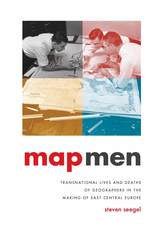
front cover of Map Men
Map Men
Transnational Lives and Deaths of Geographers in the Making of East Central Europe
Steven Seegel
University of Chicago Press, 2018
More than just colorful clickbait or pragmatic city grids, maps are often deeply emotional tales: of political projects gone wrong, budding relationships that failed, and countries that vanished. In Map Men, Steven Seegel takes us through some of these historical dramas with a detailed look at the maps that made and unmade the world of East Central Europe through a long continuum of world war and revolution. As a collective biography of five prominent geographers between 1870 and 1950—Albrecht Penck, Eugeniusz Romer, Stepan Rudnyts’kyi, Isaiah Bowman, and Count Pál Teleki—Map Men reexamines the deep emotions, textures of friendship, and multigenerational sagas behind these influential maps.

Taking us deep into cartographical archives, Seegel re-creates the public and private worlds of these five mapmakers, who interacted with and influenced one another even as they played key roles in defining and redefining borders, territories, nations­—and, ultimately, the interconnection of the world through two world wars. Throughout, he examines the transnational nature of these processes and addresses weighty questions about the causes and consequences of the world wars, the rise of Nazism and Stalinism, and the reasons East Central Europe became the fault line of these world-changing developments.

At a time when East Central Europe has surged back into geopolitical consciousness, Map Men offers a timely and important look at the historical origins of how the region was defined—and the key people who helped define it.

 
[more]

front cover of Modernism
Modernism
Representations of National Culture
Ahmet Ersoy
Central European University Press, 2010
Fifty-one texts illustrate the evolution of modernism in Eastern Europe. Essays, articles, poems, or excerpts from longer works offer new opportunities of possible comparisons of the respective national cultures. The volume focuses on the literary and scientific attempts at squaring the circle of individual and collective identities. Often outspokenly critical of the romantic episteme, these texts reflect a more sophisticated and critical stance than in the preceding periods. At the same time, rather than representing a complete rupture, they often continue and confirm the romantic identity narratives, albeit with "other means". The volume also presents the ways national minorities sought to legitimize their existence with reference to their cultural and institutional peculiarity.
[more]

front cover of Modernism
Modernism
The Creation of Nation-States
Michal Kopecek
Central European University Press, 2010
This volume presents and illustrates the development of the ideologies of nation states, the "modern" successors of former empires. They exemplify the use modernist ideological framaeworks, from liberalism to socialism, in the context of the fundamental reconfiguration of the political system in this part of Europe between the 1860s and the 1930s. It also gives a panorama of the various solutions proposed for the national question in the region.
[more]

front cover of Multicultural Cities of the Habsburg Empire, 1880–1914
Multicultural Cities of the Habsburg Empire, 1880–1914
Imagined Communities and Conflictual Encounters
Catherine Horel
Central European University Press, 2023

Catherine Horel has undertaken a comparative analysis of the societal, ethnic, and cultural diversity in the last decades of the Habsburg Monarchy as represented in twelve cities: Arad, Bratislava, Brno, Chernivtsi, Lviv, Oradea, Rijeka, Sarajevo, Subotica, Timișoara, Trieste, and Zagreb. By purposely selecting these cities, the author aims to counter the disproportionate attention that the largest cities in the empire receive.

With a focus on the aspects of everyday life faced by the city inhabitants (associations, schools, economy, and municipal politics) the book avoids any idealization of the monarchy as a paradise of peaceful multiculturalism, and also avoids exaggerating conflicts. The author claims that the world of the Habsburg cities was a dynamic space where many models coexisted and created vitality, emulation, and conflict. Modernization brought about the dissolution of old structures, but also mobility, the progress of education, the explosion of associative life, and constantly growing cultural offerings.

[more]

front cover of National Romanticism
National Romanticism
The Formation of National Movements
Miroslav Hroch
Central European University Press, 2007
67 texts, including hymns, manifestos, articles or extracts from lengthy studies exemplify the relation between Romanticism and the national movements in the cultural space ranging from Poland to the Ottoman Empire. Each text is accompanied by a presentation of the author, and by an analysis of the context in which the respective work was born.The end of the 18th century and first decades of the 19th were in many respects a watershed period in European history. The ideas of the Enlightenment and the dramatic convulsions of the French Revolution had shattered the old bonds and cast doubt upon the established moral and social norms of the old corporate society. In culture a new trend, Romanticism, was successfully asserting itself against Classicism and provided a new key for a growing number of activists to 're-imagine' their national community, reaching beyond the traditional frameworks of identification (such as the 'political nation', regional patriotism, or Christian universalism). The collection focuses on the interplay of Romantic cultural discourses and the shaping of national ideology throughout the 19th century, tracing the patterns of cultural transfer with Western Europe as well as the mimetic competition of national ideologies within the region.
[more]

front cover of Party Colonisation of the Media in Central and Eastern Europe
Party Colonisation of the Media in Central and Eastern Europe
Péter Bajomi-Lázár
Central European University Press, 2014
This book compares media and political systems in East-Central as well as in Western Europe in order to identify the reasons possibly responsible for the extensive and intensive party control over the media. This phenomenon is widely experienced in many of the former communist countries since the political transformation. The author argues that differences in media freedom and in the politicization of the news media are rooted in differences in party structures between old and new democracies, and, notably, the fact that young parties in the new members of the European Union are short of resources, which makes them more likely to take control of and to exploit media resources.
[more]

front cover of Past in the Making
Past in the Making
Historical Revisionism in Central Europe After 1989
Michal Kopecek
Central European University Press, 2008
Historical revisionism, far from being restricted to small groups of ‘negationists,’ has galvanized debates in the realm of recent history. The studies in this book range from general accounts of the background of recent historical revisionism to focused analyses of particular debates or social-cultural phenomena in individual Central European countries, from Germany to Ukraine and Estonia. Where is the borderline between legitimate re-examination of historical interpretations and attempts to rewrite history in a politically motivated way that downgrades or denies essential historical facts? How do the traditional ‘national historical narratives’ react to the ‘spill-over’ of international and political controversies into their ‘sphere of influence’? Technological progress, along with the overall social and cultural decentralization shatters the old hierarchies of academic historical knowledge under the banner of culture of memory, and breeds an unequalled democratization in historical representation. This book offers a unique approach based on the provocative and instigating intersection of scholarly research, its political appropriations, and social reflection from a representative sample of Central and East European countries.
[more]

front cover of Politics and Policies in Post-Communist Transition
Politics and Policies in Post-Communist Transition
Primary and Secondary Privatisation in Central Europe and the Former Soviet Union
Károly Attila Soós
Central European University Press, 2011
Discusses the policies, practices and outcomes of privatization in six transition economies: the Czech Republic, Hungary, Poland, Russia, Slovenia and Ukraine, paying particular attention to cross-country differences and to interrelations between the processes of privatisation and the political transition from communism to a new system.The analysis is restricted to the privatisation in those fields where its methods have been strongly different from privatisations in advanced market economies and where differences of privatisation principles and techniques among our six countries were also rather various. This is basically the privatisation of middle-sized and large enterprises, not including banks, non-bank financial companies, natural monopolies and agricultural entities.
[more]

front cover of The Privatization Process in Central Europe
The Privatization Process in Central Europe
Roman Frydman
Central European University Press, 1993
In this work, comprehensive comparative information on five Central European countries has been collected by teams of researchers from both within the region and from the West. Following an introduction to the economic environment in each country, it provides an overview of the privatization process, including an account of the legal framework of ownership, institutions for state regulation, an overview of privatization programmes and the initial transformation of enterprises. A key feature of the book is the authors' access to hitherto unavailable information and their ability to present a vast amount of material in an easily available format. Aimed at policy makers and business people, the work should provide a strong foundation for future research.
[more]

front cover of Quest for a Suitable Past
Quest for a Suitable Past
Myth and Memory in Central and Eastern Europe
Lucian Boia
Central European University Press, 2017
The past may be approached from a variety of directions. A myth provides a sense of direction: it reunites people around certain values and projects and pushes them in one direction or another. The present volume brings together a range of case studies of myth making and myth breaking in east Europe from the nineteenth century to the present day. In particular, it focuses on the complex process through which memories are transformed into myths. This problematic interplay between memory and myth-making is analyzed in conjunction with the role of myths in the political and social life of the region. The essays include cases of forging myths about national pre-history, about the endorsement of nation building by means of historiography, and above all, about communist and post-communist mythologies. The studies shed new light on the creation of local and national identities, as well as the legitimization of ideologies through myth-making. Together, the individual contributions show that myths were often instrumental in the vast projects of social and political mobilization during a period which has witnessed, among others, two world wars and the harsh oppression of the communist regimes.
[more]

front cover of Race and Photography
Race and Photography
Racial Photography as Scientific Evidence, 1876-1980
Amos Morris-Reich
University of Chicago Press, 2015
Race and Photography studies the changing function of photography from the 1870s to the 1940s within the field of the “science of race,” what many today consider the paradigm of pseudo-science. Amos Morris-Reich looks at the ways photography enabled not just new forms of documentation but new forms of perception. Foregoing the political lens through which we usually look back at race science, he holds it up instead within the light of the history of science, using it to explore how science is defined; how evidence is produced, used, and interpreted; and how science shapes the imagination and vice versa.
           
Exploring the development of racial photography wherever it took place, including countries like France and England, Morris-Reich pays special attention to the German and Jewish contexts of scientific racism. Through careful reconstruction of individual cases, conceptual genealogies, and patterns of practice, he compares the intended roles of photography with its actual use in scientific argumentation. He examines the diverse ways it was used to establish racial ideologies—as illustrations of types, statistical data, or as self-evident record of racial signs. Altogether, Morris-Reich visits this troubling history to outline important truths about the roles of visual argumentation, imagination, perception, aesthetics, epistemology, and ideology within scientific study.  

[more]

front cover of Repatriating Polanyi
Repatriating Polanyi
Market Society in the Visegrád States
Chris Hann
Central European University Press, 2019

Karl Polanyi’s “substantivist” critique of market society has found new popularity in the era of neoliberal globalization. The author reclaims this polymath for contemporary anthropology, especially economic anthropology, in the context of Central Europe, where Polanyi (1886–1964) grew up. The Polanyian approach illuminates both the communist era, in particular the “market socialist” economy which evolved under János Kádár in Hungary, as well as the post-communist transformations of property relations, civil society and ethno-national identities throughout the region.

Hann’s analyses are based primarily on his own ethnographic investigations in Hungary and South-East Poland. They are pertinent to the rise of neo-nationalism in those countries, which is theorized as a malign countermovement to the domination of the market. At another level, Hann’s adaptation of Polanyi’s social philosophy points beyond current political turbulence to an original concept of “social Eurasia”.

[more]

front cover of Rethinking the Rule of Law after Communism
Rethinking the Rule of Law after Communism
Wojciech Sadurski
Central European University Press, 2005
In the original euphoria that attended the virtually simultaneous demise of so many dictatorships in the late 1980s and early 90s, there was a widespread belief that problems of 'transition' basically involved shedding a known past, and replacing it with an also-known future. This volume surveys and contributes to the prolific debates that occurred in the years between the collapse of communism and the enlargement of the European Union regarding the issues of constitutionalism, dealing with the past, and the rule of law in the post-communist world. Eminent scholars explore the issue of transitional justice, highlighting the distinct roles of legal and constitutional bodies in the post-transition period. The introduction seeks to frame the work as an intervention in the discussion of communism and transition-two stable and separate points-while emphasizing the instability of the post-transition moment.
[more]

front cover of Retuning Culture
Retuning Culture
Musical Changes in Central and Eastern Europe
Mark Slobin
Duke University Press, 1996
As a measure of individual and collective identity, music offers both striking metaphors and tangible data for understanding societies in transition—and nowhere is this clearer than in the recent case of the Eastern Bloc. Retuning Culture presents an extraordinary picture of this phenomenon. This pioneering set of studies traces the tumultuous and momentous shifts in the music cultures of Central and Eastern Europe from the first harbingers of change in the 1970s through the revolutionary period of 1989–90 to more recent developments.
During the period of state socialism, both the reinterpretation of the folk music heritage and the domestication of Western forms of music offered ways to resist and redefine imposed identities. With the removal of state control and support, music was free to channel and to shape emerging forms of cultural identity. Stressing both continuity and disjuncture in a period of enormous social and cultural change, this volume focuses on the importance and evolution of traditional and popular musics in peasant communities and urban environments in Hungary, Poland, Romania, Russia, the Czech Republic, Ukraine, the former Yugoslavia, Macedonia, and Bulgaria. Written by longtime specialists in the region and considering both religious and secular trends, these essays examine music as a means of expressing diverse aesthetics and ideologies, participating in the formation of national identities, and strengthening ethnic affiliation.
Retuning Culture provides a rich understanding of music’s role at a particular cultural and historical moment. Its broad range of perspectives will attract readers with interests in cultural studies, music, and Central and Eastern Europe.

Contributors. Michael Beckerman, Donna Buchanan, Anna Czekanowska, Judit Frigyesi, Barbara Rose Lange, Mirjana Lausevic, Theodore Levin, Margarita Mazo, Steluta Popa, Ljerka Vidic Rasmussen, Timothy Rice, Carol Silverman, Catherine Wanner

[more]

front cover of The Rise of Comparative History
The Rise of Comparative History
Balázs Trencsényi
Central European University Press, 2021
This book—the first of a three-volume overview of comparative and transnational historiography in Europe—focuses on the complex engagement of various comparative methodological approaches with different transnational and supranational frameworks. It considers scales from universal history to meso-regional (i.e. Balkans, Central Europe, etc.) perspectives. In the form of a reader, it displays 18 historical studies written between 1900 and 1943. The collection starts with the French and German methodological discussions around the turn of the twentieth century, stemming from the effort to integrate history with other emerging social sciences on a comparative methodological basis. The volume then turns to the question of structural and institutional comparisons, revisiting various historiographical ventures that tried to sketch out a broader (regional or European-level) interpretative framework to assess the legal systems, patterns of agrarian production, and the common ethnographic and sociocultural features. 
  
In the third part, a number of texts are presented, which put forward a supra-national research framework as an antidote to national exclusivism. While in Western Europe the most obvious such framework was pan-European, in East Central Europe the agenda of comparison was linked usually to a meso-regional framework.

The studies are accompanied by short contextual introductions including biographical information on the respective authors.
[more]

front cover of Rural Economy in the Early Iron Age
Rural Economy in the Early Iron Age
Excavations at Hascherkeller, 1978–1981
Peter S. Wells
Harvard University Press, 1983
This volume presents data and analysis on settlement structure, subsistence patterns, manufacturing, and trade from the Peabody Museum’s four seasons of excavation at Hascherkeller, Bavaria, a typical Central European agricultural community, at the start of the final millennium BC.
[more]

front cover of Saints of the Christianization Age of Central Europe
Saints of the Christianization Age of Central Europe
Tenth to Eleventh Centuries
Cristian Gaspar
Central European University Press, 2012
This volume is the first of two containing hagiographical narratives from medieval Central Europe. The lives of the saints in this volume, from the tenth to eleventh centuries, written not much later, are telling witnesses for the process of Christianization of Bohemia, Poland, Hungary and Dalmatia. Most of them became patrons of their region and highly venerated throughout the Middle Ages. The volume presents the first English translation of a legend of each of these saints with the most recent critical edition of the Latin original and prefaces discussing the textual tradition. In an appendix the extensive hagiographical literature of the saints is being critically surveyed.
[more]

front cover of The Sanctity of the Leaders
The Sanctity of the Leaders
Holy Kings, Princes, Bishops and Abbots from Central Europe (11th to 13th Centuries)
Gábor Klaniczay
Central European University Press, 2023

The latest title in the Central European Medieval Texts series contains the lives of saints who were canonized in the eleventh through thirteenth centuries in the newly Christianized countries of Central and Eastern Europe (Bohemia, Poland, Hungary, and Dalmatia). A rejoinder to the earlier volume in the series, the Saints of the Christianization Age of Central Europe (CEMT, Vol. 6), containing hermits, missionaries, and martyrs, this second volume of hagiography is dominated by political or ecclesiastical leaders who became saintly patrons of their region and were highly venerated throughout the Middle Ages.

The legends in the volume present the two Hungarian holy kings Stephen and Ladislas, the holy duke Emeric, the Czech holy abbot Prokop of Sázava, three bishops, the Venetian-Hungarian Gellért of Csanád, the Polish Stanislas of Cracow (both martyrs), and the Dalmatian holy bishop Saint John of Trogir. Each “vita” is published in Latin original with an English translation and with prefaces discussing the textual tradition.

Saints’ lives have been recognized as an invaluable source of information on social and economic history, the history of mentalities and everyday life, cultural history, and, above all, as a special genre with crucial importance and prevalence in medieval literature.

[more]

front cover of Staged Otherness
Staged Otherness
Ethnic Shows in Central and Eastern Europe, 1850–1939
Dagnoslaw Demski
Central European University Press, 2022

The cultural phenomenon of exhibiting non-European people in front of the European audiences in the 19th and 20th century was concentrated in the metropolises in the western part of the continent. Nevertheless, traveling ethnic troupes and temporary exhibitions of non-European humans took place also in territories located to the east of the Oder river and Austria. The contributors to this edited volume present practices of ethnographic shows in Russia, Poland, Czechia, Slovenia, Hungary, Germany, Romania, and Austria and discuss the reactions of local audiences. The essays offer critical arguments to rethink narratives of cultural encounters in the context of ethnic shows. By demonstrating the many ways in which the western models and customs were reshaped, developed, and contested in Central and Eastern European contexts, the authors argue that the dominant way of characterizing these performances as “human zoos” is too narrow.

The contributors had to tackle the difficult task of finding traces other than faint copies of official press releases by the tour organizers. The original source material was drawn from local archives, museums, and newspapers of the discussed period. A unique feature of the volume is the rich amount of images that complement every single case study of ethnic shows.

[more]

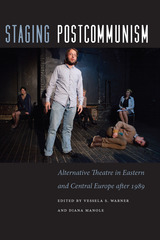
front cover of Staging Postcommunism
Staging Postcommunism
Alternative Theatre in Eastern and Central Europe after 1989
Vessela S. Warner and Diana Manole
University of Iowa Press, 2020
Theatre in Eastern and Central Europe was never the same after the fall of the Berlin Wall in 1989. In the transition to a postcommunist world, “alternative theatre” found ways to grapple with political chaos, corruption, and aggressive implementation of a market economy. Three decades later, this volume is the first comprehensive examination of alternative theatre in ten former communist countries. The essays focus on companies and artists that radically changed the language and organization of theatre in the countries formerly known as the Eastern European bloc. This collection investigates the ways in which postcommunist alternative theatre negotiated and embodied change not only locally but globally as well.

Contributors: Dennis Barnett, Dennis C. Beck, Violeta Decheva, Luule Epner, John Freedman, Barry Freeman, Margarita Kompelmakher, Jaak Rahesoo, Angelina Ros¸ca, Ban¸uta Rubess, Christopher Silsby, Andrea Tompa, S. E. Wilmer
[more]

front cover of Ten Years After
Ten Years After
A History of Roma School Desegregation in Central and Eastern Europe
Iulius Rostas
Central European University Press, 2012
The volume presents the results collated in the frames of the fact finding project led by the editor. The analysis includes the examination of a large number of legal documents and policy statements issued by national authorities and the international community on the matter. A critical overview is also made about the various Roma-specific political campaigns on national and European scale. The second half of the book contains interviews with activists that assumed a leading role in school desegregation. These testimony pieces have been critically reviewed by educational and policy analysts from the concerned countries.
[more]

front cover of Texts and Contexts from the History of Feminism and Women’s Rights
Texts and Contexts from the History of Feminism and Women’s Rights
East Central Europe, Second Half of the Twentieth Century
Zsofia Lorand
Central European University Press, 2024

A compendium of one hundred sources, preceded by a short author’s bio and an introduction, this volume offers an English language selection of the most representative texts on feminism and women’s rights from East Central Europe between the end of the Second World War and the early 1990s. While communist era is the primary focus, the interwar years and the post-1989 transition period also receive attention. All texts are new translations from the original.

The book is organised around themes instead of countries; the similarities and differences between nations are nevertheless pointed out. The editors consider women not only in their local context, but also in conjunction with other systems of thought—including shared agendas with socialism, liberalism, nationalism, and even eugenics.

The choice of texts seeks to demonstrate how feminism as political thought was shaped and organised in the region. They vary in type and format from political treatises, philosophy to literary works, even films and the visual arts, with the necessary inclusion of the personal and the private. Women’s political rights, right to education, their role in nation-building, women, and war (and especially women and peace) are part of the anthology, alongside the gendered division of labour, violence against women, the body, and reproduction.

[more]

front cover of Thinking through Transition
Thinking through Transition
Liberal Democracy, Authoritarian Pasts, and Intellectual History in East Central Europe After 1989
Michal Kopecek
Central European University Press, 2015
Thinking through Transition is the first concentrated effort to explore the most recent chapter of East Central European past from the perspective of intellectual history. Post-communism can be understood as a period of scarcity and preponderance of ideas, the dramatic eclipsing of the dissident legacy (as well as the older political traditions), and the rise of technocratic and post-political governance.  This book, grounded in empirical research sensitive to local contexts, proposes instead a history of adaptations, entanglements, and unintended consequences. In order to enable and invite comparison, the volume is structured around major domains of political thought, some of them generic (liberalism, conservatism, the Left), others (populism and politics of history) deemed typical for post-socialism. However, as shown by the authors, the generic often turns out to be heavily dependent on its immediate setting, and the typical resonates with processes that are anything but vernacular.
[more]

front cover of Times of Upheaval
Times of Upheaval
Four Medievalists in Twentieth-Century Central Europe. Conversations with Jerzy Kloczowski, János M. Bak, František Šmahel, and Herwig Wolfram
Pavlína Rychterová
Central European University Press, 2019
The volume unites conversations with four masters of Medieval Studies from east-central Europe: János Bak from Hungary, Jerzy Kloczowski from Poland, František Šmahel from the Czech Republic, and Herwig Wolfram from Austria. The interviews, made by younger colleagues, reveal engaging life stories, with numerous observations, anecdotes and experiences. The four scholars grew up before and during the war, under Nazi occupation, emerged as young scholars in the difficult post-war period, and, for most of their careers worked in the shadow of the Iron Curtain, two of them spending most of their lifetimes under communist regimes. The conversations focus on ways in which open-minded young intellectuals became medieval historians under difficult circumstances, how they experienced the long shadows of totalitarian regimes with their acute sensitivity for historical change, and how their perceptions of the world around them reflected back on their approach to medieval history. The histories of their nations were broken, most of them ceased to exist and then were re-established during their lifetimes, came under foreign domination, were split up, or had their territories shifted. These changes affected these scholars' identities and patriotic feelings, and their present was reflected in the distant mirror of the medieval past.
[more]

front cover of Transatlantic Central Europe
Transatlantic Central Europe
Contesting Geography and Redifining Culture beyond the Nation
Jessie Labov
Central European University Press, 2019
While there are still occasional uses of it today, the term "Central Europe" carries little of the charge that it did in the 1980s and early 1990s, and as a political and intellectual project it has receded from the horizon. Proponents of a distinct cultural profile of these countries—all involved now in the process of Transatlantic integration—used "Central European", as a contestation with the geo-political label of Eastern Europe. This book discusses the transnational set of practices connecting journals with other media in the mid-1980s, disseminating the idea of Central Europe simultaneously in East and West. A range of new methodologies, including GIS-mapping visualization, is used, repositing the political-cultural journal as one central node of a much larger cultural system. What has happened to the liberal humanist philosophy that "Central Europe" once evoked? In the early years of the transition era, the liberal humanist perspective shared by Havel, Konrád, Kundera, and Michnik was quickly replaced by an economic liberalism that evolved into neoliberal policies and practices. The author follows the trajectories of the concept into the present day, reading its material and intellectual traces in the postcommunist landscape. She explores how the current use of transnational, web-based media follows the logic and practice of an earlier, 'dissident' generation of writers.
[more]

logo for Karolinum Press
Transnational Trajectories and Diaspora Policies
The Case of Czechia in Comparison to Poland, Hungary and Slovakia
Edited by Eva Janská
Karolinum Press, 2025
A fascinating examination of Central European diasporic policy bolstered by individual case studies of the new Czech diaspora.

The book examines diaspora policy in Central European countries in the context of changes following their accession to the EU, utilizing the Czech Republic, Slovakia, Poland, and Hungary as case studies. With a focus on the previously underexplored new Czech diaspora (i.e., the emigration of Czechs/Czechoslovaks after 1990), individual case studies provide a comprehensive description of the contemporary Czech diaspora while also elucidating key inquiries directed towards its current character and specific needs.
[more]

front cover of Violent Sensations
Violent Sensations
Sex, Crime, and Utopia in Vienna and Berlin, 1860-1914
Scott Spector
University of Chicago Press, 2016
Around the turn of the twentieth century, Vienna and Berlin were centers of scientific knowledge, accompanied by a sense of triumphalism and confidence in progress. Yet they were also sites of fascination with urban decay, often focused on sexual and criminal deviants and the tales of violence surrounding them. Sensational media reports fed the prurient public’s hunger for stories from the criminal underworld: sadism, sexual murder, serial killings, accusations of Jewish ritual child murder—as well as male and female homosexuality.

In Violent Sensations, Scott Spector explores how the protagonists of these stories—people at society’s margins—were given new identities defined by the groundbreaking sciences of psychiatry, sexology, and criminology, and how this expert knowledge was then transmitted to an eager public by journalists covering court cases and police investigations. The book analyzes these sexual and criminal subjects on three levels: first, the expertise of scientists, doctors, lawyers, and scholars; second, the sensationalism of newspaper scandal and pulp fiction; and, third, the subjective ways that the figures themselves came to understand who they were. Throughout, Spector answers important questions about how fantasies of extreme depravity and bestiality figure into the central European self-image of cities as centers of progressive civilization, as well as the ways in which the sciences of social control emerged alongside the burgeoning emancipation of women and homosexuals.
[more]

front cover of Wars and Betweenness
Wars and Betweenness
Big Powers and Middle Europe, 1918-1945
Aliaksandr Piahanau
Central European University Press, 2020

The region between the Baltic and the Black Sea was marked by a set of crises and conflicts in the 1920s and 1930s, demonstrating the diplomatic, military, economic or cultural engagement of France, Germany, Russia, Britain, Italy and Japan in this highly volatile region, and critically damaging the fragile post-Versailles political arrangement. The editors, in naming this region as "Middle Europe" seek to revive the symbolic geography of the time and accentuate its position, situated between Big Powers and two World Wars.

The ten case studies in this book combine traditional diplomatic history with a broader emphasis on the geopolitical aspects of Big-Power rivalry to understand the interwar period. The essays claim that the European Big Powers played a key role in regional affairs by keeping the local conflicts and national movements under control and by exploiting the region's natural resources and military dependencies, while at the same time strengthening their prestige through cultural penetration and the cultivation of client networks.

The authors, however, want to avoid the simplistic view that the Big Powers fully dominated the lesser players on the European stage. The relationship was indeed hierarchical, but the essays also reveal how the "small states" manipulated Big-Power disagreements, highlighting the limits of the latters' leverage throughout the 1920s and the 1930s.

[more]

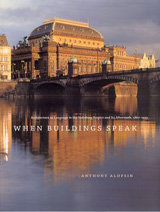
front cover of When Buildings Speak
When Buildings Speak
Architecture as Language in the Habsburg Empire and Its Aftermath, 1867-1933
Anthony Alofsin
University of Chicago Press, 2006
In When Buildings Speak,Anthony Alofsin explores the rich yet often overlooked architecture of the late Austro-Hungarian Empire and its successor states. He shows that several different styles emerged in this milieu during the late nineteenth and early twentieth centuries. Moreover, he contends that each of these styles communicates to us in a manner resembling language and its particular means of expression. 
           
Covering a wide range of buildings—from national theaters to crematoria, apartment buildings to warehouses, and sanatoria to postal savings banks—Alofsin proposes a new way of interpreting this language. He calls on viewers to read buildings in two ways: through their formal elements and through their political, social, and cultural contexts.  By looking through Alofsin’s eyes, readers can see how myriad nations sought to express their autonomy by tapping into the limitless possibilities of art and architectural styles. And such architecture can still speak very powerfully to us today about the contradictory issues affecting parts of the former Habsburg Empire.
 
 “The book itself as a production is spectacular.”—David Dunster, Architectural Review
[more]

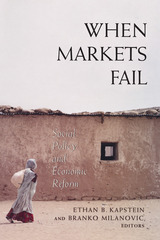
front cover of When Markets Fail
When Markets Fail
Social Policy and Economic Reform
Ethan B. Kapstein
Russell Sage Foundation, 2002
The sweeping political and economic changes of the past decade—including the spread of democracy, pro-market policies, and economic globalization—have dramatically increased the demand in developing countries for social programs such as unemployment compensation, pensions, and income supplements for the poor. When Markets Fail examines how emerging market economies in Eastern Europe, Latin America, North Africa, and the Middle East are shaping their social policies in response to these changes. The contributors—leading scholars of development and social policy—use detailed case studies to examine whether the emerging economies are likely to move toward European-style welfare systems, characterized by high unemployment benefits and large entitlements, or if they will opt for more austere, stripped-down welfare regimes. They find that much will depend on how well emerging economies perform economically, but that the political forces, ideological preferences, and historical backgrounds of each country will also play a decisive role. In his chapter on Central and Eastern Europe, Peter Lindert focuses on how aging populations and the fall of communism have fostered increased need for social assistance in the region. In contrast, Nancy Birdsall and Stephen Haggard highlight the positive role of democratization and Western-style social programs in promoting East Asian social policies. Zafiris Tzannatos and Iqbal Kaur argue that governments in North Africa and the Middle East must foster both human capital formation and competition in the market for social services if they are to meet the growing need for services. When Markets Fail presents some evidence that a global convergence in social policies may be taking place: as Europe slowly makes its welfare provisions less generous, the emerging market economies will be under increasing demographic and political pressure to make their social welfare systems more comprehensive. The book also examines the vital role that organizations such as the World Bank, the International Monetary Fund, and the Asian Development Bank can play in fostering effective social services in developing economies. Economic globalization and political liberalization have produced many economic winners around the world, but these forces have created losers as well. When Markets Fail addresses the problem of how governments in developing countries have responded to the plight of those losers through social policy. The success of these policies, however, remains sharply contested, as is their role in helping to achieve meaningful poverty reduction. When Markets Fail is essential reading for anyone interested in economic liberalization and its consequences for the developing world.
[more]

front cover of With Their Backs to the Mountains
With Their Backs to the Mountains
A History of Carpathian Rus' and Carpatho-Rusyns
Paul Robert Magocsi
Central European University Press, 2016

This is a history of a stateless people, the Carpatho-Rusyns, and their historic homeland, Carpathian Rus’, located in the heart of central Europe. A little over 100,000 Carpatho-Rusyns are registered in official censuses but their population is estimated at around 1,000,000, the greater part in Ukraine and Slovakia. The majority of the diaspora—nearly 600,000—lives in the US.

At the present, when it is fashionable to speak of nationalities as “imagined communities” created by intellectuals or elites who may live in the historic homeland, Carpatho-Rusyns provide an ideal example of a people made—or some would say still being made—before our very eyes. The book traces the evolution of Carpathian Rus’ from earliest prehistoric times to the present, and the complex manner in which a distinct Carpatho-Rusyn people, since the mid-nineteenth century, came into being, disappeared, and then re-appeared in the wake of the revolutions of 1989 and the collapse of communist rule in central and eastern Europe.

To help guide the reader further there are 34 detailed maps plus an annotated discussion of relevant books, chapters, and journal articles.

[more]

front cover of Words in Space and Time
Words in Space and Time
A Historical Atlas of Language Politics in Modern Central Europe
Tomasz Kamusella
Central European University Press, 2022

With forty-two extensively annotated maps, this atlas offers novel insights into the history and mechanics of how Central Europe’s languages have been made, unmade, and deployed for political action. The innovative combination of linguistics, history, and cartography makes a wealth of hard-to-reach knowledge readily available to both specialist and general readers. It combines information on languages, dialects, alphabets, religions, mass violence, or migrations over an extended period of time.

The story first focuses on Central Europe’s dialect continua, the emergence of states, and the spread of writing technology from the tenth century onward. Most maps concentrate on the last two centuries. The main storyline opens with the emergence of the Western European concept of the nation, in accord with which the ethnolinguistic nation-states of Italy and Germany were founded. In the Central European view, a “proper” nation is none other than the speech community of a single language. The Atlas aspires to help users make the intellectual leap of perceiving languages as products of human history and part of culture. Like states, nations, universities, towns, associations, art, beauty, religions, injustice, or atheism—languages are artefacts invented and shaped by individuals and their groups.

[more]

front cover of Worlds of Dissent
Worlds of Dissent
Charter 77, The Plastic People of the Universe, and Czech Culture under Communism
Jonathan Bolton
Harvard University Press, 2012

Worlds of Dissent analyzes the myths of Central European resistance popularized by Western journalists and historians, and replaces them with a picture of the struggle against state repression as the dissidents themselves understood, debated, and lived it. In the late 1970s, when Czech intellectuals, writers, and artists drafted Charter 77 and called on their government to respect human rights, they hesitated to name themselves “dissidents.” Their personal and political experiences—diverse, uncertain, nameless—have been obscured by victory narratives that portray them as larger-than-life heroes who defeated Communism in Czechoslovakia.

Jonathan Bolton draws on diaries, letters, personal essays, and other first-person texts to analyze Czech dissent less as a political philosophy than as an everyday experience. Bolton considers not only Václav Havel but also a range of men and women writers who have received less attention in the West—including Ludvík Vaculík, whose 1980 diary The Czech Dream Book is a compelling portrait of dissident life.

Bolton recovers the stories that dissidents told about themselves, and brings their dilemmas and decisions to life for contemporary readers. Dissidents often debated, and even doubted, their own influence as they confronted incommensurable choices and the messiness of real life. Portraying dissent as a human, imperfect phenomenon, Bolton frees the dissidents from the suffocating confines of moral absolutes. Worlds of Dissent offers a rare opportunity to understand the texture of dissent in a closed society.

[more]

front cover of Writing on Water
Writing on Water
The Sounds of Jewish Prayer
Judit Niran Frigyesi
Central European University Press, 2018

Writing on Water grasps the phenomenon of sound in prayer, that is, a meaning in sounds and soundscapes, and a musical essence in the act of praying.

The impetus for the book arose from the author’s fieldwork among traditional Jews during the era of communism in Budapest and Prague. In that period the Jewish religion and Jewishness in general were supressed and rituals became semi-secret and turned inward. The book is a witness to these communities and their rituals, but it goes beyond documentation. The uniqueness of the sounds of the rituals compelled the author to try to comprehend how melodies and soundscapes became the sustaining/protective environment, as well as the vehicle, for the expression of a world-orientation—in a situation where open discourse was inconceivable.

The book is based on extensive interviews, musical recordings, photographs and scholarly analyses. It is unique in its choice of communities, its wealth of original documents, and its novel interpretation of sound.

Writing on Water is creative non-fiction. The presentation is evocative and poetic, but at the same time it transmits knowledge. The book can aid research and serve in courses in philosophy, religion, music, ethnomusicology, anthropology, aesthetics, Jewish studies, folklore, oral history, and performance studies. It is also a work of art and literature.

[more]


Send via email Share on Facebook Share on Twitter