
 A SCHOLARLY BOOK REPOSITORY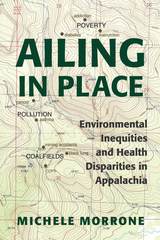
In Ailing in Place, Michele Morrone explores the relationship between environmental conditions in Appalachia and health outcomes that are too often ascribed to individual choices only. She applies quantitative data to observations from environmental health professionals to frame the ways in which the environment, as a social determinant of health, leads to health disparities in Appalachian communities. These examples—these stories of place—trace the impacts of water quality, waste disposal, and natural resource extraction on the health and quality of life of Appalachian people.
Public health is inextricably linked to place. Environmental conditions such as contaminated water, unsafe food, and polluted air are as important as culture, community, and landscape in characterizing a place and determining the health outcomes of the people who live there. In some places, the state of the environment is a consequence of historical activities related to natural resources and cultural practices. In others, political decisions to achieve short-term economic objectives are made with little consideration of long-term public health consequences.
What do we know about the possible poisons that industrial technologies leave in our air and water? How reliable is the science that federal regulators and legislators use to protect the public from dangerous products? As this disturbing book shows, ideological or economic attacks on research are part of an extensive pattern of abuse.
Thomas O. McGarity and Wendy E. Wagner reveal the range of sophisticated legal and financial tactics political and corporate advocates use to discredit or suppress research on potential human health hazards. Scientists can find their research blocked, or find themselves threatened with financial ruin. Corporations, plaintiff attorneys, think tanks, even government agencies have been caught suppressing or distorting research on the safety of chemical products.
With alarming stories drawn from the public record, McGarity and Wagner describe how advocates attempt to bend science or “spin” findings. They reveal an immense range of tools available to shrewd partisans determined to manipulate research.
Bending Science exposes an astonishing pattern of corruption and makes a compelling case for reforms to safeguard both the integrity of science and the public health.
The implications of biodiversity loss for the global environment have been widely discussed, but only recently has attention been paid to its direct and serious effects on human health. Biodiversity loss affects the spread of human diseases, causes a loss of medical models, diminishes the supplies of raw materials for drug discovery and biotechnology, and threatens food production and water quality.
Biodiversity and Human Health brings together leading thinkers on the global environment and biomedicine to explore the human health consequences of the loss of biological diversity. Based on a two-day conference sponsored by the National Institutes of Health, the National Science Foundation, and the Smithsonian Institution, the book opens a dialogue among experts from the fields of public health, biology, epidemiology, botany, ecology, demography, and pharmacology on this vital but often neglected concern.
Contributors discuss the uses and significance of biodiversity to the practice of medicine today, and develop strategies for conservation of these critical resources. Topics examined include:
- the causes and consequences of biodiversity loss
- emerging infectious diseases and the loss of biodiversity
- the significance and use of both prescription and herbal biodiversity-derived remedies
- indigenous and local peoples and their health care systems
- sustainable use of biodiversity for medicine
- an agenda for the future
The book provides a common framework for physicians and biomedical researchers who wish to learn more about environmental concerns, and for members of the environmental community who desire a greater understanding of biomedical issues.
health trade-offs between competing uses of biodiversity (highlighting synergistic situations in which conservation of natural biodiversity actually promotes human health and well-being);
relationships between biodiversity and quality of life that have developed over ecological and evolutionary time;
the effects of changing biodiversity on provisioning of ecosystem services, and how they have affected human health; the role of biodiversity in the spread of infectious disease;
native biodiversity as a resource for traditional and modern medicine
Biodiversity Change and Human Health synthesizes our current understanding and identifies major gaps in knowledge as it places all aspects of biodiversity and health interactions within a common framework. Contributors explore potential points of crossover among disciplines (both in ways of thinking and of specific methodologies) that could ultimately expand opportunities for humans to both live sustainably and enjoy a desirable quality of life.
In the 1978 Love Canal toxic waste crisis, concerned citizens "did a far better job of evaluating the health of the community than did the professionals of the New York Health Department," asserts Marvin Legator. In Chemical Alert! A Community Action Handbook, he and coeditor Sabrina Strawn offer a step-by-step guide that can be used by any lay person or citizens' group to determine whether a health risk exists in their area.
Writing for the general reader with no scientific expertise, environmental, medical, and legal professionals instruct communities on the organizational and investigative techniques that will produce a valid, scientific case study. With these tools, citizens living near petrochemical plants or waste disposal areas—or who may have simply noticed a high incidence of certain health problems in their community—can determine for themselves whether a problem really exists and seek remediation. Given the reality that government agencies often lack the resources—or the will—to detect health hazards before they affect a community, an informed citizenry should be its own best environmental watchdog.
When climate disasters like hurricanes, heatwaves, and tsunamis strike, they reveal the inequities of our social, political, and economic structures. They also lay bare the negative impacts of these structures on the health and safety of all people, and particularly socioeconomically vulnerable groups. With original contributions from scholars from a wide range of diverse fields—including environmental studies, public health, legal studies, urban planning, literary studies, and nursing—Climate Justice and Public Health examines this nexus of climate change, which has become impossible to ignore in the twenty-first century.
Expanding the climate and health equity discussions to populations all over the globe, the contributors in this volume address an impressive and broad range of topics that include Indigenous health and cultural practices, mental and emotional health, senior health, and impacts on African American communities. Collectively, they present radical new ways of confronting these issues and propose holistic solutions.
As our world becomes increasingly urbanized, an understanding of the context, mechanisms, and consequences of city and suburban environments becomes more critical. Without a sense of what open spaces such as parks and gardens contribute, it’s difficult to argue for their creation and maintenance: in the face of schools needing resources, roads and sewers needing maintenance, and people suffering at the hands of others, why should cities and counties spend scarce dollars planting trees and preserving parks?
In Constructed Climates, ecologist William G. Wilson demonstrates the value of urban green. Focusing specifically on the role of vegetation and trees, Wilson shows the costs and benefits reaped from urban open spaces, from cooler temperatures to better quality ground water—and why it all matters. While Constructed Climates is a work of science, it does not ignore the social component. Wilson looks at low-income areas that have poor vegetation, and shows how enhancing these areas through the planting of community gardens and trees can alleviate social ills. This book will be essential reading for environmentalists and anyone making decisions for the nature and well-being of our cities and citizens.
From anthrax to asbestos to pesticides, industrial toxins and pollutants have troubled the world for the past century and longer. Environmental hazards from industry remain one of the world's foremost killers.Dangerous Trade establishes historical groundwork for a better understanding of how and why these hazards continue to threaten our shrinking world.
In this timely collection, an international group of scholars casts a rigorous eye towards efforts to combat these ailments. Dangerous Trade contains a wide range of case studies that illuminate transnational movements of risk—from the colonial plantations of Indonesia to compensation laws in late 19th century Britain, and from the occupational medicine clinics of 1960s New York City to the burning of electronic waste in early twenty-first century Uruguay.
The essays in Dangerous Trade provide an unprecedented broad perspective of the dangers stirred up by industrial activity across the globe, as well as the voices rasied to remedy them.

As China develops its booming, fossil fuel-powered economy, is it taking lessons from the history of Western industrialization and the unforeseen environmental harms that accompanied it? Given the risks of climate change, is there an imperative, shared responsibility to help China respond to the environmental effects of its coal dependence? By linking global hazards to local air pollution concerns--from indoor stove smoke to burgeoning ground-level ozone--this volume of eighteen studies seeks integrated strategies to address simultaneously a range of harmful emissions. Counterbalancing the scientific inquiry are key chapters on China's unique legal, institutional, political, and cultural factors in effective pollution control.
Energizing China, the stage-setting publication of an ongoing program of Harvard-China research collaboration, is distinguished by its conceptual breadth and spirit of exchange. Its contributors include twenty-two Western and seventeen Chinese scholars with a disciplinary reach that includes science, public health, engineering, economics, public policy, law, business, and China studies.
Dramatic changes in the field of environmental health since the Third Edition was published in 2004 demand a new, radically updated version of this essential textbook.
Based on the recommendations of advisory bodies and federal agency regulations, as well as a thorough review of the scientific literature, Moeller’s Fourth Edition is the only fully current text in this burgeoning field. It features new tables and figures, and revisions of those retained from previous editions. Environmental Health is also enriched with the knowledge and insights of professionals who are deeply involved in “real world” aspects of each subject covered.
In eighteen chapters, students receive a complete but manageable introduction to the complex nature of the environment, how humans interact with it, and the mutual impact between people and the environments where they work or live. This new edition emphasizes the challenges students will face in the field: the local and global implications of environmental health initiatives, their short- and long-range effects, their importance to both developing and developed nations, and the roles individuals can play in helping to resolve these problems.
Whether discussing toxicology, injury prevention, risk assessment, and ionizing and non-ionizing radiation, or more traditional subjects like the management and control of air, water, and food, Dade Moeller emphasizes the need for a systems approach to analyzing new projects prior to their construction and operation.
Environmental Health is indispensable reading for practitioners, students, and anyone considering a career in public health.
When the first edition of Environmental Health appeared in 1992 it was quickly recognized as the single best resource for students, public health professionals, and general readers concerned with the well-being of the environment and its inhabitants. Now, four completely new chapters and an additional two hundred pages of text bring this definitive work up to date.
This new edition maintains the earlier edition's balanced coverage of a broad spectrum of timely topics, including air, water, and food; occupational health; insect and rodent control; the effects, uses, and management of ionizing and nonionizing radiation; accidents as a cause of injuries and deaths; natural and man-made disasters; the impact of energy usage; and environmental standards and monitoring. The new edition also offers completely new chapters on four crucial subjects: environmental toxicology, environmental epidemiology, environmental law, and risk assessment. In addition, drinking water and liquid wastes, formerly discussed in combination, are now covered in separate chapters.
Environmental Health has established itself as the most succinct and comprehensive textbook on the subject. This extensively revised and rewritten third edition continues this tradition by incorporating new developments and by adding timely coverage of topics such as environmental economics and terrorism.
As in previous volumes, the new edition presents balanced assessments of environmental problems, examining their local and global implications, their short- and long-range impacts, and their importance in both developed and less developed countries of the world. The Third Edition also addresses emerging issues such as environmental justice, deforestation, the protection of endangered species, multiple chemical sensitivity, and the application of the threshold concept in evaluating the effects of toxic and radioactive materials.
Whether discussing acid rain, ozone depletion, global warming, or more traditional subjects such as the management and control of air, water, and food, Dade Moeller emphasizes the need for a systems approach. As with previous volumes, Environmental Health, Third Edition, offers a depth of understanding that is without peer. While it covers technical details, it is also a book that anyone with an interest in the environment can pick up and browse at random.
Fighting Toxics is a step-by-step guide illustrating how to investigate the toxic hazards that may exist in your community, how to determine the risks they pose to your health, and how to launch an effective campaign to eliminate them.
Take a random walk through your life and you’ll find it is awash in industrial, often toxic, chemicals. Sip water from a plastic bottle and ingest bisphenol A. Prepare dinner in a non-stick frying pan or wear a layer of Gore-Tex only to be exposed to perfluorinated compounds. Hang curtains, clip your baby into a car seat, watch television—all are manufactured with brominated flame-retardants.
Cosmetic ingredients, industrial chemicals, pesticides, and other compounds enter our bodies and remain briefly or permanently. Far too many suspected toxic hazards are unleashed every day that affect the development and function of our brain, immune system, reproductive organs, or hormones. But no public health law requires product testing of most chemical compounds before they enter the market. If products are deemed dangerous, toxicants must be forcibly reduced or removed—but only after harm has been done.
In this scientifically rigorous legal analysis, Carl Cranor argues that just as pharmaceuticals and pesticides cannot be sold without pre-market testing, other chemical products should be subject to the same safety measures. Cranor shows, in terrifying detail, what risks we run, and that it is entirely possible to design a less dangerous commercial world.
Nearly forty years after the outbreak of the “Minamata Disease,” it remains one of the most horrific examples of environmental poisoning. Based on primary documents and interviews, this book describes three rounds of responses to this incidence of mercury poisoning, focusing on the efforts of its victims and their supporters, particularly the activities of grassroots movements and popular campaigns, to secure redress.
Timothy S. George argues that Japan’s postwar democracy is ad hoc, fragile, and dependent on definition through citizen action and that the redress effort is exemplary of the great changes in the second and third postwar decades that redefined democracy in Japan.
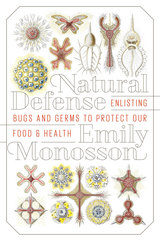
Fortunately, scientists are finding new solutions that work with, rather than against, nature. Emily Monosson explores science’s most innovative strategies, from high-tech gene editing to the ancient practice of fecal transplants. There are viruses that infect and bust apart bacteria; vaccines engineered to better provoke our natural defenses; and insect pheromones that throw crop-destroying moths into a misguided sexual frenzy. Some technologies will ultimately fizzle; others may hold the key to abundant food and unprecedented health. Each represents a growing understanding of how to employ ecology for our own protection.
Monosson gives readers a peek into the fascinating and hopeful world of natural defenses. Her book is full of optimism, not simply for particular cures, but for a sustainable approach to human welfare that will benefit generations to come.
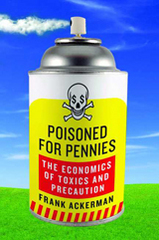
Then in clear, understandable language, he describes an alternative, precautionary approach to making decisions under uncertainty. Once a mere theory, the precautionary principle has now been applied in practice through the European Union’s REACH protocol. Citing major studies, many of which he has directed, he shows that the precautionary approach has not only worked, but has been relatively cheap.
Poisoned for Pennies shows how the misuse of cost-benefit analysis is impeding efforts to clean up and protect our environment, especially in the case of toxic chemicals. According to Ackerman, conservatives—in elected office, in state and federal regulatory agencies, and in businesses of every size—have been able to successfully argue that environmental clean-up and protection are simply too expensive. But he proves, that is untrue in case after case.
Ackerman is already well known for his carefully reasoned attacks on the conventional wisdom about the costs of environmental regulation. This new book, which finds Ackerman ranging from psychological research to risk analysis to the benefits of aggressive pesticide regulation, and from mad cow disease to lead paint, will further his reputation as a thought leader in environmental protection. We can’t afford not to listen to him.
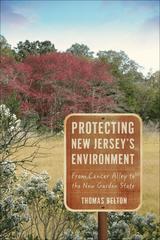
And you can add even more to the list-ozone depletion, nuclear power, toxic waste, sprawl, racial inequity, brownfields remediation versus environmental justice concerns. Through a series of gripping accounts organized by geographic area, Thomas Belton considers key environmental issues in New Jersey and champions the ways common citizens have sought justice when faced with unseen health threats. Often, as people search for remedies in their neighborhoods, the challenges they face result in what Belton calls bare-knuckles environmental protection, replete with back-room political deals, infighting, criminals, and hapless victims.
With people as its focus, Protecting New Jersey's Environment explores the science underpinning environmental issues and the public policy infighting that goes undocumented behind the scenes and beneath the controversies. Belton demonstrates the ways that scientists, regulators, lobbyists, and politicians interact and offers the public a go-to guide on how to seek environmental protection in practical ways.
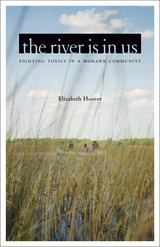
Winner of the Labriola Center American Indian National Book Award 2017
Mohawk midwife Katsi Cook lives in Akwesasne, an indigenous community in upstate New York that is downwind and downstream from three Superfund sites. For years she witnessed elevated rates of miscarriages, birth defects, and cancer in her town, ultimately drawing connections between environmental contamination and these maladies. When she brought her findings to environmental health researchers, Cook sparked the United States’ first large-scale community-based participatory research project.
In The River Is in Us, author Elizabeth Hoover takes us deep into this remarkable community that has partnered with scientists and developed grassroots programs to fight the contamination of its lands and reclaim its health and culture. Through in-depth research into archives, newspapers, and public meetings, as well as numerous interviews with community members and scientists, Hoover shows the exact efforts taken by Akwesasne’s massive research project and the grassroots efforts to preserve the Native culture and lands. She also documents how contaminants have altered tribal life, including changes to the Mohawk fishing culture and the rise of diabetes in Akwesasne.
Featuring community members such as farmers, health-care providers, area leaders, and environmental specialists, while rigorously evaluating the efficacy of tribal efforts to preserve its culture and protect its health, The River Is in Us offers important lessons for improving environmental health research and health care, plus detailed insights into the struggles and methods of indigenous groups. This moving, uplifting book is an essential read for anyone interested in Native Americans, social justice, and the pollutants contaminating our food, water, and bodies.
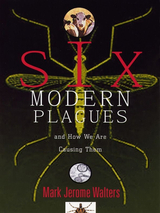
In Six Modern Plagues, Mark Jerome Walters offers us the first book for the general reader that connects these emerging health risks and their ecological origins. Drawing on new research, interviews, and his own investigations, Mark Jerome Walters weaves together a compelling argument: that changes humans have made to the environment, from warming the climate to clearing the forests, have contributed to, if not caused a rising tide of diseases that are afflicting humans and many other species.
According to Mark Jerome Walters, humans are not always innocent bystanders to infectious disease. To the contrary, in the case of many modern epidemics, we are the instigators. Six Modern Plagues, a ground-breaking introduction to the connection between disease and environmental degradation should be read by all those interested in their health and the health of others.
Your doctor is the second most important person taking care of your health. You're the first. This book was written so that you can do a better job, without going to medical school. It is designed to help you sort out the vital health information you need--what to consider, what to ignore, what to worry about, what to forget.
Deciding how to take care of a pain, an injury, a fever--and whether to call in expert advice--is not always an easy task. Knowing how to prevent disease can be even harder: Will I really live longer and feel better if I cut down on dietary fat, or alcohol, or overwork? The main focus of this book is on prevention: habits you can modify, choices you can make in daily life. Good choices do make a difference. The life expectancy of American adults has been increasing, and it is quite clear that professional medical care is not the only reason people are living longer.
But when you do call in the professionals, this book will guide you in asking the right questions about your diagnosis and treatment. When medical decisions must be made, you can be an active partner in making them.
The doctors who wrote this book have made some fundamental assumptions about their readers: they are people who want to make their own choices about their health, based on the best possible evidence; they want straightforward information unencumbered with excessive detail; when they talk with their physician, they want to ask intelligent questions and understand the answers; they want to live a long life, but also enjoy it along the way; and they want to see "the big picture"--how their personal health is affected by environmental and social forces.
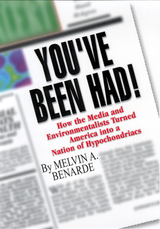
With all of the negative media about environmental threats over the last four decades, is it any wonder that most people believe disaster is just around the corner? But despite what the media would lead us to believe, annual reports from the Surgeons General show that Americans are the healthiest they have ever been, are becoming healthier and are, in fact, the healthiest people on the planet.
In You’ve Been Had!, Melvin Benarde aims to set the record straight and counteract the culture of complaint and worry with an unbiased account of the scientific facts — facts which suggest we are worried and frightened about the wrong things. Contrary to what the media would have us believe, he argues that the environmental factors that most adversely affect our health are those that are within our power to alter, such as smoking, diet, drugs, stress, guns speed, exercise, and basic safety precautions. Topics covered include: carcinogens and anti- carcinogens; dietary supplements and neutraceuticals; food safety, pasteurization and irradiation; genetically modified foods; microbial threats to health; hazardous and toxic waste; radiation and skin cancer; global warming; risk-taking; obesity, asthma, violence and longevity. Benarde also looks at the ways the media reports science and evidence-based medicine.
READERS
Browse our collection.
PUBLISHERS
See BiblioVault's publisher services.
STUDENT SERVICES
Files for college accessibility offices.
RECENTLY PUBLISHED




UChicago Accessibility Resources
home | accessibility | search | about | contact us
BiblioVault ® 2001 - 2024
The University of Chicago Press