
 A SCHOLARLY BOOK REPOSITORY
Black Eye includes excerpts from a journal Strasser kept from 1985 to1986, the year she made the decision to leave her marriage, and present-day commentary on the journal passages and her family history. Strasser works like a detective investigating her own life, drawing clarity and power from journal passages, dreams, and memories that originally emerged from confusion and despair. With language that is both insightful and poetic, she reveals the psychological and social circumstances that led a "strong" woman, an intelligent and politically active feminist, to become an emotionally dependent, abused wife.
Not coincidentally, the same year that Strasser finally found the courage to leave her husband, she also reclaimed her creative voice. Newly empowered and energized by this enormous life change, Strasser began writing again after twenty-five silent years dominated by her mother’s illness and death, her own cancer, and her painful, fearful marriage. Black Eye is one of the fruits of this creative reawakening. Strasser’s writing is refreshingly honest and instantly engrossing. Not shy of wretchedness or beauty, Strasser’s story is bitterly personal, ultimately triumphant, and inspiring to all who deal with the adversity that is part of human life.
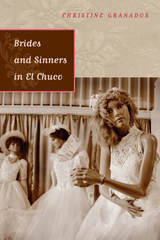
In the border town of El Paso—better known to its Mexican American residents as El Chuco—dramas unfold in humdrum households every day as working-class men come home from their jobs and as their wives and children do their best to cope with life. Christine Granados now plumbs the heart of this community in fourteen startling stories, uncovering the dreams and secrets in which ordinary people sometimes lose themselves. Many fictional accounts of barrio life play up tradition and nostalgia; Brides and Sinners in El Chuco is a trip to the darker side. Here are memories of growing up in a place where innocence is always tempered by reality—true-to-life stories, told in authentic language, of young women, from preteens to twenty-somethings, learning to negotiate their way through troubled times and troubled families. In the award-winning story “The Bride,” a young girl recalls her sister as a perennial bride on Halloween, planning for her eventual big day in a pink notebook with lists of potential husbands, only to see her dream thwarted at the junior prom. In another, we meet Bobbi, the class slut, whose D-cup chest astounds the other girls and entices everyone—even those who shouldn’t be tempted.
Granados’ tales boldly portray women’s struggle for solidarity in the face of male abuse, and as these characters come to grips with self-discovery, sibling rivalry, and dysfunctional relationships, she shows what it means for Chicanas to grow up in protective families while learning to survive in the steamy border environment. Brides and Sinners in El Chuco is an uncompromising look at life with all its hard edges—told with enough softness to make readers come back for more.

Complicated Lives focuses on the lives of sixty-five drug-using girls in the juvenile justice system (living in group homes, a residential treatment center, and a youth correctional facility) who grew up in families characterized by parental drug use, violence, and child maltreatment. Vera Lopez situates girls’ relationships with parents who fail to live up to idealized parenting norms and examines how these relationships change over time, and ultimately contribute to the girls’ future drug use and involvement in the justice system.
While Lopez’s subjects express concerns and doubt in their chances for success, Lopez provides an optimistic prescription for reform and improvement of the lives of these young women and presents a number of suggestions ranging from enhanced cultural competency training for all juvenile justice professionals to developing stronger collaborations between youth and adult serving systems and agencies.

Too many American families—unstable, broken, often poor—are in serious peril, and both the reality of the situation and the myths obscuring that reality call for attention and swift action. In this most incisive analysis of the parlous state of the family today, Marian Wright Edelman, President of the Children’s Defense Fund, charts what is happening, exposes myths, and sets a bold agenda to strengthen families and protect children. In brilliant strokes and with abundant detail, Edelman describes family conditions over a generation—the rising curve of teenage pregnancy, the overwhelming joblessness of young blacks, the trend toward single-parent households, the increase in hungry and neglected children.
Dispelling common assumptions about these bleak phenomena, she shows that the birth rate for black unmarried women is stabilizing while that for unmarried whites continues to rise, that Aid to Dependent Children does not cause teenage pregnancy or births, and that the child poverty rate has increased two-thirds for whites in recent years, as opposed to one-sixth for black children. Overall, whites are losing ground faster than blacks. Speaking for a growing number of social commentators, she finds the key to explain the rising proportion of births to single black mothers: a lost generation of fathers—young black males unable to marry and support a family, jobless from lack of education and training.
What can be done? Edelman links the family and child poverty crisis to the fragile and ephemeral commitment of government to assist the needy. She suggests establishing a partnership between government, the private sector, and the black community to ensure children food, clothing, housing, medical care, and education. “Preventive investment strategies”—providing health, nutrition, and child care, raising the minimum wage, preventing teenage pregnancies, and opening up educational and employment opportunities for heads of families—will benefit us all. A passionate call to act now, to give real meaning to traditional American instincts for decency, this book is essential reading for everyone committed to preserving the nation’s future.
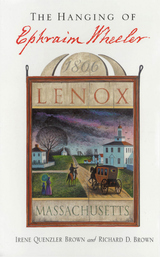
In 1806 an anxious crowd of thousands descended upon Lenox, Massachusetts, for the public hanging of Ephraim Wheeler, condemned for the rape of his thirteen-year-old daughter, Betsy. Not all witnesses believed justice had triumphed. The death penalty had become controversial; no one had been executed for rape in Massachusetts in more than a quarter century. Wheeler maintained his innocence. Over one hundred local citizens petitioned for his pardon--including, most remarkably, Betsy and her mother.
Impoverished, illiterate, a failed farmer who married into a mixed-race family and clashed routinely with his wife, Wheeler existed on the margins of society. Using the trial report to reconstruct the tragic crime and drawing on Wheeler's jailhouse autobiography to unravel his troubled family history, Irene Quenzler Brown and Richard D. Brown illuminate a rarely seen slice of early America. They imaginatively and sensitively explore issues of family violence, poverty, gender, race and class, religion, and capital punishment, revealing similarities between death penalty politics in America today and two hundred years ago.
Beautifully crafted, engagingly written, this unforgettable story probes deeply held beliefs about morality and about the nature of justice.
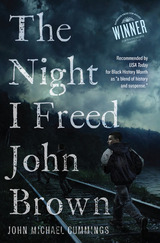
Winner of The Paterson Prize for Books for Young People
Recommended by USA Today for Black History Month as "a blend of history and suspense."
In this novel for young adults, Josh knows there is something about the tall Victorian House on the Harpers Ferry Hill, the one his father grew up in, that he can’t quite put his finger on. And his impossible father won’t give him any clues. He’s hiding something.
And then there’s the famous John Brown. The one who all the tourists come to hear about. The one whose statue looms over Josh’s house. Why does he seem to haunt Josh and his whole family? When the fancy Richmonds come to town and move right next door, their presence forces Josh to find the answers and stand up to the secrets of the House, to his father—and to John Brown, too.
The historic village of Harpers Ferry comes alive in this young boy’s brave search for answers and a place of his own in this brilliant first novel by John Michael Cummings.
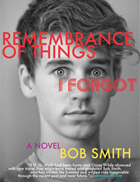
“It’s safe to say your relationship is in trouble if the only way you can imagine solving your problems is by borrowing a time machine.”
InSight Out Book Club, featured selection
Bob Smith named one of Instinct magazine’s Leading Men 2011
Finalist, Over the Rainbow Selection, American Library Association
Finalist, Green Carnation Prize, international prize for LGBT Literature
Amazon Top Ten Gay & Lesbian Books of 2011
Best Books for General Audiences, selected by the American Association of School Librarians
Best Books for General Audiences, selected by the Public Library Reviewers
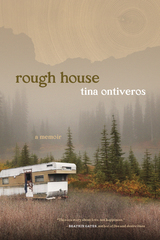
Tina Ontiveros was born into timber on both sides of the family. Her mother spent summers driving logging trucks for her family’s operation, and her father was the son of an itinerant logger, raised in a variety of lumber towns, as Tina herself would be.
A story of growing up in turmoil, rough house recounts a childhood divided between a charming, mercurial, abusive father in the forests of the Pacific Northwest and a mother struggling with small-town poverty. It is also a story of generational trauma, especially for the women—a story of violent men and societal restrictions, of children not always chosen and frequently raised alone.
Ontiveros’s father, Loyd, looms large. Reflecting on his death and long absence from her life, she writes, “I had this ridiculous hope that I would get to enjoy a functional relationship with my father, on my own terms, now that I was an adult.” In searingly honest, straightforward prose, rough house is her attempt to carve out this relationship, to understand her father and her family from an adult perspective.
While some elements of Ontiveros’s story are universal, others are indelibly grounded in the logging camps of the Pacific Northwest at the end of the twentieth century, as the lumber industry shifted and contracted. Tracing her childhood through the working-class towns and forests of Washington and Oregon, Ontiveros explores themes of love and loss, parents and children, and her own journey to a different kind of adulthood.
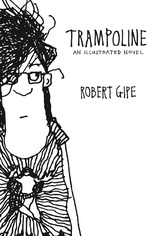
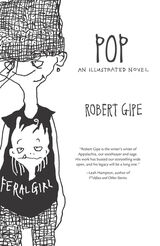
Dawn Jewell is fifteen. She is restless, curious, and wry. She listens to Black Flag, speaks her mind, and joins her grandmother’s fight against mountaintop removal mining almost in spite of herself. “I write by ear,” says Robert Gipe, and Dawn’s voice is the essence of his debut novel, Trampoline. She lives in eastern Kentucky with her addict mother and her Mamaw, whose stance against the coal companies has earned her the community’s ire. Jagged and honest, Trampoline is a powerful portrait of a place struggling with the economic and social forces that threaten and define it. Inspired by oral tradition and punctuated by Gipe’s raw and whimsical drawings, it is above all about its heroine, Dawn, as she decides whether to save a mountain or save herself; be ruled by love or ruled by anger; remain in the land of her birth or run for her life.

Finalist, 2019 Weatherford Award (Fiction)
A finalist for the 2019 Weatherford Award in Fiction, Weedeater is a contemporary story of love and loss told by a pair of eastern Kentucky mountaineers: Gene, the lovelorn landscaper who bears witness to the misadventures of a family entangled in drugs, artmaking, and politics, a family beset by both environmental and self-destruction; and Dawn Jewell, a young mother searching—for lost family members, lost youth, lost community, and lost heart.
Picking up six years after the end of Robert Gipe’s acclaimed first novel, Trampoline, in Weedeater, the reader finds Canard County living through the last hurrah of the coal industry and the most turbulent and deadly phase of the community’s battle with opioid abuse. The events Gipe chronicles are frantic. They are told through a voice by turns taciturn and angry, yet also balanced with humor and stoic grace. Weedeater is a story about how we put our lives back together when we lose the things we thought we couldn’t bear losing, how we find new purpose in what we thought were scraps and trash caught in the weeds.
READERS
Browse our collection.
PUBLISHERS
See BiblioVault's publisher services.
STUDENT SERVICES
Files for college accessibility offices.
RECENTLY PUBLISHED



UChicago Accessibility Resources
home | accessibility | search | about | contact us
BiblioVault ® 2001 - 2024
The University of Chicago Press