
 A SCHOLARLY BOOK REPOSITORY
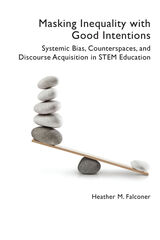
In Masking Inequality with Good Intentions, Heather M. Falconer examines the impact of systemic bias on disciplinary discourse acquisition and identity development by asking “How do the norms and expectations of higher education and STEM, specifically, impact the development of scientific identity and discursive skill?” and “What role do societal markers like race and gender play in the negotiation of identity in STEM learning environments?”
Drawing on the experiences and writings of six students from historically underrepresented backgrounds in STEM, each participating in an undergraduate research program, Falconer discusses how programmatic and pedagogical choices can work to either further marginalize students and disrupt their writing and identity development as scientists or create counterspaces—spaces where students can thrive and push back against dominant, oppressive forces. Practical applications for pedagogy, curriculum, and program design are included.
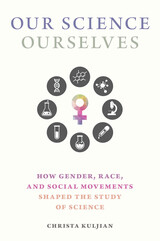
When Christa Kuljian arrived on the Harvard College campus as a first-year student in the fall of 1980 with copies of Our Bodies, Ourselves and Ms. magazine, she was concerned that the women’s movement had peaked in the previous decade. She soon learned, however, that there was a long way to go in terms of achieving equality for women and that social movements would continue to be a critical force in society. She began researching the history of science and gender biases in science, and how they intersect with race, class, and sexuality.
In Our Science, Ourselves, Kuljian tells the origin story of feminist science studies by focusing on the life histories of six key figures—Ruth Hubbard, Rita Arditti, Evelyn Fox Keller, Evelynn Hammonds, Anne Fausto-Sterling, and Banu Subramaniam. These women were part of a trailblazing network of female scientists in the 1970s, 80s, and 90s who were drawn to the Boston area—to Harvard, MIT, and other universities—to study science, to network with other scientists, or to take a job. Inspired by the social and political activism of the women’s movement and organizations such as Science for the People, the Genes and Gender Collective, and the Combahee River Collective, they began to write and teach about women in science, gender and science, and sexist and racist bias and exclusion. They would lead the critiques of E. O. Wilson’s sociobiology in 1975 and Larry Summers’ comments about women in science thirty years later. The book also explores how these contributions differed from those of Nancy Hopkins’, author of the 1999 MIT report on women in science, and a “reluctant feminist.”
Drawing on a rich array of sources that combines published journal articles and books with archival materials and interviews with major luminaries of feminist science studies, Kuljian chronicles and celebrates the contributions that these women have made to our collective scientific knowledge and view of the world.
READERS
Browse our collection.
PUBLISHERS
See BiblioVault's publisher services.
STUDENT SERVICES
Files for college accessibility offices.
RECENTLY PUBLISHED






UChicago Accessibility Resources
home | accessibility | search | about | contact us
BiblioVault ® 2001 - 2026
The University of Chicago Press