
 A SCHOLARLY BOOK REPOSITORY
Montez and Nereson bring together scholars with a diverse range of career experiences and embodied positions inside of higher learning in order to deepen the field’s theoretical inquiry using an ethnic studies framework. By participating in the interdisciplinary discourse of critical university studies, the volume aims to explore how to conduct ethical research that critiques the university while remaining mindful of our always contingent place within it. The contributors examine the ways that the university commodifies minoritarian knowledge, tokenizes the arts, and reproduces inequality. This book offers strategic ways to build liberatory communities and revolutionary networks among students and faculty alike in order to envision futures within and beyond the academy.

Jacqueline Jean Barrios confronts the cultural challenges that big canonical books pose to new generations of readers. Instead of erasing the differences between Dickens’s implied audiences and his current ones, Barrios demonstrates how youth can serve as the visionaries who bridge the gap. By placing literature in everyday surroundings, students at any school and in any location can learn from the embodied and the poetic and even question the universalism that masks unexamined reverence for the Western canon.
Empathy and the Other: Difference, Connection, and the Teaching of Writing focuses on the theoretical basis for empathy as a pedagogical concern, adding to important conversations happening in writing studies about how to foster empathetic understanding and practices for teachers and students. It offers ways for higher education classrooms to become sites for the cultivation of a critical form of empathy that can help address the most important challenges of our time.
Drawing on the study of empathy in rhetorical theory and related fields, teacher-scholars from a variety of institutions and backgrounds offer pedagogical rationales and approaches for fostering empathetic, inclusive, and antiracist pedagogies, centered around five key themes related to empathetic teaching: difference, citizenship, storytelling, assessment, and process. A reflective and critical approach to empathetic teaching—as presented by the authors in this collection—can begin to address forces of social division, particularly in the ways we read and write about others. Teaching grounded in empathetic principles can offer students ways of relating to one another across cultural, religious, class, ethnic, political, and ideological differences.
Empathy and the Other is a companion volume to Enacting Empathy: Stories and Strategies from the Writing Classroom, which features vignettes and praxis pieces focused on classroom experiences and reflections on teaching empathy. The two collections may stand alone or be read together and are of great interest to writing teachers and graduate students invested in social justice in the classroom.

In this groundbreaking book, author Margaret Cantú-Sánchez takes on the U.S. educational system. Cantú-Sánchez introduces the concept of the education/educación conflict, where Latinas navigate the clash between home and school epistemologies under Anglocentric, assimilationist pedagogies.
By analyzing literature, such as Barbara Renaud González’s Golondrina, Why Did You Leave Me?, and education testimonios from seminal works like This Bridge Called My Back and Telling to Live, Cantú-Sánchez reveals how Latina/Chicana protagonists and students negotiate this conflict through a mestizaje of epistemologies—blending elements of both home and school cultures within the third space of education.
Cantú-Sánchez utilizes an interdisciplinary approach, deploying critical race theory, Chicana third-space feminism, and other pedagogical theories like sentipensante (a sensing/thinking) pedagogy employed by education scholar Laura Rendon, among others. By providing pivotal insights and strategies, she demonstrates how educators can implement culturally relevant pedagogies in their classrooms from K–12 through higher education, fostering environments where Latina/Chicana students can thrive without forsaking their cultural identities.
Empowering Latina Narratives not only identifies the challenges Latina/Chicana students face but also offers a roadmap for overcoming them, making this book an essential resource for scholars, educators, and students committed to culturally inclusive education.
Featuring vignettes and praxis pieces focused on classroom experiences and reflections on teaching empathy, Enacting Empathy: Stories and Strategies from the Composition Classroom provides inspiration and consideration of how and why teachers might adopt an emphasis on empathy. Contributors locate empathy in the particulars of writing assignments, classroom discussions, responses to students, interpretations of texts, and connections with communities.
The challenges and means of understanding one another—as we encounter one another in words, images, and texts—are a central focus of the writing classroom. Teaching for and about empathy has become only more important as we have experienced increased social division, greater recognition and attention to identity, and an emphasis on attending to personal experiences and stories as part of larger efforts to support social justice. With its possibilities for critical reflection and revision, writing is a key tool for developing empathy. Empathy likewise can make us more present, accountable, and socially engaged in our writing. This collection explores how empathy might best be put into practice in the composition classroom, featuring teaching resources, assignment designs, and reflections on empathy and teaching writing for diverse institutional contexts.
The first edited collection in at least thirty years to present strategies for teaching empathy in composition classrooms, Enacting Empathy is a companion volume to Empathy and the Other: Difference, Connection, and the Teaching of Writing, which focuses on the theoretical basis for empathy as a pedagogical concern. The two volumes may stand alone or be read together and are of great interest to writing teachers and graduate students invested in social justice in the classroom.

Launched in 1994, the Michigan Journal of Community Service Learning (MJCSL) is an international, peer-reviewed, multi-disciplinary academic journal for college and university faculty and administrators, with an editorial board and cadre of peer reviewers representing faculty from many higher education disciplines and professional fields. It is a publication of the University of Michigan’s Ginsberg Center.
Each issue consists of articles at the cutting edge of research, theory, pedagogy, and other matters related to academic service-learning, campus-community partnerships, and engaged, public scholarship in higher education that extend the knowledge base and support and strengthen researchers’ and practitioners’ work. We also publish review essays of newly-released books pertinent to service-learning and community engagement.
“Like all writers, intellectuals need to say something new and say it well. But for intellectuals, unlike many other writers, what we have to say is bound up with the books we are reading . . . and the ideas of the people we are talking with.”
What are the moves that an academic writer makes? How does writing as an intellectual change the way we work from sources? In Rewriting, Joseph Harris draws the college writing student away from static ideas of thesis, support, and structure, and toward a more mature and dynamic understanding. Harris wants college writers to think of intellectual writing as an adaptive and social activity, and he offers them a clear set of strategies—a set of moves—for participating in it. Introducing remixing as an additional signature move and updated with new attention to digital writing, the second edition both extends and rethinks the ideas of the original.
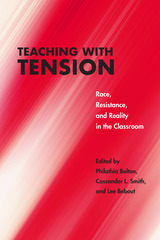
Drawing together personal reflection, pedagogical strategies, and critical theory, Teaching with Tension offers concrete examinations that will foster student learning. The essays are organized into three thematic sections: "Teaching in Times and Places of Struggle" examines the dynamics of teaching race during the current moment, marked by neoconservative politics and twenty-first century freedom struggles. "Teaching in the Neoliberal University" focuses on how pressures and exigencies of neoliberalism (such as individualism, customer-service models of education, and online courses) impact the way in which race is taught and conceptualized in college classes. The final section, "Teaching How to Read Race and (Counter)Narratives," homes in on direct strategies used to historicize race in classrooms comprised of millennials who grapple with race neutral ideologies. Taken together, these sections and their constitutive essays offer rich and fruitful insight into the complex dynamics of contemporary race and ethnic studies education.
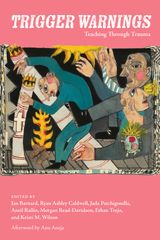
Trigger Warnings: Teaching Through Trauma brings theory and praxis to examine the ideological underpinnings and pedagogy around trigger warnings and trauma, offering multiple heuristics for classroom implementation. The ongoing interest in trigger warnings is partly a result of trigger warnings and trauma becoming more inextricably interwoven in the past few years in the wake of COVID-19, mental health crises, right-wing attacks on educational institutions, climate change, and attempts at political redress and educational equity. Critiques of trigger warnings come from all sides of the political and pedagogical spectra, and even scholars and practitioners who offer a trauma-informed approach to the topic are not unified in their view of the benefits or drawbacks of trigger warnings.
Trigger Warnings: Teaching Through Trauma provides insights through a range of forms: research articles, personal essays, long and short teaching narratives, student perspectives, memoirs, vignettes, autoethnographies, reflections, case studies, manifesto, theory, and history. Not only does this collection create a more varied engagement experience for readers, but, in line with recent scholarship in “counterstory,” it also allows for a wider variety of voices to be heard and for the articulation of experiences that might not be well accommodated by traditional scholarly essays.
READERS
Browse our collection.
PUBLISHERS
See BiblioVault's publisher services.
STUDENT SERVICES
Files for college accessibility offices.
RECENTLY PUBLISHED





UChicago Accessibility Resources
home | accessibility | search | about | contact us
BiblioVault ® 2001 - 2026
The University of Chicago Press