
 A SCHOLARLY BOOK REPOSITORY
11 start with A start with A
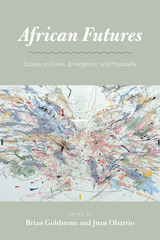
The experts in this book address Africa’s future as it is embedded within various social and cultural forms emerging on the continent today: the reconfiguration of the urban, the efflorescence of signs and wonders and gospels of prosperity, the assorted techniques of legality and illegality, lotteries and Ponzi schemes, apocalyptic visions, a yearning for exile, and many other phenomena. Bringing together social, political, religious, and economic viewpoints, the book reveals not one but multiple prospects for the future of Africa. In doing so, it offers a pathbreaking model of pluralistic and open-ended thinking and a powerful tool for addressing the vexing uncertainties that underlie so many futures around the world.
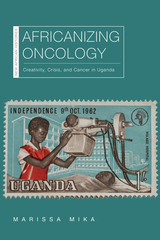


AIDS is unquestionably the most serious threat to public health in this century--yet how effective has the United States been in coping with this deadly disease? This sobering analysis of the first five years of the AIDS epidemic reveals the failure of traditional approaches in recognizing and managing this health emergency; it is an extremely unsettling probe into what makes the nation ill equipped to handle a crisis of the magnitude of the one that now confronts us.
Sandra Panem pays particular attention to the Public Health Service, within which the vast majority of biomedical research and public health services are organized, including the Centers for Disease Control and the National Institutes of Health. We learn in dismaying detail how shortcomings in communication within and among the many layers of the health establishment delayed management of the crisis.
She also investigates other problems that surface during a health emergency, involving issues such as federal budgeting, partisan politics, bureaucratic bungles, educating the public, the complications of policymaking, and the vexing role of the press. Panem makes specific recommendations for a centrally coordinated federal response to health emergencies, including the creation of a national health emergency plan.
Do patients have the right to know their physician's HIV status?
Can a dentist refuse treatment to an HIV-positive patient?
How do educators determine whether to allow an HIV-positive child to attend school, and if they do, should the parents of other children be informed?
Should a counselor break confidentiality by disclosing to a wife that her husband is infected with HIV?
This collection of original essays carefully examines the difficult moral choices the AIDS pandemic has presented for many professionals—physicians, nurses, dentists, teachers and school administrators, business managers, psychotherapists, lawyers, clergy, journalists, and politicians. In the workplace, problems posed by HIV and AIDS have led to a reexamination of traditional codes of ethics. Providing systematic and reasoned discussions, the authors explore the moral, legal, and ethical issues involved in the reconsideration of policies, standards of conduct, and the practicality of balancing personal and professional ethics.
Contributors: Albert Flores, Joan C. Callahan, Jill Powell, Kenneth Kipnis, Al Gini, Howard Cohen, Martin Gunderson, Joseph A. Edelheit, Michael Pritchard, Vincent J. Samar, Sohair ElBaz, William Pardue, and the editors.
In 1943 the American Communist Party was a large, politically influential, broadly based movement. In 1957 it was a small, weak, and isolated political sect. The Party’s decline in the intervening Cold War years is the subject of this book—an analysis of a major radical movement that touched millions of Americans and pervaded many aspects of American life.
The author, at one time active in the Party and foreign editor of its paper, The Daily Worker, and now a scholar and professor of political science, has combined personal experience with careful scholarship to analyze what happened to a revolutionary organization that found itself unable to make a revolution. His approach is not autobiographical, but rather analytical.
Joseph Starobin places the Party in its historical and political context and describes its unsuccessful efforts to adapt to the demands of the American political situation. Throughout the book are fresh interpretations of important events: the struggle in 1945 between Earl Browder and William Z. Foster for leadership of the Party, the outcome of which had a profound effect on the Party’s future course; the nature of Browder’s policies and Moscow’s eventual rejection of him; the Henry Wallace movement of 1948; the right–left battle within the CIO in the late forties; the “Communist conspiracy” problem of the fifties; the Party’s relationship with the Soviet Communists; the origins of the “Black liberation movement.”
The author’s basic conclusion is that American Communists were on their way to becoming an authentic and powerful radical movement in American life but were defeated by a basic contradiction: they could not continue to be part of a world movement dominated by Leninist concepts and yet consolidate their relative success within the United States, where these concepts were not applicable. To survive, the Party had to change. It had to anticipate by fifteen years and to endure the two tendencies that would develop within world Communism: the Russian quasi-revolutionary strain and the Chinese ultra-revolutionary. It tried, Mr. Starobin shows, and it failed.
American Communism in Crisis, 1943–1957 will interest not only history-minded readers but also anyone concerned today with social change. The book has much to say to the new left—giving historical material necessary for an understanding of its past and its potential.
Amythia results when cosmology and morality are not effectively integrated by a root metaphor, and the only possibility for the future is to transpose the old Christian God as Person to a root metaphor that is even older in origin, the concept of the Covenant tradition inherited from Israel but now understood in a nonsupernaturalist manner.
Rue asserts that amythia is a critical condition within the natural history of Western culture. The argument of the book begins with a theoretical perspective on the place of human culture within the scope of natural history and proceeds to establish the conceptual foundations for a natural history of culture.
Following an overview of the natural history of Western culture to expose the origins and depth of the contemporary intellectual and moral crisis, Rue moves on to specify and justify the limits of distinctiveness and plausibility appropriate for the task of transposing Covenant tradition. Finally, an appeal is made to the mythmakers of contemporary culture to take up the challenge of amythia.

Vivien Green Fryd argues that this crisis played a crucial role in the lives and works of two of America's most familiar and beloved artists, Georgia O'Keeffe (1887-1986) and Edward Hopper (1882-1967). Combining biographical study of their marriages with formal and iconographical analysis of their works, Fryd shows how both artists expressed the pleasures and perils of their relationships in their paintings. Hopper's many representations of Victorian homes in sunny, tranquil landscapes, for instance, take on new meanings when viewed in the context of the artist's own tumultuous marriage with Jo and the widespread middle-class fears that the new urban, multidwelling homes would contribute to the breakdown of the family. Fryd also persuasively interprets the many paintings of skulls and crosses that O'Keeffe produced in New Mexico as embodying themes of death and rebirth in response to her husband Alfred Stieglitz's long-term affair with Dorothy Norman.
Art and the Crisis of Marriage provides both a penetrating reappraisal of the interconnections between Georgia O'Keeffe's and Edward Hopper's lives and works, as well as a vivid portrait of how new understandings of family, gender, and sexuality transformed American society between the wars in ways that continue to shape it today.
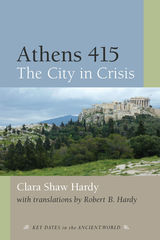
On a summer night in 415 BCE, unknown persons systematically mutilated most of the domestic “herms”—guardian statues of the god Hermes—in Athens. The reaction was immediate and extreme: the Athenians feared a terrifying conspiracy was underway against the city and its large fleet—and possibly against democracy itself. The city established a board of investigators, which led to informants, accusations, and flight by many of the accused. Ultimately, dozens were exiled or executed, their property confiscated.
This dramatic period offers the opportunity to observe the city in crisis. Sequential events allow us to see the workings of the major institutions of the city (assembly, council, law courts, and theater, as well as public and private religion). Remarkably, the primary sources for these tumultuous months name conspirators and informants from a very wide range of status-groups: citizens, women, slaves, and free residents. Thus the incident provides a particularly effective entry-point into a full multifaceted view of the way Athens worked in the late fifth century.
Designed for classroom use, Athens 415 is no potted history, but rather a source-based presentation of ancient urban life ideal for the study of a people and their institutions and beliefs. Original texts—all translated by poet Robert B. Hardy—are presented along with thoughtful discussion and analyses by Clara Shaw Hardy in an engaging narrative that draws students into Athens’ crisis.
READERS
Browse our collection.
PUBLISHERS
See BiblioVault's publisher services.
STUDENT SERVICES
Files for college accessibility offices.
RECENTLY PUBLISHED





UChicago Accessibility Resources
home | accessibility | search | about | contact us
BiblioVault ® 2001 - 2024
The University of Chicago Press