
 A SCHOLARLY BOOK REPOSITORY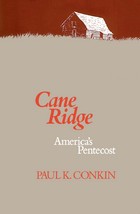
Paul Conkin tells the story of Cane Ridge in all its dimensions. The backdrop involves the convoluted history of Scotch-Irish Presbyterianism in America, the pluralistic religious environment in early Kentucky, and the gradual evolution of a new form of evangelical religious culture in eighteenth-century America.
The aftermath was complex. Cane Ridge helped popularize religious camps and influenced the subsequent development of planned camp meetings. It exposed deep and developing divisions of doctrine among Presbyterian clergy, and contributed to the birth of two new denominations —Christians (Disciples of Christ) and Cumberland Presbyterians and furthered the growth of a new revival culture, keyed to a crisis-like conversion experience, even as it marked a gradual decline in sacramentalism.
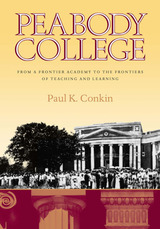
It all began as a small frontier academy in 1785. The institution that would become Peabody experienced its first reinvention two decades later as it became Cumberland College, and then, in 1826, the University of Nashville. The University maintained an elite undergraduate college until 1850, and, despite the success of its medical school and a military institute, it failed in three subsequent efforts to restart its undergraduate program.
In 1875 the University offered its campus and degree-granting authority to the first normal school in the state of Tennessee, a school funded by the Peabody Education Fund. The Peabody Normal College was the best in the South, and, as such, exerted an enormous influence on education in the region.
A new era began in 1909. The trustees of the Peabody Fund, at its liquidation, provided an eventual $1.5 million to establish a graduate-level George Peabody College for Teachers. It opened for classes in 1914, on its present campus, where it quickly became the premier teachers' college in the South. As was the case with many private, independent institutions, Peabody faced intermittent financial struggles, which finally ended with its union with Vanderbilt. Today Peabody is, by almost any criteria, one of the five or six strongest colleges of education in the United States.

Interweaving group biography and intellectual history, Conkin traces how these young intellectuals came to write their classic manifesto, I'll Take My Stand, relates their political advocacy to the earlier Fugitive movement in poetry, and follows their careers after the Agrarian crusade fell apart. More than any other historian or critic, Conkin takes seriously the economic and political beliefs of these southern writers.
READERS
Browse our collection.
PUBLISHERS
See BiblioVault's publisher services.
STUDENT SERVICES
Files for college accessibility offices.
RECENTLY PUBLISHED




UChicago Accessibility Resources
home | accessibility | search | about | contact us
BiblioVault ® 2001 - 2025
The University of Chicago Press