
 A SCHOLARLY BOOK REPOSITORY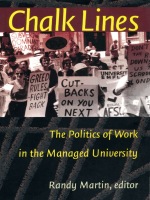
While tracing the socioeconomic conditions that have led to the present labor situation on campuses, the contributors consider such topics as the political implications of managerialism and the conceptual status of academic labor.
They examine the trend toward restructuring and downsizing, the particular plight of the adjunct professor, the growing emphasis on vocational training in the classroom, and union organizing among university faculty, staff, and graduate students. Placing such issues within the context of the history of labor movements as well as governmental initiatives to train a workforce capable of competing in the global economy, Chalk Lines explores how universities have attempted to remake themselves in the image of the corporate sector. Originally published as an issue of Social Text, this expanded volume, which includes four new essays, offers a broad view of academic labor in the United States.
With its important, timely contribution to debates concerning the future of higher education, Chalk Lines will interest a wide array of academics, administrators, policymakers, and others invested in the state—and fate—of academia.
Contributors. Stanley Aronowitz, Jan Currie, Zelda F. Gamson, Emily Hacker, Stefano Harney, Randy Martin, Bart Meyers, David Montgomery, Frederick Moten, Christopher Newfield, Gary Rhoades, Sheila Slaughter, Jeremy Smith, Vincent Tirelli, William Vaughn, Lesley Vidovich, Ira Yankwitt
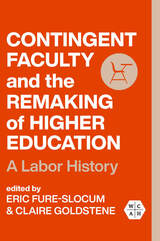
In the United States today, almost three-quarters of the people teaching in two- and four-year colleges and universities work as contingent faculty. They share the hardships endemic in the gig economy: lack of job security and health care, professional disrespect, and poverty wages that require them to juggle multiple jobs.
This collection draws on a wide range of perspectives to examine the realities of the contingent faculty system through the lens of labor history. Essayists investigate structural changes that have caused the use of contingent faculty to skyrocket and illuminate how precarity shapes day-to-day experiences in the academic workplace. Other essays delve into the ways contingent faculty engage in collective action and other means to resist austerity measures, improve their working conditions, and instigate reforms in higher education. By challenging contingency, this volume issues a clear call to reclaim higher education’s public purpose.
Interdisciplinary in approach and multifaceted in perspective, Contingent Faculty and the Remaking of Higher Education surveys the adjunct system and its costs.
Contributors: Gwendolyn Alker, Diane Angell, Joe Berry, Sue Doe, Eric Fure-Slocum, Claire Goldstene, Trevor Griffey, Erin Hatton, William A. Herbert, Elizabeth Hohl, Miguel Juárez, Aimee Loiselle, Maria C. Maisto, Anne McLeer, Steven Parfitt, Jiyoon Park, Claire Raymond, Gary Rhoades, Jeff Schuhrke, Elizabeth Tandy Shermer, Steven Shulman, Joseph van der Naald, Anne Wiegard, Naomi R Williams, and Helena Worthen
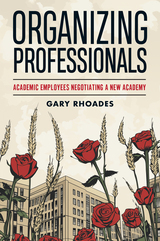

Hutcheson examines how tensions between the requirements of institutional bureaucracies and the norms of the academic profession resulted in contentiousness and conflict within the national AAUP, between administrators and faculty members on individual campuses, within the ranks of faculties themselves, and even deep in the consciences of many concerned individuals. The book analyzes the association's ability to respond effectively and to balance the values of collegial representation with the powers of collective bargaining. It thus offers a detailed and authoritative examination of the AAUP's search for ways to sustain professionalism while dealing with the fundamental changes in the nature of the professoriate in the post-World War II era.
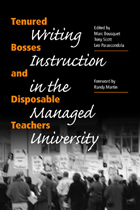
Tenured Bosses and Disposable Teachers: Writing Instruction in the Managed University exposes the poor working conditions of contingent composition faculty and explores practical alternatives to the unfair labor practices that are all too common on campuses today.
Editors Marc Bousquet, Tony Scott, and Leo Parascondola bring together diverse perspectives from pragmatism to historical materialism to provide a perceptive and engaging examination of the nature, extent, and economics of the managed labor problem in composition instruction—a field in which as much as ninety-three percent of all classes are taught by graduate students, adjuncts, and other “disposable” teachers. These instructors enjoy few benefits, meager wages, little or no participation in departmental governance, and none of the rewards and protections that encourage innovation and research. And it is from this disenfranchised position that literacy workers are expected to provide some of the core instruction in nearly everyone's higher education experience.
Twenty-six contributors explore a range of real-world solutions to managerial domination of the composition workplace, from traditional academic unionism to ensemble movement activism and the pragmatic rhetoric, accommodations, and resistances practiced by teachers in their daily lives.
Contributors are Leann Bertoncini, Marc Bousquet, Christopher Carter, Christopher Ferry, David Downing, Amanda Godley, Robin Truth Goodman, Bill Hendricks, Walter Jacobsohn, Ruth Kiefson, Paul Lauter, Donald Lazere, Eric Marshall, Randy Martin, Richard Ohmann, Leo Parascondola, Steve Parks, Gary Rhoades, Eileen Schell, Tony Scott, William Thelin, Jennifer Seibel Trainor, Donna Strickland, William Vaughn, Ray Watkins, and Katherine Wills.
READERS
Browse our collection.
PUBLISHERS
See BiblioVault's publisher services.
STUDENT SERVICES
Files for college accessibility offices.
RECENTLY PUBLISHED




UChicago Accessibility Resources
home | accessibility | search | about | contact us
BiblioVault ® 2001 - 2026
The University of Chicago Press