
 A SCHOLARLY BOOK REPOSITORY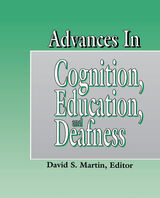
The Second International Symposium on Cognition, Education, and Deafness in 1989 broadened and deepened the scope of investigation initiated at the first conference held five years earlier. Advances in Cognition, Education, and Deafness provides the results in a single integrated volume. The 39 scholars from 14 nations who attended offered consistent progress from the first symposium and new areas of research, especially in the study of applications in education and the new field of neuro-anatomical dimensions of cognition and deafness.
This important book has been organized under six major themes: Cognitive Assessment; Language and Cognition; Cognitive Development; Neuroscientific Issues; Cognitive Processes; and Cognitive Intervention Programs. This useful study also features programs designed to facilitate the learning of deaf individuals in cognitive realms, and questions about methodological problems facing researchers in deafness.
Advances in Cognition, Education, and Deafness also synthesizes this wealth of data with the added value of the objective perspective of a cognitive psychologist not directly involved in the field of deafness. Teachers, students, scholars, and researchers will consider this an indispensable reference for years to come.

The theoretical constants Narmour uses are context-free and, therefore, applicable to all styles of melody. He places considerable emphasis on the listener's cognitive performance (that is, fundamental melodic perception as opposed to acquired musical competence). He concentrates almost exclusively on low-level, note-to-note relations. The result is a highly generalized theory useful in researching all manner of psychological and music-theoretic problems concerned with the analysis and cognition of melody.
"In this innovative, landmark book, a distinguished music theorist draws extensively from a variety of disciplines, in particular from cognitive psychology and music theory, to develop an elegant and persuasive framework for the understanding of melody. This book should be read by all scholars with a serious interest in music."—Diana Deutsch, Editor, Music Perception
Narmour explains the cognitive operations by which listeners assimilate and ultimately encode complex melodic structures, and goes on to show how sixteen melodic archetypes can combine to form some 200 complex structures that, in turn, can chain together in a theoretically infinite number of ways.
Of particular importance to music theorists and music historians is Narmour's argument that melodic analysis and formal analysis, though often treated separately, are in fact indissolubly linked. Illustrated with over 250 musical examples, The Analysis and Cognition of Melodic Complexity will also appeal to ethnomusicologists, psychologists, and cognitive scientists.

Truth, reason, and objectivity--can we survive without them? What happens to law, science, and the pursuit of social justice when such ideas and ideals are rejected? These questions are at the heart of the controversies between traditionalists and "postmodernists" that Barbara Herrnstein Smith examines in her wide-ranging book, which also offers an original perspective on the perennial--perhaps eternal--clash of belief and skepticism, on our need for intellectual stability and our experience of its inevitable disruption.
Focusing on the mutually frustrating impasses to which these controversies often lead and on the charges--"absurdity," "irrationalism," "complicity," "blindness," "stubbornness"--that typically accompany them, Smith stresses our tendency to give self-flattering reasons for our own beliefs and to discount or demonize the motives of those who disagree with us. Her account of the resulting cognitive and rhetorical dynamics of intellectual conflict draws on recent research and theory in evolutionary biology, neuroscience, developmental psychology, and the history and sociology of science, as well as on contemporary philosophy and language theory.
Smith's analyses take her into important ongoing debates over the possibility of an objective grounding of legal and political judgments, the continuing value of Enlightenment rationalism, significant challenges to dominant ideas of scientific truth, and proper responses to denials of the factuality of the Holocaust. As she explores these and other controversies, Smith develops fresh ways to understand their motives and energies, and more positive ways to see the operations of intellectual conflict more generally.
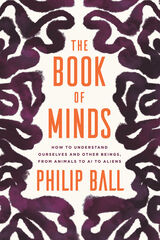
Sciences from zoology to astrobiology, computer science to neuroscience, are seeking to understand minds in their own distinct disciplinary realms. Taking a uniquely broad view of minds and where to find them—including in plants, aliens, and God—Philip Ball pulls the pieces together to explore what sorts of minds we might expect to find in the universe. In so doing, he offers for the first time a unified way of thinking about what minds are and what they can do, by locating them in what he calls the “space of possible minds.” By identifying and mapping out properties of mind without prioritizing the human, Ball sheds new light on a host of fascinating questions: What moral rights should we afford animals, and can we understand their thoughts? Should we worry that AI is going to take over society? If there are intelligent aliens out there, how could we communicate with them? Should we? Understanding the space of possible minds also reveals ways of making advances in understanding some of the most challenging questions in contemporary science: What is thought? What is consciousness? And what (if anything) is free will?
Informed by conversations with leading researchers, Ball’s brilliant survey of current views about the nature and existence of minds is more mind-expanding than we could imagine. In this fascinating panorama of other minds, we come to better know our own.
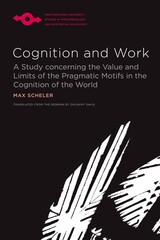
Max Scheler’s Cognition and Work (Erkenntnis und Arbeit) first appeared in German in 1926, just two years before his death. The first part of the book offers one of the earliest critical analyses of American pragmatism, an analysis that would come to have a significant impact on the reception of pragmatism in Germany and western Europe. The second part of the work contains Scheler’s phenomenological account of perception and the experience of reality, an account that is as original as both Husserl’s and Merleau-Ponty’s phenomenologies of perception. Scheler aims to show that the modern mechanistic view of nature fails to account for the dynamic relation that not only the human being but all living beings have to the environment they inhabit.
Available in English translation for the first time, Cognition and Work pushes the boundaries of phenomenology as it is traditionally understood and offers insight into Scheler’s distinct metaphysics. This book is essential reading for those interested in phenomenology, pragmatism, perception, and living beings in their relation to the natural world.
Alexander Romanovich Luria, one of the most influential psychologists of the twentieth century, is best known for his pioneering work on the development of language and thought, mental retardation, and the cortical organization of higher mental processes. Virtually unnoticed has been his major contribution to the understanding of cultural differences in thinking.
In the early 1930s young Luria set out with a group of Russian psychologists for the steppes of central Asia. Their mission: to study the impact of the socialist revolution on an ancient Islamic cotton-growing culture and, no less, to establish guidelines for a viable Marxist psychology. Lev Vygotsky, Luria's great teacher and friend, was convinced that variations in the mental development of children must be understood as a process including historically determined cultural factors. Guided by this conviction, Luria and his colleagues studied perception, abstraction, reasoning, and imagination among several remote groups of Uzbeks and Kirghiz—from cloistered illiterate women to slightly educated new friends of the central government.
The original hypothesis was abundantly supported by the data: the very structure of the human cognitive process differs according to the ways in which social groups live out their various realities. People whose lives are dominated by concrete, practical activities have a different method of thinking from people whose lives require abstract, verbal, and theoretical approaches to reality.
For Luria the legitimacy of treating human consciousness as a product of social history legitimized the Marxian dialectic of social development. For psychology in general, the research in Uzbekistan, its rich collection of data and the penetrating observations Luria drew from it, have cast new light on the workings of cognitive activity. The parallels between individual and social development are still being explored by researchers today. Beyond its historical and theoretical significance, this book represents a revolution in method. Much as Piaget introduced the clinical method into the study of children's mental activities, Luria pioneered his own version of the clinical technique for use in cross-cultural work. Had this text been available, the recent history of cognitive psychology and of anthropological study might well have been very different. As it is, we are only now catching up with Luria's procedures.
This novel approach to epistemological discourse explains the complex but crucial role that systematization plays-not just for the organization of what we know, but also for its validation. Cognitive Harmony argues for a new conception of the process philosophers generally call induction.
Relying on the root definition of harmony, a coherent unification of component parts (systemic integrity) in such a way that the final object can successfully accomplish what it was meant to do (evaluative positivity), Rescher discusses the role of harmony in cognitive contexts, the history of cognitive harmony, and the various features it has in producing human knowledge. The book ends on the issue of philosophy and the sort of harmony required of philosophical systems.
"A most stimulating, and intellectually delightful book."—John Goldsmith
"[De Mey] has brought together an unusually wide range of material, and suggested some interesting lines of thought, about what should be an important application of cognitive science: The understanding of science itself."—Cognition and Brain Theory
"It ought to be on the shelf of every teacher and researcher in the field and on the reading list of any student or practitioner seriously interested in how those they serve are likely to set about knowing."—ISIS
Nicholas Rescher tackles the major questions of philosophical inquiry, pondering the nature of truth and existence. In the authoritative voice and calculated manner that we’ve come to expect from this distinguished philosopher, Rescher argues that the development of knowledge is a practice, pursued by humans because we have a need for its products. This pragmatic approach satisfies our innate urge as humans to make sense of our surroundings.
Taking his discussion down to the level of particular details, and addressing such topics as inductive validation, hypostatization fallacies, and counterfactual reasoning, Rescher abandons abstract generalities in favor of concrete specifics. For example, philosophers usually insist that to reason logically from a counterfactual, we must imagine a possible world in which the statement is fact. But Rescher argues that there’s no need to attempt to accept the facts of a world outside our cognition in order to reason from them. He shows us how we can use our own natural system of prioritizing, our own understanding of the fundamental, to resolve the inconsistencies in such statements as, “If the Eiffel Tower were in Manhattan, then it would be in New York State.”
In using dozens of real-world examples such as these, and in arguing in his characteristically succinct style, Rescher casts light on a wide variety of concrete issues in the classical theory of knowledge, and reassures us along the way that the inherent limitations on our knowledge are no cause for distress. In pragmatic theory and inquiry, we must accept that the best we can do is good enough, because we only have a certain (albeit large) set of tools and conceptualizations available to us.
A unique synthesis, this endeavor into pragmatic epistemology will be of interest to scholars and students of philosophy and cognitive science.
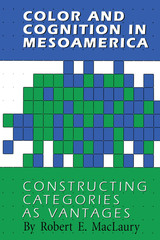
More than 100 indigenous languages are spoken in Mexico and Central America. Each language partitions the color spectrum according to a pattern that is unique in some way. But every local system of color categories also shares characteristics with the systems of other Mesoamerican languages and of languages elsewhere in the world.
This book presents the results of the Mesoamerican Color Survey, which Robert E. MacLaury conducted in 1978-1981. Drawn from interviews with 900 speakers of some 116 Mesoamerican languages, the book provides a sweeping overview of the organization and semantics of color categorization in modern Mesoamerica.
Extensive analysis and MacLaury's use of vantage theory reveal complex and often surprising interrelationships among the ways languages categorize colors. His findings offer valuable cross-cultural data for all students of Mesoamerica. They will also be of interest to all linguists and cognitive scientists working on theories of categorization more generally.
Co-Published with CSU Open Press
Since the 1980s, even as international writing scholars have embraced cognitive science, the number of studies building on research in writing and cognition has decreased in the United States. Despite this decline, significant interest and ongoing research in this critical area continues. Contemporary Perspectives on Cognition and Writing explores the historical context of cognitive studies, the importance to our field of studies in neuroscience, the applicability of habits of mind, and the role of cognition in literate development and transfer. These works—each of which offers a timely contribution to research, teaching, and learning in the composition classroom—are book-ended by a foreword and afterword by cognition and writing pioneers John Hayes and Linda Flower. This collection, as a result, offers a historical marker of where we were in cognitive studies and where we might go.
Why do some surprises delight—the endings of Agatha Christie novels, films like The Sixth Sense, the flash awareness that Pip’s benefactor is not (and never was!) Miss Havisham? Writing at the intersection of cognitive science and narrative pleasure, Vera Tobin explains how our brains conspire with stories to produce those revelatory plots that define a “well-made surprise.”
By tracing the prevalence of surprise endings in both literary fiction and popular literature and showing how they exploit our mental limits, Tobin upends two common beliefs. The first is cognitive science’s tendency to consider biases a form of moral weakness and failure. The second is certain critics’ presumption that surprise endings are mere shallow gimmicks. The latter is simply not true, and the former tells at best half the story. Tobin shows that building a good plot twist is a complex art that reflects a sophisticated understanding of the human mind.
Reading classic, popular, and obscure literature alongside the latest research in cognitive science, Tobin argues that a good surprise works by taking advantage of our mental limits. Elements of Surprise describes how cognitive biases, mental shortcuts, and quirks of memory conspire with stories to produce wondrous illusions, and also provides a sophisticated how-to guide for writers. In Tobin’s hands, the interactions of plot and cognition reveal the interdependencies of surprise, sympathy, and sense-making. The result is a new appreciation of the pleasures of being had.
A brief account of Johnson’s own intellectual journey, through which we track some of the most important discoveries in the field over the past forty years, sets the stage. Subsequent chapters set out Johnson’s important role in embodied cognition theory, including his cofounding (with George Lakoff) of conceptual metaphor theory and, later, their theory of bodily structures and processes that underlie all meaning, conceptualization, and reasoning. A detailed account of how meaning arises from our physical engagement with our environments provides the basis for a nondualistic, nonreductive view of mind that he sees as most congruous with the latest cognitive science. A concluding section explores the implications of our embodiment for our understanding of knowledge, reason, and truth. The resulting book will be essential for all philosophers dealing with mind, thought, and language.
Tracing the leading role of emotions in the evolution of the mind, a philosopher and a psychologist pair up to reveal how thought and culture owe less to our faculty for reason than to our capacity to feel.
Many accounts of the human mind concentrate on the brain’s computational power. Yet, in evolutionary terms, rational cognition emerged only the day before yesterday. For nearly 200 million years before humans developed a capacity to reason, the emotional centers of the brain were hard at work. If we want to properly understand the evolution of the mind, we must explore this more primal capability that we share with other animals: the power to feel.
Emotions saturate every thought and perception with the weight of feelings. The Emotional Mind reveals that many of the distinctive behaviors and social structures of our species are best discerned through the lens of emotions. Even the roots of so much that makes us uniquely human—art, mythology, religion—can be traced to feelings of caring, longing, fear, loneliness, awe, rage, lust, playfulness, and more.
From prehistoric cave art to the songs of Hank Williams, Stephen T. Asma and Rami Gabriel explore how the evolution of the emotional mind stimulated our species’ cultural expression in all its rich variety. Bringing together insights and data from philosophy, biology, anthropology, neuroscience, and psychology, The Emotional Mind offers a new paradigm for understanding what it is that makes us so unique.
Whatever the target of our effort to know—whether we probe the origin of the cosmos, the fabric of man-made symbols and culture, or simply the layout of our immediate environment—all knowledge is grounded in natural cognitive capacities. Philosophers of knowledge must therefore make use of the science of cognition. So argues a leading epistemologist in this work of fundamental importance to philosophical thinking.
Against the traditional view, Alvin Goldman argues that logic, probability theory, and linguistic analysis cannot by themselves delineate principles of rationality or justified belief. The mind’s operations must be taken into account. Part I of his book lays the foundations of this view by addressing the major topics of epistemology: skepticism, knowledge, justification, and truth. Drawing parallels with ethical theory, it provides criteria for evaluating belief formation, problem solving, and probability judgment. Part II examines what cognitive scientists have learned about the basic processes of the mind-brain: perception, memory, representational constraints, internal codes, and so on. Looking at reliability, power, and speed, Goldman lays the groundwork for a balanced appraisal of the strengths and weaknesses of human mental processes.
In establishing a theoretical framework for the link between epistemology and cognitive science, Alvin Goldman does nothing less than redirect the entire field of study.
Arguing that the mind is essentially embedded in the external world, Ron McClamrock provides a schema that allows cognitive scientists to address such long-standing problems in artificial intelligence as the "frame" problem and the issue of "bounded" rationality. Extending this schema to cover progress in other studies of behavior, including language, vision, and action, McClamrock reinterprets the importance of the organism/environment distinction. McClamrock also considers the broader philosophical question of the place of mind in the world, particularly with regard to questions of intentionality, subjectivity, and phenomenology.
With implications for philosophy, cognitive and computer science, AI, and psychology, this book synthesizes state-of-the-art work in philosophy and cognitive science on how the mind interacts with the world to produce thoughts, ideas, and actions.
"The writing is delightfully clear and accessible. On balance, few books advance our subject as well."—Paul Teller, Philosophy of Science
This edited volume focuses on medical and philosophical debates on human intelligence and animal perception in the early modern age, providing fresh insights into the influence of medical discourse on the rise of modern philosophical anthropology. Contributions from distinguished historians of philosophy and medicine focus on sixteenth-century zoological, psychological, and embryological discourses on man; the impact of mechanism and comparative anatomy on philosophical conceptions of body and soul; and the key status of sensibility in the medical and philosophical enlightenment.
Historically, there has been great deliberation about the limits of human knowledge. Isaac Newton, recognizing his own shortcomings, once described himself as “a boy standing on the seashore . . . whilst the great ocean of truth lay all underscored before me.”
In Ignorance, Nicholas Rescher presents a broad-ranging study that examines the manifestations, consequences, and occasional benefits of ignorance in areas of philosophy, scientific endeavor, and ordinary life. Citing philosophers, theologians, and scientists from Socrates to Steven Hawking, Rescher seeks to uncover the factors that hinder our cognition.
Rescher categorizes ignorance as ontologically grounded (rooted in acts of nature-erasure, chaos, and chance-that prevent fact determination), or epistemically grounded (the inadequacy of our information-securing resources). He then defines the basis of ignorance: inaccessible data; statistical fogs; secreted information; past data that have left no trace; future discoveries; future contingencies; vagrant predicates; and superior intelligences. Such impediments set limits to inquiry and mean that while we can always extend our existing knowledge-variability here is infinite-there are things that we will never know.
Cognitive finitude also hinders our ability to assimilate more than a certain number of facts. We may acquire additional information, but lack the facility to interpret it. More information does not always increase knowledge; it may point us further down the path toward an erroneous conclusion. In light of these deficiencies, Rescher looks to the role of computers in solving problems and expanding our knowledge base, but finds limits to their reasoning capacity.
As Rescher's comprehensive study concludes, ignorance itself is a fertile topic for knowledge, and recognizing the boundaries of our comprehension is where wisdom begins.

The Intellective Space explores the nature and limits of thought. It celebrates the poetic virtues of language and the creative imperfections of our animal minds while pleading for a renewal of the humanities that is grounded in a study of the sciences.
According to Laurent Dubreuil, we humans both say more than we think and think more than we say. Dubreuil’s particular interest is the intellective space, a space where thought and knowledge are performed and shared. For Dubreuil, the term “cognition” refers to the minimal level of our mental operations. But he suggests that for humans there is an excess of cognition due to our extensive processing necessary for verbal language, brain dynamics, and social contexts. In articulating the intellective, Dubreuil includes “the productive undoing of cognition.”
Dubreuil grants that cognitive operations take place and that protocols of experimental psychology, new techniques of neuroimagery, and mathematical or computerized models provide access to a certain understanding of thought. But he argues that there is something in thinking that bypasses cognitive structures. Seeking to theorize with the sciences, the book’s first section develops the “intellective hypothesis” and points toward the potential journey of ideas going beyond cognition, after and before computation. The second part, “Animal Meditations,” pursues some of the consequences of this hypothesis with regard to the disparaged but enduring project of metaphysics, with its emphasis on categories such as reality, humanness, and the soul.
How does sense perception contribute to human cognition? How did the Byzantines understand that contribution? Byzantine culture in all its domains showed deep appreciation for sensory awareness and sensory experience. The senses were reckoned as modes of knowledge—intersecting realms both human and divine, bodily and spiritual, physical and intellectual.
Scholars have attended to aspects of sight and sound in Byzantine culture, but have generally left smell, taste, and touch undervalued and understudied. Through collected essays that redress the imbalance, the contributors explore how the Byzantines viewed the senses; how they envisaged sensory interactions within their world; and how they described, narrated, and represented the senses at work. The result is a fresh charting of the Byzantine sensorium as a whole.
This compilation of cutting-edge philosophical and scientific research comprises a survey of recent neuroscientific research on representational systems in animals and humans. Representational systems provide their owners with useful information about their environment and are shaped by the special informational needs of the organism with respect to its environment. In this volume, the authors address the long-standing dispute about the usefulness of the notion of representation in the study of behavior systems and offer a fresh perspective on representational systems that combines philosophical insights and experimental experience.
In seminal works ranging from Sources of the Self to A Secular Age, Charles Taylor has shown how we create possible ways of being, both as individuals and as a society. In his new book setting forth decades of thought, he demonstrates that language is at the center of this generative process.
For centuries, philosophers have been divided on the nature of language. Those in the rational empiricist tradition—Hobbes, Locke, Condillac, and their heirs—assert that language is a tool that human beings developed to encode and communicate information. In The Language Animal, Taylor explains that this view neglects the crucial role language plays in shaping the very thought it purports to express. Language does not merely describe; it constitutes meaning and fundamentally shapes human experience. The human linguistic capacity is not something we innately possess. We first learn language from others, and, inducted into the shared practice of speech, our individual selves emerge out of the conversation.
Taylor expands the thinking of the German Romantics Hamann, Herder, and Humboldt into a theory of linguistic holism. Language is intellectual, but it is also enacted in artistic portrayals, gestures, tones of voice, metaphors, and the shifts of emphasis and attitude that accompany speech. Human language recognizes no boundary between mind and body. In illuminating the full capacity of “the language animal,” Taylor sheds light on the very question of what it is to be a human being.
The only way we can convey our thoughts in detail to another person is through verbal language. Does this imply that our thoughts ultimately rely on words? Is there only one way in which thoughts can occur? This ambitious book takes the contrary position, arguing that many possible "languages of thought" play different roles in the life of the mind.
"Language" is more than communication. It is also a means of representing information in both working and long-term memory. It provides a set of rules for combining and manipulating those representations.
A stellar lineup of international cognitive scientists, philosophers, and artists make the book's case that the brain is multilingual. Among topics discussed in the section on verbal languages are the learning of second languages, recovering language after brain damage, and sign language, and in the section on nonverbal languages, mental imagery, representations of motor activity, and the perception and representation of space.
In exploring the relationship between imaginative invention and that of allegory or fable, the essays in Learning from Other Worlds comment on the field’s most abiding concerns and employ a variety of critical approaches—from intellectual history and genre studies to biographical criticism, feminist cultural studies, and political textual analysis. Among the topics discussed are the works of John Wyndham, Kim Stanley Robinson, Stanislau Lem, H.G. Wells, and Ursula Le Guin, as well as the media’s reactions to the 1997 cloning of Dolly the Sheep. Darko Suvin’s characteristically outspoken and penetrating afterword responds to the essays in the volume and offers intimations of a further stage in his long and distinguished career.
This useful compendium and companion offers a coherent view of science fiction studies as it has evolved while paying tribute to the debt it owes Suvin, one of its first champions. As such, it will appeal to critics and students of science fiction, utopia, and fantasy writing.
Contributors. Marc Angenot, Marleen S. Barr, Peter Fitting, Carl Freedman, Edward James, Fredric Jameson, David Ketterer, Gerard Klein, Tom Moylan, Rafail Nudelman, Darko Suvin
The international bestseller that has helped millions of students, teachers, and lifelong learners use proven approaches to learn better and remember longer.
“We have made Make It Stick a touchstone for our instructors and support … to gain a real advantage for our learners as they tackle some of the toughest work in the world.” —Carl Czech, former Senior Instructional Systems Specialist/Advisor, US Navy SEALs
Are you tired of forgetting what you learn? This groundbreaking book, based on the latest research in cognitive science, offers powerful strategies to boost memory and learning.
To most of us, learning something “the hard way” means wasted time and effort. Good teaching, many believe, should be tailored to the different learning styles of students and should use strategies that make learning easier. Make It Stick turns fashionable ideas like these on their head. Drawing on recent discoveries in cognitive psychology and a 10-year collaboration among some of the world’s leading experts on human learning and memory, the authors explain what really drives successful learning. With clear, real-world examples, they show how we can confidently hone our skills and learn more effectively.
Many common study habits simply don’t work. Underlining, highlighting, rereading, cramming, and single-minded repetition of new skills create the illusion of mastery, but gains fade quickly. Science shows that more durable learning comes from self-testing, introducing certain difficulties in practice, waiting to re-study new material until a little forgetting has occurred, and interleaving the practice of one skill or topic with another. Make It Stick breaks down these proven approaches in compelling ways and offers concrete techniques for becoming more productive learners.
Full of eye-opening and inspiring stories for students, educators, and parents, Make It Stick is an indispensable guide to all those interested in the challenge of lifelong learning and self-improvement.
Knowing where things are seems effortless. Yet our brains devote tremendous computational power to figuring out the simplest details about spatial relationships. Going to the grocery store or finding our cell phone requires sleuthing and coordination across different sensory and motor domains. Making Space traces this mental detective work to explain how the brain creates our sense of location. But it goes further, to make the case that spatial processing permeates all our cognitive abilities, and that the brain’s systems for thinking about space may be the systems of thought itself.
Our senses measure energy in the form of light, sound, and pressure on the skin, and our brains evaluate these measurements to make inferences about objects and boundaries. Jennifer Groh describes how eyes detect electromagnetic radiation, how the brain can locate sounds by measuring differences of less than one one-thousandth of a second in how long they take to reach each ear, and how the ear’s balance organs help us monitor body posture and movement. The brain synthesizes all this neural information so that we can navigate three-dimensional space.
But the brain’s work doesn’t end there. Spatial representations do double duty in aiding memory and reasoning. This is why it is harder to remember how to get somewhere if someone else is driving, and why, if we set out to do something and forget what it was, returning to the place we started can jog our memory. In making space the brain uses powers we did not know we have.

Based on fieldwork and reflection over a period of almost fifty years, Maya Potters’ Indigenous Knowledge utilizes engagement theory to describe the indigenous knowledge of traditional Maya potters in Ticul, Yucatán, Mexico. In this heavily illustrated narrative account, Dean E. Arnold examines craftspeople’s knowledge and skills, their engagement with their natural and social environments, the raw materials they use for their craft, and their process for making pottery.
Following Lambros Malafouris, Tim Ingold, and Colin Renfrew, Arnold argues that potters’ indigenous knowledge is not just in their minds but extends to their engagement with the environment, raw materials, and the pottery-making process itself and is recursively affected by visual and tactile feedback. Pottery is not just an expression of a mental template but also involves the interaction of cognitive categories, embodied muscular patterns, and the engagement of those categories and skills with the production process. Indigenous knowledge is thus a product of the interaction of mind and material, of mental categories and action, and of cognition and sensory engagement—the interaction of both human and material agency.
Engagement theory has become an important theoretical approach and “indigenous knowledge” (as cultural heritage) is the focus of much current research in anthropology, archaeology, and cultural resource management. While Dean Arnold’s previous work has been significant in ceramic ethnoarchaeology, Maya Potters' Indigenous Knowledge goes further, providing new evidence and opening up different concepts and approaches to understanding practical processes. It will be of interest to a wide variety of researchers in Maya studies, material culture, material sciences, ceramic ecology, and ethnoarchaeology.
An exploration of the representational culture of Alzheimer’s disease and how media technologies shape our ideas of cognition and aging
With no known cause or cure despite a century of research, Alzheimer’s disease is a true medical mystery. In Mediating Alzheimer’s, Scott Selberg examines the nature of this enduring national health crisis by looking at the disease’s relationship to media and representation. He shows how collective investments in different kinds of media have historically shaped how we understand, treat, and live with this disease.
Selberg demonstrates how the cognitive abilities that Alzheimer’s threatens—memory, for example—are integrated into the operations of representational technologies, from Polaroid photographs to Post-its to digital artificial intelligence. Focusing on a wide variety of media technologies, such as neuroimaging, art therapy, virtual reality, and social media, he shows how these cognitively oriented media ultimately help define personhood for people with Alzheimer’s. Media have changed the practices of successful aging in the United States, and Selberg takes us deep into how technologies like digital brain-training and online care networks shape ideas of cognition and healthy aging.
Packed with startlingly fresh insights, Mediating Alzheimer’s contributes to debates around bioethics, the labor of caregiving, and a national economy increasingly invested in communication and digital media. Probing the very technologies that promise to save and understand our brains, it gives us new ways of understanding Alzheimer’s disease and aging in America.
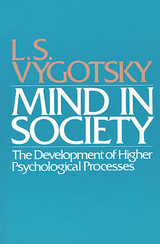
Vygotsky’s sociocultural theory of cognitive development in his own words—collected and translated by an outstanding group of scholars.
“A landmark book.” —Contemporary Psychology
The great Russian psychologist L. S. Vygotsky has long been recognized as a pioneer in developmental psychology. But his theory of development has never been well understood in the West. Mind in Society corrects much of this misunderstanding. Carefully edited by a group of outstanding Vygotsky scholars, the book presents a unique selection of Vygotsky’s important essays, most of which have previously been unavailable in English.
The mind, Vygotsky argues, cannot be understood in isolation from the surrounding society. Humans are the only animals who use tools to alter their own inner world as well as the world around them. Vygotsky characterizes the uniquely human aspects of behavior and offers hypotheses about the way these traits have been formed in the course of human history and the way they develop over an individual's lifetime.
From the handkerchief knotted as a simple mnemonic device to the complexities of symbolic language, society provides the individual with technology that can be used to shape the private processes of the mind. In Mind in Society Vygotsky applies this theoretical framework to the development of perception, attention, memory, language, and play, and he examines its implications for education. The result is a remarkably interesting book that makes clear Vygotsky’s continuing influence in the areas of child development, cognitive psychology, education, and modern psychological thought.
Chapters include:
1. Tool and Symbol in Child Development
2. The Development of Perception and Attention
3. Mastery of Memory and Thinking
4. Internalization of Higher Psychological Functions
5. Problems of Method
6. Interaction between Learning and Development
7. The Role of Play in Development
8. The Prehistory of Written Language
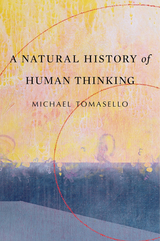
A Wall Street Journal Favorite Read of the Year
A Guardian Top Science Book of the Year
Tool-making or culture, language or religious belief: ever since Darwin, thinkers have struggled to identify what fundamentally differentiates human beings from other animals. In this much-anticipated book, Michael Tomasello weaves his twenty years of comparative studies of humans and great apes into a compelling argument that cooperative social interaction is the key to our cognitive uniqueness. Once our ancestors learned to put their heads together with others to pursue shared goals, humankind was on an evolutionary path all its own.
“Michael Tomasello is one of the few psychologists to have conducted intensive research on both human children and chimpanzees, and A Natural History of Human Thinking reflects not only the insights enabled by such cross-species comparisons but also the wisdom of a researcher who appreciates the need for asking questions whose answers generate biological insight. His book helps us to understand the differences, as well as the similarities, between human brains and other brains.”
—David P. Barash, Wall Street Journal
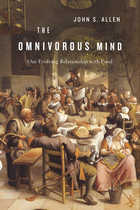
In this gustatory tour of human history, John S. Allen demonstrates that the everyday activity of eating offers deep insights into human beings’ biological and cultural heritage.
We humans eat a wide array of plants and animals, but unlike other omnivores we eat with our minds as much as our stomachs. This thoughtful relationship with food is part of what makes us a unique species, and makes culinary cultures diverse. Not even our closest primate relatives think about food in the way Homo sapiens does. We are superomnivores whose palates reflect the natural history of our species.
Drawing on the work of food historians and chefs, anthropologists and neuroscientists, Allen starts out with the diets of our earliest ancestors, explores cooking’s role in our evolving brain, and moves on to the preoccupations of contemporary foodies. The Omnivorous Mind delivers insights into food aversions and cravings, our compulsive need to label foods as good or bad, dietary deviation from “healthy” food pyramids, and cross-cultural attitudes toward eating (with the French, bien sûr, exemplifying the pursuit of gastronomic pleasure).
To explain, for example, the worldwide popularity of crispy foods, Allen considers first the food habits of our insect-eating relatives. He also suggests that the sound of crunch may stave off dietary boredom by adding variety to sensory experience. Or perhaps fried foods, which we think of as bad for us, interject a frisson of illicit pleasure. When it comes to eating, Allen shows, there’s no one way to account for taste.
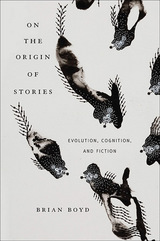
A century and a half after the publication of Origin of Species, evolutionary thinking has expanded beyond the field of biology to include virtually all human-related subjects—anthropology, archeology, psychology, economics, religion, morality, politics, culture, and art. Now a distinguished scholar offers the first comprehensive account of the evolutionary origins of art and storytelling. Brian Boyd explains why we tell stories, how our minds are shaped to understand them, and what difference an evolutionary understanding of human nature makes to stories we love.
Art is a specifically human adaptation, Boyd argues. It offers tangible advantages for human survival, and it derives from play, itself an adaptation widespread among more intelligent animals. More particularly, our fondness for storytelling has sharpened social cognition, encouraged cooperation, and fostered creativity.
After considering art as adaptation, Boyd examines Homer’s Odyssey and Dr. Seuss’s Horton Hears a Who! demonstrating how an evolutionary lens can offer new understanding and appreciation of specific works. What triggers our emotional engagement with these works? What patterns facilitate our responses? The need to hold an audience’s attention, Boyd underscores, is the fundamental problem facing all storytellers. Enduring artists arrive at solutions that appeal to cognitive universals: an insight out of step with contemporary criticism, which obscures both the individual and universal. Published for the bicentenary of Darwin’s birth and the 150th anniversary of the publication of Origin of Species, Boyd’s study embraces a Darwinian view of human nature and art, and offers a credo for a new humanism.
Out of Mind makes a compelling case for understanding narrative forms and cognitive-scientific frameworks as co-emergent and cross-pollinating. To this end, Ghosal harnesses narrative theory, multimodality studies, cognitive sciences, and disability studies to track competing perspectives on remembering, reading, and sense of place and self. Through new readings of the works of Kamila Shamsie, Aleksandar Hemon, Mark Haddon, Lance Olsen, Steve Tomasula, Jonathan Safran Foer, and others, Out of Mind generates unique insights into literary imagination’s influence on how we think and perceive amid twenty-first-century social, technological, and environmental changes.
Illusions of judgment—standard anomalies where people consistently misjudge or misperceive what is logically implied or really present—are often used in cognitive science to explore the workings of the cognitive process. The explanations given for these anomalous results have generally explained only the anomaly under study and nothing more. Margolis provides a provocative and systematic analysis of these illusions, which explains why such anomalies exist and recur.
Offering empirical applications of his theory, Margolis turns to historical cases to show how an individual's cognitive repertoire—the available cognitive patterns and their relation to cues—changes or resists changes over time. Here he focuses on the change in worldview occasioned by the Copernican discovery: not only how an individual might come to see things in a radically new way, but how it is possible for that new view to spread and become the dominant one. A reanalysis of the trial of Galileo focuses on social cognition and its interactions with politics.
In challenging the prevailing paradigm for understanding how the human mind works, Patterns, Thinking, and Cognition is certain to stimulate fruitful debate.

The cognitive research Luck draws upon suggests that the strangeness of experimental poetry can reshape the activity of the reader’s mind, creating new forms of attention, perception, and cognition. This book closes by shifting from theory to praxis, extracting forms of teaching from the forms of thinking that experimental poems instill in order to better enable their transformative effects in readers and to bring poetry pedagogy into the twenty-first century.
After the age of 40, we may notice occasional lapses—a forgotten phone number, a friend's name, or a word that was right on the tip of our tongue. By 60, we may find ourselves wondering who called this morning, why we came into the kitchen, where we parked the car. In an aging nation, where one citizen in seven will be 65 when the next century arrives, these little difficulties raise a larger question: What precisely happens to our thinking as we grow older? What is normal, what is not, and how are we to know the signs?
Douglas Powell offers a comprehensive account of cognitive aging, of how our mental functions change as we mature. Defining patterns of normal decline, as well as severe forms of cognitive impairment, this book will help us understand and address the needs of an aging population. Powell integrates the latest literature on aging with the findings of his recent study of 1,000 physicians and 600 other subjects ranging in age from 25 to 92. His work reveals patterns of cognitive aging throughout the life cycle, particularly the way in which variability among individuals outpaces the decline of overall ability. Tackling an issue of growing interest in the field of gerontology, he notes the effect of certain factors such as gender, diet, health, and physical and mental exercise on changes in cognitive functioning over time.
Along with the criteria for mild cognitive impairment and normal cognitive aging, this book addresses the question of optimal cognitive aging, identifying its characteristics and searching out their implications for the maintenance of intellectual abilities in the post-retirement years.
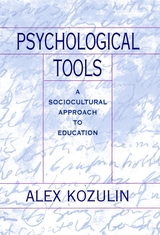
The concept of "psychological tools" is a cornerstone of L. S. Vygotsky's sociocultural theory of cognitive development. Psychological tools are the symbolic cultural artifacts--signs, symbols, texts, formulae, and most fundamentally, language--that enable us to master psychological functions like memory, perception, and attention in ways appropriate to our cultures. In this lucid book, Alex Kozulin argues that the concept offers a useful way to analyze cross-cultural differences in thought and to develop practical strategies for educating immigrant children from widely different cultures.
Kozulin begins by offering an overview of Vygotsky's theory, which argues that consciousness arises from communication as civilization transforms "natural" psychological functions into "cultural" ones. He also compares sociocultural theory to other innovative approaches to learning, cognitive education in particular. And in a vivid case study, the author describes his work with recent Ethiopian immigrants to Israel, whose traditional modes of learning were oral and imitative, and who consequently proved to be quick at learning conversational Hebrew, but who struggled with the reading, writing, and formal problem solving required by a Western classroom. Last, Kozulin develops Vygotsky's concept of psychological tools to promote literature as a useful tool in cognitive development.
With its explication of Vygotsky's theory, its case study of sociocultural pedagogy, and its suggested use of literary text for cognitive development, Psychological Tools will be of considerable interest to research psychologists and educators alike.
Explore the embodied foundations of Paul's resurrection ideals
It is commonly recognized that Paul's resurrection ideals are bodily ideals, though this dictum is usually configured along literal and metaphorical lines. The realism of future resurrected bodies is disconnected from the metaphoricity of bodily transformation in the present. Drawing on cognitive linguistics, this fresh and innovative study addresses this problem. By eschewing the opposition of metaphor and realism, Tappenden explores the concepts and metaphors Paul uses to fashion notions of resurrection, and the uses to which those notions are put. Rather than asserting resurrection as a disembodied, cognicentric proposition, this book illuminates the body's central role in shaping and grounding the apostle's thought and writings.
Features:
- Close examination of Paul's letters within multiple, interlocking cultural contexts
- Provides a novel and fresh approach to assessing (in)coherence across the undisputed letters
- Addresses the materialist nature of early Christian and Judean resurrection ideals without compromising the metaphoricity of those ideals
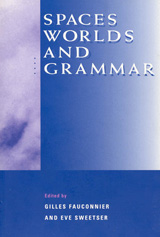
These twelve original papers extend the mental-spaces framework and demonstrate its utility in solving deep problems in linguistics and discourse theory. Investigating the ties between mental constructs, they analyze a wide range of phenomena, including analogical counterfactuals; the metaphor system for conceptualizing the self; abstract change expressions in Japanese; mood in Spanish; deictic expressions; copular sentences in Japanese; conditional constructions; and reference in American Sign Language.
The ground-breaking research presented in this volume will be of interest to linguists and cognitive scientists.
The contributors are Claudia Brugman, Gilles Fauconnier, George Lakoff, Yo Matsumoto, Errapel Mejias-Bikandi, Laura A. Michaelis, Gisela Redeker, Jo Rubba, Shigeru Sakahara, Jose Sanders, Eve Sweetser, and Karen van Hoek.
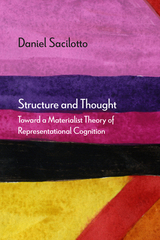
This study develops a novel account of representational cognition, explaining how cognitive systems progressively come to map the structure of their worlds. Daniel Sacilotto offers a constructive response to the critique of representation formulated throughout the post‑Kantian philosophical tradition. Rather than a skepticism or idealism whereby thinking can grasp appearances but never the real, representation, Sacilotto shows, is a constitutive dimension of cognitive systems’ creative capacity to know and intervene in the world of which they are part.
Structure and Thought: Toward a Materialist Theory of Representational Cognition integrates various lines in contemporary philosophy, including those often seen as incommensurable or in irresolvable tension with one another. Sacilotto thus advances a productive synthesis of a materialist ambition to provide a creative and historical understanding of cognition with a structural realist account of representation. He shows how the different forms of sensory, discursive, and theoretical mediation that characterize human cognition are conducive to a realist epistemological framework that explains how the possibility of knowledge about a mind‑independent reality is conceivable.
Jean Piaget has spent a major part of his life work showing how thought is fundamentally derived from action. In Success and Understanding, this master psychologist inverts the question for the first time and considers how action is controlled by thought.
In a series of ingenious experiments, children are presented with physical puzzles just difficult enough to challenge their emerging skills. Under these conditions, Piaget reveals how the child comes to use his developing conceptual system to design strategies that result in successful actions. According to Piaget, it takes time for thought and action to enter into their familiar partnership. The young child has trouble using his ideas to guide his actions and must pass through several interesting stages before he can routinely coordinate idea and act.
Success and Understanding completes the Piagetian scheme for relating thought to action that was so brilliantly initiated in The Grasp of Consciousness (Harvard, 1976). Together, the two books form a major episode in the history of Piaget's remarkable career.
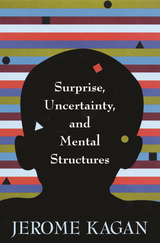
When we are startled by the new, confronted with discrepancies, our knowing gives way to uncertainty—and changes. In the distinctive manner that has made him one of the most influential forces in developmental psychology, Jerome Kagan challenges scientific commonplaces about mental processes, pointing in particular to the significant but undervalued role of surprise and uncertainty in shaping behavior, emotion, and thought.
Drawing on research in both animal and human subjects, Kagan presents a strong case for making qualitative distinctions among four different types of mental representation—perceptual schemata, visceral schemata, sensorimotor structures, and semantic networks—and describes how each is susceptible to the experience of discrepancy and the feeling of surprise or uncertainty. The implications of these findings are far-reaching, challenging current ideas about the cognitive understandings of infants and revealing the bankruptcy of contemporary questionnaire-based personality theory. More broadly, Kagan’s daring, thoroughly informed, and keenly reasoned book demonstrates the risks of making generalizations about human behavior, in which culture, context, and past experience play such paramount and unpredictable roles.
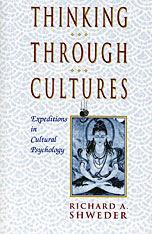
A discipline is emerging called cultural psychology; it will serve as a force of renewal for both anthropology and psychology. In this book Richard Shweder presents its manifesto. Its central theme is that we have to understand the way persons, cultures, and natures make each other up. Its goal is to seek the mind indissociably embedded in the meanings and resonances that are both its product and its components.
Over the past thirty years the person as a category has disappeared from ethnography. Shweder aims to reverse this trend, focusing on the search for meaning and the creation of intentional worlds. He examines the prospect for a reconciliation of rationality and relativism and defines an intellectual agenda for cultural psychology.
What Shweder calls for is an exploration of the human mind, and of one’s own mind, by thinking through the ideas and practices of other peoples and their cultures. He examines evidence of cross-cultural similarities and differences in mind, self, emotion, and morality with special reference to the cultural psychology of a traditional Hindu temple town in India, where he has done considerable work in comparative anthropology. And he critiques the concept of the “person” implicit in Western social science, as well as psychiatric theories of the “subject.” He maintains that it will come as no surprise to cultural psychology if it should turn out that there are different psychological generalizations or “nomological networks”—a Hindu psychology, a Protestant psychology—appropriate for the different semiotic regions of the world. Shweder brings the news that God is alive not dead, but that there are many gods.
What is "art"? Why have human societies through all time and around the globe created those objects we call works of art? Is there any way of defining art that can encompass everything from Paleolithic objects to the virtual images created by the latest computer technology? Questions such as these have preoccupied Esther Pasztory since the beginning of her scholarly career. In this authoritative volume, she distills four decades of research and reflection to propose a pathbreaking new way of understanding what art is and why human beings create it that can be applied to all cultures throughout time.
At its heart, Pasztory's thesis is simple and yet profound. She asserts that humans create things (some of which modern Western society chooses to call "art") in order to work out our ideas—that is, we literally think with things. Pasztory draws on examples from many societies to argue that the art-making impulse is primarily cognitive and only secondarily aesthetic. She demonstrates that "art" always reflects the specific social context in which it is created, and that as societies become more complex, their art becomes more rarefied.
Pasztory presents her thesis in a two-part approach. The first section of the book is an original essay entitled "Thinking with Things" that develops Pasztory's unified theory of what art is and why we create it. The second section is a collection of eight previously published essays that explore the art-making process in both Pre-Columbian and Western societies. Pasztory's work combines the insights of art history and anthropology in the light of poststructuralist ideas. Her book will be indispensable reading for everyone who creates or thinks about works of art.
Indian movies are among the most popular in the world. However, despite increased availability and study, these films remain misunderstood and underappreciated in much of the English-speaking world, in part for cultural reasons.
In this book, Patrick Colm Hogan sets out through close analysis and explication of culturally particular information about Indian history, Hindu metaphysics, Islamic spirituality, Sanskrit aesthetics, and other Indian traditions to provide necessary cultural contexts for understanding Indian films. Hogan analyzes eleven important films, using them as the focus to explore the topics of plot, theme, emotion, sound, and visual style in Indian cinema. These films draw on a wide range of South Asian cultural traditions and are representative of the greater whole of Indian cinema. By learning to interpret these examples with the tools Hogan provides, the reader will be able to take these skills and apply them to other Indian films.
But this study is not simply culturalist. Hogan also takes up key principles from cognitive neuroscience to illustrate that all cultures share perceptual, cognitive, and emotional elements that, when properly interpreted, can help to bridge gaps between seemingly disparate societies. Hogan locates the specificity of Indian culture in relation to human universals, and illustrates this cultural-cognitive synthesis through his detailed interpretations of these films. This book will help both scholars and general readers to better understand and appreciate Indian cinema.
Psychology is now ready for unified theories of cognition—so says Allen Newell, a leading investigator in computer science and cognitive psychology. Not everyone will agree on a single set of mechanisms that will explain the full range of human cognition, but such theories are within reach and we should strive to articulate them.
In this book, Newell makes the case for unified theories by setting forth a candidate. After reviewing the foundational concepts of cognitive science—knowledge, representation, computation, symbols, architecture, intelligence, and search—Newell introduces Soar, an architecture for general cognition. A pioneer system in artificial intelligence, Soar is the first problem solver to create its own subgoals and learn continuously from its own experience.
Newell shows how Soar’s ability to operate within the real-time constraints of intelligent behavior, such as immediate-response and item-recognition tasks, illustrates important characteristics of the human cognitive structure. Throughout, Soar remains an exemplar: we know only enough to work toward a fully developed theory of cognition, but Soar’s success so far establishes the viability of the enterprise.
Given its integrative approach, Unified Theories of Cognition will be of tremendous interest to researchers in a variety of fields, including cognitive science, artificial intelligence, psychology, and computer science. This exploration of the nature of mind, one of the great problems of philosophy, should also transcend disciplines and attract a large scientific audience.
In his most probing and expansive work to date, Jerome Kagan—one of this country’s leading psychologists—demonstrates that innovative research methods in the behavioral sciences and neurobiology, together with a renewed philosophical commitment to rigorous empiricism, are transforming our understanding of human behavior. Contemporary psychology, according to Kagan, has been preoccupied with three central themes: How malleable is temperament? How predictable are the milestones of cognitive development? How accurate is consciousness as a window onto the self, its motives, beliefs, and emotions?
In a review of past approaches to these questions, Kagan argues persuasively that behavioral scientists have reached less-than-satisfactory answers because they have failed to appreciate the biases inherent in their frame of reference and the limitations of their investigative procedures. He calls into question a number of techniques that have been mainstays of psychological investigation: the Ainsworth Strange Situation for assessing the emotional attachment of an infant to its mother, and interviews and questionnaires as indexes of personality, to name only two. Kagan’s own research has used novel laboratory situations to discover a group of children who exhibit a pattern of behavior he calls “temperamentally inhibited”—they are restless and irritable from birth, and by twenty-four months cling to the mother and show biological signs of high anxiety in unfamiliar situations.
These findings, coupled with current understanding of the structure and chemistry of the nervous system, lead him to speculate that these children are born with a biological predisposition that favors the development of a shy, fearful personality. Through longitudinal studies of this kind, as well as through his cross-cultural investigations of cognitive development, Kagan has infused new meaning into the nature–nurture debate.
Marshalling fresh insights from neuroscience, cognitive science, cognitive biology, and literature, Hayles expands our understanding of cognition and demonstrates that it involves more than consciousness alone. Cognition, as Hayles defines it, is applicable not only to nonconscious processes in humans but to all forms of life, including unicellular organisms and plants. Startlingly, she also shows that cognition operates in the sophisticated information-processing abilities of technical systems: when humans and cognitive technical systems interact, they form “cognitive assemblages”—as found in urban traffic control, drones, and the trading algorithms of finance capital, for instance—and these assemblages are transforming life on earth. The result is what Hayles calls a “planetary cognitive ecology,” which includes both human and technical actors and which poses urgent questions to humanists and social scientists alike.
At a time when scientific and technological advances are bringing far-reaching aspects of cognition into the public eye, Unthought reflects deeply on our contemporary situation and moves us toward a more sustainable and flourishing environment for all beings.
Is a human being a person or a machine? Is the mind a social construction or a formal device? It is both, William Frawley tells us, and by bringing together Vygotsky's sociocultural theory of the mind and cognitive science's computational model, he shows us how this not only can but must be. To do so, Frawley focuses on language, particularly on how the computational mind uses language to mediate the internal and the external during thought. By reconciling the linguistic device and the linguistic person, he argues for a Vygotskyan cognitive science.
Frawley begins by exploding the internalist/externalist dichotomy that presently drives cognitive science and falsely pits computationalism against socioculturalism. He replaces the reigning Platonic paradigm of computational mind-science with a framework based on an unusual, unified account of Wittgenstein, thus setting the stage for a Vygotskyan cognitive science centered on three aspects of mind: subjectivity, real-time operation, and breakdown. In this context, he demonstrates how computational psychology accommodates a critical aspect of Vygotskyan theory--private speech--as the mind's metacomputational regulator. An examination of certain congenital disorders (such as Williams Syndrome, Turner Syndrome, and autism) that disrupt speech further clarifies the issue of computational and cognitive control.
In a book of intellectual breadth, James Wertsch not only offers a synthesis and critique of all Vygotsky’s major ideas, but also presents a program for using Vygotskian theory as a guide to contemporary research in the social sciences and humanities. He draws extensively on all Vygotsky’s works, both in Russian and in English, as well as on his own studies in the Soviet Union with colleagues and students of Vygotsky.
Vygotsky’s writings are an enormously rich source of ideas for those who seek an account of the mind as it relates to the social and physical world. Wertsch explores three central themes that run through Vygotsky’s work: his insistence on using genetic, or developmental, analysis; his claim that higher mental functioning in the individual has social origins; and his beliefs about the role of tools and signs in human social and psychological activity Wertsch demonstrates how the notion of semiotic mediation is essential to understanding Vygotsky’s unique contribution to the study of human consciousness.
In the last four chapters Wertsch extends Vygotsky’s claims in light of recent research in linguistics, semiotics, and literary theory. The focus on semiotic phenomena, especially human language, enables him to integrate findings from the wide variety of disciplines with which Vygotsky was concerned Wertsch shows how Vygotsky’s approach provides a principled way to link the various strands of human science that seem more isolated than ever today.
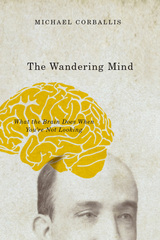
That may be bad news for me, but is it bad news for people in general? Does the fact that as much as fifty percent of our waking hours find us failing to focus on the task at hand represent a problem? Michael Corballis doesn’t think so, and with The Wandering Mind, he shows us why, rehabilitating woolgathering and revealing its incredibly useful effects. Drawing on the latest research from cognitive science and evolutionary biology, Corballis shows us how mind-wandering not only frees us from moment-to-moment drudgery, but also from the limitations of our immediate selves. Mind-wandering strengthens our imagination, fueling the flights of invention, storytelling, and empathy that underlie our shared humanity; furthermore, he explains, our tendency to wander back and forth through the timeline of our lives is fundamental to our very sense of ourselves as coherent, continuing personalities.
Full of unusual examples and surprising discoveries, The Wandering Mind mounts a vigorous defense of inattention—even as it never fails to hold the reader’s.
Margaret A. Syverson discusses the ways in which a theory of composing situations as ecological systems might productively be applied in composition studies. She demonstrates not only how new research in cognitive science and complex systems can inform composition studies but also how composing situations can provide fruitful ground for research in cognitive science.
Syverson first introduces theories of complex systems currently studied in diverse disciplines. She describes complex systems as adaptive, self-organizing, and dynamic; neither utterly chaotic nor entirely ordered, these systems exist on the boundary between order and chaos. Ecological systems are "metasystems" composed of interrelated complex systems. Writers, readers, and texts, together with their environments, constitute one kind of ecological system.
Four attributes of complex systems provide a theoretical framework for this study: distribution, embodiment, emergence, and enaction. Three case studies provide evidence for the application of these concepts: an analysis of a passage from an autobiographical poem by Charles Reznikoff, a study of first-year college students writing collaboratively, and a conflict in a computer forum of social scientists during the Gulf War. The diversity of these cases tests the robustness of theories of distributed cognition and complex systems and suggests possibilities for wider application.
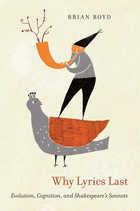
In Why Lyrics Last, the internationally acclaimed critic Brian Boyd turns an evolutionary lens on the subject of lyric verse. He finds that lyric making, though it presents no advantages for the species in terms of survival and reproduction, is “universal across cultures because it fits constraints of the human mind.” An evolutionary perspective— especially when coupled with insights from aesthetics and literary history—has much to tell us about both verse and the lyrical impulse.
Boyd places the writing of lyrical verse within the human disposition “to play with pattern,” and in an extended example he uncovers the many patterns to be found within Shakespeare’s Sonnets. Shakespeare’s bid for readership is unlike that of any sonneteer before him: he deliberately avoids all narrative, choosing to maximize the openness of the lyric and demonstrating the power that verse can have when liberated of story.
In eschewing narrative, Shakespeare plays freely with patterns of other kinds: words, images, sounds, structures; emotions and moods; argument and analogy; and natural rhythms, in daily, seasonal, and life cycles. In the originality of his stratagems, and in their sheer number and variety, both within and between sonnets, Shakespeare outdoes all competitors. A reading of the Sonnets informed by evolution is primed to attend to these complexities and better able to appreciate Shakespeare’s remarkable gambit for immortal fame.
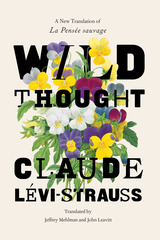
Controversially titled The Savage Mind when it was first published in English in 1966, the original translation nevertheless sparked a fascination with Lévi-Strauss’s work among Anglophone readers. Wild Thought rekindles that spark with a fresh and accessible new translation. Including critical annotations for the contemporary reader, it restores the accuracy and integrity of the book that changed the course of intellectual life in the twentieth century, making it an indispensable addition to any philosophical or anthropological library.
READERS
Browse our collection.
PUBLISHERS
See BiblioVault's publisher services.
STUDENT SERVICES
Files for college accessibility offices.
RECENTLY PUBLISHED





UChicago Accessibility Resources
home | accessibility | search | about | contact us
BiblioVault ® 2001 - 2024
The University of Chicago Press