
 A SCHOLARLY BOOK REPOSITORY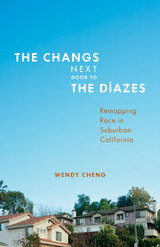
U.S. suburbs are typically imagined to be predominantly white communities, but this is increasingly untrue in many parts of the country. Examining a multiracial suburb that is decidedly nonwhite, Wendy Cheng unpacks questions of how identity—especially racial identity—is shaped by place. She offers an in-depth portrait, enriched by nearly seventy interviews, of the San Gabriel Valley, not far from downtown Los Angeles, where approximately 60 percent of residents are Asian American and more than 30 percent are Latino. At first glance, the cities of the San Gabriel Valley look like stereotypical suburbs, but almost no one who lives there is white.
The Changs Next Door to the Díazes reveals how a distinct culture is being fashioned in, and simultaneously reshaping, an environment of strip malls, multifamily housing, and faux Mediterranean tract homes. Informed by her interviews as well as extensive analysis of three episodic case studies, Cheng argues that people’s daily experiences—in neighborhoods, schools, civic organizations, and public space—deeply influence their racial consciousness. In the San Gabriel Valley, racial ideologies are being reformulated by these encounters. Cheng views everyday landscapes as crucial terrains through which racial hierarchies are learned, instantiated, and transformed. She terms the process “regional racial formation,” through which locally accepted racial orders and hierarchies complicate and often challenge prevailing notions of race.
There is a place-specific state of mind here, Cheng finds. Understanding the processes of racial formation in the San Gabriel Valley in the contemporary moment is important in itself but also has larger value as a model for considering the spatial dimensions of racial formation and the significant demographic shifts taking place across the national landscape.
READERS
Browse our collection.
PUBLISHERS
See BiblioVault's publisher services.
STUDENT SERVICES
Files for college accessibility offices.
RECENTLY PUBLISHED




UChicago Accessibility Resources
home | accessibility | search | about | contact us
BiblioVault ® 2001 - 2026
The University of Chicago Press