logo for Oregon State University Press
Frontier Doctor
Observations on Central Oregon and the Changing West
Urling C. Coe
Oregon State University Press, 1996

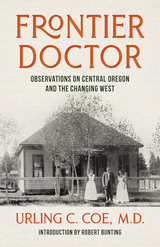
front cover of Frontier Doctor
Frontier Doctor
Observations on Central Oregon and the Changing West
Urling C. Coe
Oregon State University Press, 1940
Frontier Doctor, Urling C. Coe's autobiographical account of his thirteen years in Central Oregon, details the extraordinary experiences of a young physician in a frontier town, from childbirthing to epidemics, broken bones to unwanted pregnancies. In 1905 Coe became the first licensed doctor in what he called "the heart of the last pioneer stock country of the West." His colorful, firsthand stories about treating patients—cowboys, rustlers, ranch wives, prostitutes, homesteaders, town boosters, and Native Americans—offer a vivid social history of town and ranch life on the Oregon high desert. They also document the development of a Western boomtown: with the arrival of the railroad in 1911, the wide-open settlement known as Farewell Bend was transformed into an important center of industry, commerce, and culture.
 
[more]

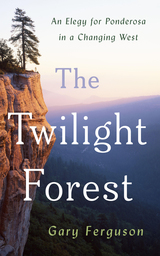
front cover of The Twilight Forest
The Twilight Forest
An Elegy for Ponderosa in a Changing West
Gary Ferguson
Island Press, 2025
With their towering, cinnamon-colored trunks and dusky green canopies, ponderosa pine has long been a charismatic icon of the American West. Yet a quiet unraveling has begun: in the past decade, in a vast area from Santa Fe to the Sierras, more than two hundred million ponderosa have died. While some trees will survive in cooler places, scientists estimate that by mid-century less than five percent of the ponderosa in the American Southwest may remain. As the very character of this vast region shifts, what will be left behind? And how can we come to terms with such profound loss?

In The Twilight Forest, Gary Ferguson brings readers on an expansive journey through the ponderosa forests of the Southwest both to mourn—and to celebrate—the forests that nurtured him. In warm and luminous storytelling, Ferguson weaves together the human and natural history of ponderosa, from its march across the West more than 10,000 years ago, to centuries of artists inspired by its dazzling stature and shady passageways. Both wildfire and climate change are constant presences on this journey. Fire is necessary for healthy forests but has turned deadly, while climate change stresses even the hardiest beings of the natural world. Yet the story of ponderosa reminds us that loss can be a gateway to connection—to nature and each other.

While it is tempting to hide from the changes around us, Ferguson offers a healing approach: “to pick even one of these thousand doors of loss, pull it open and walk through.” The resulting journey is a life-affirming tribute to one of America’s most cherished wild landscapes. 
 
[more]


Send via email Share on Facebook Share on Twitter