
 A SCHOLARLY BOOK REPOSITORY
Lyall Powers is both a respected scholar of literature and a lifelong friend of Laurence's, having met her when they were students together at Winnipeg's United College in the 1940s. Alien Heart is the first full-length biography of Margaret that combines personal knowledge and insights about Laurence with a study of her work, which often paralleled the events and concerns in her own life.
Drawing on letters, personal correspondence, journals, and interviews, Lyall Powers discusses the struggles and triumphs Laurence experienced in her efforts to understand herself in the roles of writer, wife, mother, and public figure. He portrays a deeply compassionate and courageous woman, who yet felt troubled by conflicting demands. While Laurence's work is not directly autobiographical, Powers illustrates how her writing expressed many of the same dilemmas, and how the resolution her characters achieved in the novels and stories had an impact on Laurence's own life.
Powers provides an in-depth analysis of all Laurence's work, including the early African essays, fiction, and translations, and her books for children, as well as the beloved Manawaka fiction. The study clearly shows the progression and expression of Laurence as a writer of great humanity and conscience.
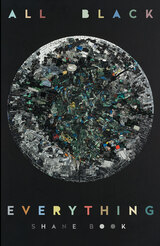
The political sublime of Caribbean poetics ebb and flood in this contagious new voice of borrowings, hijacking the trap house. This is an original collection, daring to assume the voice of the system and its death drives, having fun, mixing it up, throwing hands too. If old pirates rob I, then Shane Book has stolen back something from them. All Black Everything is a redemption song.
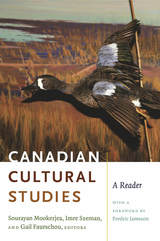
Including essays by anglophone, francophone, and First Nations writers, the reader is divided into three parts, the first of which features essays by scholars who helped set the agenda for cultural and social analysis in Canada and remain important to contemporary intellectual formations: Harold Innis, Marshall McLuhan, and Anthony Wilden in communications theory; Northrop Frye in literary studies; George Grant and Harold Innis in a left-nationalist tradition of critical political economy; Fernand Dumont and Paul-Émile Borduas in Quebecois national and political culture; and Harold Cardinal in native studies.
The volume’s second section showcases work in which contemporary authors address Canada’s problematic and incomplete nationalism; race, difference, and multiculturalism; and modernity and contemporary culture. The final section includes excerpts from federal policy documents that are especially important to Canadians’ conceptions of their social, political, and cultural circumstances. The reader opens with a foreword by Fredric Jameson and concludes with an afterword in which the Quebecois scholar Yves Laberge explores the differences between English-Canadian cultural studies and the prevailing forms of cultural analysis in francophone Canada.
Contributors. Ian Angus, Himani Bannerji, Jody Berland, Paul-Émile Borduas, Harold Cardinal, Maurice Charland, Stephen Crocker, Ioan Davies, Fernand Dumont, Kristina Fagan, Gail Faurschou, Len Findlay, Northrop Frye, George Grant, Rick Gruneau, Harold Innis, Fredric Jameson, Yves Laberge, Jocelyn Létourneau, Eva Mackey, Lee Maracle, Marshall McLuhan, Katharyne Mitchell, Sourayan Mookerjea, Kevin Pask, Rob Shields, Will Straw, Imre Szeman, Serra Tinic, David Whitson, Tony Wilden


North America is more a political and an economic invention than a place people call home. Nonetheless, the region shared by the United States and its closest neighbors, North America, is an intriguing frame for comparative American studies. Continental Divides is the first book to study the patterns of contact, exchange, conflict, and disavowal among cultures that span the borders of Canada, the United States, and Mexico.
Rachel Adams considers a broad range of literary, filmic, and visual texts that exemplify cultural traffic across North American borders. She investigates how our understanding of key themes, genres, and periods within U.S. cultural study is deepened, and in some cases transformed, when Canada and Mexico enter the picture. How, for example, does the work of the iconic American writer Jack Kerouac read differently when his Franco-American origins and Mexican travels are taken into account? Or how would our conception of American modernism be altered if Mexico were positioned as a center of artistic and political activity? In this engaging analysis, Adams charts the lengthy and often unrecognized traditions of neighborly exchange, both hostile and amicable, that have left an imprint on North America’s varied cultures.


Davidson details the evolution of the U.S. and Canadian Western forms, tracing the divergence between the two as Canadian writers responded to their unique historical circumstances by reinventing the West as well as the Western and establishing a new literary landscape where author and reader could work out new possibilities of being. Surveying a range of texts by Canada’s most innovative writers, with special attention to women writers and Native stories of Coyote, he provides close readings of novels by Howard O’Hagan, Sheila Watson, Robert Kroetsch, Aritha van Herk, Anne Cameron, Peter Such, W. O. Mitchell, Beatrice Culleton, and Thomas King. A unique study, Coyote Country offers at one and the same time a theory of Canadian Western fiction, a history of crosscultural paradigms of the West as manifested in novels, and an intensive reading of some of Canada’s best literature.
In 2005 Michael Ignatieff left his life as a writer and professor at Harvard University to enter the combative world of politics back home in Canada. By 2008, he was leader of the country’s Liberal Party and poised—should the governing Conservatives falter—to become Canada’s next Prime Minister. It never happened. Today, after a bruising electoral defeat, Ignatieff is back where he started, writing and teaching what he learned.
What did he take away from this crash course in political success and failure? Did a life of thinking about politics prepare him for the real thing? How did he handle it when his own history as a longtime expatriate became a major political issue? Are cynics right to despair about democratic politics? Are idealists right to hope? Ignatieff blends reflection and analysis to portray today’s democratic politics as ruthless, unpredictable, unforgiving, and hyper-adversarial.
Rough as it is, Ignatieff argues, democratic politics is a crucible for compromise, and many of the apparent vices of political life, from inconsistency to the fake smile, follow from the necessity of bridging differences in a pluralist society. A compelling account of modern politics as it really is, the book is also a celebration of the political life in all its wild, exuberant variety.
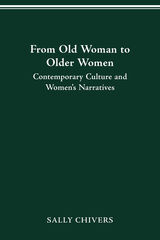
Sally Chivers provides a fascinating look at and challenge to how North American popular culture has portrayed old age as a time of disease, decline, and death. Within contemporary Canadian literary and film production, a tradition of articulate central elderly female characters challenges what the aging body has come to signify in a broader cultural context. Rather than seek positive images of aging, which can do their own prescriptive damage, the author focuses on constructive depictions that provide a basis on which to create new stories and readings of growing old. This type of humanities approach to the study of aging promises neither to fixate on nor avoid consideration of the role of the body in the much broader process of getting older. The progression implied in the title from the solitary symbol of The Old Woman toward a community of older women, indicates not a move toward euphemism, but rather an increasing and necessary awareness of the social and cultural dimensions of aging.

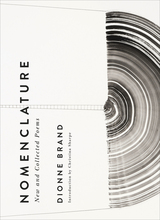
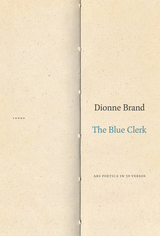
Spanning almost four decades, Dionne Brand’s poetry has given rise to whole new grammars and vocabularies. With a profound alertness that is attuned to this world and open to some other, possibly future, time and place, Brand’s ongoing labors of witness and imagination speak directly to where and how we live and reach beyond those worlds, their enclosures, and their violences.
Nomenclature: New and Collected Poems begins with a new long poem, the titular Nomenclature for the Time Being, in which Dionne Brand’s diaspora consciousness dismantles our quotidian disasters. In addition to this searing new work, Nomenclature collects eight volumes of Brand’s poetry published between 1982 and 2010 and includes a critical introduction by the literary scholar and theorist Christina Sharpe.
Nomenclature: New and Collected Poems features the searching and centering cantos of Primitive Offensive; the sharp musical conversations of Winter Epigrams and Epigrams to Ernesto Cardenal in Defense of Claudia; and the documentary losses of revolutions in Chronicles of the Hostile Sun, in which “The street was empty/with all of us standing there.” No Language Is Neutral reads language, coloniality, and sexuality as a nexus. Land to Light On writes intimacies and disaffections with nation, while in thirsty a cold-eyed flâneur surveys the workings of the city. In Inventory, written during the Gulf Wars, the poet is “the wars’ last and late night witness,” her job is not to soothe but to “revise and revise this bristling list/hourly.” Ossuaries’ futurist speaker rounds out the collection and threads multiple temporal worlds—past, present, and future.
This masterwork displays Dionne Brand’s ongoing body of thought—trenchant, lyrical, absonant, discordant, and meaning-making. Nomenclature: New and Collected Poems is classic and living, a record of one of the great writers of our age.
Why do the United States and Canada have such divergent political cultures when they share one of the closest economic and cultural relationships in the world? Canadians and Americans consistently disagree over issues such as the separation of church and state, the responsibility of government for the welfare of everyone, the relationship between federal and subnational government, and the right to marry a same-sex partner or to own an assault rifle.
In this wide-ranging work, Jason Kaufman examines the North American political landscape to draw out the essential historical factors that underlie the countries’ differences. He discusses the earliest European colonies in North America and the Canadian reluctance to join the American Revolution. He compares land grants and colonial governance; territorial expansion and relations with native peoples; immigration and voting rights. But the key lies in the evolution and enforcement of jurisdictional law, which illuminates the way social relations and state power developed in the two countries.
Written in an accessible and engaging style, this book will appeal to readers of sociology, politics, law, and history as well as to anyone interested in the relationship between the United States and Canada.
Poetry Matters explores poetry written by women from the United States and Canada, which documents the social and political turmoil of the early twenty-first century and places this poetry in dialogue with recent currents of feminist theory including new materialism, affect theory, posthumanism, and feminist engagements with neoliberalism and capitalism. Central to this project is the conviction that a poetics that explores the political dimensions of affect; demonstrates an understanding of subjectivity as posthuman and transcorporeal; critically reflects on the impact of capitalism on queer, racialized, and female bodies; and develops an ethical vocabulary for reimagining the nation state and critically engaging with issues of democracy and citizenship is now more urgent than ever before.
Milne focuses on poetry published after 2001 by writers who mostly began writing after the feminist writing movements of the 1980s, but who have inherited and built upon their political and aesthetic legacies. The poets discussed in this book—including Jennifer Scappettone, Margaret Christakos, Larissa Lai, Rita Wong, Nikki Reimer, Rachel Zolf, Yedda Morrison, Marcella Durand, Evelyn Reilly, Juliana Spahr, Claudia Rankine, Dionne Brand, Jena Osman, and Jen Benka—bring a sense of political agency to poetry. These voices seek new vocabularies and dissenting critical and aesthetic frameworks for thinking across issues of gender, materiality, capitalism, the toxic convergences of nationalism and racism, and the decline of democratic institutions. This is poetry that matters—both in its political urgency and in its attentiveness to the world as “matter”—as a material entity under siege. It could not be more timely or more relevant.
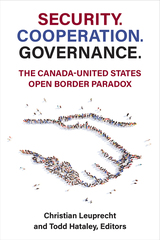
The book’s findings show that border governance straddles multiple regional, sectoral, and security scales in ways rarely documented in such detail. These developments have precipitated an Open Border Paradox: extensive, regionally varied flows of trade and people have resulted in a series of nested but interdependent security regimes that function on different scales and vary across economic and policy sectors. These realities have given rise to regional and sectoral specialization in related security regimes. For instance, just-in-time automotive production in the Great Lakes region varies considerably from the governance of maritime and intermodal trade (and port systems) on the Atlantic and Pacific coasts, which in turn is quite different from commodity-based systems that manage diverse agricultural and food trade in the Canadian Prairies and US Great Plains.
The paradox of open borders and their legitimacy is a function of robust bilateral and multilevel governance based on effective partnerships with substate governments and the private sector. Effective policy accounts for regional variation in integrated binational security and trade imperatives. At the same time, binational and continental policies are embedded in each country’s trade and security relationships beyond North America.

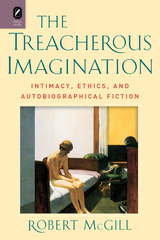
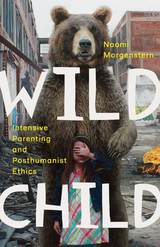
Exploring how the figure of the “wild child” in contemporary fiction grapples with contemporary cultural anxieties about reproductive ethics and the future of humanity
In the eighteenth century, Western philosophy positioned the figure of “the child” at the border between untamed nature and rational adulthood. Contemporary cultural anxieties about the ethics and politics of reproductive choice and the crisis of parental responsibility have freighted this liminal figure with new meaning in twenty-first-century narratives.
In Wild Child, Naomi Morgenstern explores depictions of children and their adult caregivers in extreme situations—ranging from the violence of slavery and sexual captivity to accidental death, mass murder, torture, and global apocalypse—in such works as Toni Morrison’s A Mercy, Cormac McCarthy’s The Road, Lionel Shriver’s We Need to Talk about Kevin, Emma Donoghue’s Room, and Denis Villeneuve’s film Prisoners. Morgenstern shows how, in such narratives, “wild” children function as symptoms of new ethical crises and existential fears raised by transformations in the technology and politics of reproduction and by increased ethical questions about the very decision to reproduce. In the face of an uncertain future that no longer confirms the confidence of patriarchal humanism, such narratives displace or project present-day apprehensions about maternal sacrifice and paternal protection onto the wildness of children in a series of hyperbolically violent scenes.
Urgent and engaging, Wild Child offers the only extended consideration of how twenty-first-century fiction has begun to imagine the decision to reproduce and the ethical challenges of posthumanist parenting.

Here is a celebration and an analysis of four Québécois feminist rebels whose self-conscious revolt against language has put them at the forefront of experimental writing in Quebec. These women—Nicole Brossard, Madeleine Gagnon, Louky Bersianik, and France Theoret—are attempting to explode male-dominated language and to construct a new language and literature of women.
In this first major study of their work in English, Karen Gould examines in depth these women’s literary visions and the new ways in which they communicate those visions. Gould broadens her book’s appeal by showing how these four women’s works, in modern forms of experimental literature, are shaped not only by Quebec feminism, politics, and culture but by American and French influences as well.
READERS
Browse our collection.
PUBLISHERS
See BiblioVault's publisher services.
STUDENT SERVICES
Files for college accessibility offices.
RECENTLY PUBLISHED


UChicago Accessibility Resources
home | accessibility | search | about | contact us
BiblioVault ® 2001 - 2024
The University of Chicago Press