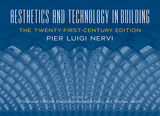

Aesthetics and Technology in Building: The Twenty-First-Century Edition introduces Nervi's ideas about architecture and engineering to a new generation of students and admirers. More than 200 photographs, details, drawings, and plans show how Nervi put his ideas into practice. Expanding on the seminal 1961 Norton Lectures at Harvard, Nervi analyzes various functional and construction problems. He also explains how precast and cast-in-place concrete can answer demands for economy, technical and functional soundness, and aesthetic perfection. Throughout, he uses his major projects to show how these now-iconic buildings emerged from structural truths and far-sighted construction processes.
This new edition features dozens of added images, a new introduction, and essays by Joseph Abram, Roberto Einaudi, Alberto Bologna, Gabriele Neri, and Hans-Christian Schink on Nervi's life, work, and legacy.
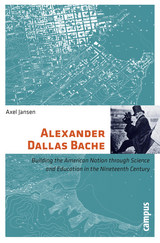
Alexander Dallas Bache (1806–1867) was one of the leaders of American science in the nineteenth century. Driven by a vision of science as a key component of an integrated U.S. nation-state, he guided the nascent American Association for the Advancement of Science and also led what was at that point the nation’s largest scientific enterprise, the U.S. Coast Survey. In this analytical biography, Axel Jansen explains and explores Bache’s efforts to build and shape public institutions as aids to his goal of creating a national foundation for a shared culture—efforts that culminated in his work during the Civil War as one of the founders of the National Academy of Sciences, which he saw as a key symbol of the continued viability of a unified American nation.
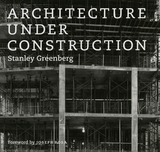
Mies van der Rohe once commented, “Only skyscrapers under construction reveal their bold constructive thoughts, and then the impression made by their soaring skeletal frames is overwhelming.” Never has this statement resonated more than in recent years, when architectural design has undergone a radical transformation, and when powerful computers allow architects and engineers to design and construct buildings that were impossible just a few years ago. At the same time, what lies underneath these surfaces is more mysterious than ever before.
In Architecture under Construction, photographer Stanley Greenberg explores the anatomy and engineering of some of our most unusual new buildings, helping us to understand our own fascination with what makes buildings stand up, and what makes them fall down. As designs for new constructions are revealed and the public watches closely as architects and engineers challenge each other with provocative new forms and equally audacious ideas, Greenberg captures penetrating images that reveal the complex mystery—and beauty—found in the transitory moments before the skin of a building covers up the structures that hold it together.
Framed by a historical and critical essay by Joseph Rosa and including an afterword by the author, the eighty captivating and thought-provoking images collected here—which focus on some of the most high-profile design projects of the past decade, including buildings designed by Norman Foster, Frank Gehry, Steven Holl, Daniel Libeskind, Thom Mayne, and Renzo Piano, among others —are not to be missed by anyone with an eye for the almost invisible mechanisms that continue to define our relationship with the built world.
Winner, Abbott Lowell Cummings Award, Vernacular Architecture Forum, 2020
Winner, Elisabeth Blair MacDougall Book Award, Society of Architectural Historians, 2021
From the boundary surveys of the 1850s to the ever-expanding fences and highway networks of the twenty-first century, Border Land, Border Water examines the history of the construction projects that have shaped the region where the United States and Mexico meet.
Tracing the accretion of ports of entry, boundary markers, transportation networks, fences and barriers, surveillance infrastructure, and dams and other river engineering projects, C. J. Alvarez advances a broad chronological narrative that captures the full life cycle of border building. He explains how initial groundbreaking in the nineteenth century transitioned to unbridled faith in the capacity to control the movement of people, goods, and water through the use of physical structures. By the 1960s, however, the built environment of the border began to display increasingly obvious systemic flaws. More often than not, Alvarez shows, federal agencies in both countries responded with more construction—“compensatory building” designed to mitigate unsustainable policies relating to immigration, black markets, and the natural world. Border Land, Border Water reframes our understanding of how the border has come to look and function as it does and is essential to current debates about the future of the US-Mexico divide.
Building a Better Bridge is a record of the fourth "Building Bridges" seminar held in Sarajevo in 2005 as part of an annual symposium on Muslim-Christian relations cosponsored by Georgetown University and the Archbishop of Canterbury. This volume presents the texts of the public lectures with regional presentations on issues of citizenship, religious believing and belonging, and the relationship between government and religion—both from the immediate situation in Bosnia-Herzegovina and from three contexts further afield: Britain, Malaysia, and West Africa.
Both Christian and Muslim scholars propose key questions to be faced in addressing the issue of the common good. How do we approach the civic sphere as believers in particular faiths and as citizens of mixed societies? What makes us who we are, and how do our religious and secular allegiances relate to one another? How do we accommodate our commitment to religious values with acknowledgment of human disagreement, and how can this be expressed in models of governance and justice? How are we, mandated by scriptures to be caretakers, to respond to the current ecological and economic disorder of our world?
Michael Ipgrave and his contributors do not claim to provide definitive answers to these questions, but rather they further a necessary dialogue and show that, while Christian and Islamic understandings of God may differ sharply and perhaps irreducibly, the acknowledgment of one another as people of faith is the surest ground on which to build trust, friendship, and cooperation.
Building a Curriculum for General Education was first published in 1943. Minnesota Archive Editions uses digital technology to make long-unavailable books once again accessible, and are published unaltered from the original University of Minnesota Press editions.
Called as an apostle in 1906, David O. McKay devoted the remaining sixty-four years of his life to serving in the Church of Jesus Christ of Latter-day Saints, including nineteen as church president. That lengthy tenure, combined with his warmth, extensive personal ministry, broadmindedness, deep spirituality, and unprecedented global travel made him one of the church’s most beloved and influential leaders of all time. When he died in 1970, roughly 60 percent of the church’s membership had known no other church president. Memories of McKay’s teachings and ministry remain a taproot for the spiritual convictions and values of many Latter-day Saints.
Brian Q. Cannon’s biography offers a fresh perspective on important features of McKay’s life, showing how his mission to Scotland, round-the-world tour as an apostle, and service as president of the European Mission shaped his global vision and priorities. Building a Global Zion illuminates previously underappreciated facets of McKay’s reach, including his crusades against alcohol consumption and political corruption, his long-term administration of missionary work, his spiritual impressions, his personnel decisions, and his mediation of interpersonal impasses in administrative settings. Cannon carefully reconstructs facets of McKay’s vast ministry to individuals, highlights distinctive themes of his teachings, and explores challenges that confronted McKay’s associates as his health and acuity waned.The first decade of the twenty-first century has been characterized by a growing global awareness of the tremendous strains that human economic activity place on natural resources and the environment. As the world’s population increases, so does the demand for energy, food, and other resources, which adds to existing stresses on ecosystems, with potentially disastrous consequences. Humanity is at a crossroads in our pathway to future prosperity, and our next steps will impact our long-term sustainability immensely. In this timely volume, leading ecological economics scholars offer a variety of perspectives on building a green economy. Grounded in a critique of conventional thinking about unrestrained economic expansion and the costs of environmental degradation, this book presents a roadmap for an economy that prioritizes human welfare over consumerism and growth. As the authors represented here demonstrate, the objective of ecological economics is to address contemporary problems and achieve long-term socioeconomic well-being without undermining the capacity of the ecosphere. The volume is organized around three sections: “Perspectives on a Green Economy,” “Historical and Theoretical Perspectives,” and “Applications and Practice.” A rich resource in its own right, Building a Green Economy contains the most innovative thinking in ecological economics at a critical time in the reexamination of the human relationship with the natural world.
Charity is an economic act. This premise underlies a societal transformation—the merging of religious and capitalist impulses that Mona Atia calls “pious neoliberalism.” Though the phenomenon spans religious lines, Atia makes the connection between Islam and capitalism to examine the surprising relations between charity and the economy, the state, and religion in the transition from Mubarak-era Egypt.
Mapping the landscape of charity and development in Egypt, Building a House in Heaven reveals the factors that changed the nature of Egyptian charitable practices—the state’s intervention in social care and religion, an Islamic revival, intensified economic pressures on the poor, and the subsequent emergence of the private sector as a critical actor in development. She shows how, when individuals from Egypt’s private sector felt it necessary to address poverty, they sought to make Islamic charities work as engines of development, a practice that changed the function of charity from distributing goods to empowering the poor. Drawing on interviews with key players, Atia explores the geography of Islamic charities through multiple neighborhoods, ideologies, sources of funding, projects, and wide social networks. Her work shifts between absorbing ethnographic stories of specific organizations and reflections on the patterns that appear across the sector.
An enlightening look at the simultaneous neoliberalization of Islamic charity work and Islamization of neoliberal development, the book also offers an insightful analysis of the political and socioeconomic movements leading up to the uprisings that ended Mubarak’s rule and that amplified the importance of not only the Muslim Brotherhood but also the broader forces of Islamic piety and charity.
2001 Louis Brownlow Award from the National Academy of Public Administration
Reimagining public administration through the lens of constitutional governance and legislative intent.
Before 1946 the congressional role in public administration had been limited to authorization, funding, and review of federal administrative operations, which had grown rapidly as a result of the New Deal and the Second World War. But in passing the Administrative Procedure Act and the Legislative Reorganization Act that pivotal year, Congress self-consciously created for itself a comprehensive role in public administration. Reluctant to delegate legislative authority to federal agencies, Congress decided to treat the agencies as extensions of itself and established a framework for comprehensive regulation of the agencies' procedures. Additionally, Congress reorganized itself so it could provide continuous supervision of federal agencies.
Rosenbloom shows how these 1946 changes in the congressional role in public administration laid the groundwork for future major legislative acts, including the Freedom of Information Act (1966), Privacy Act (1974), Government in the Sunshine Act (1976), Paperwork Reduction Acts (1980, 1995), Chief Financial Officers Act (1990), and Small Business Regulatory Fairness Enforcement Act (1996). Each of these acts, and many others, has contributed to the legislative-centered public administration that Congress has formed over the past 50 years.
This first book-length study of the subject provides a comprehensive explanation of the institutional interests, values, and logic behind the contemporary role of Congress in federal administration and attempts to move the public administration field beyond condemning legislative "micromanagement" to understanding why Congress values it.
A vital guide to centering community knowledge to generate effective solutions to inequality
When organizations take on social problems, from school reform to conservation to healthcare disparities, community members are sometimes “invited to the table” to share their insights. But if the table has already been set with institutional assumptions about the issue at hand, the solutions that emerge often have little to do with the people and places they are meant to help. When this is the case, inclusion can only go so far: as Dr. Brittany Lewis argues, it’s time to build a new table.
Drawing on her work as a community researcher and nonprofit consultant, Dr. Lewis developed the Equity in Action (EIA) model as a framework for closing the gaps between communities, researchers, and institutions. By centering the knowledge of the community members who ostensibly benefit from the work of various organizations, EIA makes research questions more relevant and the research process more targeted, getting at the roots of social inequality to find sustainable, impactful solutions. In Building a New Table, Dr. Lewis guides readers through the steps of EIA: assessing the landscape, building the community action council, co-developing a research approach, data collection, community review, and identifying solutions. Along the way, she highlights the values imbued in each step and the skills needed for success as well as how the model can be adapted for different organizations.
Practical and hands-on, Building a New Table explores each phase of the Equity in Action model through case studies featuring commentary from organizational leaders and staff who have used it to reshape their engagement with the communities they serve. Demonstrating how to ground solutions in lessons from lived experience, this book teaches how authentic community engagement and community-driven research creates reciprocal, generative relationships that can enact real, systemic change.
Retail e-book files for this title are screen-reader friendly with images accompanied by short alt text and/or extended descriptions.
Why is there a national monument near a small town on the Minnesota prairie? Why do the town’s residents dress as Indians each summer and perform a historical pageant based on a Victorian-era poem? To answer such questions, Building on a Borrowed Past: Place and Identity in Pipestone, Minnesota shows what happens when one culture absorbs the heritage of another for civic advantage.
Founded in 1874, Pipestone was named for the quarries where regional tribes excavated soft stone for making pipes. George Catlin and Henry Wadsworth Longfellow described the place and its tribal history. Promotion by white residents of the quarries as central to America’s Indian heritage helped Pipestone obtain a federal Indian boarding school in the 1890s and a national monument in the 1930s. The annual “Song of Hiawatha” pageant attracted tourists after World War II. Sally J. Southwick’s prizewinning study demonstrates how average, small–town citizens contributed to the generic image of “the Indian” in American culture.
Examining oral histories, memoirs, newspapers, federal documents, civic group records, and promotional literature, Southwick focuses on the role of middle–class individuals in establishing a historical, place–based identity. Building on a Borrowed Past reveals how identities are formed through adaptation of cultural, spiritual, racial, and historical symbols.
A timely ethnography of how Indonesia’s coastal dwellers inhabit the “chronic present” of a slow-motion natural disaster
Ice caps are melting, seas are rising, and densely populated cities worldwide are threatened by floodwaters, especially in Southeast Asia. Building on Borrowed Time is a timely and powerful ethnography of how people in Semarang, Indonesia, on the north coast of Java, are dealing with this global warming–driven existential challenge. In addition to antiflooding infrastructure breaking down, vast areas of cities like Semarang and Jakarta are rapidly sinking, affecting the very foundations of urban life: toxic water oozes through the floors of houses, bridges are submerged, traffic is interrupted.
As Lukas Ley shows, the residents of Semarang are constantly engaged in maintaining their homes and streets, trying to live through a slow-motion disaster shaped by the interacting temporalities of infrastructural failure, ecological deterioration, and urban development. He casts this predicament through the temporal lens of a “meantime,” a managerial response that means a constant enduring of the present rather than progress toward a better future—a “chronic present.”
Building on Borrowed Time takes us to a place where a flood crisis has already arrived—where everyday residents are not waiting for the effects of climate change but are in fact already living with it—and shows that life in coastal Southeast Asia is defined not by the temporality of climate science but by the lived experience of tidal flooding.
Contributors: Jason P. Chambers, Marcia Chatelain, Will Cooley, Robert Howard, Christopher Robert Reed, Myiti Sengstacke Rice, Clovis E. Semmes, Juliet E. K. Walker, and Robert E. Weems Jr.
Building the Devil’s Empire is the first comprehensive history of New Orleans’s early years, tracing the town’s development from its origins in 1718 to its revolt against Spanish rule in 1768. Shannon Lee Dawdy’s picaresque account of New Orleans’s wild youth features a cast of strong-willed captives, thin-skinned nobles, sharp-tongued women, and carousing travelers. But she also widens her lens to reveal the port city’s global significance, examining its role in the French Empire and the Caribbean, and she concludes that by exemplifying a kind of rogue colonialism—where governments, outlaws, and capitalism become entwined—New Orleans should prompt us to reconsider our notions of how colonialism works.
"[A] penetrating study of the colony's founding."—Nation
“A brilliant and spirited reinterpretation of the emergence of French New Orleans. Dawdy leads us deep into the daily life of the city, and along the many paths that connected it to France, the North American interior, and the Greater Caribbean. A major contribution to our understanding of the history of the Americas and of the French Atlantic, the work is also a model of interdisciplinary research and analysis, skillfully bringing together archival research, archaeology, and literary analysis.”—Laurent Dubois, Duke University
Frederick Quinn, an Episcopal priest and historian, is adjunct professor of history at Utah State University and adjunct professor of political science at the University of Utah. His previous books include Democracy at Dawn, Notes From Poland and Points East, a TLS International Book of the Year, and African Saints, Martyrs, and Holy People, a Black Catholic Congress Book of the Month. A former chaplain at Washington National Cathedral, he holds a doctorate in history from the University of California at Los Angeles.
Focusing on the camino real linking Mexico City and the port of Veracruz, Bruce Castleman has written a social history of road construction laborers in late Bourbon Mexico. He has drawn on employment and census records to study a major shift in methods used by the Spanish colonial regime to mobilize the supply of unskilled labor—and concomitant changes in the identities those laborers asserted for themselves.
Through a close analysis of wages actually paid to named individuals from one week to the next, Castleman opens a new window on Mexican history. In the 1760s, a free-wage labor regime replaced a draft-labor system, and by examining records of road construction he traces both this transformation and its implications. During this time, free-wage artisans saw their earnings reduced, and they were pushed into the labor pool, and Castleman reveals how a shift occurred in the way that laborers identified themselves as the Spanish casta system of racial classification became increasingly fluid.
In his study, Castleman introduces some of the principle players of eighteenth-century Mexico, from viceroys to tobacco planters to military engineers. He then fleshes out the lives of working persons, drawing on a complete set of construction records from the construction of the Puente de Escamela at Orizaba to forge a collective biography that considers their existences apart from the workplace. By linking census and employment records, he uncovers a host of social indicators such as marriage preference, family structure, and differences over time in how the caste system was used to classify people according to ancestry.
As Castleman shows, roads did not so much link Mexico to the global economy as forge regional markets within New Spain, and his work provides an astute analysis of struggles between the Bourbon colonial state, the important consulados of Mexico City and Veracruz, and more localized interests over road policy. More important, Building the King’s Highway provides a valuable new perspective on people’s lives as it advances our understanding of labor in late colonial Latin America.
Building the Urban Environment is a comparative study of the contestation among planners, policymakers, and the grassroots over the production and meaning of urban space. Award-winning historian Harold Platt presents case studies of seven cities, including Rotterdam, Chicago, and Sao Paulo, to show how, over time, urban life created hybrid spaces that transformed people, culture, and their environments.
As Platt explains, during the post-1945 race to technological modernization, policymakers gave urban planners of the International Style extraordinary influence to build their utopian vision of a self-sustaining “organic city.” However, in the 1960s, they faced a revolt of the grassroots. Building the Urban Environment traces the rise and fall of the Modernist planners during an era of Cold War, urban crisis, unnatural disasters, and global restructuring in the wake of the oil-energy embargo of the ’70s.
Ultimately, Platt provides a way to measure different visions of the postwar city against actual results in terms of the built environment, contrasting how each city created a unique urban space.
When Earl "Curly" Lambeau was a young boy growing up in Green Bay in the early 1900s, he and his friends didn't have money for a football. Instead, they kicked around a salt sack filled with sand, leaves, and pebbles. That humble beginning produced a single-minded drive for the figure whose name now graces the Green Bay Packers' stadium.
This title in the Badger Biographies series charts the course of Curly Lambeau's career as a flamboyant player and coach, which paralleled the rise of professional football in this country. Lambeau revolutionized the way football is played by legitimizing passing in a game that had previously centered on running. His dedication to popularizing football in Green Bay and in the state helped build the Packer organization into the institution it has become. Yet, he was not without flaws, and this biography presents a full picture of a man whose ambitions complicated his legacy.
Vancouver today is recognized as one of the most livable cities in the world as well as an international model for sustainability and urbanism. Single-family homes in this city are “a dying breed.” Most people live in the various low-rise and high-rise urban alternatives throughout the metropolitan area.
The Death and Life of the Single-Family House explains how residents in Vancouver attempt to make themselves at home without a house. Local sociologist Nathanael Lauster has painstakingly studied the city’s dramatic transformation to curb sprawl. He tracks the history of housing and interviews residents about the cultural importance of the house as well as the urban problems it once appeared to solve.
Although Vancouver’s built environment is unique, Lauster argues that it was never predestined by geography or demography. Instead, regulatory transformations enabled the city to renovate, build over, and build around the house. Moreover, he insists, there are lessons here for the rest of North America. We can start building our cities differently, and without sacrificing their livability.
The analysis of film music is emerging as one of the fastest-growing areas of interest in film studies. Yet scholarship in this up-and-coming field has been beset by the lack of a common language and methodology between film and music theory. Drawing on the philosophy of Gilles Deleuze, film studies scholar Gregg Redner provides a much-needed analysis of the problem which then forms the basis of his exploration of the function of the film score and its relation to film's other elements. Not just a groundbreaking examination of persistent difficulties in this new area of study, Deleuze and Film Music also offers a solution—a methodological bridge—that will take film music analysis to a new level.
In addition to providing the full text, Uihlein and the contributors trace Ricker’s career and delve into his practice of teaching. Subject experts explore specific topics. Thomas Leslie surveys contemporary construction practices in Chicago. Tom F. Peters considers Ricker’s writings in the context of the time while Rachel Will looks at masonry know-how and testing. Donald Friedman examines the teaching of iron and steel construction.
An illuminating look at a field and a legacy, The Elements of Construction rediscovers a figure that shaped the teaching of architecture and trained a generation that forever changed Chicago.
By focusing on changing patterns of production and consumption over time, the contributors reconstruct complex webs of relationships and economic processes, highlighting Latin America’s central and interactive place in the world economy. They show how changes in coffee consumption habits, clothing fashions, drug usage, or tire technologies in Europe, Asia, and the Americas reverberate through Latin American commodity chains in profound ways. The social and economic outcomes of the continent’s export experience have been mixed. By analyzing the dynamics of a wide range of commodities over a five-hundred-year period, From Silver to Cocaine highlights this diversity at the same time that it provides a basis for comparison and points to new ways of doing global history.
Contributors. Marcelo Bucheli, Horacio Crespo, Zephyr Frank, Paul Gootenberg, Robert Greenhill, Mary Ann Mahony, Carlos Marichal, David McCreery, Rory Miller, Aldo Musacchio, Laura Nater, Ian Read, Mario Samper, Steven Topik, Allen Wells
Van Rensselaer Potter created and defined the term "bioethics" in 1970, to describe a new philosophy that sought to integrate biology, ecology, medicine, and human values. Bioethics is often linked to environmental ethics and stands in sharp contrast to biomedical ethics. Because of this confusion (and appropriation of the term in medicine), Potter chose to use the term "Global Bioethics" in 1988. Potter's definition of bioethics from Global Bioethics is, "Biology combined with diverse humanistic knowledge forging a science that sets a system of medical and environmental priorities for acceptable survival."
Calling upon a wealth of primary sources, Brian Regan describes in a compelling narrative the cathedral’s almost century-long history. He traces the project to its origins in the late 1850s and the great expectations held by the project’s prime movers—all passionate about Gothic architecture and immensely proud of Newark—that never wavered despite numerous setbacks and challenges. Construction did not begin until 1898 and, when completed in 1954, the cathedral became New Jersey’s largest church—and the most expensive Catholic church ever built in America. During Pope John Paul II’s visit to the United States in 1995, he celebrated evening prayer at the Cathedral. On that occasion, the Cathedral of the Sacred Heart was elevated to a basilica to become the Cathedral Basilica of the Sacred Heart.
Meticulously researched, Gothic Pride brings to life the people who built, contributed to, and worshipped in Sacred Heart, recalling such remarkable personalities as George Hobart Doane, Jeremiah O’Rourke, Gonippo Raggi, and Archbishop Thomas Walsh. In many ways, the cathedral’s story is a lens that lets us look at the history of Newark itself—its rise as an industrial city and its urban culture in the nineteenth century; its transformation in the twentieth century; its immigrants and the profound effects of their cultures, especially their religion, on American life; and the power of architecture to serve as a symbol of community values and pride..
This book illuminates issues in medical ethics revolving around the complex bond between healer and patient, focusing on friendship and other important values in the healing relationship. Embracing medicine, philosophy, theology, and bioethics, it considers whether bioethical issues in medicine, nursing, and dentistry can be examined from the perspective of the healing relationship rather than external moral principles.
Distinguished contributors explore the role of the health professional, the moral basis of health care, greater emphasis on the humanities in medical education, and some of the current challenges facing healers today.
Robert E. Weems Jr. restores Overton to his rightful place in American business history. Dispelling stubborn myths, he traces Overton's rise from mentorship by Booker T. Washington, through early failures, to a fateful move to Chicago in 1911. There, Overton started a popular magazine aimed at African American women that helped him dramatically grow his cosmetics firm. Overton went on to become the first African American to head a major business conglomerate, only to lose significant parts of his businesses—and his public persona as ”the merchant prince of his race”—in the Depression, before rebounding once again in the early 1940s.
Revealing and panoramic, The Merchant Prince of Black Chicago weaves the fascinating life story of an African American trailblazer through the eventful history of his times.
The digital storytelling project Humanizing Deportation invites migrants to present their own stories in the world’s largest and most diverse archive of its kind. Since 2017, more than 300 community storytellers have created their own audiovisual testimonial narratives, sharing their personal experiences of migration and repatriation. With Migrant Feelings, Migrant Knowledge, the project’s coordinator, Robert Irwin, and other team members introduce the project’s innovative participatory methodology, drawing out key issues regarding the human consequences of contemporary migration control regimes, as well as insights from migrants whose world-making endeavors may challenge what we think we know about migration.
In recent decades, migrants in North America have been treated with unprecedented harshness. Migrant Feelings, Migrant Knowledge outlines this recent history, revealing stories both of grave injustice and of seemingly unsurmountable obstacles overcome. As Irwin writes, “The greatest source of expertise on the human consequences of contemporary migration control are the migrants who have experienced them,” and their voices in this searing collection jump off the page and into our hearts and minds.
At the age of thirty-six, in 1852, Lt. Montgomery Cunningham Meigs of the Army Corps of Engineers reported to Washington, D.C., for duty as a special assistant to the chief army engineer, Gen. Joseph G. Totten. It was a fateful assignment, both for the nation’s capital and for the bright, ambitious, and politically connected West Point graduate.
Meigs's forty-year tenure in the nation's capital was by any account spectacularly successful. He surveyed, designed, and built the Washington water supply system, oversaw the extension of the U.S. Capitol and the erection of its massive iron dome, and designed and supervised construction of the Pension Building, now the home of the National Building Museum. The skills he exhibited in supervising engineering projects were carefully noted by political leaders, including president-elect Abraham Lincoln, who named Meigs quartermaster general of the Union Army, the most important position he held during his long and active military career.
Meigs believed Washington, D.C., should be the reincarnation of Rome, the ancient capital of the Roman Empire. He endeavored to memorialize the story of the American nation in all the structures he built, expressing these ideas in murals, sculpture, and monumental design.
Historians have long known Meigs for the organizational genius with which he fulfilled his duty as quartermaster general during the Civil War and for his unwavering loyalty to Lincoln and Secretary of War Edwin Stanton. This volume establishes his claim as one of the major nineteenth-century contributors to the built environment of the nation's capital.
Agricultural extension services are undergoing rapid change in many countries, with a shift in funding and management from the public to the private sector. This is especially true in Africa, where donors from industrial countries, and more recently from the middle-income developing countries such as Chile, have historically promoted and financed those extension models. Currently, African nations are being encouraged to import the Farmer Field School extension model, which is meeting with some success in Asia.
Mozambique, a former Portuguese colony, became independent in 1975 but was wracked by civil war in the 1980s. It was unable to establish its public extension service until 1987. The authors analyze the growth and evolution of extension from 1987 to 2004, as provided by public, private, and NGO sources in Mozambique.
This work highlights the Ministry of Agriculture's drive to develop and test both local and imported extension models and share its experience with other African countries.
Nation of Outlaws, State of Violence is the first extensive history of Cameroonian nationalism to consider the global and local influences that shaped the movement within the French and British Cameroons and beyond. Drawing on the archives of the United Nations, France, Great Britain, Ghana, and Cameroon, as well as oral sources, Nation of Outlaws, State of Violence chronicles the spread of the Union des populations du Cameroun (UPC) nationalist movement from the late 1940s into the first postcolonial decade. It shows how, in the French and British Cameroon territories administered as UN Trusteeships after the Second World War, notions of international human rights, the promise of Third World independence, Pan-African federation, and national citizenship blended with local political and spiritual practices that resurfaced as the period of European rule came to a close. After French and British administrators banned the party in the mid-1950s, UPC nationalists adopted violence as a revolutionary strategy. In the 1960s, the nationalist vision disintegrated. The postcolonial regime labeled UPC nationalists “outlaws” and rounded them up for imprisonment or execution as the state shifted to single-party rule in 1966.
Nation of Outlaws, State of Violence traces the connection between local and transregional politics in the age of Africa’s decolonization and the early decades of the Cold War. Rather than stop at official independence as most conventional histories of African nationalist movements do, this book considers postindependence events as crucial to the history of Cameroonian nationalism and to an understanding of the postcolonial government that came to power on 1 January 1960. While the history of the UPC is a story that ends with the party’s failure to gain access to political power with independence, it is also a story of the postcolonial state’s failure to become a nation.
The history of New York City’s urban development often centers on titanic municipal figures like Robert Moses and on prominent inner Manhattan sites like Central Park. New York Recentered boldly shifts the focus to the city’s geographic edges—the coastlines and waterways—and to the small-time unelected locals who quietly shaped the modern city. Kara Murphy Schlichting details how the vernacular planning done by small businessmen and real estate operators, performed independently of large scale governmental efforts, refigured marginal locales like Flushing Meadows and the shores of Long Island Sound and the East River in the late nineteenth and early twentieth centuries. The result is a synthesis of planning history, environmental history, and urban history that recasts the story of New York as we know it.
While many baby boomers are downsizing to a simpler retirement lifestyle, photographer and writer Judy Blankenship and her husband Michael Jenkins took a more challenging leap in deciding to build a house on the side of a mountain in southern Ecuador. They now live half the year in Cañar, an indigenous community they came to know in the early nineties when Blankenship taught photography there. They are the only extranjeros (outsiders) in this homely, chilly town at 10,100 feet, where every afternoon a spectacular mass of clouds rolls up from the river valley below and envelopes the town.
In this absorbing memoir, Blankenship tells the interwoven stories of building their house in the clouds and strengthening their ties to the community. Although she and Michael had spent considerable time in Cañar before deciding to move there, they still had much to learn about local customs as they navigated the process of building a house with traditional materials using a local architect and craftspeople. Likewise, fulfilling their obligations as neighbors in a community based on reciprocity presented its own challenges and rewards. Blankenship writes vividly of the rituals of births, baptisms, marriages, festival days, and deaths that counterpoint her and Michael’s solitary pursuits of reading, writing, listening to opera, playing chess, and cooking. Their story will appeal to anyone contemplating a second life, as well as those seeking a deeper understanding of daily life in the developing world.
This book tells the remarkable story of Birzeit University, Palestine’s oldest university in the Occupied Territories.
Founded against the backdrop of occupation, it is open to all students, irrespective of income. Putting the study of democracy and tolerance at the heart of its curriculum, Birzeit continues to produce idealistic young people who can work to bring about a peaceful future. Gabi Baramki explains how the University has survived against shocking odds, including direct attacks where Israeli soldiers have shot unarmed students. Baramki himself has been dragged from his home at night, beaten and arrested. Yet Birzeit continues to thrive, putting peace at the heart of its teaching, and offering Palestinians the opportunities that only education can bring.
U'vamakom she'ein anashim, hishtadel l'hiyot ish…"In the place where no one stands up to do what is right, be the one who steps up to the plate."
Stepping Up to the Plate is the autobiography of Rabbi Robert L. Samuels, a visionary who fused Zionism and Progressive Judaism and who had a tremendous impact on Israel.
Around the year 1000 a Viking ship landed on the Atlantic coast of what would one day be North America. Nearly a millennium later, on June 7, 1945, Norway’s King Haakon VII returned from exile under guard of the American Ninety-ninth—or “Viking”—Battalion. In Vikings across the Atlantic, Daron W. Olson reveals how these two moments form narrative poles for the vision of a Greater Norway that expanded the boundaries of the Norwegian nation.
Looking at matters of religion, literature, media, and ethnicity, Olson explores how Norwegian Americans’ myths about themselves changed over time in relation to a broader Anglo-American culture, while at the same time influencing and being influenced by the burgeoning national culture of their homeland. Beginning in the 1920s, homeland Norwegian identity-makers framed the concept of the Greater Norway, which viewed the Norwegian nation as having two halves: Norwegians who resided in the homeland and those who had emigrated from Norway, especially those in America. Far from being merely symbolic, this idea, Olson shows, was actually tested by the ordeal of World War II, when Norwegians the world over demonstrated their willingness to sacrifice and even die for the Greater Norway.
In its transnational approach, Olson’s book brings a new perspective to immigrant studies and theories of nationalism; Vikings across the Atlantic depicts the nation as a larger community in which membership is constructed or imagined, a status of belonging defined not by physical proximity but through qualities such as culture and shared traditions.
READERS
Browse our collection.
PUBLISHERS
See BiblioVault's publisher services.
STUDENT SERVICES
Files for college accessibility offices.
UChicago Accessibility Resources
home | accessibility | search | about | contact us
BiblioVault ® 2001 - 2026
The University of Chicago Press