front cover of Climate Dependence and Food Problems in Russia, 1900-1990
Climate Dependence and Food Problems in Russia, 1900-1990
The Interaction of Climate and Agricultural Policy and Their Effect on Food Problems
Nikolai M. Dronin
Central European University Press, 2006
Between 1900 and 1990 there were several periods of grain and other food shortages in Russia and the former Soviet Union, some of which reached disaster proportions resulting in mass famine and death on an unprecedented scale. New stocks of information not previously accessible as well as traditional official and other sources have been used to explore the extent to which policy and vagaries in climate conspired to affect agricultural yields. Were the leaders' (Stalin, Krushchev, Brezhnev and Gorbachev) policies sound in theory but failed in practice because of unpredictable weather? How did the Soviet peasants react to these changes? What impact did Soviet agriculture have on the overall economy of the country? These are all questions that are taken into account. The book is arranged in chapters representing different time periods. In each the policy of the central government is discussed followed by the climate vagaries during that period. Crop yields are then analyzed in the light of policy and climate.
[more]

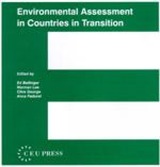
front cover of Environmental Assessment in Countries in Transintion
Environmental Assessment in Countries in Transintion
Norman Lee
Central European University Press, 2000
The countries included in this study on the regulations and practices relating environmental assessment are Armenia, Belarus, Bulgaria, Croatia, the Czech Republic, Estonia, Hungary, Kazakhstan, Latvia, Lithuania, Moldova, Montenegro, Poland, Romania, Russia, Slovenia, Ukraine. Each country study has been prepared by specialists from within the country concerned. This study will be of interest to EA practitioners in public administration; development and consultant organizations; training and educational and research institutes; and international and bilateral aid agencies. Project level EIA (Environmental Impact Assessment) and, to a lesser extent, SEA (Strategic Environmental Assessment) for planning and other strategic-level actions have been, or are being, introduced in the great majority of countries in transition (CIT). As yet, however, most of the countries have only limited experience in formulating "state of the art" EIA regulations and applying them satisfactorily. Furthermore, such experiences in CITs that do exist are not yet sufficiently well documented and widely disseminated. This report should be of considerable value in helping strengthen EA regulation and practice in the region.
[more]


Send via email Share on Facebook Share on Twitter