
 A SCHOLARLY BOOK REPOSITORY
Results by Title
3 books about Bejarano, Cynthia
3 books about Bejarano, Cynthia
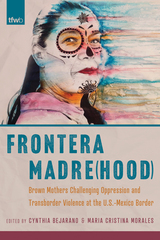
Frontera Madre(hood)
Brown Mothers Challenging Oppression and Transborder Violence at the U.S.-Mexico Border
Edited by Cynthia Bejarano and Maria Cristina Morales
University of Arizona Press, 2024
The topic of mothers and mothering transcends all spaces, from popular culture to intellectual thought and critique. This collection of essays bridges both methodological and theoretical frameworks to explore forms of mothering that challenge hegemonic understandings of parenting and traditional notions of Latinx womxnhood. It articulates the collective experiences of Latinx, Black, and Indigenous mothering from both sides of the U.S.-Mexico border.
Thirty contributors discuss their lived experiences, research, or community work challenging multiple layers of oppression, including militarization of the border, border security propaganda, feminicides, drug war and colonial violence, grieving and loss of a child, challenges and forms of resistance by Indigenous mothers, working mothers in maquiladoras, queer mothering, academia and motherhood, and institutional barriers by government systems to access affordable health care and environmental justice. Also central to this collection are questions on how migration and detention restructure forms of mothering. Overall, this collection encapsulates how mothering is shaped by the geopolitics of border zones, which also transcends biological, sociological, or cultural and gendered tropes regarding ideas of motherhood, who can mother, and what mothering personifies.
Contributors
Elva M. Arredondo
Cynthia Bejarano
Bertha A. Bermúdez Tapia
Margaret Brown Vega
Macrina Cárdenas Montaño
Claudia Yolanda Casillas
Luz Estela (Lucha) Castro
Marisa Elena Duarte
Taide Elena
Sylvia Fernández Quintanilla
Paula Flores Bonilla
Judith Flores Carmona
Sandra Gutiérrez
Ma. Eugenia Hernández Sánchez
Irene Lara
Leticia López Manzano
Mariana Martinez
Maria Cristina Morales
Paola Isabel Nava Gonzales
Olga Odgers-Ortiz
Priscilla Pérez
Silvia Quintanilla Moreno
Cirila Quintero Ramírez
Felicia Rangel-Samponaro
Coda Rayo-Garza
Shamma Rayo-Gutierrez
Marisol Rodríguez Sosa
Brenda Rubio
Ariana Saludares
Victoria M. Telles
Michelle Téllez
Marisa S. Torres
Edith Treviño Espinosa
Mariela Vásquez Tobon
Hilda Villegas
Thirty contributors discuss their lived experiences, research, or community work challenging multiple layers of oppression, including militarization of the border, border security propaganda, feminicides, drug war and colonial violence, grieving and loss of a child, challenges and forms of resistance by Indigenous mothers, working mothers in maquiladoras, queer mothering, academia and motherhood, and institutional barriers by government systems to access affordable health care and environmental justice. Also central to this collection are questions on how migration and detention restructure forms of mothering. Overall, this collection encapsulates how mothering is shaped by the geopolitics of border zones, which also transcends biological, sociological, or cultural and gendered tropes regarding ideas of motherhood, who can mother, and what mothering personifies.
Contributors
Elva M. Arredondo
Cynthia Bejarano
Bertha A. Bermúdez Tapia
Margaret Brown Vega
Macrina Cárdenas Montaño
Claudia Yolanda Casillas
Luz Estela (Lucha) Castro
Marisa Elena Duarte
Taide Elena
Sylvia Fernández Quintanilla
Paula Flores Bonilla
Judith Flores Carmona
Sandra Gutiérrez
Ma. Eugenia Hernández Sánchez
Irene Lara
Leticia López Manzano
Mariana Martinez
Maria Cristina Morales
Paola Isabel Nava Gonzales
Olga Odgers-Ortiz
Priscilla Pérez
Silvia Quintanilla Moreno
Cirila Quintero Ramírez
Felicia Rangel-Samponaro
Coda Rayo-Garza
Shamma Rayo-Gutierrez
Marisol Rodríguez Sosa
Brenda Rubio
Ariana Saludares
Victoria M. Telles
Michelle Téllez
Marisa S. Torres
Edith Treviño Espinosa
Mariela Vásquez Tobon
Hilda Villegas
[more]

Gathering Together, We Decide
Archives of Dispossession, Resistance, and Memory in Ndé Homelands
Edited by Margo Tamez, Cynthia Bejarano, and Jeffrey P. Shepherd
University of Arizona Press, 2025
In 2007, the Department of Homeland Security began condemnation proceedings on the property of Dr. Eloisa Tamez, a Lipan Apache (Ndé) professor, veteran, and title holder to land in South Texas deeded to her ancestors under the colonial occupation and rule of King Charles III of Spain in 1761, during a time when Indigenous lands were largely taken and exploited by Spanish colonizers. Crown grants of lands to Indigenous peoples afforded them the opportunity to reclaim Indigenous title and control. The federal government wanted Tamez’s land to build a portion of the “border wall” on the U.S.-Mexico border. She refused. In 2008, the Department of Homeland Security sued her, but she countersued based on Aboriginal land rights, Indigenous inherent rights, the land grant from Spain, and human rights. This standoff continued for years, until the U.S. government forced Tamez to forfeit land for the wall.
In response, Dr. Eloisa Tamez and her daughter, Dr. Margo Tamez, organized a gathering of Lipan tribal members, activists, lawyers, and allies to meet in El Calaboz, South Texas. This gathering was a response to the appropriation of the Tamez family land, but it also provided an international platform to dispute the militarization of Indigenous territory throughout the U.S.-Mexico bordered lands. The gathering and years of ensuing resistance and activism produced an archive of scholarly analyses, testimonios, artwork, legal briefs, poetry, and other cultural productions.
This unique collection spotlights powerful voices and perspectives from Ndé leaders, Indigenous elders, settler-allies, Native youth, and others associated with the Tamez family, the Ndé defiance, and the larger Indigenous rights movement to document their resistance; expose, confront, and end racism and militarization; and to foreground Indigenous women–led struggles for justice.
In response, Dr. Eloisa Tamez and her daughter, Dr. Margo Tamez, organized a gathering of Lipan tribal members, activists, lawyers, and allies to meet in El Calaboz, South Texas. This gathering was a response to the appropriation of the Tamez family land, but it also provided an international platform to dispute the militarization of Indigenous territory throughout the U.S.-Mexico bordered lands. The gathering and years of ensuing resistance and activism produced an archive of scholarly analyses, testimonios, artwork, legal briefs, poetry, and other cultural productions.
This unique collection spotlights powerful voices and perspectives from Ndé leaders, Indigenous elders, settler-allies, Native youth, and others associated with the Tamez family, the Ndé defiance, and the larger Indigenous rights movement to document their resistance; expose, confront, and end racism and militarization; and to foreground Indigenous women–led struggles for justice.
[more]
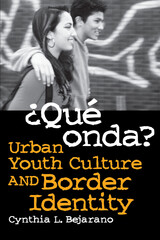
¿Qué Onda?
Urban Youth Culture and Border Identity
Cynthia L. Bejarano
University of Arizona Press, 2005
Angel was born in Arizona and is part of the in-crowd. She likes clubbing, dancing, and going to car shows. Betzayra is from Mexico City and, despite polio-related disabilities, is the confident group leader of the Mexican girls. Arturo is also from Mexico City; he dresses more fashionably than most other boys and is taunted by the Chicanos. Evelyn was born in Arizona, but her mother was from Mexico and she hangs out with Mexican kids because she thinks they’re nicer than Chicanos. How these and some two dozen other young Latinas and Latinos interact forms the basis of a penetrating new study of identity formation among Mexican-origin border youths, taking readers directly into their world to reveal the labyrinth they navigate to shape their identities.
For Latina/o adolescents who already find life challenging, the borderland is a place that presents continual affirmations of and contradictions about identity—questions of who is more Mexican than American or vice versa. This book analyzes the construction of Mexicana/o and Chicana/o identities through a four-year ethnographic study in a representative American high school. It reveals how identity politics impacts young people’s forms of communication and the cultural spaces they occupy in the school setting. By showing how identities are created and directly influenced by the complexities of geopolitics and sociocultural influences, it stresses the largely unexplored divisions among youths whose identities are located along a wide continuum of “Mexicanness.”
Through in-depth interviews and focus groups with both Mexicana/o and Chicana/o students, Cynthia Bejarano explores such topics as the creation of distinct styles that reinforce differences between the two groups; the use of language to further distinguish themselves from one another; and social stratification perpetuated by internal colonialism and the “Othering” process. These and other issues are shown to complicate how Latinas/os ethnically identify as Mexicanas/os or Chicanas/os and help explain how they get to this point.
In contrast to research that views identity as a reflection of immigration or educational experiences, this study embraces border theory to frame the complex and conflicted relations of adolescents as a result of their identity-making processes. This intimate glimpse into their lives provides valuable information about the diversity among youths and their constant efforts to create, define, and shape their identities according to cultural and social structures.
For Latina/o adolescents who already find life challenging, the borderland is a place that presents continual affirmations of and contradictions about identity—questions of who is more Mexican than American or vice versa. This book analyzes the construction of Mexicana/o and Chicana/o identities through a four-year ethnographic study in a representative American high school. It reveals how identity politics impacts young people’s forms of communication and the cultural spaces they occupy in the school setting. By showing how identities are created and directly influenced by the complexities of geopolitics and sociocultural influences, it stresses the largely unexplored divisions among youths whose identities are located along a wide continuum of “Mexicanness.”
Through in-depth interviews and focus groups with both Mexicana/o and Chicana/o students, Cynthia Bejarano explores such topics as the creation of distinct styles that reinforce differences between the two groups; the use of language to further distinguish themselves from one another; and social stratification perpetuated by internal colonialism and the “Othering” process. These and other issues are shown to complicate how Latinas/os ethnically identify as Mexicanas/os or Chicanas/os and help explain how they get to this point.
In contrast to research that views identity as a reflection of immigration or educational experiences, this study embraces border theory to frame the complex and conflicted relations of adolescents as a result of their identity-making processes. This intimate glimpse into their lives provides valuable information about the diversity among youths and their constant efforts to create, define, and shape their identities according to cultural and social structures.
[more]
READERS
Browse our collection.
PUBLISHERS
See BiblioVault's publisher services.
STUDENT SERVICES
Files for college accessibility offices.
RECENTLY PUBLISHED



UChicago Accessibility Resources
home | accessibility | search | about | contact us
BiblioVault ® 2001 - 2025
The University of Chicago Press