 A SCHOLARLY BOOK REPOSITORY
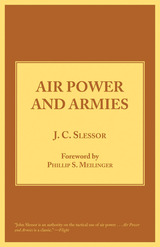
Sir John Slessor played a significant role in building the World War II Anglo-American air power partnership as an air planner on the Royal Air Force Staff, the British Chiefs of Staff, and the Combined Chiefs of Staff. He coordinated allied strategy in 1940–41, helped create an Anglo-American bomber alliance in 1942, and drafted the compromise at the Casablanca Conference that broke a deadlock in Anglo-American strategic debate.
Slessor was instrumental in defeating the U-boat menace as RAF Coastal Commander, and later shared responsibility for directing Allied air operations in the Mediterranean. Few aspects of the allied air effort escaped his influence: pilot training, aircraft procurement, and dissemination of operational intelligence and information all depended to a degree on Slessor. His influence on Anglo-American operational planning paved the way for a level of cooperation and combined action never before undertaken by the military forces of two great nations.
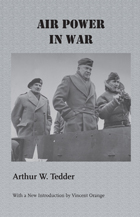
Arthur Tedder, who was knighted and raised to the peerage for his contributions to the Allied victory in World War II, served in the British air force in World War I and played an important role in professionalizing and organizing British air forces between the two world wars. During World War II, he held a succession of increasingly vital air force posts.
In addition to his achievements as Air Commander-in-Chief in the North African theater early in the war, Tedder’s most lasting contribution was as Deputy Supreme Commander under Dwight D. Eisenhower. He deserves much credit for keeping the Allied command functioning and harmonious. He was also the architect of the successful air strategy Eisenhower adopted for the Normandy invasion of 1944, which departed from both the British and American existing doctrine and models by concentrating on German rail systems rather than on either civilian or industrial targets.
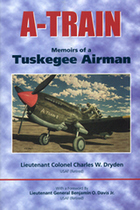
A moving personal account by one of the first Tuskegee airmen which illustrates the period of racial integration in American military and civilian life
A-Train is the story of one of the black Americans who, during World War II, graduated from Tuskegee (AL) Flying School and served as a pilot in the Army Air Corps’ 99th Pursuit Squadron. Charles W. Dryden presents a fast-paced, balanced, and personal account of what it was like to prepare for a career traditionally closed to African Americans, how he coped with the frustrations and dangers of combat, and how he, along with many fellow black pilots, navigators, bombardiers, and crewmen, emerged with a magnificent war record.
Under the command of Colonel Benjamin O. Davis Jr., the Tuskegee airmen fought over North Africa, Sicily, and Europe, escorting American bomber crews who respected their "no-losses" record. Some were shot down, many of them were killed or captured by the enemy, and several won medals of valor and honor. But the airmen still faced great barriers of racial prejudice in the armed forces and at home. As a member of that elite group of young pilots who fought for their country overseas while being denied civil liberties at home, Dryden presents an eloquent story that will touch each and every reader.
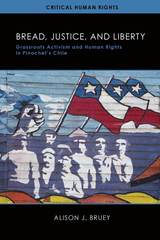
<i>Named Best Social Science Book, LASA Southern Cone Studies Section</i>
In Santiago, Chile, poverty and state violence have often led to grassroots resistance movements among the poor and working class. Alison J. Bruey offers a compelling history of the struggle for social justice and democracy during the Pinochet dictatorship. Deeply grounded by both extensive oral history interviews and archival research, Bread, Justice, and Liberty provides innovative contributions to scholarship on Chilean history, social movements, popular protest and democratization, neoliberal economics, and the Cold War in Latin America.


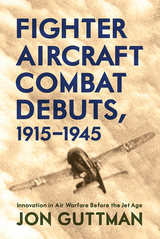
Of all military aircraft, fighter planes hold a mystique all their own. Perhaps it is because fighters can afford the least compromise: when the goal is to seize and maintain control of the air, the confrontation is direct. During World War I, the concept of air superiority took hold and in the ensuing decades the development of fighter aircraft became an ongoing back-and-forth battle, with adversaries trying to gain an upper hand through innovations in aerodynamics, powerplants, and armament. Fighter Aircraft Combat Debuts, 1915–1945: Innovation in Air Warfare Before the Jet Age by prominent aviation expert Jon Guttman explores the first combats for a variety of fighters of World War I, the conflicts of the so-called "interwar years," and World War II—a thirty-year period that saw the birth of the fighter concept and its maturity on the threshold of the Jet Age. Most of the aircraft described are fairly well known to aviation historians and a few names, such as Sopwith Camel, Fokker Triplane, Messerschmitt Me-109, Mitsubishi Zero, North American Mustang, and Supermarine Spitfire, are familiar even to the most nonaviation- minded persons. Not so well-known are the circumstances of their combat debuts, in which some, such as the Zero, made their mark almost from the outset, but in which others, like the British Bristol F.2A, showed rather less promise than they would ultimately realize. While a certain amount of space must be devoted to the technical development of these famous fighters, these studies of first combats serve as a reminder that it is the human factor, with all its special quirks, that inevitably came into play when these deadly flying machines first fired their guns. Profusely illustrated, Fighter Aircraft Combat Debuts is an authoritative history of one of the most enduring subjects in military aviation.
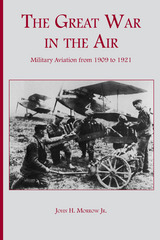
"For the general reader as well as the specialist, Morrow's history of the development and significance of airpower during WWI will be considered definitive. He compares the military, technological, and industrial aspects of the air services of the major powers--France, Germany, England, Italy, Austria-Hungary, and the United States--and reveals how, by means of superior production (particularly French engine manufacture), the Allies prevailed in the air war."--Publishers Weekly
"Morrow's encyclopedic examination of aviation's part in World War I concentrates on aircraft engine and airframe production, but the emotional content of contemporary accounts rises to the surface to put a human face on the brutal use of an infant technology. . . . a serious yet readable history of this vital part of the conflict, meant for any reader."--Library Journal
"A comprehensive study of the totality of the air war in its military, political, industrial, and cultural aspects distinguish this book from other treatments of military aviation during this period. . . . Morrow's efforts have yielded new insights into the evolution of military aviation and corrected previous oversights. The author's attention to developments in production and logistics, as well as events at the front, provide the most complete understanding of the development of air power and its role in the Great War."--American Historical Review
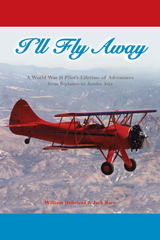
From his adventures flying for the Allies in World War II to his work as head pilot trainer for Ariana Afghan Airlines, Race has logged more than six decades in the air. I’ll Fly Away tracks his travels around the globe, encompassing his post-war job as crop duster and bush pilot, his thirty-four years as a commercial airline pilot for Pan American World Airways, his consultancy to King Hussein for Royal Jordanian Airlines, and the eight years in which he served as lead pilot for Orbis, an eye hospital on wings that served thirty-one countries. In 1989 Race notably retraced Charles Lindbergh’s 1927 20,000-mile goodwill tour, flying his Spirit of Orbis biplane to all forty-eight of the continental U.S. states.
A remarkable and wholly readable biography of an American original, I’ll Fly Away will be essential for the bookshelf of every aviation enthusiast.
The True Story of the Daring Attempt to Cripple Nazi Germany's Oil Production
A detailed and vivid account of the World War II disaster."—Booklist
"Into the Fire shimmers with historical parallels and modern resonances. . . . Schultz combed an impressive body of material for this account." —Washington Times
"This bittersweet tale of arrogance, wishful thinking, sacrifice, and heroism is recounted with grace and empathy." —Military.com
"Schultz combines a historian's meticulous research and a novelist's hypnotic prose to produce this memorable popular history... Shultz's intimate account of this controversial episode is a timely reminder of the horrors of war and a moving tribute to Ploestl's heroes." —Publishers Weekly
"We knew it was a disaster and knew that in the flames shooting up from those refineries we might be burned to death. But we went right in." —Lt. Norman Whalen
"We were dragged through the mouth of hell."—from a Ploesti Mission debriefing report
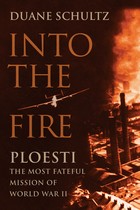
Planned by Winston Churchill, authorized by Dwight D. Eisenhower, and executed by five specially trained American bomber units, the attack on the oil refineries of Ploesti, Romania, was among the most daring and dangerous missions of World War II. If the raid succeeded, the Nazi war machine would suffer a devastating blow. On August 1, 1943, nearly two hundred B-24 bombers flew from Benghazi, North Africa, with directions to descend on Ploesti at treetop level, bomb the refineries, and return. The low-level bombers could evade enemy radar and were thought to be more difficult to shoot down. But despite warnings that a German heavy flak train had been moved into the area and that the secrecy of their mission had been compromised, the bombers were sent out. Minutes from the target, one of the commanders made a wrong turn, leading the formations away from Ploesti. Recovering from this mistake, most of the bombers relocated the refineries, but the mission was doomed. The ensuing air-ground battle claimed dozens of the bombers, and many of those that survived the ordeal were forced to ditch in the ocean or in remote areas due to lack of fuel or structural damage.
In Into the Fire: Ploesti, The Most Fateful Mission of World War II, Duane Schultz re-creates this great battle, combining original research and interviews with survivors in order to capture the tension, drama, and heroics of the warring sides. More Medals of Honor were awarded for this mission than any other aerial combat enterprise in the history of the United States. But the medals are bittersweet testimony to the courage of the 1,726 young men who risked all on a fateful attempt to cut off the Nazi supply of "black gold."
This translation of a volume of the Senshi Sosho, the National Defense College of Japan’s unparalleled 1966–80 war history series, The Invasion of the South describes Japanese army air force operations against the Dutch East Indies during World War II. This essential resource provides the most comprehensive treatment of Japanese activity in the Indonesian archipelago, one of the largest transoceanic operations in history.
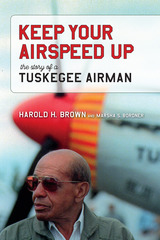
Keep Your Airspeed Up: The Story of a Tuskegee Airman is the memoir of an African American man who, through dedication to his goals and vision, overcame the despair of racial segregation to great heights, not only as a military aviator, but also as an educator and as an American citizen.
Unlike other historical and autobiographical portrayals of Tuskegee airmen, Harold H. Brown’s memoir is told from its beginnings: not on the first day of combat, not on the first day of training, but at the very moment Brown realized he was meant to be a pilot. He revisits his childhood in Minneapolis where his fascination with planes pushed him to save up enough of his own money to take flying lessons. Brown also details his first trip to the South, where he was met with a level of segregation he had never before experienced and had never imagined possible.
During the 1930s and 1940s, longstanding policies of racial discrimination were called into question as it became clear that America would likely be drawn into World War II. The military reluctantly allowed for the development of a flight-training program for a limited number of African Americans on a segregated base in Tuskegee, Alabama. The Tuskegee Airmen, as well as other African Americans in the armed forces, had the unique experience of fighting two wars at once: one against Hitler’s fascist regime overseas and one against racial segregation at home.
Colonel Brown fought as a combat pilot with the 332nd Fighter Group during World War II, and was captured and imprisoned in Stalag VII A in Moosburg, Germany, where he was liberated by General George S. Patton on April 29, 1945. Upon returning home, Brown noted with acute disappointment that race relations in the United States hadn’t changed. It wasn’t until 1948 that the military desegregated, which many scholars argue would not have been possible without the exemplary performance of the Tuskegee Airmen.
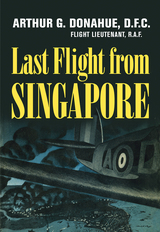
In Last Flight from Singapore, Donahue tells his dramatic story, accompanied by photographs he took himself, of the intense and futile battle against the Japanese for control of the gateway to the Malay Peninsula. He continues his story through his convalescence to his return to England, where he once again began patrols over Europe. The manuscript for Last Flight from Singapore was found among his effects after he did not return from a patrol in 1942 and was presumed lost.
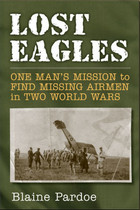
Praise for Lost Eagles
"The pilot and observer stories selected have not previously seen much exposure. Not only are they interesting, but I found myself relishing getting to the next chapter to find out what Frederick Zinn was doing during the next stage of his life."
---Alan Roesler, founding member, League of World War I Aviation Historians, and former Managing Editor, Over the Front
Praise for Blaine Pardoe's previous military histories (which average 4.5-star customer reviews on Amazon.com):
Terror of the Autumn Skies: The True Story of Frank Luke, America's Rogue Ace of World War I
"This painstaking biography of World War I ace Frank Luke will earn Pardoe kudos . . . Pardoe has flown a very straight course in researching and recounting Luke's myth-ridden life. . . . Thorough annotation makes the book that much more valuable to WWI aviation scholars as well as for more casual air-combat buffs."
---Booklist
The Cruise of the Sea Eagle: The Amazing True Story of Imperial Germany's Gentleman Pirate
"This is a gem of a story, well told, and nicely laid out with photos, maps, and charts that cleverly illuminate the lost era of ‘gentlemen pirates' at sea . . . [German commerce raider Felix von Luckner's] legend lives on in this lively and readable biography."
---Admiral James Stavridis, U.S. Navy, Naval History
Few people have ever heard of Frederick Zinn, yet even today airmen's families are touched by this man and the work he performed in both world wars. Zinn created the techniques still in use to determine the final fate of airmen missing in action. The last line of the Air Force Creed reads, "We will leave no airman behind." Zinn made that promise possible.
Blaine Pardoe weaves together the complex story of a man who brought peace and closure to countless families who lost airmen during both world wars. His lasting contribution to warfare was a combination of his methodology for locating the remains of missing pilots (known as the Zinn system) and his innovation of imprinting all aircraft parts with the same serial number so that if a wreck was located, the crewman could be identified. The tradition he established for seeking and recovering airmen is carried on to this day.
Blaine Pardoe is an accomplished author who has published dozens of military fiction novels and other books, including the widely acclaimed Cubicle Warfare: Self-Defense Tactics for Today's Hypercompetitive Workplace; Terror of the Autumn Skies: The True Story of Frank Luke, America's Rogue Ace of World War I; and The Cruise of the Sea Eagle: The Amazing True Story of Imperial Germany's Gentleman Pirate.
Jacket photo: Frederick Zinn's Sopwith aircraft, which crashed during World War I. National Museum of the United States Air Force Archives.
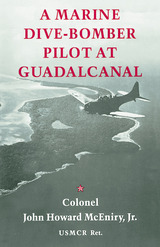
This book chronicles the World War II experiences of the author, who served as a Marine Corps pilot in the South Pacific. Colonel McEniry describes the organization and deployment of a Marine dive-bombing squadron (VMSB-132) in the early days of the war and follows the squadron through its actions in November and December of 1942.
The participation by the squadron in the naval battle of Guadalcanal, November 12-15, 1942, is related in detail and includes the personal experiences of the author on several bombing missions. This battle, described by Admiral Ernest J. King, the Chief of Naval Operations, as “the fiercest naval battle ever fought,” resulted in the loss by the Japanese of two battleships, ten transport ships, and numerous cruisers and destroyers.

Today von Braun is recognized as the person most responsible for laying the groundwork for public acceptance of America's space program. When President Bush directed NASA in 1989 to prepare plans for an orbiting space station, lunar research bases, and human exploration of Mars, he was largely echoing what von Braun proposed in The Mars Project.
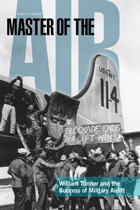
Into this difficult situation the US placed General William Henry Tunner. He was given a task that seemed doomed to failure—to supply a major city by air with everything it needed to survive from food to a winter’s supply of coal—and made it a brilliant success, astonishing the world in a major public relations defeat for the Soviets, and demonstrating the unexpected capacity of air fleets in a postwar world.
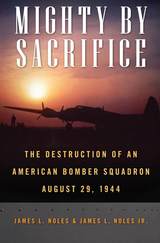
On August 29, 1944, the 15th U.S. Army Air Force unleashed 500 bombers against oil and rail targets throughout central Europe. It dispatched the 20th Squadron of the 2nd Bombardment Group on what they regarded as an easy assignment: attack the Privoser Oil Refinery and associated railroad yards at Moravska Ostrava, Czechoslovakia. This "milk run" deteriorated into the bloodiest day in the 2nd Bombardment Group's history: not a single one of the 20th Squadron's B-17 Flying Fortress bombers returned from the mission. Forty airmen were killed, another 46 spent the rest of the war as POWs, and only four, with the aid of the OSS and anti-German partisans, and sympathetic Czech civilians managed to evade capture.
The ninety airmen on the mission to Moravska Ostrava provide a remarkable personal window into the Allies' Combined Bomber Offensive at its height during WWII. In a microcosm, their stories encapsulate how the U.S. Army Air Forces built, trained, and employed one of the mightiest war machines ever seen. Their stories also illustrate, however, the terrible cost in lives demanded by that same machine.
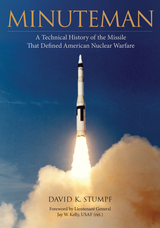
Minuteman offers a fascinating look at the technological breakthroughs necessary to field this weapon system that has served as a powerful component of the strategic nuclear triad for more than half a century. With exacting detail, Stumpf examines the construction of launch and launch control facilities; innovations in solid propellant, lightweight inertial guidance systems, and lightweight reentry vehicle development; and key flight tests and operational flight programs—all while situating the Minuteman program in the context of world events. In doing so, the author reveals how the historic missile has adapted to changing defense strategies—from counterforce to mutually assured destruction to sufficiency.
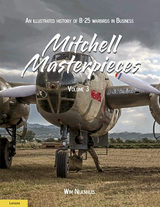
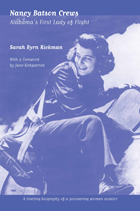
This is the story of an uncommon woman--high school cheerleader, campus queen, airplane pilot, wife, mother, politician, business-woman--who epitomizes the struggles and freedoms of women in 20th-century America, as they first began to believe they could live full lives and demanded to do so. World War II offered women the opportunity to contribute to the work of the country, and Nancy Batson Crews was one woman who made the most of her privileged beginnings and youthful talents and opportunities.
In love with flying from the time she first saw Charles Lindbergh in Birmingham, (October 1927), Crews began her aviation career in 1939 as one of only five young women chosen for Civilian Pilot Training at the University of Alabama. Later, Crews became the 20th woman of 28 to qualify as an "Original" Women's Auxiliary Ferrying Squadron (WAFS) pilot, employed during World War II shuttling P-38, P-47, and P-51 high-performance aircrafts from factory to staging areas and to and from maintenance and training sites. Before the war was over, 1,102 American women would qualify to fly Army airplanes. Many of these female pilots were forced out of aviation after the war as males returning from combat theater assignments took over their roles. But Crews continued to fly, from gliders to turbojets to J-3 Cubs, in a postwar career that began in California and then resumed in Alabama.
The author was a freelance journalist looking to write about the WASP (Women Airforce Service Pilots) when she met an elderly, but still vital, Nancy Batson Crews. The former aviatrix held a reunion of the surviving nine WAFS for an interview with them and Crews, recording hours of her own testimony and remembrance before Crews's death from cancer in 2001. After helping lead the fight in the '70s for WASP to win veteran status, it was fitting that Nancy Batson Crews was buried with full military honors.
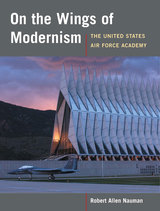
The United States Air Force Academy stands as one of the most extensive architectural projects of the cold war era. Key to a full understanding of American modernism, the project was also a volatile battleground involving competing ideas about aesthetics and politics. Arguing that the academy's production was squarely grounded in bureaucratic and political processes, Robert Allen Nauman demonstrates that selection of both the site and the design firm was the result of political maneuverings involving U.S. military leadership.
In the academy’s iconic design, myths and metaphors of flight and the American West were interwoven with those of modernism, both to justify the plan and to free it from any lingering socialist or European associations. Skidmore, Owings, and Merrill’s first public exhibition of plans and models for the project was designed by the former Bauhaus master Herbert Bayer, and it incorporated photographs of the Colorado Springs site by Ansel Adams and William Garnett. Using previously unexplored resources of the U.S. Air Force Academy, SOM, and the Air Force Academy Construction Agency, Nauman uncovered materials such as negatives of Adams’s original photographs of the sites. He also conducted extensive interviews with SOM’s project director for the academy, Walter Netsch, in tracing the complete history of the academy's construction, from its earliest conception to eventual completion.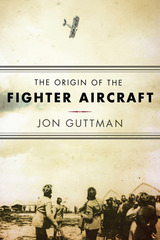
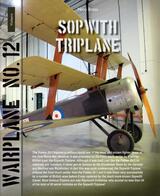
From Scouts to Balloon-busters, the Emergence of Air-to-Air Combat in World War I
When World War I began in August 1914, the airplane had already proven its worth as an intelligence gathering “eye-in-the-sky.” These scouting aircraft soon became indispensable to armies on both sides, and the attempt to drive enemy planes away began in earnest. Local air superiority was incorporated into battlefield strategy, and the use of aircraft to conduct offensive operations would change warfare as dramatically as the first firearms 300 years before. By the end of 1915, the basic formula of the armed scout settled on a single-seater with a machine gun synchronized to fire through its propeller blades. This heavily armed aircraft became the first true fighter plane whose primary function was to destroy enemy aircraft, whether scouts, balloons, bombers, or other fighters. A new glamorized “knight of the air” was born: the ace, a fighter pilot who brought down five or more opponents. From 1916 on, as the combatants relied on airplanes more, flying tactics and strategy—including mass formations—were developed for what would become a deadly struggle for complete air superiority. By 1918, the final year of the war, air battles could be as sprawling as those on the ground.
In The Origin of the Fighter Aircraft, historian Jon Guttman tells the engrossing story of how one of the most amazing inventions became a integral component of warfare. Balancing technical description, personalities, and battle accounts, the author demonstrates that by the end of World War I most of the fundamentals for modern aerial combat had been established.
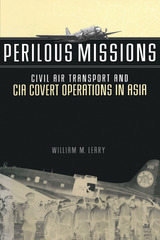
Civil Air Transport (CAT), founded in China after World War II by Claire Chennault and Whiting Willauer, was initially a commercial carrier specializing in air freight. Its role quickly changed as CAT became first a paramilitary adjunct of the Nationalist Chinese Air Force, then the CIA's secret "air force" in Korea, then "the most shot-at airline in the world" in French Indochina, and eventually becoming reorganized as Air America at the height of the Vietnam War. William M. Leary's detailed operational history of CAT sets the story in the perspective of Asian and Cold War geopolitics and shows how CAT allowed the CIA to operate with a level of flexibility and secrecy that it would not have attained through normal military or commercial air transportation.
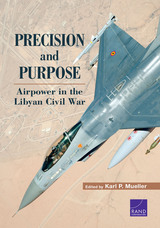

Considers how people have confronted, challenged, and resisted remote warfare
Drone warfare is now a routine, if not predominant, aspect of military engagement. Although this method of delivering violence at a distance has been a part of military arsenals for two decades, scholarly debate on remote warfare writ large has remained stuck in tired debates about practicality, efficacy, and ethics. Remote Warfare broadens the conversation, interrogating the cultural and political dimensions of distant warfare and examining how various stakeholders have responded to the reality of state-sponsored remote violence.
The essays here represent a panoply of viewpoints, revealing overlooked histories of remoteness, novel methodologies, and new intellectual challenges. From the story arc of Homeland to redefining the idea of a “warrior,” these thirteen pieces consider the new nature of surveillance, similarities between killing with drones and gaming, literature written by veterans, and much more. Timely and provocative, Remote Warfare makes significant and lasting contributions to our understanding of drones and the cultural forces that shape and sustain them.
Contributors: Syed Irfan Ashraf, U of Peshawar, Pakistan; Jens Borrebye Bjering, U of Southern Denmark; Annika Brunck, U of Tübingen; David A. Buchanan, U.S. Air Force Academy; Owen Coggins, Open U; Andreas Immanuel Graae, U of Southern Denmark; Brittany Hirth, Dickinson State U; Tim Jelfs, U of Groningen; Ann-Katrine S. Nielsen, Aarhus U; Nike Nivar Ortiz, U of Southern California; Michael Richardson, U of New South Wales; Kristin Shamas, U of Oklahoma; Sajdeep Soomal; Michael Zeitlin, U of British Columbia.

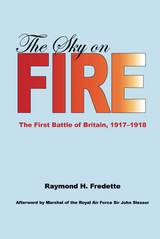
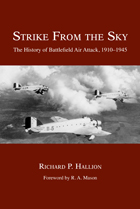
Chronicles the history of battlefield air attack from 1911, when the airplane was first used in war, to the end of World War II.
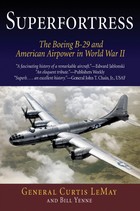
The Complete Story of the Design, Development, and Deployment of an Iconic Aircraft
Among the most sophisticated aircraft flown during World War II, the Boeing B-29 Superfortress was designed to replace the B-17 as the primary long-range bomber of the U.S. Army Air Forces. With its distinctive glazed nose and long, thin wings that provided both speed at high altitude and stability at takeoff and landing, the Superfortress was the first operational bomber with a pressurized crew cabin and featured advanced radar and avionics. Armed with remote-controlled machine gun turrets and a 20,000 pound bomb load, it was the first USAAF bomber capable of mastering the vast distances of the Pacific Theater of World War II. The prototype flew in September 1942 but a series of post-production modifications delayed the bomber's first mission until April 1944. Superfortresses began attacking Japan in daylight with conventional ordnance from high altitude, but their mission was redirected in March 1945, with massive low-level formations dropping incendiary bombs! at night on Japanese cities. The ensuing firestorms, followed by the complete destruction of Hiroshima and Nagasaki by atomic bombs dropped from two specially modified "silverplate" B-29s, forced Japan to cease fighting.
Written by the man who led the B-29 into combat, Superfortress: The Boeing B-29 and American Airpower in World War II is an important document of one of the most turbulent times in world history. General Curtis LeMay recalls the early debate about whether or not the United States needed a long-range bomber, how the B-29 was created and produced despite the enormous logistical difficulties of the design, and the decision to conduct fire-bombings against Japan and ultimately drop the atomic bomb. Highly praised when it was first published, this new edition is complete with photographs, a new introduction, and statistical tables.
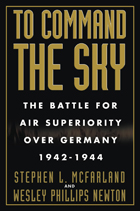
To Command the Sky is a scholarly record of the fight for domination of the skies over western Europe during World War II. It also explains the technical details of the tactics used to defeat the Luftwaffe. This book is important for serious students of World War II or military aviation.
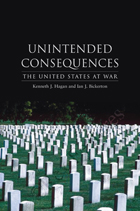
“The United States does not do nation building,” claimed Secretary of Defense Donald Rumsfeld three years ago. Yet what are we to make of the American military bases in Korea? Why do American warships patrol the Somali coastline? And perhaps most significantly, why are fourteen “enduring bases” being built in Iraq? In every major foreign war fought by United States in the last century, the repercussions of the American presence have been felt long after the last Marine has left. Kenneth J. Hagan and Ian J. Bickerton argue here that, despite adamant protests from the military and government alike, nation building and occupation are indeed hallmarks—and unintended consequences—of American warmaking.
In this timely, groundbreaking study, the authors examine ten major wars fought by the United States, from the Revolutionary War to the ongoing Iraq War, and analyze the conflicts’ unintended consequences. These unexpected outcomes, Unintended Consequences persuasively demonstrates, stemmed from ill-informed decisions made at critical junctures and the surprisingly similar crises that emerged at the end of formal fighting. As a result, war did not end with treaties or withdrawn troops. Instead, time after time, the United States became inextricably involved in the issues of the defeated country, committing itself to the chaotic aftermath that often completely subverted the intended purposes of war.
Stunningly, Unintended Consequences contends that the vast majority of wars launched by the United States were unnecessary, avoidable, and catastrophically unpredictable. In a stark challenge to accepted scholarship, the authors show that the wars’ unintended consequences far outweighed the initial calculated goals, and thus forced cataclysmic shifts in American domestic and foreign policy.
A must-read for anyone concerned with the past, present, or future of American defense, Unintended Consequences offers a provocative perspective on the current predicament in Iraq and the conflicts sure to loom ahead of us.
—James R. Hansen, prizewinning aerospace historian and bestselling author of First Man: The Life of Neil A. Armstrong
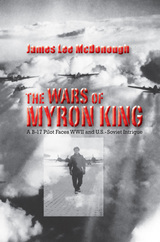
When Myron King of the U.S. Army Air Corps arrived in England in 1944, he fully expected to fly dangerous bombing missions over Nazi Germany. What the twenty-three-year-old lieutenant had no way of predicting, however, was that he would spend his last months in Europe entangled in a bizarre affair born of the mounting tensions between the United States and the Soviet Union. Ultimately, King faced three wars: the monumental conflict between the Allies and the Third Reich, the nascent Cold War, and a personal battle with the military brass to clear his name after enduring a grossly unjust court-martial.
This book presents an engrossing account of King’s early life and wartime service as part of the 401st Bombardment Group, U.S. Eighth Air Force. As a child growing up in New York and Tennessee, he was thoroughly captivated by the young field of aviation and dreamed of becoming a pilot. Attending college when Pearl Harbor was attacked, he realized his boyhood ambition by enlisting as an Air Corps cadet. After completing flight training two years later, King and his crew flew a B-17 bomber across the Atlantic to join their fellow airmen at a base near the English village of Deenethorpe—doing their first battle not with German fighters but with a raging storm during the Greenland-to-Iceland leg of the journey.
Once settled in Great Britain, the King Crew flew twenty missions from November 1944 through February 1945. It was on their last flight to Berlin that enemy fire crippled their plane and forced them to land in Poland amid the Russian forces that were advancing on Germany from the east. There events took a decidedly strange turn as King became embroiled in an incident involving a young stowaway and the increasingly complicated relations between the United States and Stalin’s regime. Scapegoated in the episode, King would leave the Air Corps with his honorable record severely soiled—a wrong that would take years to undo.
The Wars of Myron King is more than just a rattling good true-life adventure story. Based on a wide array of published and primary sources, including trial transcripts and interviews with King, the book offers a unique view of the experience of air combat, the intertwining of politics and military justice, and the complex circumstances that inaugurated the Cold War.
James Lee McDonough is professor emeritus of history at Auburn University. He is the author of ten books, including Shiloh—In Hell Before Night, Stones River—Bloody Winter in Tennessee, Chattanooga—A Death Grip on the Confederacy, War in Kentucky: From Shiloh to Perryville, and Nashville: The Western Confederacy’s Final Gamble. This is his second book on a World War II subject.
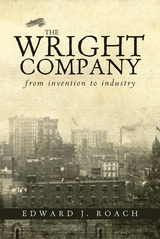
Fresh from successful flights before royalty in Europe, and soon after thrilling hundreds of thousands of people by flying around the Statue of Liberty, in the fall of 1909 Wilbur and Orville Wright decided the time was right to begin manufacturing their airplanes for sale. Backed by Wall Street tycoons, including August Belmont, Cornelius Vanderbilt III, and Andrew Freedman, the brothers formed the Wright Company. The Wright Company trained hundreds of early aviators at its flight schools, including Roy Brown, the Canadian pilot credited with shooting down Manfred von Richtofen—the “Red Baron”—during the First World War; and Hap Arnold, the commander of the U.S. Army Air Forces during the Second World War. Pilots with the company’s exhibition department thrilled crowds at events from Winnipeg to Boston, Corpus Christi to Colorado Springs. Cal Rodgers flew a Wright Company airplane in pursuit of the $50,000 Hearst Aviation Prize in 1911.
But all was not well in Dayton, a city that hummed with industry, producing cash registers, railroad cars, and many other products. The brothers found it hard to transition from running their own bicycle business to being corporate executives responsible for other people’s money. Their dogged pursuit of enforcement of their 1906 patent—especially against Glenn Curtiss and his company—helped hold back the development of the U.S. aviation industry. When Orville Wright sold the company in 1915, more than three years after his brother’s death, he was a comfortable man—but his company had built only 120 airplanes at its Dayton factory and Wright Company products were not in the U.S. arsenal as war continued in Europe.
Edward Roach provides a fascinating window into the legendary Wright Company, its place in Dayton, its management struggles, and its effects on early U.S. aviation.

But all was not well in Dayton, a city that hummed with industry, producing cash registers, railroad cars, and many other products. The brothers found it hard to transition from running their own bicycle business to being corporate executives responsible for other people’s money. Their dogged pursuit of enforcement of their 1906 patent — especially against Glenn Curtiss and his company — helped hold back the development of the U.S. aviation industry. When Orville Wright sold the company in 1915, more than three years after his brother’s death, he was a comfortable man — but his company had built only 120 airplanes at its Dayton factory and Wright Company products were not in the U.S. arsenal as war continued in Europe.
Edward Roach provides a fascinating window into the legendary Wright Company, its place in Dayton, its management struggles, and its effects on early U.S. aviation.
READERS
Browse our collection.
PUBLISHERS
See BiblioVault's publisher services.
STUDENT SERVICES
Files for college accessibility offices.
RECENTLY PUBLISHED




UChicago Accessibility Resources
home | accessibility | search | about | contact us
BiblioVault ® 2001 - 2024
The University of Chicago Press