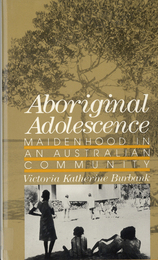

front cover of Aboriginal Adolescence
Aboriginal Adolescence
Burbank, Victoria Katherine
Rutgers University Press, 1999
Study of the changing social context of adolescence, marriage and sexual relations in Mangraove, a Groote Eylandt Aboriginal community; review of anthropological and Aboriginal models of marriage- past and present ideals and realities; missionary influences; case studies of contemporary adolescent Aboriginal girls - love, expectations, intergenerational conflict; social strategies and changing values.
[more]

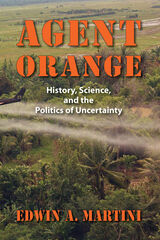
front cover of Agent Orange
Agent Orange
History, Science, and the Politics of Uncertainty
Edwin A. Martini
University of Massachusetts Press, 2012

Taking on what one former U.S. ambassador called “the last ghost of the Vietnam War,” this book examines the far-reaching impact of Agent Orange, the most infamous of the dioxin-contaminated herbicides used by American forces in Southeast Asia. Edwin A. Martini's aim is not simply to reconstruct the history of the “chemical war” but to investigate the ongoing controversy over the short- and long-term effects of weaponized defoliants on the environment of Vietnam, on the civilian population, and on the troops who fought on both sides.

Beginning in the early 1960s, when Agent Orange was first deployed in Vietnam, Martini follows the story across geographical and disciplinary boundaries, looking for answers to a host of still unresolved questions. What did chemical manufacturers and American policymakers know about the effects of dioxin on human beings, and when did they know it? How much do scientists and doctors know even today? Should the use of Agent Orange be considered a form of chemical warfare? What can, and should, be done for U.S. veterans, Vietnamese victims, and others around the world who believe they have medical problems caused by Agent Orange?

Martini draws on military records, government reports, scientific research, visits to contaminated sites, and interviews to disentangle conflicting claims and evaluate often ambiguous evidence. He shows that the impact of Agent Orange has been global in its reach affecting individuals and communities in New Zealand, Australia, Korea, and Canada as well as Vietnam and the United States. Yet for all the answers it provides, this book also reveals how much uncertainty—scientific, medical, legal, and political—continues to surround the legacy of Agent Orange.

[more]

logo for Rutgers University Press
AIDS in Industrialized Democracies
Passions, Politics, and Policies
Bayer, Ronald
Rutgers University Press, 1992

In the ten years since the first cases of AIDS were reported, the disease has spread around the world. Every country has had to come up with policies suited to its own conditions, economy, culture, and institutions. The differences among their approaches are striking. This volume, the first international comprehensive comparison of responses to AIDS, is a unique guide to the world's most urgent public health crisis.

Sixteen leading experts in public health, social science, government, and public policy from USA, Canada, Germany, Australia, Spain, Britain, France, the Netherlands, Denmark, Sweden, and Japan candidly recount and analyze the responses of their own nations and comment on the lessons that can be drawn from each country's experience. For each country, they look critically at the tragic statistics of AIDS incidence; the circumstances of AIDS's first appearance; public health traditions of mandatory screening, contact tracing, and quarantine; attitudes toward drug abuse, homosexuality, sex education; publicity about AIDS; legal and customary protections of civil rights, minority groups, medical confidentiality; access to health care and insurance; and the interplay of formal and informal interest groups in shaping policy. The spectrum of AIDS policy ranges from severe "contain-and-control" programs to much more liberal plans based on education, cooperation, and inclusion.

No matter what policy a nation has constructed to deal with AIDS, the coming decade will test how well that policy conforms to democratic ideals. By scrutinizing the responses to AIDS so far, this book aims to give countries around the world a chance to learn from each others' mistakes and triumphs. It will be essential reading for all students and professionals in public health and public policy.
[more]

front cover of Ancestral Connections
Ancestral Connections
Art and an Aboriginal System of Knowledge
Howard Morphy
University of Chicago Press, 1991
Ancestral Connections unlocks the inner meaning of Australian Aboriginal bark painting. Drawing on more than ten years of fieldwork among the Yolngu—an Aboriginal people of Northeast Arnhem Land—and applying both anthropological and art historical methods, Howard Morphy explores systematically the graphic representation of traditional knowledge in Yolngu art. He also charts the role that art has played in Aboriginal society both present and past.

The rich symbolism of Yolngu art links the Yolngu directly with the "Dreaming," the time of world-creation that continues as the spiritual dimension of the present. Morphy shows how a complex dialectic of "inside" and "outside" interpretations of painting structures the system of knowledge in Yolngu society, and how European interest in this art has caused certain changes in the conditions of its production. The "inside" significance of the art, however, has not changed; it retains its dual ability to represent and to constitute relationships between things.

Ancestral Connections is a major contribution to the anthropology of art. A subtle commentary on the colonial encounter in northern Australia, the book demonstrates how the Yolngu have used their art—against all odds—as an instrument of cultural survival and as a component of the economic and political transformation of their society.

[more]

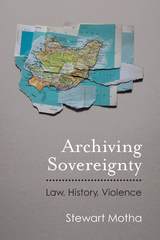
front cover of Archiving Sovereignty
Archiving Sovereignty
Law, History, Violence
Stewart Motha
University of Michigan Press, 2018
Archiving Sovereignty shows how courts use fiction in their treatment of sovereign violence. Law's complicity with imperial and neocolonial practices occurs when courts inscribe and repeat the fabulous tales that provide an alibi for archaic sovereign acts that persist in the present. The United Kingdom's depopulation of islands in the Indian Ocean to serve the United States' neoimperial interests, Australia's exile and abandonment of refugees on remote islands, the failure to acknowledge genocidal acts or colonial dispossession, and the memorial work of the South African Constitution after apartheid are all sustained by historical fictions. This history-work of law constitutes an archive where sovereign violence is mediated, dissimulated, and sustained. Stewart Motha extends the concept of the "archive," as site of origin and source of authority, to signifying what law does in preserving and disavowing the past at the same time.

Sovereignty is often cast as a limit-concept, constituent force, determining the boundary of law. Archiving Sovereignty reverses this to explain how judicial pronouncements inscribe and sustain extravagant claims to exceptionality and sovereign solitude. This wide-ranging, critical work distinguishes between myths that sustain neocolonial orders and fictions that generate new forms of political and ethical life.
[more]

front cover of Arrernte Present, Arrernte Past
Arrernte Present, Arrernte Past
Invasion, Violence, and Imagination in Indigenous Central Australia
Diane J. Austin-Broos
University of Chicago Press, 2008
The Arrernte people of Central Australia first encountered Europeans in the 1860s as groups of explorers, pastoralists, missionaries, and laborers invaded their land. During that time the Arrernte were the subject of intense curiosity, and the earliest accounts of their lives, beliefs, and traditions were a seminal influence on European notions of the primitive. The first study to address the Arrernte’s contemporary situation, Arrernte Present, Arrernte Past also documents the immense sociocultural changes they have experienced over the past hundred years.
            Employing ethnographic and archival research, Diane Austin-Broos traces the history of the Arrernte as they have transitioned from a society of hunter-gatherers to members of the Hermannsburg Mission community to their present, marginalized position in the modern Australian economy. While she concludes that these wrenching structural shifts led to the violence that now marks Arrernte communities, she also brings to light the powerful acts of imagination that have sustained a continuing sense of Arrernte identity.
[more]

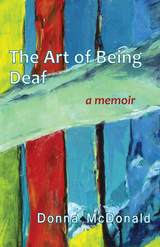
front cover of The Art of Being Deaf
The Art of Being Deaf
A Memoir
Donna McDonald
Gallaudet University Press, 2014
Concerned about aspects of her romantic relationships, Donna McDonald consulted with a psychologist who asked, “Your hearing loss must have had a big impact on you?” At age 45, with a successful career in social work policy, McDonald took umbrage at the question. Then, she realized that she never had addressed the personal barrier she had constructed between her deaf-self and her hearing persona. In The Art of Being Deaf, she describes her long, arduous pursuit of finding out exactly who she was.
 
       Born in 1950s Australia, McDonald was placed in an oral deaf school when she was five. There, she was trained to communicate only in spoken English. Afterwards, she attended mainstream schools where she excelled with speechreading and hard work. Her determination led to achievements that proved her to be “the deaf girl that had made good.” Yet, despite her constant focus on fitting in the hearing world, McDonald soon realized that she missed her deaf schoolmates and desired to explore her closed-off feelings about being deaf.
 
       When she reconnected with her friends, one urged her to write about her experiences to tell all about “the Forgotten Generation, the orally-raised deaf kids that no one wants to talk about.” In writing her memoir, McDonald did learn to reconcile her deaf-self with her “hearing-deaf” persona, and she realized that the art of being deaf is the art of life, the art of love.
[more]

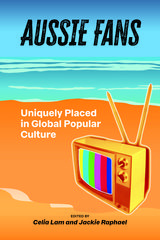
front cover of Aussie Fans
Aussie Fans
Uniquely Placed in Global Popular Culture
Celia Lam and Jackie Raphael
University of Iowa Press, 2019

Australia holds a unique place in the global scheme of fandom. Much of the media consumed by Australian audiences originates from either the United States or the United Kingdom, yet several Australian productions have also attracted international fans in their own right. This first-ever academic study of Australian fandom explores the national popular culture scene through themes of localization and globalization.

The essays within reveal how Australian audiences often seek authentic imports and eagerly embrace different cultures, examining both Hollywood’s influence on Australian fandom and Australian fan reactions to non-Western content. By shining a spotlight on Australian fandom, this book not only provides an important case study for fan studies scholars, it also helps add nuance to a field whose current literature is predominantly U.S. and U.K. focused.

Contributors: Kate Ames, Ahmet Atay, Jessica Carniel, Toija Cinque, Ian Dixon, Leigh Edmonds, Sharon Elkind, Jacqui Ewart, Lincoln Geraghty, Sarah Keith, Emerald L. King, Renee Middlemost

[more]

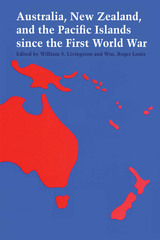
front cover of Australia, New Zealand, and the Pacific Islands since the First World War
Australia, New Zealand, and the Pacific Islands since the First World War
Edited by William S. Livingston and Wm. Roger Louis
University of Texas Press, 1979

Three forces—dwindling British power, rising American influence, and nationalism in a variety of forms—have transformed Australia, New Zealand, and the adjacent islands since 1919. In this volume, some of the most distinguished scholars of the Pacific region assess these significant historical changes.

These essays deal with international relations, politics, changing social structures, and literature since World War I. The themes of the volume as a whole are social and humanistic; they concern the evolution of both a regional identity and separate national identities in the Southwest Pacific. The unique areal and thematic concentration of this book makes it essential reading for all those interested in the history, politics, and culture of the Pacific.

[more]

front cover of Australian Adventure
Australian Adventure
Letters from an Ambassador's Wife
By Anne Clark
University of Texas Press, 1969

From August 1965 to February 1968, during his period of service in Australia, Ambassador Edward Clark traveled in that country as no other American and probably few Australians ever have. His wife, Anne Clark, traveled with him, then wrote her observations and impressions to friends and family in the United States.

Her letters, published for the first time in this volume, reveal the isolations and involvements as well as the opportunities and the pleasures of embassy life. The etiquette of official functions at times posed problems, as in the Clarks' first black-tie dinner with the Acting Governor General, where Mrs. Clark was supposed to curtsy. "Some Ambassadors feel strongly that the representative of the President of the United States should never bend his knee (or rather his wife's) to any man. Mrs. Battle, wife of our predecessor ... put the question directly to President Kennedy. His answer to her was, 'Curtsy you must, but keep a stiff upper knee.'"

Soon, Anne Clark realized that the routine of appearances and entertainments was constant: "I do not know when I will make peace with the schedule. I am a slave to the little black book that is my calendar."

In addition to the intricacies of embassy life, the Clarks encountered much that was unfamiliar—new people, almost a new language, new flowers, new animals—even a sky with its new moon upside down. But their warm hospitality and genuine interest in things Australian attracted friends throughout the continent. Figures from the government, the church, the diplomatic circle, and everyday life, plus well-known guests from home, all become known to the reader in this perceptive account of official life from the inside.

[more]

logo for Intellect Books
Australian Film Theory and Criticism
Volume 1: Critical Positions
Noel King, Constantine Verevis, and Deane Williams
Intellect Books, 2013
 
The first part of a planned three-volume work devoted to mapping the transnational history of Australian film studies, AustralianFilm Theory and Criticism, Volume 1 provides an overview of the period between 1975 and 1990, during which the discipline first became established in the academy.
 
Tracing critical positions, personnel, and institutions across this formative period, Noel King, Constantine Verevis, and Deane Williams examine a multitude of books and journal articles published in Australia and distributed internationally though such processes as publication in overseas journals, translation, and reprinting. At the same time, they offer important insights about the origins of Australian film theory and its relationship to such related disciplines as English, and cultural studies. Ultimately, Australian Film Theory and Criticism, Volume 1 delineates the historical implications—and reveals the future possibilities—of establishing new directions of inquiry for film studies in Australia and internationally.
[more]

logo for Intellect Books
Australian Film Theory and Criticism
Volume 2: Interviews
Edited by Noel King and Deane Williams
Intellect Books, 2014
A three-volume project tracing key critical positions, people, and institutions in Australian film, Australian Film Theory and Criticism interrogates not only the origins of Australian film theory but also its relationships to adjacent disciplines and institutions. The second volume in the series, this book gathers interviews with national and international film theorists and critics to chart the development of different discourses in Australian film studies through the decades. Seeking to examine the position of film theorists and their relationship to film industry practitioners and policy makers, this volume succeeds mightily in reasserting Australian film’s place on the international scholarly agenda.

[more]

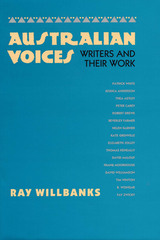
front cover of Australian Voices
Australian Voices
Writers and Their Work
By Ray Willbanks
University of Texas Press, 1991

Contemporary Australian fiction is attracting a world audience, particularly in the United States, where a growing readership eagerly awaits new works. In Australian Voices, Ray Willbanks goes beyond the books to their authors, using sixteen interviews to reveal the state of fiction writing in Australia—what nags from the past, what engages the imagination for the future.

Willbanks engages the writers in lively discussions of their own work, as well as topics of collective interest such as the past, including convict times; the nature of the land; the treatment of Aborigines; national identity and national flaws; Australian-British antipathy; sexuality and feminism; drama and film; writing, publishing, and criticism in Australia; and the continuous and pervasive influence of the United States on Australia.

The interviews in Australian Voices are gossipy, often funny, and always informative, as Willbanks builds a structured conversation that reveals biography, personality, and significant insight into the works of each writer. They will be important for both scholars and the reading public.

[more]


front cover of Bentham and Australia
Bentham and Australia
Convicts, Utility and Empire
Edited by Tim Causer, Margot Finn, and Philip Schofield
University College London, 2022
Distinguished scholars contextualize and critically assess Jeremy Bentham’s writings on Australia.

This volume considers Jeremy Bentham’s Australian writings. In the first part of the volume, Bentham’s works are placed in their historical contexts, while the second part provides a critical assessment of the historical accuracy and plausibility of Bentham’s arguments against transportation from the British Isles. In the third part, attention turns to Bentham’s claim that New South Wales was founded illegally and to the imperial and colonial constitutional ramifications of that claim. The authors also discuss Bentham’s work of 1831 in which he supports the establishment of a free colony on the southern coast of Australia. In the final part, the authors shed light on the history of Bentham’s panopticon penitentiary scheme, his views on the punishment and reform of criminals and what role, if any, religion had to play in that regard, and discuss apparently panopticon-inspired institutions built in the Australian colonies.
 
This collection will appeal to readers interested in Bentham’s life and thought, the history of transportation from the British Isles and of British penal policy more generally, colonial and imperial history, Indigenous history, legal and constitutional history, and religious history.
[more]

front cover of Between Care and Criminality
Between Care and Criminality
Marriage, Citizenship, and Family in Australian Social Welfare
Helena Zeweri
Rutgers University Press, 2024
Between Care and Criminality examines social welfare’s encounter with migration and marriage in a period of intensified border control in Melbourne, Australia. It offers an in-depth ethnographic account of the effort to prevent forced marriage in the aftermath of a 2013 law that criminalized the practice. Disproportionately targeted toward Muslim migrant communities, prevention efforts were tasked with making the family relations and marital practices of migrants objects of policy knowledge in the name of care and community empowerment. Through tracing the everyday ways that direct service providers, police, and advocates learned to identify imminent marriages and at-risk individuals, this book reveals how the domain of social welfare becomes the new frontier where the settler colonial state judges good citizenship. In doing so, it invites social welfare to reflect on how migrant conceptions of familial care, personhood, and mutual obligation become structured by the violence of displacement, borders, and conditional citizenship.
[more]

front cover of Boomtown
Boomtown
Runaway Globalisation on the Queensland Coast
Thomas Hylland Eriksen
Pluto Press, 2018
Sitting next to the Great Barrier Reef, steeped in coal and gas, the industrial boomtown of Gladstone, Australia embodies many of the contradictions of the “overheated” world: prosperous yet polluted, growing and developing, yet always on the precipice of crisis.
            Capturing Gladstone at the peak of its accelerated growth in 2013–14, Thomas Hylland Eriksen dissects here the boomtown phenomenon in all its profound ambivalence. Based on ethnographic fieldwork, the book examines local identity, family life, infrastructure, and local services and explores the tensions and resentments surrounding migrant workers.
            Writ large in Boomtown are the clashes of scale at the heart of the town’s contradictions, where the logic of big industry and the state compete with those of the individual and the local community and ecology, crystallizing the current crisis of political legitimacy that is unfurling all over the world.
 
[more]

front cover of Cold War and Decolonisation
Cold War and Decolonisation
Australia's Policy towards Britain's End of Empire in Southeast Asia
Andrea Benvenuti
National University of Singapore Press, 2017
In this book, Andrea Benvenuti discusses the development of Australia’s foreign and defense policies toward Malaya and Singapore in light of the redefinition of Britain’s imperial role in Southeast Asia and the formation of new postcolonial states. Benvenuti sheds light on the impact of Britain on Australia’s political and strategic interests in Southeast Asia during the Cold War. It will be of interest to historians of Australia’s foreign relations, Southeast Asia, and the British Empire and decolonization.
 
[more]

front cover of A Constant Struggle
A Constant Struggle
Deaf Education in New South Wales Since World War II
Naomi Malone
Gallaudet University Press, 2019
Deaf education in New South Wales has made tremendous progress since the end of World War II, yet issues remain for students from their early years of education through secondary high school. Naomi Malone traces the roots of these issues and argues that they persist due to the historical fragmentation within deaf education regarding oralism (teaching via spoken language) and manualism (teaching via sign language). She considers the early prevalence of oralism in schools for deaf students, the integration of deaf students into mainstream classrooms, the recognition of Australian Sign Language as a language, and the growing awareness of the diversity of deaf students. Malone’s historical assessments are augmented by interviews with former students and contextualized with explanations of concurrent political and social events. She posits that deaf people must be consulted about their educational experiences and that they must form a united social movement to better advocate for improved deaf education, regardless of communication approach.
[more]

logo for Intellect Books
Contemporary Design Education in Australia
Creating Transdisciplinary Futures
Edited by Lisa Scharoun, Deanna Meth, Philip Crowther, et al.
Intellect Books, 2023
New essays on education for the future of the design industry.

This book offers a range of approaches to teaching higher education design students to learn to design collaboratively and creatively, through transdisciplinary, multidisciplinary, cross-disciplinary, and interdisciplinary learning experiences. It highlights that the premise of traditional disciplinary silos does little to advance the competencies needed for contemporary design and non-linear career paths and emphasizes the importance of higher education being responsive to changes in society, including fluctuating market demands, economic variations, uncertainties, and globalization. Chapters highlight approaches that address this changing landscape, to meet student, industry, and societal needs and reflect a range of design education contexts in which the authors have taught, with a focus on experiences at the Queensland University of Technology (QUT), Brisbane, Australia, but also including collaborations and comparative discussions elsewhere in Australia and globally, including Europe, Asia, the Middle East, and the United States.
 
[more]

front cover of The Cultivation of Whiteness
The Cultivation of Whiteness
Science, Health, and Racial Destiny in Australia
Warwick Anderson
Duke University Press, 2006
The Cultivation of Whiteness is an award-winning history of scientific ideas about race and place in Australia from the time of the first European settlement through World War II. Chronicling the extensive use of biological theories and practices in the construction and “protection” of whiteness, Warwick Anderson describes how a displaced “Britishness” (or whiteness) was defined by scientists and doctors in relation to a harsh, strange environment and in opposition to other races. He also provides the first account of extensive scientific experimentation in the 1920s and 1930s on poor whites in tropical Australia and on Aboriginal people in the central deserts.

“[Anderson] writes with passion, wit, and panache, and the principal virtues of The Cultivation of Whiteness are the old-fashioned ones of thoroughness, accuracy, and impeccable documentation. . . . [His] sensitive study is a model of how contentious historical issues can be confronted.”—W. F. Bynum, Times Literary Supplement

“One of the virtues of The Cultivation of Whiteness is that it brings together aspects of Australian life and history that are now more often separated—race and environment, blood and soil, medicine and geography, tropical science and urban health, biological thought and national policy, Aboriginality and immigration, the body and the mind. The result is a rich and subtle history of ideas that is both intellectual and organic, and that vividly evokes past states of mind and their lingering, haunting power.”—Tom Griffiths, Sydney Morning Herald

[more]

front cover of The Cunning of Recognition
The Cunning of Recognition
Indigenous Alterities and the Making of Australian Multiculturalism
Elizabeth A. Povinelli
Duke University Press, 2002
The Cunning of Recognition is an exploration of liberal multiculturalism from the perspective of Australian indigenous social life. Elizabeth A. Povinelli argues that the multicultural legacy of colonialism perpetuates unequal systems of power, not by demanding that colonized subjects identify with their colonizers but by demanding that they identify with an impossible standard of authentic traditional culture.
Povinelli draws on seventeen years of ethnographic research among northwest coast indigenous people and her own experience participating in land claims, as well as on public records, legal debates, and anthropological archives to examine how multicultural forms of recognition work to reinforce liberal regimes rather than to open them up to a true cultural democracy. The Cunning of Recognition argues that the inequity of liberal forms of multiculturalism arises not from its weak ethical commitment to difference but from its strongest vision of a new national cohesion. In the end, Australia is revealed as an exemplary site for studying the social effects of the liberal multicultural imaginary: much earlier than the United States and in response to very different geopolitical conditions, Australian nationalism renounced the ideal of a unitary European tradition and embraced cultural and social diversity.
While addressing larger theoretical debates in critical anthropology, political theory, cultural studies, and liberal theory, The Cunning of Recognition demonstrates that the impact of the globalization of liberal forms of government can only be truly understood by examining its concrete—and not just philosophical—effects on the world.
[more]

logo for Intellect Books
Developing Dialogues
Indigenous and Ethnic Community Broadcasting in Australia
Susan Forde, Kerrie Foxwell, and Michael Meadows
Intellect Books, 2009

The traditional audience/producer boundary has collapsed in indigenous and ethnic community broadcasting, and this is the first comprehensive study of this homegrown media sector. Based on firsthand research of radio and television audiences in Australia, the authors argue that community radio and television worldwide performs an essential service for indigenous and ethnic audiences, empowering them at various levels, fostering active citizenry, and enhancing democracy. Developing Dialogues offers international researchers a new perspective on Australian community broadcasting and presents evidence of global trends in the media industry.

[more]

logo for Intellect Books
Directory of World Cinema
Australia and New Zealand
Edited by Ben Goldsmith and Geoff Lealand
Intellect Books, 2010

This addition to Intellect's Directory of World Cinema series turns the spotlight on Australia and New Zealand and offers an in-depth and exciting look at the cinema produced in these two countries since the turn of the twentieth century.  Though the two nations share considerable cultural and economic connections, their film industries remain distinct, marked by differences of scale, level of government involvement and funding, and relations with other countries and national cinemas. Through essays about prominent genres and themes, profiles of directors, and comprehensive reviews of significant titles, this user-friendly guide explores the diversity and distinctiveness of films from Australia and New Zealand from Whale Rider to The Piano to Wolf Creek.

[more]

logo for Intellect Books
Directory of World Cinema
Australia and New Zealand 2
Edited by Ben Goldsmith, Mark David Ryan and Geoff Lealand
Intellect Books, 2015
Building on and bringing up to date the material presented in the first installment of Directory of World Cinema: Australia and New Zealand, this volume continues the exploration of the cinema produced in Australia and New Zealand since the beginning of the twentieth century. Among the additions to this volume are in-depth treatments of the locations that feature prominently in the countries’ cinema. Essays by leading critics and film scholars consider the significance of the outback and the beach in films, which are evoked as a liminal space in Long Weekend and a symbol of death in Heaven’s Burning, among other films. Other contributions turn the spotlight on previously unexplored genres and key filmmakers, including Jane Campion, Rolf de Heer, Charles Chauvel, and Gillian Armstrong.
 
Accompanying the critical essays in this volume are more than one hundred and fifty new film reviews, complemented by film stills and significantly expanded references for further study. From The Piano to Crocodile Dundee, Directory of World Cinema: Australia and New Zealand 2 completes this comprehensive treatment of a consistently fascinating national cinema.
[more]

front cover of Disabling Pedagogy
Disabling Pedagogy
Power, Politics, and Deaf Education
Linda Komesaroff
Gallaudet University Press, 2008

Traditionally, deaf education has been treated as the domain of special educators who strive to overcome the difficulties associated with hearing loss. Recently, the sociocultural view of deafness has prompted research and academic study of Deaf culture, sign language linguistics, and bilingual education. Linda Komesaroff exposes the power of the entrenched dominant groups and their influence on the politics of educational policy and practice in Disabling Pedagogy: Power, Politics, and Deaf Education.

Komesaroff suggests a reconstruction of deaf education based on educational and social theory. First, she establishes a deep and situated account of deaf education in Australia through interviews with teachers, Deaf leaders, parents, and other stakeholders. Komesaroff then documents a shift to bilingual education by one school community as part of her ethnographic study of language practices in deaf education. She also reports on the experiences of deaf students in teacher education. Her study provides an analytical account of legal cases and discrimination suits brought by deaf parents for lack of access to native sign language in the classroom. Komesaroff confronts the issue of cochlear implantation, locating it within the broader context of gene technology and bioethics, and advocates linguistic rights and self-determination for deaf people on the international level. Disabling Pedagogy concludes with a realistic assessment of the political challenge and the potential of the “Deaf Resurgence” movement to enfranchise deaf people in the politics of their own education.

[more]

front cover of Doctoral Dissertations on South Asia, 1966–1970
Doctoral Dissertations on South Asia, 1966–1970
An Annotated Bibliography Covering North America, Europe, and Australia
Frank Joseph Shulman
University of Michigan Press, 1971
This volume gathers the harvest of recent doctoral dissertations on South Asia, principally from North America and Western Europe, but exclusive of theses from universities in South Asia itself. The yield—1305 dissertations based on research carried out during the early and middle nineteen-sixties and brought to completion between 1966 and 1970—is even greater than one would have guessed, eloquent testimony to the expansion of South Asian studies in the West over the last decade.
Doctoral Dissertations on South Asia seeks to be a comprehensive compilation of recently completed theses dealing in whole or in part with the former civilizations and the contemporary affairs of Ceylon, India, Nepal and Pakistan. At the same time, this work provides striking testimony of the dynamic growth of Asian Studies outside the subcontinent and particularly in the United States, Great Britain, Germany and France, where most of the major centers of scholarship are presently found. It is an interdisciplinary work covering the natural sciences as well as the humanities and social sciences.
[more]

front cover of Dreaming Down the Track
Dreaming Down the Track
Awakenings in Aboriginal Cinema
William Lempert
University of Minnesota Press, 2025

What can Aboriginal filmmaking reveal about Indigenous presence and futures?

The product of years of embedded fieldwork within Indigenous film crews in Northwestern Australia, Dreaming Down the Track delves deeply into Aboriginal cinema as a transformative community process. It follows the social lives of projects throughout their production cycles, from planning and editing to screening, broadcasting, and after-images. Across its narrative sweep, this ethnography engages the film career of Kukatja elder Mark Moora to demonstrate the impact of filmmaking on how Aboriginal futures are collectively imagined and called forth.

William Lempert highlights a series of awakenings through which Moora ultimately came to view cinema as a process for catalyzing his family’s return to their home country of Mangkayi. This biographical media journey paints an intimate portrait of the inspiring possibilities and sobering limitations of Indigenous envisioning within settler states. Lempert traces how Moora’s life and films convey a multiplicity of Aboriginal experiences across time and space, from colonial contact to contemporary life in communities like Balgo, including the continued governmental attempts to undermine them.

Amid ongoing negotiations to establish the first treaties between Indigenous nations and Australian states, Dreaming Down the Track illustrates what is at stake in how Aboriginal–State relations are represented and understood, both within communities and for the broader public. Lempert stays true to Moora’s insight that film can preserve community stories for generations to come, toward the aim of enacting sovereign futures.

[more]

front cover of Dreams of Flight
Dreams of Flight
The Lives of Chinese Women Students in the West
Fran Martin
Duke University Press, 2022
In Dreams of Flight, Fran Martin explores how young Chinese women negotiate competing pressures on their identity while studying abroad. On one hand, unmarried middle-class women in the single-child generations are encouraged to develop themselves as professional human capital through international education, molding themselves into independent, cosmopolitan, career-oriented individuals. On the other, strong neotraditionalist state, social, and familial pressures of the post-Mao era push them back toward marriage and family by age thirty. Martin examines these women’s motivations for studying in Australia and traces their embodied and emotional experiences of urban life, social media worlds, work in low-skilled and professional jobs, romantic relationships, religion, Chinese patriotism, and changed self-understanding after study abroad. Martin illustrates how emerging forms of gender, class, and mobility fundamentally transform the basis of identity for a whole generation of Chinese women.
[more]

front cover of Dynamic Partisanship
Dynamic Partisanship
How and Why Voter Loyalties Change
Ken Kollman and John E. Jackson
University of Chicago Press, 2021
Why do people identify with political parties? How stable are those identifications? Stable party systems, with a limited number of parties and mostly stable voter identification with a party, are normally considered significant signals of a steady democracy. In Dynamic Partisanship, Ken Kollman and John E. Jackson study changing patterns of partisanship in the United States, the United Kingdom, Canada, and Australia over the last fifty years in order to disentangle possible reasons for shifting partisanship and party identification. The authors argue that changes in partisanship can be explained by adjustments in voters’ attitudes toward issues or parties; the success or failure of policies advocated by parties; or alterations in parties’ positions on key issues. They contend that, while all three factors contribute, it is the latter, a party changing positions on a chief concern, that most consistently leads voters to or from a particular party. Their approach provides a deeper knowledge of the critical moving parts in democratic politics. 
[more]

logo for Intellect Books
The Dynamics of News and Indigenous Policy in Australia
Kerry McCallum and Lisa Waller
Intellect Books, 2017
This book offers rich insights into the news media’s role in the development of policy in Australia, and explores the complex and interactive relationship between news media and Australian Indigenous affairs.
 
Kerry McCallum and Lisa Waller critically examine how Indigenous health, bilingual education, and controversial legislation are portrayed through public media, and they look closely at how Indigenous people are both being excluded from policy and media discussion, as well as using the media to their advantage.
[more]

front cover of Economies of Abandonment
Economies of Abandonment
Social Belonging and Endurance in Late Liberalism
Elizabeth A. Povinelli
Duke University Press, 2011
In Economies of Abandonment, Elizabeth A. Povinelli explores how late liberal imaginaries of tense, eventfulness, and ethical substance make the global distribution of life and death, hope and harm, and endurance and exhaustion not merely sensible but also just. She presents new ways of conceptualizing formations of power in late liberalism—the shape that liberal governmentality has taken as it has responded to a series of legitimacy crises in the wake of anticolonial and new social movements and, more recently, the “clash of civilizations” after September 11. Based on longstanding ethnographic work in Australia and the United States, as well as critical readings of legal, academic, and activist texts, Povinelli examines how alternative social worlds and projects generate new possibilities of life in the context of ordinary and extraordinary acts of neglect and surveillance. She focuses particularly on social projects that have not yet achieved a concrete existence but persist at the threshold of possible existence. By addressing the question of the endurance, let alone the survival, of alternative forms of life, Povinelli opens new ethical and political questions.
[more]

front cover of Elections in Australia, Ireland, and Malta under the Single Transferable Vote
Elections in Australia, Ireland, and Malta under the Single Transferable Vote
Reflections on an Embedded Institution
Shaun Bowler and Bernard Grofman, Editors
University of Michigan Press, 2000
The Single Transferable Vote, or STV, is often seen in very positive terms by electoral reformers, yet relatively little is known about its actual workings beyond one or two specific settings. This book gathers leading experts on STV from around the world to discuss the examples they know best, and represents the first systematic cross-national study of STV. Furthermore, the contributors collectively build an understanding of electoral systems as institutions embedded within a wider social and political context, and begins to explain the gap between analytical models and the actual practice of elections in Australia, Ireland, and Malta. Rather than seeing electoral institutions in purely mechanical terms, the collection of essays in this volume shows that the effects of electoral system may be contingent rather than automatic. On the basis of solid empirical evidence, the volume argues that the same political system can, in fact, have quite different effects under different conditions.
Contributors to the volume are Shaun Bowler, David Farrell, Michael Gallagher, Bernard Grofman, Wolfgang Hirczy, Colin Hughes, J. Paul Johnston, Michael Laver, Malcom Mackerras, Michael Maley, Michael Marsh, Ian McAllister, and Ben Reilly.
Shaun Bowler is Professor of Political Science, University of California, Riverside. Bernard Grofman is Professor of Political Science, University of California, Irvine.
[more]

front cover of Eye Contact
Eye Contact
Photographing Indigenous Australians
Jane Lydon
Duke University Press, 2005
An indigenous reservation in the colony of Victoria, Australia, the Coranderrk Aboriginal Station was a major site of cross-cultural contact the mid-nineteenth century and early twentieth. Coranderrk was located just outside Melbourne, and from its opening in the 1860s the colonial government commissioned many photographs of its Aboriginal residents. The photographs taken at Coranderrk Station circulated across the western world; they were mounted in exhibition displays and classified among other ethnographic “data” within museum collections. The immense Coranderrk photographic archive is the subject of this detailed, richly illustrated examination of the role of visual imagery in the colonial project. Offering close readings of the photographs in the context of Australian history and nineteenth- and early-twentieth-century photographic practice, Jane Lydon reveals how western society came to understand Aboriginal people through these images. At the same time, she demonstrates that the photos were not solely a tool of colonial exploitation. The residents of Coranderrk had a sophisticated understanding of how they were portrayed, and they became adept at manipulating their representations.

Lydon shows how the photographic portrayals of the Aboriginal residents of Coranderrk changed over time, reflecting various ideas of the colonial mission—from humanitarianism to control to assimilation. In the early twentieth century, the images were used on stereotypical postcards circulated among the white population, showing what appeared to be compliant, transformed Aboriginal subjects. The station closed in 1924 and disappeared from public view until it was rediscovered by scholars years later. Aboriginal Australians purchased the station in 1998, and, as Lydon describes, today they are using the Coranderrk photographic archive in new ways, to identify family members and tell stories of their own.

[more]

front cover of Feral Future
Feral Future
The Untold Story of Australia's Exotic Invaders
Tim Low
University of Chicago Press, 2002
A decade ago, Tim Low journeyed to the remote northernmost tip of Australia. Instead of the pristine rain forests he expected, he found jungles infested with Latin American carpet grass and feral cattle. That incident helped inspire Feral Future, a passionate account of the history and implications of invasive species in that island nation, with consequences for ecological communities around the globe.

Australia is far from alone in facing horrific ecological and economic damage from invading plants and animals, and in Low's capable hands, Australia's experiences serve as a wake-up call for all of us. He covers how invasive species like cane toads and pond apple got to Australia (often through misguided but intentional introductions) and what we can do to stop them. He also covers the many pests that Australia has exported to the world, including the paperbark tree (Melaleuca) that infests hundreds of thousands of acres in south Florida.
[more]

front cover of The Fixed Period
The Fixed Period
Anthony Trollope
University of Michigan Press, 1990
At a time when concern over the ethics of euthanasia and the implications of a rapidly aging population are frequent topics of discussion, Trollope’s only science fiction novel strikes a very modern chord. The Fixed Period, begun in 1880 when Trollope was 65, is set in the then far-distant year of 1980. The story is narrated by the president of the fictitious Republic of Britannula, an ex-British colony on an imaginary island near New Zealand. The original young settlers, led by their president, adopt a plan called the Fixed Period. Under this plan, the island would be relieved of the burden of an aging population by calling for compulsory euthanasia for citizens reaching the age of 67. Opposition to the plan grows as the time approaches for “depositing” the first citizen in the euthanasia park, and the elderly citizens successfully persuade the British government to send a gunboat armed with a powerful new weapon to reannex the country.
 
Trollope’s satiric portrayal of the statisticians who calculate the savings to be realized by putting the old people away before they become an expensive catastrophic burden, and the ironic presentation of the narrator’s justification of euthanasia by appeal to Christian practice and doctrine, will delight contemporary readers. Trollope’s strong dislike of government bureaucracy is evident throughout, as is his awareness of the dangers to the world of an imagined weapon of destruction not unlike (in its effect) the atomic bomb.
 
In making accessible the complete text of this work with corrections from the original manuscript, Super has performed an invaluable service for Trollope scholars and enthusiasts.
 
[more]

front cover of A Fragile Balance
A Fragile Balance
The Extraordinary Story of Australian Marsupials
Christopher Dickman
University of Chicago Press, 2007

Marsupials are nearly synonymous with Australia. Although one of these enigmatic pouched mammals—the opossum—inhabits the United States and another 80 or so thrive in South America, some 220 species are confined to the Australasian region. In Australia, marsupials are the most diverse and dominant indigenous species, from the wallaby and the wombat to the kangaroo and koala.

The extraordinary story of these fascinating animals, A Fragile Balance provides the most up-to-date information on marsupials without losing sight of the unique set of circumstances that led them to prevalence Down Under. Covering all marsupial species in Australia, the book uses an evolutionary framework to interpret the marsupial’s biological traits. Each species account includes a basic biological description, a range map, and a measure of conservation status. The accounts are bounded by general chapters on biology, natural history, cultural history, and conservation. A Fragile Balance is the first book to emphasize interactions between and among marsupials, as well as between humans and marsupials.

Combining the expertise of renowned biologist Christopher Dickman with the artistic talents of illustrator Rosemary Woodford Ganf, A Fragile Balance will be a much celebrated reference for mammalogists worldwide, as well as for readers interested in Australian natural and cultural history.

[more]

front cover of Frontiers of Labor
Frontiers of Labor
Comparative Histories of the United States and Australia
Edited by Greg Patmore and Shelton Stromquist
University of Illinois Press, 2018
Alike in many aspects of their histories, Australia and the United States diverge in striking ways when it comes to their working classes, labor relations, and politics.

Greg Patmore and Shelton Stromquist curate innovative essays that use transnational and comparative analysis to explore the two nations’ differences. The contributors examine five major areas: World War I’s impact on labor and socialist movements; the history of coerced labor; patterns of ethnic and class identification; forms of working-class collective action; and the struggles related to trade union democracy and independent working-class politics. Throughout, many essays highlight how hard-won transnational ties allowed Australians and Americans to influence each other’s trade union and political cultures.

Contributors: Robin Archer, Nikola Balnave, James R. Barrett, Bradley Bowden, Verity Burgmann, Robert Cherny, Peter Clayworth, Tom Goyens, Dianne Hall, Benjamin Huf, Jennie Jeppesen, Marjorie A. Jerrard, Jeffrey A. Johnson, Diane Kirkby, Elizabeth Malcolm, Patrick O’Leary, Greg Patmore, Scott Stephenson, Peta Stevenson-Clarke, Shelton Stromquist, and Nathan Wise

[more]

logo for Intellect Books
Gay Men at the Movies
Cinema, Memory and the History of a Gay Male Community
Scott McKinnon
Intellect Books, 2016
Cinema has long played a major role in the formation of community among marginalized groups, and this book details that process for gay men in Sydney, Australia from the 1950s to the present. Scott McKinnon builds the book from a variety of sources, including film reviews, media reports, personal memoirs, oral histories, and a striking range of films, all deployed to answer the question of understanding cinema-going as a moment of connection to community and identity—how the experience of seeing these films and being part of an audience helped to build a community among the gay men of Sydney in the period.
 
[more]

front cover of The Harvest of American Racism
The Harvest of American Racism
The Political Meaning of Violence in the Summer of 1967
Robert Shellow
University of Michigan Press, 2018

In the summer of 1967, in response to violent demonstrations that rocked 164 U.S. cities, the National Advisory Commission on Civil Disorders, a.k.a. the Kerner Commission, was formed. The Commission sought reasons for the disturbances, including the role that law enforcement played. Chief among its research projects was a study of 23 American cities, headed by social psychologist Robert Shellow. An early draft of the scientists’ analysis, titled “The Harvest of American Racism: The Political Meaning of Violence in the Summer of 1967,” provoked the Commission’s staff in November 1967 by uncovering political causes for the unrest; the team of researchers was fired, and the controversial report remained buried at the LBJ Presidential Library until now.

The first publication of the Harvest report half a century later reveals that many of the issues it describes are still with us, including how cities might more effectively and humanely react to groups and communities in protest. In addition to the complete text of the suppressed Harvest report, the book includes an introduction by Robert Shellow that provides useful historical context; personal recollections from four of the report’s surviving social scientists, Robert Shellow, David Boesel, Gary T. Marx, and David O. Sears; and an appendix outlining the differences between the unpublished Harvest analysis and the well-known Kerner Commission Report that followed it.

“The [Harvest of American Racism] report was rejected by Johnson administration functionaries as being far too radical—politically ‘unviable’… Social science can play an extremely positive role in fighting racial and other injustice and inequality, but only if it is matched with a powerful political will to implement the findings.  That will has never come from within an American presidential administration—that will has only been forged in black and other radical communities’ movements for justice. The political power for change, as incremental as it has been, has come from within those communities. Washington responds, it does not lead."
—from the Foreword by Michael C. Dawson

[more]

front cover of Haunting Biology
Haunting Biology
Science and Indigeneity in Australia
Emma Kowal
Duke University Press, 2023
In Haunting Biology Emma Kowal recounts the troubled history of Western biological studies of Indigenous Australians and asks how we now might see contemporary genomics, especially that conducted by Aboriginal and Torres Strait Islander scientists. Kowal illustrates how the material persistence of samples over decades and centuries folds together the fates of different scientific methodologies. Blood, bones, hair, comparative anatomy, human biology, physiology, and anthropological genetics all haunt each other across time and space, together with the many racial theories they produced and sustained. The stories Kowal tells feature a variety of ghostly presences: a dead anatomist, a fetishized piece of hair hidden away in a war trunk, and an elusive white Indigenous person. By linking this history to contemporary genomics and twenty-first-century Indigeneity, Kowal outlines the fraught complexities, perils, and potentials of studying Indigenous biological difference in the twenty-first century.
[more]

front cover of The History of Cartography, Volume Two, Book Three
The History of Cartography, Volume Two, Book Three
Cartography in the Traditional African, American, Arctic, Australian, and Pacific Societies
Edited by David Woodward and G. Malcolm Lewis
University of Chicago Press, 1998
"Certain to be the standard reference for all subsequent scholarship."—John Noble Wilford, New York Times Book Review, on the History of Cartography series

"The maps in this book provide an evocative picture of how indigenous peoples view and represent their worlds. They illuminate not only questions of material culture but also the cognitive systems and social motivations that underpin them" (from the introduction).

Although they are often rendered in forms unfamiliar to Western eyes, maps have existed in most cultures. In this latest book of the acclaimed History of Cartography, contributors from a broad variety of disciplines collaborate to describe and address the significance of traditional cartographies. Whether painted on rock walls in South Africa, chanted in a Melanesian ritual, or fashioned from palm fronds and shells in the Marshall Islands, all indigenous maps share a crucial role in representing and codifying the spatial knowledge of their various cultures. Some also serve as repositories of a group's sacred or historical traditions, while others are exquisite art objects.

The indigenous maps discussed in this book offer a rich resource for disciplines such as anthropology, archaeology, art history, ethnology, geography, history, psychology, and sociology. Copious illustrations and carefully researched bibliographies enhance the scholarly value of this definitive reference.

[more]

front cover of Image of Australia
Image of Australia
Edited by Joseph Jones
University of Texas Press, 1962
This volume, originally published as a special issue of The Texas Quarterly in 1962, contains a collection of Australian literature and essays on Australian culture.
[more]

front cover of Immigration, Trade, and the Labor Market
Immigration, Trade, and the Labor Market
Edited by John M. Abowd and Richard B. Freeman
University of Chicago Press, 1991
Are immigrants squeezing Americans out of the work force? Or is competition wth foreign products imported by the United States an even greater danger to those employed in some industries? How do wages and unions fare in foreign-owned firms? And are the media's claims about the number of illegal immigrants misleading?

Prompted by the growing internationalization of the U.S. labor market since the 1970s, contributors to Immigration, Trade, and the Labor Market provide an innovative and comprehensive analysis of the labor market impact of the international movements of people, goods, and capital. Their provocative findings are brought into perspective by studies of two other major immigrant-recipient countries, Canada and Australia. The differing experiences of each nation stress the degree to which labor market institutions and economic policies can condition the effect of immigration and trade on economic outcomes
Contributors trace the flow of immigrants by comparing the labor market and migration behavior of individual immigrants, explore the effects of immigration on wages and employment by comparing the composition of the work force in local labor markets, and analyze the impact of trade on labor markets in different industries. A unique data set was developed especially for this study—ranging from an effort to link exports/imports with wages and employment in manufacturing industries, to a survey of illegal Mexican immigrants in the San Diego area—which will prove enormously valuable for future research.
[more]

front cover of Improvising Theory
Improvising Theory
Process and Temporality in Ethnographic Fieldwork
Allaine Cerwonka and Liisa H. Malkki
University of Chicago Press, 2007

Scholars have long recognized that ethnographic method is bound up with the construction of theory in ways that are difficult to teach. The reason, Allaine Cerwonka and Liisa H. Malkki argue, is that ethnographic theorization is essentially improvisatory in nature, conducted in real time and in necessarily unpredictable social situations. In a unique account of, and critical reflection on, the process of theoretical improvisation in ethnographic research, they demonstrate how both objects of analysis, and our ways of knowing and explaining them, are created and discovered in the give and take of real life, in all its unpredictability and immediacy.

Improvising Theory centers on the year-long correspondence between Cerwonka, then a graduate student in political science conducting research in Australia, and her anthropologist mentor, Malkki. Through regular e-mail exchanges, Malkki attempted to teach Cerwonka, then new to the discipline, the basic tools and subtle intuition needed for anthropological fieldwork. The result is a strikingly original dissection of the processual ethics and politics of method in ethnography.

[more]

front cover of Indigenous Homelessness
Indigenous Homelessness
Perspectives from Canada, Australia, and New Zealand
Evelyn J. Peters
University of Manitoba Press, 2016

front cover of Inside Agitators
Inside Agitators
Australian Femocrats and the State
Hester Eisenstein
Temple University Press, 1996
Is a "woman-friendly" state possible? Can women achieve full social citizenship? At a time when backlash against people of color, women, and the poor is accelerating, this account of the experiences of Australian feminists is illuminating: Australian feminists succeeded in making women's issues like child care and domestic violence part of the main stream political agenda. Inside Agitators is the first full-length study of the Australian femocrats published in the United States. Hester Eisenstein (herself a former femocrat) chronicles the efforts of a cohort of women, feminist bureaucrats, who changed the gender landscape--from the initial invitation to enter government by Labor in 1973 to the rise of neo-liberalism and the contemporary attack on the public sector. Connecting the femocrats to specifically Australian features of political culture and political economy, this book analyzes the implicit political theory of the femocrats. Eisenstein addresses the issues of strategies for social change, class, race and racism, sexuality and sexual politics, "gendered" experience, and accountability to the women's movement. This important study explores the possibilities and limits of the contemporary attempt by the women's movement to constitute women as a "gender interest," and to use state power as an instrument for social change.
[more]

front cover of Instructions for American Servicemen in Australia, 1942
Instructions for American Servicemen in Australia, 1942
Edited by the Bodleian Library
Bodleian Library Publishing, 2006

“Unlike cricket, which is a polite game, Australian Rules Football creates a desire on the part of the crowd to tear someone apart, usually the referee.” This is only one of the entertaining and astute observations the U.S. military provided in the pocket guides distributed to the nearly one million American soldiers who landed on the shores of Australia between 1942 and 1945. Although the Land Down Under felt more familiar than many of their assignments abroad, American GIs still needed help navigating the distinctly different Aussie culture, and coming to their rescue was Instruction for American Servicemen in Australia, 1942. The newest entry in the Bodleian Library’s bestselling series of vintage pocket guides, this pamphlet is filled with pithy notes on Australian customs, language, and other cultural facts the military deemed necessary for every American soldier.

             From the native wildlife—a land of “funny animals”—to the nation’s colonial history to the general characteristics of Australians—“an outdoors sort of people, breezy and very democratic”—Instructions for American Servicemen in Australia gives a concise yet amazingly informative overview of the island nation. Regarding Aussie slang, it notes that “the Australian has few equals in the world at swearing. . . . The commonest swear words are ‘bastard’ (pronounced ‘barstud’), ‘bugger,’ and ‘bloody,’ and the Australians have a genius for using the latter nearly every other word.” The pamphlet also contains a humorous explanation of the country’s musical traditions—including an annotated text of “Waltzing Matilda”—as well as amusing passages on sports, politics, and the Aussies’ attitudes toward Yanks and Brits.

            A fascinating look at a neglected Allied front in the Southern hemisphere, Instructions for American Servicemen in Australia, 1942 follows its successful predecessors as a captivating historical document of a pivotal era in history.

[more]

front cover of Ireland's New Worlds
Ireland's New Worlds
Immigrants, Politics, and Society in the United States and Australia, 1815–1922
Malcolm Campbell
University of Wisconsin Press, 2007
In the century between the Napoleonic Wars and the Irish Civil War, more than seven million Irish men and women left their homeland to begin new lives abroad. While the majority settled in the United States, Irish emigrants dispersed across the globe, many of them finding their way to another “New World,” Australia.
    Ireland’s New Worlds is the first book to compare Irish immigrants in the United States and Australia. In a profound challenge to the national histories that frame most accounts of the Irish diaspora, Malcolm Campbell highlights the ways that economic, social, and cultural conditions shaped distinct experiences for Irish immigrants in each country, and sometimes in different parts of the same country. From differences in the level of hostility that Irish immigrants faced to the contrasting economies of the United States and Australia, Campbell finds that there was much more to the experiences of Irish immigrants than their essential “Irishness.” America’s Irish, for example, were primarily drawn into the population of unskilled laborers congregating in cities, while Australia’s Irish, like their fellow colonialists, were more likely to engage in farming. Campbell shows how local conditions intersected with immigrants’ Irish backgrounds and traditions to create surprisingly varied experiences in Ireland’s new worlds. 
 
Outstanding Book, selected by the American Association of School Librarians, and Best Books for Special Interests, selected by the Public Library Association

“Well conceived and thoroughly researched . . . . This clearly written, thought-provoking work fulfills the considerable ambitions of comparative migration studies.”—Choice
 
 
[more]

front cover of Killing the Koala and Poisoning the Prairie
Killing the Koala and Poisoning the Prairie
Australia, America, and the Environment
Corey J. A. Bradshaw and Paul R. Ehrlich
University of Chicago Press, 2015
Though separated by thousands of miles, the United States and Australia have much in common. Geographically both countries are expansive—the United States is the fourth largest in land mass and Australia the sixth—and both possess a vast amount of natural biodiversity. At the same time, both nations are on a crash course toward environmental destruction. Highly developed super consumers with enormous energy footprints and high rates of greenhouse-gas emissions, they are two of the biggest drivers of climate change per capita. As renowned ecologists Corey J. A. Bradshaw and Paul R. Ehrlich make clear in Killing the Koala and Poisoning the Prairie, both of these countries must confront the urgent question of how to stem this devastation and turn back from the brink.
 
In this book, Bradshaw and Ehrlich provide a spirited exploration of the ways in which the United States and Australia can learn from their shared problems and combine their most successful solutions in order to find and develop new resources, lower energy consumption and waste, and grapple with the dynamic effects of climate change. Peppering the book with humor, irreverence, and extensive scientific knowledge, the authors examine how residents of both countries have irrevocably altered their natural environments, detailing the most pressing ecological issues of our time, including the continuing resource depletion caused by overpopulation. They then turn their discussion to the politics behind the failures of environmental policies in both nations and offer a blueprint for what must be dramatically changed to prevent worsening the environmental crisis.
 
Although focused on two nations, Killing the Koala and Poisoning the Prairie clearly has global implications—the problems facing the United States and Australia are not theirs alone, and the solutions to come will benefit by being crafted in coalition. This book provides a vital opportunity to learn from both countries’ leading environmental thinkers and to heed their call for a way forward together.
[more]

front cover of Labor's Lot
Labor's Lot
The Power, History, and Culture of Aboriginal Action
Elizabeth A. Povinelli
University of Chicago Press, 1994
How does an Aboriginal community see itself, its work, and its place on the land? Elizabeth Povinelli goes to the Belyuen community of northern Australia to show how it draws from deep connections between labor, language, and the landscape. Her findings challenge Western notions of "productive labor" and longstanding ideas about the role of culture in subsistence economies.

In Labor's Lot, Povinelli shows how everyday activities shape Aboriginal identity and provide cultural meaning. She focuses on the Belyuen women's interactions with the countryside and on Belyuen conflicts with the Australian government over control of local land. Her analysis raises serious questions about the validity of Western theories about labor and culture and their impact on Aboriginal society.

Povinelli's focus on women's activities provides an important counterpoint to recent works centering on male roles in hunter-gatherer societies. Her unique "cultural economy" approach overcomes the dichotomy between the two standard approaches to these studies. Labor's Lot will engage anyone interested in indigenous peoples or in the relationship between culture and economy in contemporary social practice.
[more]

logo for Pluto Press
Little America
Australia, the 51st State
Erik Paul
Pluto Press, 2006
"Australia is one of the US's most staunch supporters: Australia has sent troops to Iraq, and is an ally in the 'war on terror'. Australian domestic policy also follows the US economic model, as state industries and services have been privatised. 

Erik Paul dissects the relationship between Australia and the US. He explores how Australia has become a key player in maintaining American dominance in South East Asia, and looks critically at the contrast between the Australian wealth and the comparative poverty of surrounding nations. 

Examining the influence of neoconservative imperialism on Australia's economic and military strategies, he draws some startling conclusions about future Australian relationships in East Asia, in particular, its relationship with China."
[more]

front cover of Llamas beyond the Andes
Llamas beyond the Andes
Untold Histories of Camelids in the Modern World
Marcia Stephenson
University of Texas Press, 2023

Camelids are vital to the cultures and economies of the Andes. The animals have also been at the heart of ecological and social catastrophe: Europeans overhunted wild vicuña and guanaco and imposed husbandry and breeding practices that decimated llama and alpaca flocks that had been successfully tended by Indigenous peoples for generations. Yet the colonial encounter with these animals was not limited to the New World. Llamas beyond the Andes tells the five-hundred-year history of animals removed from their native habitats and transported overseas.

Initially Europeans prized camelids for the bezoar stones found in their guts: boluses of ingested matter that were thought to have curative powers. Then the animals themselves were shipped abroad as exotica. As Europeans and US Americans came to recognize the economic value of camelids, new questions emerged: What would these novel sources of protein and fiber mean for the sheep industry? And how best to cultivate herds? Andeans had the expertise, but knowledge sharing was rarely easy. Marcia Stephenson explores the myriad scientific, commercial, and cultural interests that have attended camelids globally, making these animals a critical meeting point for diverse groups from the North and South.

[more]

front cover of Managing Their Own Affairs
Managing Their Own Affairs
The Australian Deaf Community in the 1920s and 1930s
Breda Carty
Gallaudet University Press, 2017
Managing Their Own Affairs explores how Deaf organizations and institutions were forged in Australia during the early 20th century. During this period, deaf people challenged the authority of the dominant welfare organizations, or Deaf Societies, which were largely controlled by hearing people and run as charitable institutions. Breda Carty comprehensively documents the growth of the Australian Deaf community and Australian Deaf organizations for the first time. She focuses on both the political developments of the early 20th century and on the nature of the relationships between deaf and hearing people.
               During this time, deaf Australians aspired to manage their own affairs. They enjoyed some success by establishing “breakaways” from the Deaf Societies, and they also established an independent national organization, which was contested and ultimately suppressed by the Deaf Societies. These developments were influenced by wider social movements in Australian society, such as the mobilization of minority groups in their push for autonomy and equal rights. Although most of the breakaway Deaf organizations did not survive beyond the 1930s, they significantly affected the power structures and relationships between deaf and hearing people in Australia. The Australian Deaf community’s attempts to organize independently during these years have been largely erased from collective memory, making Carty’s examination a particularly important and necessary addition to the historical literature.
[more]

front cover of Migration, Class and Transnational Identities
Migration, Class and Transnational Identities
Croations in Australia and America
Val Colic-Pelsker
University of Illinois Press, 2007

Val Colic-Peisker harnesses concepts and theories from sociology, anthropology, and political science to compare the vastly different experiences of two Croatian immigrant cohorts in the city of Perth, Western Australia. The populations explored represent an earlier group of working-class migrants arriving from communist Yugoslavia from the 1950s to 1970s and a later group of urban professionals arriving in the 1980s and 1990s as 'independent' or skills-based migrants. This latter group integrated into professional ranks but also used their Australian experience as a stepping stone in becoming part of a highly mobile global professional middle class. 

Employing a refined theoretical analysis, this rich ethnography challenges the domination of the ethnic perspective in migration studies and the idea of ethnic community itself. It emphasizes the importance of class, focusing on the intersection of class, ethnicity, and gender in the process of migration, migrant incorporation, and transnationalism. In theorizing the connection of the two migrant cohorts with their native Croatia, the study introduces concepts of "ethnic" and "cosmopolitan" transnationalism as two distinctive experiences mediated by class.

[more]

front cover of Miss Cutler and the Case of the Resurrected Horse
Miss Cutler and the Case of the Resurrected Horse
Social Work and the Story of Poverty in America, Australia, and Britain
Mark Peel
University of Chicago Press, 2011

Social workers produced thousands of case files about the poor during the interwar years. Analyzing almost two thousand such case files and traveling from Boston, Minneapolis, and Portland to London and Melbourne, Miss Cutler and the Case of the Resurrected Horse is a pioneering comparative study that examines how these stories of poverty were narrated and reshaped by ethnic diversity, economic crisis, and war.

Probing the similarities and differences in the ways Americans, Australians, and Britons understood and responded to poverty, Mark Peel draws a picture of social work that is based in the sometimes fraught encounters between the poor and their interpreters. He uses dramatization to bring these encounters to life—joining Miss Cutler and that resurrected horse are Miss Lindstrom and the fried potatoes and Mr. O’Neil and the seductive client—and to give these people a voice. Adding new dimensions to the study of charity and social work, this book is essential to understanding and tackling poverty in the twenty-first century.
[more]

front cover of Multilingualism and Sign Languages
Multilingualism and Sign Languages
From the Great Plains to Australia
Ceil Lucas
Gallaudet University Press, 2006

The 12th Volume in the Sociolinguistics in Deaf Communities Series

The latest entry in the Sociolinguistics in Deaf Communities series continues to mine the rich resources found in signing communities throughout the world. Divided into four parts, this collection features 16 internationally renowned linguistics experts whose absorbing studies reflect an astonishing range of linguistic diversity.

The sole essay in Part One: Multilingualism describes historic and contemporary uses of North American Indian Sign Language. Part Two: Language Contact examines language-contact phenomena between Auslan/English interpreters and Deaf people in Australia, and the features of bimodal bilingualism in hearing, Italian, native signers. Part Three: Variation reports the results of a study on location variation in Australian Sign Language.

Part Four: Discourse Analysis begins with an analysis of how deaf parents and their hearing toddlers establish and maintain sight triangles when conducting signed conversations. The ensuing chapter explores the use of evaluation within an informal narrative in Langue des Signes Québécoise. The final chapter explicates how a signer depersonalizes the concept of “self” in an American Sign Language narrative through the use of signs for “he” and “I.”

[more]

front cover of My Life with Kangaroos
My Life with Kangaroos
A Deaf Woman’s Remarkable Story
Doris Herrmann
Gallaudet University Press, 2013

Doris Herrmann was born deaf in 1933 in Basel, Switzerland, and from the age of three, she possessed a mystical attraction to kangaroos. She recalls seeing them at that age for the first time at the Basel Zoo, and spending every spare moment visiting them from then on. Eventually, her fascination grew into passionate study of their behavior. Her dedication caught the attention of the zookeepers who provided her greater access to these extraordinary animals. Despite her challenges with communication, Herrmann wrote a scientific paper about the kangaroo’s pouch hygiene when raising a joey. Soon, experts from around the world came to visit this precocious deaf girl who knew about kangaroos.

       Herrmann appreciated the opportunities opening up to her, but her real dream was to travel to Australia to study kangaroos in the wild. For years she worked and yearned, until Dr. Karl H. Winkelsträter a renowned authority on kangaroos, suggested an independent study in Australia at a place called Pebbly Beach. In 1969, at the age of 35, Herrmann finally traveled to the native land of kangaroos. During the next four decades, she would make many more trips to observe and write about kangaroos.

       My Life with Kangaroos explores every facet of Herrmann’s connection to these engaging marsupials. Her single-minded devotion not only made her a leading self-made scholar on kangaroos, it transformed her own personality and her relationships with others. As she forged bonds with kangaroos named Dora, Jacqueline, Manuela, and many others, she engendered great affection and respect in the people around her, truly a remarkable story of success.

[more]

logo for University of Chicago Press
Names and Substance in the Australian Subsection System
C. G. von Brandenstein
University of Chicago Press, 1982
In this volume, which has been hailed as a major breakthrough in understanding the meaning of the elaborate kinship systems currently existing in Australian Aboriginal societies, C. G. von Brandenstein argues that such systems refer to an archaic theory of "world order" common to all these societies. This controversial conclusion is based on native testimony and on a sophisticated linguistic analysis of a vast quantity of data collected by the author and others.

Though the author has restricted the results of his research to Aboriginal Australia, his methodological approach is generalizable. Hence this work will be of importance to specialists in many areas.
[more]

logo for University of Minnesota Press
Native To The Nation
Disciplining Landscapes And Bodies In Australia
Allaine Cerwonka
University of Minnesota Press, 2004
In a world increasingly marked by migration and dislocation, the question of displacement, and of establishing a sense of belonging, has become ever more common and ever more urgent. But what of those who stay in place? How do people who remain in their place of origin or ancestral homeland rearticulate a sense of connection, of belonging, when ownership of the territory they occupy is contested? Focusing on Australia, Allaine Cerwonka examines the physical and narrative spatial practices by which people reclaim territory in the wake of postcolonial claims to land by indigenous people and new immigration of “foreigners.” As a multicultural, postcolonial nation whose claims to land until recently were premised on the notion of the continent as “empty” (terra nullius), Australia offers an especially rich lens for understanding the reterritorialization of the nation-state in an era of globalization. To this end, Native to the Nation provides a multisited ethnography of two communities in Melbourne, the Fitzroy Police Station and the East Melbourne Garden Club, allowing us to see how bodies are managed and nations physically constructed in everyday confrontations and cultivations. Allaine Cerwonka is assistant professor of women’s studies and political science at Georgia State University.
[more]

logo for Intellect Books
The Ned Kelly Films
A Cultural History of Kelly History
Stephen Gaunson
Intellect Books, 2013
Irish Australian outlaw Ned Kelly led one of the most spectacular outbreaks the tradition has ever experienced, culminating in a siege at Glenrowan on June 28, 1880. Donned in homemade metal armor and a helmet, he was captured and sentenced to hang at the Melbourne Gaol in November. Immortalized in a series of onscreen productions, he has since become one of the most resilient screen presences in the history of Australian cinema. The Ned Kelly Films recounts the history of this presence, covering the nine feature films, three miniseries, and two TV movies that have been made about this controversial character.
 
Providing a comprehensive overview of these productions and their reception, Stephen Gaunson illuminates a central irony: From dime novels to comics to the branding of the site where he was captured, most cultural representations of Kelly are decidedly lowbrow. But only the films have been condemned for not offering a more serious interpretation of this figure and his historical context. Parsing the assumption that films about Kelly should do more than broadcast the sentiments of his fans, Gaunson explores why historical films have a reputation as a form of “bad” culture. Asking what value we can place on such “bad” historical cinema, he offers new insights about the textual characteristics of cinematic material and the conditions of film distribution, circulation, and reception.
[more]

front cover of Neither–Nor
Neither–Nor
A Young Australian's Experience with Deafness
Paul Jacobs
Gallaudet University Press, 2007

The Fifth Volume in the Deaf Lives Series

Born in Melbourne, Australia, in 1974, Paul Jacobs lost his mother when he was three months old. When he was five, he lost most of his hearing. These two defining events formed the core of his being. He spent the first two decades of his life “coming to terms with being neither Deaf nor hearing — a neither/nor, an in-between — and a person with a social identity that had yet to be invented.” His memoir, Neither—Nor: A Young Australian’s Experience with Deafness, recounts this journey.

Jacobs excelled in sports and the classroom, but he never lost awareness of how he was seen as different, often in cruel or patronizing ways. His father, a child psychologist, headed a long list of supportive people in his life, including his Uncle Brian, his itinerant teacher of the deaf Mrs. Carey, a gifted art teacher Mrs. Klein, who demanded and received from him first-rate work, a notetaker Rita, and Bella, his first girlfriend. Jacobs eventually attended university, where he graduated with honors. He also entered the Deaf world when he starred on the Deaf Australian World Cup cricket team. However, he never learned sign language, and frequently noted the lack of an adult role model for “neither—nors” such as himself.

Still emotionally adrift in 1998, Jacobs toured Europe, then volunteered to tutor deaf residents at Court Grange College in Devon, England. There, he discovered a darker reality for some deaf individuals — hearing loss complicated by schizophrenia, Bonnevie-Ullrich Syndrome, and other conditions. After returning to Australia, Jacobs recognized what he had gleaned from his long journey: “Power comes from within, not without. Sure, deafness makes one prone to be stigmatized. Yet having a disability can act as a stimulus for greater personal growth, richer experiences, and more genuine relationships.”

[more]

front cover of The New Politics of Online Feminism
The New Politics of Online Feminism
Akane Kanai
Duke University Press, 2026
In The New Politics of Online Feminism, Akane Kanai argues that for young feminists online culture often poses more dilemmas than it solves. Moving beyond a narrow characterization of online feminism as a site of activism and resistance, Kanai attends to the feminist quandaries of being politically conscientious as life online becomes inseparable from the offline world. Kanai suggests that for online feminists, avoiding complicity with patriarchy, racism, and other oppressions has never been more important, yet the self has remained the central site of agency and transformation—casting politics in terms of individual scrupulousness, diligence, and improvement. Under these circumstances, a feminist lens becomes about benchmarking, comparing, and anxiously avoiding the public mistakes that others make in online life. Kanai foregrounds the importance of moving beyond the polarities of correct and incorrect feeling to enable the everyday practices of listening to and learning about experience and difference.
[more]

front cover of Octopus Crowd
Octopus Crowd
Maritime History and the Business of Australian Pearling in Its Schooner Age
Steve Mullins
University of Alabama Press, 2019
A detailed study of the origins and demise of schooner-based pearling in Australia

For most of its history, Australian pearling was a shore-based activity. But from the mid-1880s until the World War I era, the industry was dominated by highly mobile, heavily capitalized, schooner-based fleets of pearling luggers, known as floating stations, that exploited Australia’s northern continental shelf and the nearby waters of the Netherlands Indies. Octopus Crowd: Maritime History and the Business  of Australian Pearling in Its Schooner Age is the first book-length study of schooner-based pearling and explores the floating station system and the men who developed and employed it.

Steve Mullins focuses on the Clark Combination, a syndicate led by James Clark, Australia’s most influential pearler. The combination honed the floating station system to the point where it was accused of exhausting pearling grounds, elbowing out small-time operators, strangling the economies of pearling ports, and bringing the industry to the brink of disaster. Combination partners were vilified as  monopolists—they were referred to as an “octopus crowd”—and their schooners were stigmatized as hell ships and floating sweatshops.

Schooner-based floating stations crossed maritime frontiers with  impunity, testing colonial and national territorial jurisdictions. The Clark Combination passed through four fisheries management regimes, triggering significant change and causing governments to alter laws and extend maritime boundaries. It drew labor from ports across the Asia-Pacific, and its product competed in a volatile world market. Octopus Crowd takes all of these factors into account to explain Australian pearling during its schooner age. It argues that  the demise of the floating station system was not caused by resource depletion, as was often predicted, but by ideology and Australia’s shifting sociopolitical landscape
[more]

front cover of On the Stump
On the Stump
Campaign Oratory and Democracy in the United States, Britain, and Australia
Sean Scalmer
Temple University Press, 2017

"Stumping," or making political speeches in favor of a candidate, cause, or campaign has been around since before the 1800s, when speechmaking was frequently portrayed as delivered from the base of a tree. The practice, which has been strongly associated with the American frontier, British agitators, and colonial Australia, remains an effective component of contemporary democratic politics. 

In his engaging book On the Stump, Sean Scalmer provides the first comprehensive, transnational history of the "stump speech." He traces the development and transformation of campaign oratory, as well as how national elections and public life and culture have been shaped by debate over the past century. 

Scalmer presents an eloquent study of how "stumping" careers were made, sustained, remembered, and exploited, to capture the complex rhythms of political change over the years. On the Stump examines the distinctive dramatic and performative styles of celebrity orators including Davy Crockett, Henry Clay, and William Gladstone. Ultimately, Scalmer recovers the history of the stump speech and its historical significance in order to better understand how political change is forged.

[more]

front cover of One and Five Ideas
One and Five Ideas
On Conceptual Art and Conceptualism
Terry Smith
Duke University Press, 2017
In One and Five Ideas eminent critic, historian, and former member of the Art & Language collective Terry Smith explores the artistic, philosophical, political, and geographical dimensions of Conceptual Art and conceptualism. These four essays and a conversation with Mary Kelly—published between 1974 and 2012—contain Smith's most essential work on Conceptual Art and his argument that conceptualism was key to the historical transition from modern to contemporary art. Nothing less than a distinctive theory of Conceptual and contemporary art, One and Five Ideas showcases the critical voice of one of the major art theorists of our time.
[more]

front cover of Painting Culture
Painting Culture
The Making of an Aboriginal High Art
Fred R. Myers
Duke University Press, 2002
Painting Culture tells the complex story of how, over the past three decades, the acrylic "dot" paintings of central Australia were transformed into objects of international high art, eagerly sought by upscale galleries and collectors. Since the early 1970s, Fred R. Myers has studied—often as a participant-observer—the Pintupi, one of several Aboriginal groups who paint the famous acrylic works. Describing their paintings and the complicated cultural issues they raise, Myers looks at how the paintings represent Aboriginal people and their culture and how their heritage is translated into exchangeable values. He tracks the way these paintings become high art as they move outward from indigenous communities through and among other social institutions—the world of dealers, museums, and critics. At the same time, he shows how this change in the status of the acrylic paintings is directly related to the initiative of the painters themselves and their hopes for greater levels of recognition.

Painting Culture describes in detail the actual practice of painting, insisting that such a focus is necessary to engage directly with the role of the art in the lives of contemporary Aboriginals. The book includes a unique local art history, a study of the complete corpus of two painters over a two-year period. It also explores the awkward local issues around the valuation and sale of the acrylic paintings, traces the shifting approaches of the Australian government and key organizations such as the Aboriginal Arts Board to the promotion of the work, and describes the early and subsequent phases of the works’ inclusion in major Australian and international exhibitions. Myers provides an account of some of the events related to these exhibits, most notably the Asia Society’s 1988 "Dreamings" show in New York, which was so pivotal in bringing the work to North American notice. He also traces the approaches and concerns of dealers, ranging from semi-tourist outlets in Alice Springs to more prestigious venues in Sydney and Melbourne.

With its innovative approach to the transnational circulation of culture, this book will appeal to art historians, as well as those in cultural anthropology, cultural studies, museum studies, and performance studies.

[more]

front cover of The Panopticon Versus
The Panopticon Versus "New South Wales" and Other Writings on Australia
Tim Causer and Philip Schofield
University College London, 2021
Jeremy Bentham’s writings on Australian governance and colonization.
 
Jeremy Bentham conceived the panopticon, in part, as an alternative to criminal transportation to Australia. This latest volume in The Collected Works of Jeremy Bentham series draws out these connections by collecting both Bentham’s fragmentary and extended comments on Australian governance and colonization. These writings include a fragment headed “New Wales” (1792) correspondence with William Wilberforce (1802), three letters to Lord Pelham (1802), a “Plea for the Constitution” (1802–3), and “Colonization Company Proposal” (1831)—the majority published here for the first time. Although Bentham’s most famous ideas emerged from his opposition to colonization, these writings demonstrate how the reformer became a vocal advocate for settler colonization near the end of his life.
 
[more]

logo for Intellect Books
Peter Weir
A Creative Journey from Australia to Hollywood
Serena Formica
Intellect Books, 2012
Peter Weir has been directing Hollywood films since his successful US debut, Witness, in 1985. But does this make him a Hollywood director? Or should he still be considered an Australian filmmaker as many scholars argue?  
 
For the first time, Weir’s entire three-decade creative journey from Australia to Hollywood is considered in light of the recent theories on transnational cinema and through a close examination of four key films: Picnic at Hanging Rock, The Year of Living Dangerously, Witness, and The Truman Show The films’ analyses integrate original interviews with Weir and his closest collaborators, including Russell Boyd. The book concludes that Weir is both an Australian and a Hollywood filmmaker—and would be better seen as a transnational filmmaker whose success in the United States reflects the fact that he was already a “Hollywood” director by the time he relocated.
[more]

front cover of Platypus Matters
Platypus Matters
The Extraordinary Story of Australian Mammals
Jack Ashby
University of Chicago Press, 2022
Scientifically informed and funny, a firsthand account of Australia’s wonderfully unique mammals—and how our perceptions impact their future.

Think of a platypus: They lay eggs (that hatch into so-called platypups), produce milk without nipples and venom without fangs, and can detect electricity. Or a wombat: Their teeth never stop growing, they poop cubes, and they defend themselves with reinforced rears. And what about antechinuses—tiny marsupial carnivores whose males don’t see their first birthday, as their frenzied sex lives take so much energy that their immune systems fail? Platypuses, possums, wombats, echidnas, devils, kangaroos, quolls, dibblers, dunnarts, kowaris: Australia has some truly astonishing mammals, with incredible, unfamiliar features. But how does the world regard these creatures? And what does that mean for their conservation?

In Platypus Matters, naturalist Jack Ashby shares his love for these often-misunderstood animals. Informed by his own experiences meeting living marsupials and egg-laying mammals during fieldwork in Tasmania and mainland Australia, as well as his work with thousands of zoological specimens collected for museums over the last two-hundred-plus years, Ashby’s tale not only explains historical mysteries and debunks myths (especially about the platypus), but also reveals the toll these myths can take. Ashby makes clear that calling these animals “weird” or “primitive”—or incorrectly implying that Australia is an “evolutionary backwater,” a perception that can be traced back to the country’s colonial history—has undermined conservation: Australia now has the worst mammal extinction rate of any place on Earth. Important, timely, and written with humor and wisdom by a scientist and self-described platypus nerd, this celebration of Australian wildlife will open eyes and change minds about how we contemplate and interact with the natural world—everywhere.
[more]

front cover of Racism
Racism
A Critical Analysis
Mike Cole
Pluto Press, 2015
The book traces the legacy of racism across three continents, from its origins to the present day. With a wide-ranging yet closely-argued style, it brings a sophisticated neo-Marxist analysis to bear on controversial political issues.
 
Mike Cole tackles three countries in-depth: the United Kingdom, the United States and Australia. In the United Kingdom, he focuses on the effects of colonialism as well as looking at non-colour-coded racism, such as anti-Gipsy, Roma, and Traveller racism and xeno-racism directed at Eastern Europeans. Turning to the United States, Cole charts the dual legacies of indigenous genocide and slavery, as well as exploring anti-Latina/o and anti-Asian racism. Finally, in Australia, he interrogates the idea of "Terra Nullius" and its ongoing impact on the indigenous peoples, as well as other forms of racism, such as that experienced by South Sea Islanders, anti-Asian racism, and that which targets migrants. The Pauline Hanson phenomenon is also addressed. Islamophobia, antisemitism and anti-Irish racism are also dealt with in the book, as is that aimed at asylum-seekers.
 
Cole demonstrates that racism is both endemic and multifaceted. This book will undoubtedly establish itself as required reading for students and other critical readers looking for a comprehensive, critical overview of the study of racism in Anglophone countries.
[more]

front cover of Reclaiming Indigenous Governance
Reclaiming Indigenous Governance
Reflections and Insights from Australia, Canada, New Zealand, and the United States
Edited by William Nikolakis, Stephen Cornell, and Harry W. Nelson; Foreword by Sophie Pierre and Gwen Phillips
University of Arizona Press, 2019
Reclaiming Indigenous Governance examines the efforts of Indigenous peoples in four important countries to reclaim their right to self-govern. Showcasing Native nations, this timely book presents diverse perspectives of both practitioners and researchers involved in Indigenous governance in Canada, Australia, New Zealand, and the United States (the CANZUS states).

Indigenous governance is dynamic, an ongoing relationship between Indigenous peoples and settler-states. The relationship may be vigorously contested, but it is often fragile—one that ebbs and flows, where hard-won gains can be swiftly lost by the policy reversals of central governments. The legacy of colonial relationships continues to limit advances in self-government.

Yet Indigenous peoples in the CANZUS countries are no strangers to setbacks, and their growing movement provides ample evidence of resilience, resourcefulness, and determination to take back control of their own destiny. Demonstrating the struggles and achievements of Indigenous peoples, the chapter authors draw on the wisdom of Indigenous leaders and others involved in rebuilding institutions for governance, strategic issues, and managing lands and resources.

This volume brings together the experiences, reflections, and insights of practitioners confronting the challenges of governing, as well as researchers seeking to learn what Indigenous governing involves in these contexts. Three things emerge: the enormity of the Indigenous governance task, the creative agency of Indigenous peoples determined to pursue their own objectives, and the diverse paths they choose to reach their goal.
[more]

logo for Georgetown University Press
Remaking New Zealand and Australian Economic Policy
Ideas, Institutions and Policy Communities
Shaun Goldfinch
Georgetown University Press, 2000

During the 1980s and early 1990s, Australia and New Zealand extensively deregulated their economies to create two of the most open markets in the industrialized world. Drawing on interviews with more than 180 leading policymakers in Australia and New Zealand—including former prime ministers, ministers of finance, treasurers, and public servants—Shaun Goldfinch analyzes the factors that made the deregulation process different in each country.

Describing specific policies—including liberalization of financial and capital markets, lowering of trade barriers, the floating of the exchange rate, and privatization—he compares the "crash-through" approach that characterized reform in New Zealand with the "bargained consensus" that underpinned change in Australia. In Australia, influences on policy were relatively diffuse and implementations open and decentralized. New Zealand’s more centralized government structure resulted in a concentration of influence and less deliberation. He contrasts rapid and gradual change, arguing that the latter may yield better policy results and prevent political instability.

Shedding new light on the economic policymaking process, including the role of economic ideas, institutions, and policy elites, this book will appeal to both students and professionals in interested in public policy, comparative politics, and economics.

[more]

front cover of Remote Avant-Garde
Remote Avant-Garde
Aboriginal Art under Occupation
Jennifer Loureide Biddle
Duke University Press, 2016
In Remote Avant-Garde Jennifer Loureide Biddle models new and emergent desert Aboriginal aesthetics as an art of survival. Since 2007, Australian government policy has targeted "remote" Australian Aboriginal communities as at crisis level of delinquency and dysfunction. Biddle asks how emergent art responds to national emergency, from the creation of locally hunted grass sculptures to biliterary acrylic witness paintings to stop-motion animation. Following directly from the unprecedented success of the Western Desert art movement, contemporary Aboriginal artists harness traditions of experimentation to revivify at-risk vernacular languages, maintain cultural heritage, and ensure place-based practice of community initiative. Biddle shows how these new art forms demand serious and sustained attention to the dense complexities of sentient perception and the radical inseparability of art from life. Taking shape on frontier boundaries and in zones of intercultural imperative, Remote Avant-Garde presents Aboriginal art "under occupation" in Australia today.
 
[more]

front cover of Rethinking Sex
Rethinking Sex
Social Theory and Sexuality Research
R. Connell
Temple University Press, 1993
Sex and Gender Section Award for Distinguished Contribution to the Study of Sex and Gender, American Sociological Association, 1995 This volume of essays sharply questions current knowledge and ideas about sexuality, social theory, and public policy research on sexuality. The contributors, internationally recognized scholars and activists from Australia, examine the dominant research models from the United States and Western Europe and propose a new perspective, one sensitive to the social construction of sexuality and its research and to variation in sexual practices across cultures. Addressing the debates over sexual conduct from contraception to AIDS prevention, Rethinking Sex provides a systematic examination of the social dimensions of sexuality. Social theory, public policy analysis, and historical and survey research are applied to issues ranging from AIDS and gay identity to perceptions of women's sexuality and relations between the state and private sexual behavior. "Sexuality is a major theme in our culture, from the surf video to the opera stage to the papal encyclical. It is, accordingly, one of the major themes of the human sciences, and figures as weighty as Darwin and Freud have made major contributions to it. Social research has, over the last hundred years, produced crucially important evidence for the understanding of sexuality. But social theory has been slow to grapple with the issue, to give it the sophisticated attention that has been devoted to questions of production or of communication. "We are convinced that an adequate social theory of sexuality is essential for progress on 'applied' issues, such as the design of research on the social transmission of human immunodefiency virus (HIV). This chapter attempts a mapping exercise, sorting out the major intellectual frameworks that have governed Western thinking about sexuality. We discuss first the religious and scientific nativism that dominated the field into the twentieth century, the problems this approach ran into, and the rise of social construction approaches to sexuality. We discuss the impasse that social constructionism has reached. In the final part of the chapter we sketch the outline of an approach which can move past these difficulties." --From Chapter 3, "'The Unclean Motion of the Generative Parts': Frameworks in Western Thought on Sexuality"
[more]

front cover of Rustic Cubism
Rustic Cubism
Anne Dangar and the Art Colony at Moly-Sabata
Bruce Adams
University of Chicago Press, 2004
In Rustic Cubism, Bruce Adams tells the fascinating story of Moly-Sabata, an art colony founded in the Rhône Valley during the height of French modernism by Cubist pioneer Albert Gleizes. Following his social and spiritual agenda of earthly labor and a Celtic-medievalist view of Christianity, Gleizes' disciples worked to fuse Cubism with a revival of ancient agrarian, artisanal traditions. The most important and committed member of this experimental commune was ceramicist Anne Dangar (1885-1951).

In part a gripping biography of this Australian expatriate, Rustic Cubism chronicles Dangar's personal battles and the tumult of the World War II era during her tempestuous tenure at Moly-Sabata. Dangar dedicated herself to the colony's aims by working in the region's village potteries, combining their vernacular elements with Gleizes' design methods to arrive at a type of rustic Cubism. Her work there would ultimately be rewarded; her pieces can today be found in the Musée des Arts Décoratifs in Paris, the Musée d'Art Moderne de la Ville de Paris, the Museo Internazionale delle Ceramiche in Faenza, the National Gallery of Australia, Canberra, and many other museums.

Rustic Cubism places Dangar at the heart of Moly-Sabata's alternative art movement—one that, in its nostalgic present, attempted to construct a culture based on the distant past. Generously illustrated with photographs of the art and social milieu of the period, this captivating and original narrative makes a considerable contribution to our understanding of French modernism and early twentieth-century cultural politics as well as of the life of a most talented and intriguing female artist.
[more]

front cover of Searching for Aboriginal Languages
Searching for Aboriginal Languages
Memoirs of a Field Worker
R. M. W. Dixon
University of Chicago Press, 1989
In 1963 R. M. W. (Bob) Dixon set off for Australia, where he was to record, chart, and preserve several of the complex and nearly extinct Aboriginal languages. Beginning with his introduction to these languages while a graduate student at the University of Edinburgh and his difficulties in getting to the Australian bush, Dixon's fourteen-year tale is one of frustration and enlightenment, of setbacks and discoveries.

As he made his way through northern Australia, Dixon was dependent on rumors of Aboriginal speakers, the unreliable advice of white Australians, and the faulty memories of many of the remaining speakers of the languages. Suggestions of informants led him on a circuitous trail through the bush, to speakers such as the singer Willie Kelly in Ravenshoe, who wanted his recordings sent to the south, "where white people would pay big money to hear a genuine Aborigine sing" and Chloe Grant in Murray Upper, who told tales in four dialects of digging wild yams, of the blue-tongue lizard Banggara, and of the arrival of Captain Cook. Dixon tells of obtaining the trust of possible informants, of learning the customs and terrain of the country, and of growing understanding of the culture and tradition of his subjects. And he explains his surprise at his most unexpected discovery: that the rich oral tradition of the "primitive" Aborigines could yield a history of a people, as told by that people, that dates to almost ten millenia before.
[more]

front cover of See How We Roll
See How We Roll
Enduring Exile between Desert and Urban Australia
Melinda Hinkson
Duke University Press, 2021
In See How We Roll Melinda Hinkson follows the experiences of Nungarrayi, a Warlpiri woman from the Central Australian desert, as she struggles to establish a new life for herself in the city of Adelaide. Banished from her hometown, Nungarrayi energetically navigates promises of transformation as well as sedimented racialized expectations on the urban streets. Drawing on a decades-long friendship, Hinkson explores these circumstances through Nungarrayi's relationships: those between her country and kin that sustain and confound life beyond the desert, those that regulate her marginalized citizenship, and the new friendships called out by displacement and metropolitan life. An intimate ethnography, See How We Roll provides great insight into the enduring violence of the settler colonial state while illuminating the efforts of Indigenous people to create lives of dignity and shared purpose in the face of turbulence, grief, and tightening governmental controls.
[more]

front cover of Sightlines
Sightlines
Race, Gender, and Nation in Contemporary Australian Theatre
Helen Gilbert
University of Michigan Press, 1998
Sightlines: Race, Gender, and Nation in Contemporary Australian Theatre asserts the centrality of theater to the ongoing negotiations of the Australian context. By exploring ways in which ideas about race, gender, and nation are expressed in concrete theatrical contexts, the performative qualities of theatrical representation are revealed as compelling, important sites of critique. Helen Gilbert discusses an exciting variety of plays, drawing examples from marginalized groups as well as from the theatrical mainstream. While fully engaged with the discourses of contemporary critical thought, Sightlines remains focused on the material stuff of the theater, grounding its discussion in the visual elements of costume, movement, and scenography. And although focused specifically on performance, the author's insistent interest in historical and political contexts also speaks to the broader concerns of cultural studies. The book's recurrent concern with representations of Aboriginality, particularly in the works of nonindigenous playwrights, draws attention to racial politics as a perennial motif in postcolonial nations. Its illumination of the relationships between patriarchy and imperialism is supported by an extensive discussion of plays by and about women. This nomadic approach marks Sightlines as a groundbreaking study of recent Australian theater, a provocative application of postcolonial theory to the embodied qualities of theatrical representation. "An impressive and ground-breaking study that provides a coherent postcolonial approach to Australian drama." --Bill Ashcroft, University of New South Wales "Elegantly written, and always beautifully lucid in its argument. . . . this is a very original work, particularly in its marriage of performance theory and postcolonial analysis." --Deidre Coleman, University of Sydney Helen Gilbert is Lecturer in Drama and Theatre Studies, University of Queensland, and co-author, with Joanne Tompkins, of Post-Colonial Drama: Theory, Practice, Politics.
[more]

front cover of Six Paintings from Papunya
Six Paintings from Papunya
A Conversation
Fred R. Myers and Terry Smith
Duke University Press, 2024
In the early 1970s at Papunya, a remote settlement in the Central Australian desert, a group of Indigenous artists decided to communicate the sacred power of their traditional knowledge to the wider worlds beyond their own. Their exceptional, innovative efforts led to an outburst of creative energy across the continent that gave rise to the contemporary Aboriginal art movement that continues to this day. In their new book, anthropologist Fred Myers and art critic Terry Smith discuss six Papunya paintings featured in a 2022 exhibition in New York. They draw on several discourses that have developed around First Nations art—notably anthropology, art history, and curating as practiced by Indigenous and non-Indigenous interpreters. Their focus on six key paintings enables unusually close and intense insight into the works’ content and extraordinary innovation. Six Paintings from Papunya also includes a reflection by Indigenous curator and scholar Stephen Gilchrist, who considers the nature and significance of this rare transcultural conversation.
[more]

logo for University of Wisconsin Press
Spirit of Australia
The Crime Fiction of Arthur W. Upfield
Smith
University of Wisconsin Press, 1988
In the world of crime fiction, Arthur W. Upfield stands among the giants. His detective-inspector Napoleon Bonaparte, is one of the most memorable of all crime fighters. Upfield was an independent, fiercely self-assertive ex-Britisher, who loved Australia, especially the Outback. In many ways Upfield became Outback Australia—the “Spirit of Australia.”


Library of Congress subject headings for this publication:
Upfield, Arthur William, -- 1888-1964 -- Criticism and interpretation.
Detective and mystery stories, Australian -- History and criticism.
Bonaparte, Napoleon, Inspector (Fictitious character)
National characteristics, Australian, in literature.
Australia -- In literature.
Police in literature.
Crime in literature.
[more]

logo for University of Chicago Press
Stinging Trees and Wait-a-Whiles
Confessions of a Rainforest Biologist
William Laurance
University of Chicago Press, 2000
The last traces of Australia's tropical rainforest, where the southeasterly winds bring rain to the coastal mountains, contain a unique assemblage of plants and animals, some primitive, many that are found nowhere else on earth. And fifteen years ago, they also contained Bill Laurance, a budding ecologist seduced by the nature of the landscape in north Queensland. Laurance isn't your typical scientist: he wears cut-offs instead of white coats, enjoys the occasional food fight, and isn't afraid to speak his mind, even if it gets him into trouble, as it often did in the Australian rainforest and as he recounts in his marvelous Queensland journal Stinging Trees and Wait-a-Whiles.
The book is his record of the time he spent in this remote area and his run-ins with plant, animal, and human species alike. Laurance lived in a tiny town of loggers and farmers, and he witnessed firsthand the impact of conservation issues on individual lives. He found himself at the center of a bitter battle over conservation strategies and became not only the subject of small-town gossip but also the object of many residents' hatred. Keeping ahead of his high-spirited young volunteers, hounded by the drug-sniffing local policeman, and all the while trying to further his own research amid natural and unnatural obstacles, Laurance offers us a personal and hilarious account of fieldwork and life in the Australian outpost of Millaa Millaa. Stinging Trees and Wait-a-Whiles is a biology lesson, a conservation primer, and an utterly energetic story about an impressionable young man who wound up at the epicenter of an issue that tore a small town apart.
[more]

front cover of Take Back the Economy
Take Back the Economy
An Ethical Guide for Transforming Our Communities
J.K. Gibson-Graham
University of Minnesota Press, 2013


In the wake of economic crisis on a global scale, more and more people are reconsidering their role in the economy and wondering what they can do to make it work better for humanity and the planet. In this innovative book, J. K. Gibson-Graham, Jenny Cameron, and Stephen Healy contribute complex understandings of economics in practical terms: what can we do right now, in our own communities, to make a difference?


Full of exercises, thinking tools, and inspiring examples from around the world, Take Back the Economy shows how people can implement small-scale changes in their own lives to create ethical economies. There is no manifesto here, no one prescribed model; rather, readers are encouraged and taught how to take back the economy in ways appropriate for their own communities and context, using what they already have at hand.


Take Back the Economy dismantles the idea that the economy is separate from us and best comprehended by experts. Instead, the authors demonstrate that the economy is the outcome of the decisions and efforts we make every day. The economy is thus reframed as a space of ethical action—something we can shape and alter according to what is best for the well-being of people and the planet. The book explores what people are already doing to build ethical economies, presenting these deeds as mutual concerns: What is necessary for survival, and what do we do with the surplus produced beyond what will fulfill basic needs? What do we consume, and how do we preserve and replenish the commons—those resources that can be shared to maintain all? And finally, how can we invest in a future worth living in?


Suitable for activists and students alike, Take Back the Economy will be of interest to anyone seeking a more just, sustainable, and equitable world.


[more]

logo for University of Illinois Press
Taking the Risk Out of Democracy
Corporate Propaganda versus Freedom and Liberty
Alex Carey
University of Illinois Press, 1995
Alex Carey documents the twentieth-century history of corporate propaganda as practiced by U.S. businesses, and its export to and adoption by Western democracies like the United Kingdom and Australia. The collection, drawn from Carey's voluminous unpublished writings, examines how and why the business elite successfully sold its values and perspectives to the rest of society.
 
[more]

front cover of Talkin' Up to the White Woman
Talkin' Up to the White Woman
Indigenous Women and Feminism
Aileen Moreton-Robinson
University of Minnesota Press, 2021

A twentieth-anniversary edition of this tour de force in feminism and Indigenous studies, now with a new preface 
 

The twentieth anniversary of the original publication of this influential and prescient work is commemorated with a new edition of Talkin’ Up to the White Woman by Aileen Moreton-Robinson. In this bold book, of its time and ahead of its time, whiteness is made visible in power relations, presenting a dialogic of how white feminists represent Indigenous women in discourse and how Indigenous women self-present. 

Moreton-Robinson argues that white feminists benefit from colonization: they are overwhelmingly represented and disproportionately predominant, play the key roles, and constitute the norm, the ordinary, and the standard of womanhood. They do not self-present as white but rather represent themselves as variously classed, sexualized, aged, and abled. The disjuncture between representation and self-presentation of Indigenous women and white feminists illuminates different epistemologies and an incommensurability in the social construction of gender.

Not so much a study of white womanhood, Talkin’ Up to the White Woman instead reveals an invisible racialized subject position represented and deployed in power relations with Indigenous women. The subject position occupied by middle-class white women is embedded in material and discursive conditions that shape the nature of power relations between white feminists and Indigenous women—and the unjust structural relationship between white society and Indigenous society. 

[more]

front cover of Transcontinental Dialogues
Transcontinental Dialogues
Activist Alliances with Indigenous Peoples of Canada, Mexico, and Australia
Edited by R. Aída Hernández Castillo, Suzi Hutchings, and Brian Noble
University of Arizona Press, 2019
Transcontinental Dialogues brings together Indigenous and non-Indigenous anthropologists from Mexico, Canada, and Australia who work at the intersections of Indigenous rights, advocacy, and action research. These engaged anthropologists explore how obligations manifest in differently situated alliances, how they respond to such obligations, and the consequences for anthropological practice and action.

This volume presents a set of pieces that do not take the usual political or geographic paradigms as their starting point; instead, the particular dialogues from the margins presented in this book arise from a rejection of the geographic hierarchization of knowledge in which the Global South continues to be the space for fieldwork while the Global North is the place for its systematization and theorization. Instead, contributors in Transcontinental Dialogues delve into the interactions between anthropologists and the people they work with in Canada, Australia, and Mexico. This framework allows the contributors to explore the often unintended but sometimes devastating impacts of government policies (such as land rights legislation or justice initiatives for women) on Indigenous people’s lives.

Each chapter’s author reflects critically on their own work as activist-­scholars. They offer examples of the efforts and challenges that anthropologists—Indigenous and non-Indigenous—confront when producing ­knowledge in alliances with Indigenous peoples. Mi’kmaq land rights, pan-Maya social movements, and Aboriginal title claims in rural and urban areas are just some of the cases that provide useful ground for reflection on and critique of challenges and opportunities for scholars, policy-makers, activists, allies, and community members.

This volume is timely and innovative for using the disparate anthropological traditions of three regions to explore how the interactions between anthropologists and Indigenous peoples in supporting Indigenous activism have the potential to transform the production of knowledge within the historical colonial traditions of anthropology.
 
[more]

front cover of Transported to Botany Bay
Transported to Botany Bay
Class, National Identity, and the Literary Figure of the Australian Convict
Dorice Williams Elliott
Ohio University Press, 2019

Literary representations of British convicts exiled to Australia were the most likely way that the typical English reader would learn about the new colonies there. In Transported to Botany Bay, Dorice Williams Elliott examines how writers—from canonical ones such as Dickens and Trollope to others who were themselves convicts—used the figure of the felon exiled to Australia to construct class, race, and national identity as intertwined.

Even as England’s supposedly ancient social structure was preserved and venerated as the “true” England, the transportation of some 168,000 convicts facilitated the birth of a new nation with more fluid class relations for those who didn’t fit into the prevailing national image. In analyzing novels, broadsides, and first-person accounts, Elliott demonstrates how Britain linked class, race, and national identity at a key historical moment when it was still negotiating its relationship with its empire. The events and incidents depicted as taking place literally on the other side of the world, she argues, deeply affected people’s sense of their place in their own society, with transnational implications that are still relevant today.

[more]

front cover of Trees, Truffles, and Beasts
Trees, Truffles, and Beasts
How Forests Function
Maser, Chris
Rutgers University Press, 2008
In today's world of specialization, people are attempting to protect the Earth's fragile state by swapping limousines for hybrids and pesticide-laced foods for organic produce. At other times, environmental awareness is translated into public relations gimmicks or trendy commodities. Moreover, simplistic policies, like single-species protection or planting ten trees for every tree cut down, are touted as bureaucratic or industrial panaceas.

Because today's decisions are tomorrow's consequences, every small effort makes a difference, but a broader understanding of our environmental problems is necessary to the development of sustainable ecosystem policies. In Trees, Truffles, and Beasts, Chris Maser, Andrew W. Claridge, and James M. Trappe make a compelling case that we must first understand the complexity and interdependency of species and habitats from the microscopic level to the gigantic. Comparing forests in the Pacific Northwestern United States and Southeastern mainland of Australia, the authors show how easily observable speciesùtrees and mammalsùare part of a complicated infrastructure that includes fungi, lichens, and organisms invisible to the naked eye, such as microbes.

Eminently readable, this important book shows that forests are far more complicated than most of us might think, which means simplistic policies will not save them. Understanding the biophysical intricacies of our life-support systems just might.


[more]

logo for Duke University Press
Unbecoming
Eric Michaels
Duke University Press, 1997
In 1982, the American-born anthropologist Eric Michaels went to Australia to research the impact of television on remote aboriginal communities. Over the next five years, until his death, he became a major intellectual presence in Australia. Unbecoming is Michaels’s gritty, provocative, and intellectually powerful account of living with AIDS—a chronicle of the last year of his life as he became increasingly ill. Michaels’s diary offers a forceful and ironic rumination on the cultural phenomenon of AIDS, how it relates to his concerns as both an anthropologist and a gay man, and the failure of medical and governmental institutions to come to terms with the disease. Like the AIDS testimony of artist David Wojnarowicz and filmmaker Derek Jarman, Unbecoming provides a view of the AIDS epidemic from a distinctly new vantage point.
[more]

front cover of Under a Bad Sun
Under a Bad Sun
Police, Politics, and Corruption in Australia
Paul Bleakley
Michigan State University Press, 2021
Why do police officers turn against the people they are hired to protect? This question seems all the more urgent in the wake of recent global protests against police brutality. Historical criminologist Paul Bleakley addresses this by examining a series of intersecting cases of police corruption in Queensland, Australia. The protection and extortion of illegal gambling operators and sex workers were only the most visible features of a decades-long, pervasive culture of corruption in the state’s law enforcement agency. Even more dangerous—and far harder to prosecute—was the corrupt bargain between the police and the state’s conservative government, which gave law enforcement free rein to profit from criminalized vice in return for supporting the government’s repression and persecution of its political enemies, from punk music fans to gay men to left-wing protestors. While intimidating members of the political opposition, the police also protected friends and allies from criminal prosecution, even for offenses as serious as child sex abuse. When journalists and investigators revealed this corrupt bargain in 1987, the premier was forced from office and the police commissioner went to prison. But untangling politics from policing proved—and continues to prove—far more difficult in societies around the world. This true crime story goes beyond the everyday violations of law and ethics to underscore how central honest, equitable policing is to a truly democratic society.
[more]

front cover of Wainewright the Poisoner
Wainewright the Poisoner
The Confessions of Thomas Griffiths Wainewright
Andrew Motion
University of Chicago Press, 2001
Andrew Motion brings all his lyricism and inventiveness to bear in this fictional autobiography of the great swindler, Thomas Griffiths Wainewright. A painter, writer, and friend of Blake, Byron, and Keats, Wainewright was almost certainly a murderer. When he died in a penal colony in Tasmania, he left behind fragments of documents and a beguiling legend which Motion uses to create an imagined confession laced with facts, telling the story as no straightforward history could.

"Thomas Griffiths Wainewright is a dream subject for either novelist or biographer. . . . Andrew Motion, Britain's poet laureate, clearly felt that neither straight biography nor pure fiction would do Wainewright's complexities justice, and so he combined the two genres. The result is stunning. The central voice is that of Wainewright himself, reflecting back on his life. After each chapter Mr. Motion has added detailed notes that inform and flesh out the narrative, giving not only his own informed opinion of Wainewright's actions but also those of Wainewright's contemporaries and the scholars and writers who have studied him over the past two centuries."—Lucy Moore, Washington Times

"Brilliantly innovative, gripping, intricately researched, Motion's biography does justice to its subject at last."—John Carey, The Sunday Times

"Engaging and convincing. . . . The trajectory of this character-from neglected and resentful child to arrogant and envious London dandy to sociopathic murderer on to an enfeebled, frightened prisoner-is indelibly imagined and drawn."—Edmund White, Financial Times

"[A] fascinating look at an evil artist, a charmer still having his way with us. We can hear him being economical with the truth, telling us and himself just what he wants to hear."—Michael Olmert, New Jersey Star Ledger

"Motion crafts a fascinating tale as complex and compelling as if Wainewright himself had written it."—Michael Spinella, Booklist

"Did he kill his servant, and possibly others as well? . . . The footnotes seem to say yes, but Wainewright adamantly argues his own case. Motion's prose is flawless, and Wainewright's voice is convincing. But in the long run, it's this ambiguity that makes Wainewright the Poisoner a fascinating and memorable read."—R.V. Schelde, Sacramento News and Review

"Who could as for a better Romantic villain than Thomas Griffiths Wainewright? . . . [The book] succeeds on many levels: as an act of ventriloquism, a work of scholarship, a psychological study, as a set of sharp portraits of famous men and an engrossing read. . . ."—Polly Shulman, Newsday

"Instead of a straightforward biography, Andrew Motion gives us Wainewright's first person, fictionalized "confession."—a document as circumspect, slyly reticent, and oeaginously smooth as the man himself. Splendid."—John Banville, Literary Review

"A genuine tour de force, and on a non-fictional level, a telling portrait of a strange, intriguing and repellant man."—Brian Fallon, Irish Times

"A marvelous literary hybrid that totters with one foot in the world of nonfiction, the other in the land of make-believe. One is alternatively swept up in Motion's dizzy imaginative pastiche, or sent crashing into a dusty stack of scholarly cogitations. . . ."—Philadelphia Inquirer

"As true a portrait of a liar as its subject could wish. Rich and strange. . . ."—Glasgow Herald
[more]

front cover of Waltzing the Magpies
Waltzing the Magpies
A Year in Australia
Sam Pickering
University of Michigan Press, 2004
Praise for Sam Pickering:

"The art of the essay as delivered by Mr. Pickering is the art of the front porch ramble."
---The New York Times Book Review


"Reading Pickering . . . is like taking a walk with your oldest, wittiest friend."
---Smithsonian

"What a joy it is to 'mess around' with Professor Sam Pickering!"
---The Chattanooga Times

"Pickering is a barefoot observer of the quotidian who revels in the spectacle and its gift for surprise, prefers the rumpled to the starched, has raised puttering and messing about to an art form, and wrings from it more than a pennyworth of happiness and a life well lived."
---Kirkus Reviews


The movie Dead Poets Society is where most Americans first met Sam Pickering, the University of Connecticut English professor. Robin Williams plays the lead character (loosely based on Pickering), an idiosyncratic instructor who employs some over-the-top teaching methods to keep his subjects fresh and his students learning.

Fewer know that Pickering is the author of more than 16 books and nearly 200 articles, or that he's inspired thousands of university students to think in new ways. And, while Williams may have captured Pickering's madcap classroom antics, he didn't uncover the other side of the author-Sam Pickering as one of our great American men of letters. Like the music of Mozart, the painting of Picasso, or the poetry of Emily Dickinson, you can spot Pickering's writing a mile away; there's no mistaking the Pickering pen. As an ample demonstration of the author's literary gifts, Waltzing the Magpies is his unabashedly lush and Technicolor travelogue from Down Under.

On the face of it, Waltzing is the chronicle of a sabbatical year spent with family in Australia. Yet beneath the surface Pickering's big themes-family, nature, seizing the moment-move in a powerful current that frequently bursts out in moments of ecstatic revelation and intense sensual flourish. Through it all Pickering weaves stories from his fictional Southern town of Carthage, Tennessee, especially when the goings of the outside world get rough.

Waltzing the Magpies is classic Pickering at the height of his literary powers, and places him in the company of such great American essayists as E. B. White and James Thurber, but with an irony and observational prowess that is pure Pickering.
[more]

front cover of William Hughes
William Hughes
Australia
Carl Bridge
Haus Publishing, 2010
The First World War marked the emergence of the Dominions on the world stage as independent nations, none more so than Australia. The country's sacrifice at Gallipoli in 1915, and the splendid combat record of Australian troops on the Western Front not only created a national awakening at home, but also put Great Britain in their debt, ensuring them greater influence at the Peace Conferences. Australia was represented at Versailles by the Prime Minister, the colourful Billy Hughes, whom Woodrow Wilson called 'a pestiferous varmint' after their repeated clashes over Australia's claims to the Pacific Islands its troops had taken from Germany during the War. Hughes was also the most vociferous (though by no means at all the only) opponent of the racial equality clause put forward by Japan. Indeed, it was fear of Japanese expansion that drove Australia's territorial demands in the Pacific.
[more]

front cover of A World of Fiction
A World of Fiction
Digital Collections and the Future of Literary History
Katherine Bode
University of Michigan Press, 2018
Proposes a new basis for data-rich literary history
[more]


Send via email Share on Facebook Share on Twitter