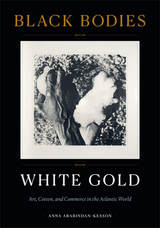
front cover of Black Bodies, White Gold
Black Bodies, White Gold
Art, Cotton, and Commerce in the Atlantic World
Anna Arabindan-Kesson
Duke University Press, 2021
In Black Bodies, White Gold Anna Arabindan-Kesson uses cotton, a commodity central to the slave trade and colonialism, as a focus for new interpretations of the way art, commerce, and colonialism were intertwined in the nineteenth-century Atlantic world. In doing so, Arabindan-Kesson models an art historical approach that makes the histories of the Black diaspora central to nineteenth-century cultural production. She traces the emergence of a speculative vision that informs perceptions of Blackness in which artistic renderings of cotton—as both commodity and material—became inexorably tied to the monetary value of Black bodies. From the production and representation of “negro cloth”—the textile worn by enslaved plantation workers—to depictions of Black sharecroppers in photographs and paintings, Arabindan-Kesson demonstrates that visuality was the mechanism through which Blackness and cotton became equated as resources for extraction. In addition to interrogating the work of nineteenth-century artists, she engages with contemporary artists such as Hank Willis Thomas, Lubaina Himid, and Yinka Shonibare CBE RA, who contend with the commercial and imperial processes shaping constructions of Blackness and meanings of labor.
[more]

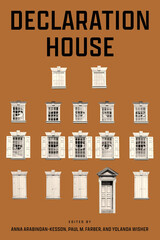
front cover of Declaration House
Declaration House
Edited by Anna Arabindan-Kesson, Paul M. Farber, and Yolanda Wisher
Temple University Press, 2026

During the drafting of the Declaration of Independence in 1776, Thomas Jefferson and enslaved valet Robert Hemmings spent several months at 700 Market Street in Philadelphia. The editors and contributors to Declaration House reflect on the history of this site and illuminate the entangled legacy of freedom and enslavement at the core of our nation’s founding. They expand our history by revisiting and mapping this historic place in the city and nation, past and present, as a way to tend to our democracy today.


At the center of the book is artist Sonya Clark’s revelatory public artwork “The Descendants of Monticello,” a multichannel video installation created in collaboration with Hemmings’ collateral descendants and others who are related to the hundreds of people enslaved at Monticello. Interviews and essays about the project and the site consider history, memory, and the founding of our country. Like Clark’s project, Declaration House asks the timely question, "What does the Declaration of Independence mean to us today?"

Contributors: Niya Bates, Kerry Bickford, Paul Buchanan, Sonya Clark, Andrew M. Davenport, Kai Davis, Husnaa Haajarah Hashim, J. Calvin Jefferson Sr., Jabari Jefferson, Jane Kamensky, Matthew Kenyatta, Salamishah Tillet, Gayle Jessup White, Auriana Woods, and the editors


[more]


Send via email Share on Facebook Share on Twitter