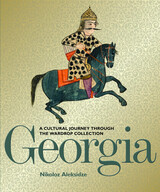
front cover of Georgia
Georgia
A Cultural Journey through the Wardrop Collection
Nikoloz Aleksidze
Bodleian Library Publishing, 2018
When Marjory Wardrop joined her diplomat brother Oliver in Georgia in 1894, the two siblings found themselves witnessing the birth pangs of a modern nation. Recognizing the significance of these transformative years, they actively participated in the work of Ilia Chavchavadze and other leaders of the independence movement, which culminated in Georgia’s declaration of independence in 1918.
            Becoming increasingly fascinated by Georgian history and culture, the Wardrops gathered a significant collection of manuscripts dating from the eleventh to the twentieth century, including a seventeenth-century manuscript of Georgia’s national epic poem The Man in the Panther’s Skin, which Marjory famously translated. Through the items of the Waldrop collection—manuscripts, royal charters, correspondence, notebooks, and a draft of the 1918 declaration of independence—Nikoloz Aleksidze narrates a history of Georgian literature and culture, moving from epic and folk tales, to the Georgian Church’s battle against persecution, to the political activism of women in Georgia at the end of the nineteenth century.
            Richly illustrated with rare and previously unpublished images from the collection, this book offers unique insight into Georgian culture and political history through the remarkable lens of an eccentric English diplomat and his talented sister.

[more]

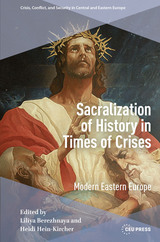
front cover of Sacralization of History in Times of Crises
Sacralization of History in Times of Crises
Modern Eastern Europe
Liliya Berezhnaya
Central European University Press, 2026
This book explores the sacralization of history with a focus on modern Eastern Europe where the erasure of Soviet traditions has triggered a search for specific “usable pasts”. It discusses the importance of sacralization in memory and identity-building politics and the complex interplay between religion, history, and identity, particularly within the context of crises and conflict situations, by showing the historical roots of these processes.
The contributors seek to identify the political, societal and religious actors promoting the sacralization of history. They consider which networks promote sacralized visions of history and who is excluded from the sacralized community of national belonging. They also explore which historical topics seem best suited for the sacralization of history and question what happens to the rituals, objects, or spaces, formerly regarded as sacral: are they profaned, neglected, or re-inscribed by new national histories, and is there a religious language of national history? These are the major questions of this book.
[more]


Send via email Share on Facebook Share on Twitter