 A SCHOLARLY BOOK REPOSITORY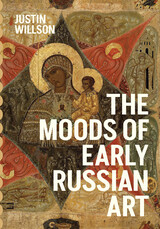
The Moods of Early Russian Art describes an alternative early modernity at the easternmost border of the European cultural sphere, where the Renaissance marked a return not to secular humanism but to the religiosity and art of the Middle Ages. Charting a kind of “Renaissance in reverse,” art historian Justin Willson explores how the value placed on style and virtuosity faded in importance as the Church cultivated miracle-working images during the reigns of Ivan the Great and Ivan the Terrible. Arguing for a broader unity of interests among artistic workshops across the Muscovite landscape—a system of interconnected values that he explains using the language of “moods”—Willson examines icons, illuminated manuscripts, enamelwork, and murals, tracing how the interpretive framework of the age shifted from the “aesthetic” and “literal” moods to the “intoxicated” and “romantic” over the fifteenth and sixteenth centuries.
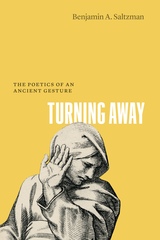
A sweeping account of how we are at our most human when we turn away from the pains of the world.
Why do we look away from the suffering of others? Why do we cover our faces in shame? Why do we lower our heads in grief? Few gestures are as universal as the averted gaze. Fewer still are as ambivalent and inscrutable. In this incisive study, Benjamin A. Saltzman reveals how the kaleidoscopic appearance of these gestures in art, poetry, and philosophy has turned them into an essential language for our uncomfortable engagements with the world, challenging us to reflect on the ways we fundamentally relate to others.
Into the horizon of contemporary discourse, Turning Away sets out from five influential scenes in which figures avert their gaze: Timanthes’s Sacrifice of Iphigenia, Plato’s Republic, Augustine’s Confessions, Christ’s Crucifixion, and the Fall and Expulsion of Adam and Eve. The gestures of aversion in these scenes refract across visual media, through philosophy and politics, into modernity and the present day, having been reimagined along the way by thinkers like Hannah Arendt, artists like Marc Chagall and Salvador Dalí, poets like Langston Hughes, and many others. Saltzman offers a timely critique of the privilege of turning away and of the too-easy condemnation of our tendencies to do so.

A novel account of the rise of pictorial naturalism on the eve of the Reformation.
In the summer of 1507, the town of Bern was abuzz with rumors about a sculpture at the Dominican church that had wept tears of blood. But astonishment soon gave way to doubt when a group of local artisans denounced the authenticity of the miracle, complaining that the tears were too poorly made to be the work of a skilled hand, let alone divine intervention. The resulting trial exposed an elaborate fraud staged by the church’s leaders and, with it, a tension that had been building across the region for nearly a century. In a world where claims of sanctity faced judicial scrutiny, the threshold between artistry and deception had become dangerously thin.
Tamara Golan examines how three generations of painters working in fifteenth- and sixteenth-century Switzerland navigated this fraught terrain. Golan traces how, amid intensifying skepticism over the authenticity of miracles and visions, these artists forged what she calls an “alternative naturalism,” a conspicuously unnatural mode of painting marked by distorted perspective, unusual modeling, and heavily tooled gold ground. Rather than striving for the faithful transcription of appearances, these artists drew on shared premises of artisanal expertise and juridical inquiry to advance bold claims about the capacity of their craft to represent not just the natural but the supernatural. The first study to identify this body of work as a coherent enterprise, Unnatural Evidence recovers an epistemological experiment at once ambitious and inherently unstable.
READERS
Browse our collection.
PUBLISHERS
See BiblioVault's publisher services.
STUDENT SERVICES
Files for college accessibility offices.
RECENTLY PUBLISHED




UChicago Accessibility Resources
home | accessibility | search | about | contact us
BiblioVault ® 2001 - 2026
The University of Chicago Press