
 A SCHOLARLY BOOK REPOSITORY
11 start with W start with W
A collective ethnography of grassroots mobilizations for community safety across the Silicon Valley
This is a narrative of struggle and solidarity and a collective toolkit for grassroots opposition to militarization, policing, and ongoing conditions of war in the current conjuncture of racial patriarchal capitalism. Grassroots researcher Annie Paradise presents here a collective ethnography of the mothers and community matriarchs whose children have been murdered by police across the San Francisco Bay Area as they develop and practice autonomous, creative forms of resistance.
The War on the Social Factory: The Struggle for Community Safety in the Silicon Valley maps local families’ struggles to reclaim their households and their communities—to create a social infrastructure of care, justice, and safety outside state- and market-determined modes of “security.” Practices such as sustained vigil, testimony, and the production and circulation of insurgent knowledges are shown here to be part of interconnected justice efforts to demilitarize and decarcerate communities in the face of the multiple forms of violence enacted under late racial patriarchal capitalism. Paradise examines the expanding carceral processes of enclosure, criminalization, dispossession, expropriation, and disposability that mark the neoliberal "security” regime across the Silicon Valley and offers counter-counterinsurgent strategies and practices of co-generative, dynamic resistance.
Drawing on oral histories and personal narratives, Crumpton provides an intimate look at the lived experiences of thirty-seven full-time community organizers. These activists and organizers share their strategies for maintaining an ethic of care that sustains them while fighting against both external oppression and internal community struggles. The book highlights how contemporary Black resisters have leveraged a growing understanding of trauma and healing to enhance their activism. This blend of historical knowledge and modern therapeutic practices has equipped them with a broader array of tools to support their communities.
Rooted in womanist practical theology, We Gon’ Be Alright emphasizes the interconnectedness of white supremacy with other forms of oppression such as sexism, homophobia, and classism. Crumpton’s work underscores the necessity of “deep, deep healing” to address these multifaceted threats to Black life. This book is an essential resource for scholars, activists, and anyone interested in understanding the dynamics of Black resistance and healing in contemporary America. Through its detailed examination of the past decade, it offers valuable insights into the ongoing struggle for Black humanity, dignity, and a thriving future.

Israel claims it is a security measure to protect Israeli citizens from terrorist attacks. Opponents point to the serious impact on the rights of Palestinians, depriving them of their land, mobility and access to health and educational services.
This book explores the Palestinian experience of the Wall in their international context. What are the real intentions behind the Israeli security argument? Is it a means of securing territory permanently through an illegal annexation of East Jerusalem? The West Bank Wall is a cutting account of the impact of the wall and how it affects prospects of a future peace in the Middle East.

Drawing on many overlooked pages of history, including English, French, Hebrew, Yiddish and Russian sources, Yakov Rabkin shows that Zionism was conceived as a sharp break with Judaism and Jewish continuity. Israel’s past and present must be seen in the context of European ethnic nationalism, colonial expansion and geopolitical interests, rather than as an incarnation of Biblical prophecies or a culmination of Jewish history.
The editors curate essays that see beloved community as a generous space that centers justice. Taking inspiration from the radical moral vision of figures like Bayard Rustin and Audre Lorde, the contributors look at how Black queer, feminist, and trans thought and practice can cultivate belonging across lines of race, gender, sexuality, class, and region. Essayists use a variety of disciplinary and methodological perspectives that includes archival recovery, institutional critique, cultural analysis, ethnography, and political theory. The contributors define beloved community for themselves while offering entry points—through art, culture, activism, policy, pedagogy, and theory—for exploring what it means to belong, to resist, and to build.
Expansive and interdisciplinary, Whose Beloved Community? begins the process of advancing toward truly inclusive communities that are more honest, more complex, and more loving.

The essays collectively explore the shifting dynamics and power relations between the civic coalitions that pursue the Winter Olympics and the social movements that oppose their efforts. The contributors look at specific Games impacted by dissent and probe the issues that swirled around failed and withdrawn bids. In addition, contributions on the contemporary Olympics describe current or future bids while delving into the campaigns demanding host nations pay attention to economic, social, humanitarian, and environmental concerns.
A first-of-its-kind collection, Winters of Discontent profiles the wide range of activists and social movements that have organized against the Winter Olympics.

Maparyan organizes the contributions around five key ideas. The first section looks at womanist self-care as a life-saving strategy. The second examines healing the Earth as a prerequisite to healing ourselves. In Part Three, the essays illuminate how womanism’s politics of invitation provides a strategy for enlarging humanity’s circle of inclusion, while Part Four considers womanism as both a challenge and antidote to dehumanization. The final section delves into womanism’s potential for constructing worlds and futures. In addition, Maparyan includes a section of works by womanist visual artists.
Defiant and far-sighted, Womanism Rising takes readers on a journey into a new generation of concepts, ideas, and strategies for womanist studies.
Words like Water explores the nonconfrontational strategies the tongzhi movement uses in contemporary China. Caterina Fugazzola analyzes tongzhi organizers’ conceptualizations of, and approaches to, social change, explaining how they avoid the backlash that meets Western tactics, such as protests, confrontation, and language about individual freedoms. In contrast, the groups’ intentional use of community and family-oriented narratives, discourses, and understandings of sexual identity are more effective, especially in situations where direct political engagement is not possible.
Providing on-the-ground stories that examine the social, cultural, and political constraints and opportunities, Words like Water emphasizes the value of discursive flexibility that allows activists to adapt to changing social and political conditions.
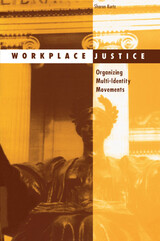
An unheralded union battle offers new insight into identity politics.
In 1991, Columbia University’s one thousand clerical workers launched a successful campaign for justice in their workplace. This diverse union-two-thirds black and Latina, three-fourths women-was committed to creating an inclusive movement organization and to fighting for all kinds of justice. How could they address the many race and gender injustices members faced, avoid schism, and maintain the unity needed to win? Sharon Kurtz, an experienced union activist and former clerical worker herself, was welcomed into the union and pursued these questions. Using this case study and secondary studies of sister clerical unions at Yale and Harvard, she examines the challenges and potential of identity politics in labor movements.
With the Columbia strike as a point of departure, Kurtz argues that identity politics are valuable for mobilizing groups, but often exclude members and their experiences of oppression. However, Kurtz believes that identity politics should not be abandoned as a component in building movements, but should be reframed-as multi-identity politics. In the end she shows an approach to organizing with great potential impact not only for labor unions but for any social movement.
Meyer Weinberg created The World of W.E.B. Du Bois to provide a short journey through Du Bois's views on virtually all aspects of twentieth-century life. More than one thousand quotations from his published writings and correspondence are included, arranged into twenty topical chapters. Each quotation begins with a heading designed to summarize its main theme. A subject index provides additional access to the ideas of this complex figure.
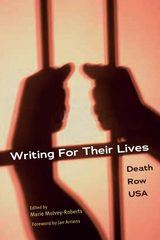
Exposing little-known facts about the five modes of execution practiced in the United States today, Writing for Their Lives documents the progress of life on death row from a capital trial to execution and beyond, through the testimony of the prisoners themselves as well as those who watch, listen, and write to them. What emerges are stories of the survival of the human spirit under even the most unimaginable circumstances, and the ways in which some prisoners find penitence and peace in the most unlikely surroundings. In spite of the uniformity of their prison life and its nearly inevitable conclusion, prisoners able to read and write letters are shown to retain and develop their individuality and humanity as their letters become poems and stories.
Writing for Their Lives serves ultimately as an affirmation of the value of life and provides bountiful evidence that when a state executes a prisoner, it takes a life that still had something to give.
This edition features an introduction by the editor as well as a foreword by Jan Arriens. Dr. Mulvey-Roberts will be donating her profits from the sale of this volume to the legal charity Amicus, which assists in capital defense in the United States."
READERS
Browse our collection.
PUBLISHERS
See BiblioVault's publisher services.
STUDENT SERVICES
Files for college accessibility offices.
RECENTLY PUBLISHED





UChicago Accessibility Resources
home | accessibility | search | about | contact us
BiblioVault ® 2001 - 2026
The University of Chicago Press