front cover of Valiant Vel
Valiant Vel
Vel Phillips and the Fight for Fairness and Equality
Jerrianne Hayslett
Wisconsin Historical Society Press, 2025
A New York Public Library Best Book of 2025

An illustrated biography of groundbreaking civil rights activist Vel Phillips for young readers 


Fair housing advocate, civil rights champion, and civic leader Vel Phillips spent her life breaking barriers and fighting for justice for all people. As the first Black woman on the Milwaukee Common Council, Wisconsin’s first Black judge, and the first Black woman to win statewide office when she was elected secretary of state of Wisconsin, Phillips left a lasting legacy that has inspired generations to continue the fight for justice and equality.  

Valiant Vel depicts Phillips’s captivating story for young readers in middle and high school—from her childhood experiences facing racial discrimination, to achieving her dream of becoming a lawyer, to her long career in politics and civil rights. In the 1960s, Phillips spearheaded a campaign to advocate for fair housing in Milwaukee, joining forces with the NAACP Youth Council and marching alongside other activists in the face of violent opposition. In 1968, Phillips’s persistence paid off when the Milwaukee Common Council passed a fair housing ordinance. 

Beautifully illustrated with historic photographs and original artwork by Milwaukee artist Aaron Boyd, Valiant Vel makes an excellent addition to young readers’ bookshelves at school and at home. With an afterword by Phillips’s son, Michael, a glossary of terms, and sources for further research, this book provides a thorough look at an inspirational activist who dedicated her life to making the world a better place. 
[more]

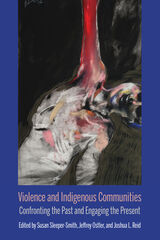
front cover of Violence and Indigenous Communities
Violence and Indigenous Communities
Confronting the Past and Engaging the Present
Edited by Susan Sleeper-Smith, Jeffrey Ostler, and Joshua L. Reid
Northwestern University Press, 2021

In contrast to past studies that focus narrowly on war and massacre, treat Native peoples as victims, and consign violence safely to the past, this interdisciplinary collection of essays opens up important new perspectives. While recognizing the long history of genocidal violence against Indigenous peoples, the contributors emphasize the agency of individuals and communities in genocide’s aftermath and provide historical and contemporary examples of activism, resistance, identity formation, historical memory, resilience, and healing. The collection also expands the scope of violence by examining the eyewitness testimony of women and children who survived violence, the role of Indigenous self-determination and governance in inciting violence against women, and settler colonialism’s promotion of cultural erasure and environmental destruction.

By including contributions on Indigenous peoples in the United States, Canada, the Pacific, Greenland, Sápmi, and Latin America, the volume breaks down nation-state and European imperial boundaries to show the value of global Indigenous frameworks. Connecting the past to the present, this book confronts violence as an ongoing problem and identifies projects that mitigate and push back against it.


[more]

front cover of A Vital Frontier
A Vital Frontier
Water Insurgencies in Europe
Andrea Muehlebach
Duke University Press, 2023
In A Vital Frontier Andrea Muehlebach examines the work of activists across Europe as they organize to preserve water as a commons and public good in the face of privatization. Traversing social, political, legal, and hydrological terrains, Muehlebach situates water as a political fault line at the frontiers of financialization, showing how the seemingly relentless expansion of capital into public utilities is being challenged by an equally relentless and often successful insurgence of political organizing. Drawing on ethnographic research, Muehlebach presents water protests as a vital politics that comprises popular referenda, barricades in the streets, huge demonstrations, the burning of utility bills, and legal disputes over transparency and contracts. As Muehlebach documents, Europe’s water activists articulate their own values of democracy and just price, raising far-reaching political questions about private versus common property and financing, liberal democracy, sovereignty, legality, and collective infrastructural responsibility in the face of financialization and commodification. Muehlebach shows that water-rights activists can successfully resist financial markets by exposing the commodification of water as the theft of life itself.
[more]


Send via email Share on Facebook Share on Twitter