logo for Harvard University Press
The United States and India, Pakistan, Bangladesh
Third Edition
W. Norman Brown
Harvard University Press, 1972

The first edition of this work appeared in 1953. The Foreign Service Journal greeted it as a "basic work" and the New York Times Book Review hailed it as "unquestionably the best and most balanced account of India and Pakistan."

The second edition appeared in 1963 and received an equally warm welcome. The Times of India said, "It provides the historical perspective, and discusses the present-day social, economic, and political problems with knowledge, sympathy, and acumen."

Between 1963 and 1972 the two nations of India and Pakistan made a number of important governmental, political, economic, and cultural changes. They had to meet crises caused by forces of nature as well as crises originating in their own institutions. Democratic processes advanced in India; they were repudiated in Pakistan and the repudiation led to the civil war in East Pakistan and the creation of Bangladesh. W. Norman Brown covers all of this and more in his fresh look at the subcontinent.

[more]

logo for Harvard University Press
The United States and Italy
Third Edition, Enlarged
H. Stuart Hughes
Harvard University Press, 1979

When the first edition of this book was published, the Christian ScienceMonitor called it "one of the mostconcise and informative books toappear on Italy since the end of Fascism." Thoroughly revised and updated, this third edition insures thatProfessor Hughes' work will retain itspreeminence as the best single introduction to contemporary Italy.

Professor Hughes outlines the geographic, economic, and psychological factors that have conditionedItaly's development, and reviews thetraditional contacts between Italy andthe United States, in particular theimmigration of Italians to this country. The chapters on Italy's historicaldevelopment interpret the trends andforces--the "legacy" of Fascism,anti-Fascism, the Second WorldWar--that still affect Italy today.Hughes' treatment of Italy's cultural,economic, and international status issuccinct and stimulating.

Two new chapters have been added for this third edition, dealing with the problems produced by the country's rapid industrial growth. The first situates the new Italy in its ecological and social context, delineating the stresses that have resulted from rapid change, among them political terrorism and the protest movements of women and of youth. The second assesses the transformation of Italian public life that the leading Eurocommunist party in the Westernworld has brought about.

[more]

logo for Harvard University Press
The United States and Japan
Third Edition
Edwin O. Reischauer
Harvard University Press

logo for Harvard University Press
The United States and the Arab World
Third Edition
William R. Polk
Harvard University Press, 1975

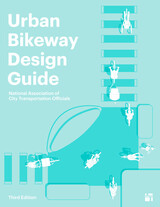
front cover of Urban Bikeway Design Guide, Third Edition
Urban Bikeway Design Guide, Third Edition
National Association of City Transportation Officials, NACTO
Island Press, 2024
Over a decade ago, the first edition of the NACTO Urban Bikeway Design Guide sparked a design revolution in cities. City streets are now understood as key elements in confronting the intertwined safety, equity, and climate crises in North America.

The completely revised and updated third edition of the NACTO Urban Bikeway Design Guide sets a new standard for street design in North America. Developed for cities, by cities, the new guide is more than a permission slip for better street design--it's a prescription for safe, connected, equitable bike networks. It captures lessons learned and emerging practices to set a new bar for the design of city streets.

The NACTO Urban Bikeway Design Guide, Third Edition, will help city leaders and street designers meet the needs of our time. New topics address critical gaps in existing guidance for planning and project development. Contextual guidance for bikeway design encompasses the needs of a wider swath of potential riders, across genders, ages, races, ethnicities, incomes, and abilities. The guide offers substantive guidance for safe intersection design, with a focus on conflict reduction. It is a blueprint for implementing safe, connected, and equitable bike networks. Every transportation professional, from design to maintenance and from field staff to executives, needs a copy for their daily work.

Praise for the second edition
 
“NACTO's Urban Bikeway Design Guide gives American planners and designers the tools they need to make cycling accessible to more people.”
—Janette Sadik-Khan, former New York City Transportation Commissioner
 
“This is an extraordinary piece of work that's long overdue.”
—Ray LaHood, former United States Secretary of Transportation
 
“The guide will serve as an essential blueprint for safe, active, multi-modal streets.”
—Gabe Klein, former Chicago Transportation Commissioner
 
“A Must-read… Landscape architects, planners, and city officials should find this guide invaluable. Anyone who advocates for increasing bicycle infrastructure in our cities will find many useful tools for implementing best practice infrastructure.”
―ASLA's The Dirt
 
[more]

logo for Harvard University Press
The Uses of the University
Third Edition with a new Preface and Postscript
Clark Kerr
Harvard University Press, 1982


Send via email Share on Facebook Share on Twitter