
 A SCHOLARLY BOOK REPOSITORY
4 start with U start with U

Uncovering the spirit of freedom and self-determination in New Orleans
In Under a Black Star, Amari Johnson explores what he defines as the “maroon impulse” among the BlackStar Community in the Algiers neighborhood of New Orleans. This community sought autonomy for Black people facing systemic marginalization through denied employment, insufficient education, and a housing crisis following Hurricane Katrina, establishing initiatives such as Kamali Academy, a homeschool collective, and BlackStar Books and Caffé, a bookstore and gathering place. Instead of appealing to the city, they built the community they desired by employing legacies of marronage: disengagement, flight, and reengagement.
An active participant in the physical and ideological development of these autonomous spaces, Johnson provides nuanced insights into the community’s work toward liberation and self-determination. Demonstrating that marronage is a cultural tradition throughout the African Diaspora, he focuses on the transtemporal maroon process to show how it is central to the pursuit of autonomy, community, and freedom.
From the swamps of southeastern Louisiana, across urban obstacles, and into BlackStar’s creative spaces, Johnson’s path leads him to ask: How did the New Orleans community mobilize the tradition of marronage to create autonomous spaces amid gentrification? What forms might the maroon impulse take in the twenty-first century? This dynamic ethnographic memoir ultimately illuminates marronage as a potent form of liberatory potential, offering strategies for similar communities across the country and around the world.

What political power do social media videos have? In what ways do they exert influence, shape public discourse, and change political life? How can participants in this field assert themselves against commercial interests, anti-democratic agitation, and authoritarian propaganda? These questions are being debated intensely as social media increasingly dominates global information flows, and videos increasingly dominate social media.
The forms, practices, and opportunities of activism depend on a media environment that is changing rapidly and profoundly in terms of its technological basis, ownership, legal regulations, and governmental control. This makes the act of understanding video activism even more relevant at a time when the internet is undergoing fundamental disruptions.
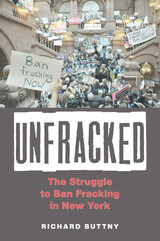
Since fracking emerged as a way of extracting natural gas, through intense deep drilling and the use of millions of gallons of water and chemicals to fracture shale, it has been controversial. It is perceived in different ways by different people—by some as an opportunity for increased resources and possibly jobs and other income; by others as a public health and environmental threat; and for many, an unknown. Richard Buttny, a scholar who works on rhetoric and discursive practices, read a story in his local paper in New York about hydrofracking coming to his area and had to research what it was, and what it could mean for his community. Soon he joined neighbors in fighting to have the practice banned state-wide. At the same time, he turned his scholarly eye to the messaging from both sides of the fight, using first-person accounts, interviews, and media coverage.
The activists fighting fracking won. New York is now the only state in the US with sizable deposits of natural gas that has banned hydraulic fracturing, or fracking. Unfracked explains the competing rhetoric and discourses on fracking among New York-based advocates, experts, the grassroots, and political officials. Buttny examines how these positions evolved over time and how eventually the state arrived at a decision to ban this extractive technology. His accessible approach provides both a historical recounting of the key events of this seven-year conflict, along with four in-depth case studies: a grassroots citizen group, a public hearing with medical physicians, a key intergovernmental hearing, and a formal debate among experts. The result is a look at a very recent, important historical moment and a useful examination of environmental activist and fossil fuel advocate rhetoric around an issue that continues to cause debate nationwide.

READERS
Browse our collection.
PUBLISHERS
See BiblioVault's publisher services.
STUDENT SERVICES
Files for college accessibility offices.
RECENTLY PUBLISHED




UChicago Accessibility Resources
home | accessibility | search | about | contact us
BiblioVault ® 2001 - 2026
The University of Chicago Press