
 A SCHOLARLY BOOK REPOSITORY
8 start with S start with S
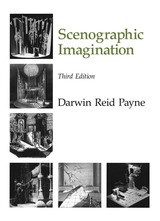
In this enlarged and thoroughly revised third edition of his widely used text, Darwin Reid Payne explores the principles and philosophies that shape the visual elements of theatre.
Payne sets out to discover who scenographers are and to define their responsibilities. He sees scenographers as not merely craftspersons but artists with "a special vision that spans all the arts." Such artists are in a position to "extend and amplify underlying meanings of the production." The proper goal of beginning scenographers, according to Payne, is one day to be able to approach the job as artists in full command of their craft.
Payne seeks to instill in beginning scenographers a basic core of knowledge: an understanding of theatre history and the development of drama; a knowledge of art history and an understanding of periods and styles of architecture, painting, sculpture, furnishings, and costume; and a familiarity with the principles, techniques, and materials of pictorial and three-dimensional design. This new edition contains 248 illustrations, 38 more than the second edition. Payne’s goal, certainly, is to teach students what to do and how to do it; equally important, however, is Payne’s view that scenographers must know why.
To Payne, "Scenography is an art whose scope is nothing less than the whole world outside the theatre." Scenographers must read not only in their own field but in others as well. Payne has incorporated into his text many suggestions for outside readings, quoting passages and even entire chapters from important works. Stressing research, Payne argues that without knowledge of the literature of their own and related arts, scenographers cannot grow. And that is the emphasis of this book: to present aspiring scenographers with an approach and a set of concepts that will enable them to grow. Toward that end, Payne establishes five priorities, the first of which is to develop in students what he calls "time vision," or the ability to "see" the historical past as a living place with living inhabitants. The second priority is to bring about an awareness that allows students to "see" beneath the surface of objects and events. Third, students must be helped to recognize and appreciate the difference between the "concept of space as it exists outside the theatre and the concept of space as it is used within the theatre." The fourth priority is to ingrain in students an understanding of the importance of imagery to the scenographer, and the final priority is to teach those technical skills necessary to carry out the concepts of the scenographer.

An authoritative guide to modelmaking for theater
This third edition of noted scenographer Darwin Reid Payne’s landmark text builds upon Payne’s theories and exercises to provide a modern exploration of the practice of theatrical modelmaking. With chapters on traditional and contemporary materials, tools, and techniques, the book serves as a foundational guide to understanding the historical, theoretical, and practical aspects of scenographic modelmaking, making it essential for the beginner, generalist, and professional design practitioner.
The volume begins with a brief history of the scenographic model and explores how modelmaking has adapted to changes in materials, technology, and commercial influences over time. It details setting up a safe, productive model-building studio before introducing the types and purposes of various scenographic models. It then instructs the reader in constructing common model elements and accessories. Later chapters explore how the models reveal stage space and create mood and atmosphere through tonal shading and lighting; discuss the use of found objects, collage techniques, and projection models in scenic design; and delve into 3D printing and computer routering. The final chapter provides information on various aspects of photography and image sharing related to design and production communication.
This comprehensive text provides information not just from theater but also from other modeling disciplines and sources, including architecture, film, dioramas, dollhouse modeling, and model railroading. A useful resource for high school, community college, university, and community theater enthusiasts, it is an excellent reference book for theater designers throughout the country.


First published in 1960, Albert B. Lord’s The Singer of Tales remains the fundamental study of the distinctive techniques and aesthetics of oral epic poetry. Based upon pathbreaking fieldwork conducted in the 1930s and 1950s among oral epic singers of Bosnia, Croatia, and Serbia, Lord analyzes in impressive detail the techniques of oral composition in performance. He explores the consequences of this analysis for the interpretation of numerous works of traditional verbal art, including—in addition to South Slavic epic songs—the Homeric Iliad and Odyssey, Beowulf, the Chanson de Roland, and the Byzantine epic Digenis Akritas. A cardinal text for the study of oral traditions, The Singer of Tales also represents an exemplary use of the comparative method in literary criticism.
This third edition offers a corrected text of the second edition and is supplemented by an open-access website (in lieu of the second edition’s CD-ROM), providing all the recordings discussed by Lord, as well as a variety of other multimedia materials.
In this third edition of “So What Are You Going to Do with That?”, thoroughly revised with new advice for students in the sciences, Susan Basalla and Maggie Debelius—PhDs themselves—answer all those questions with a resounding “Yes!” A witty, accessible guide full of concrete advice for anyone contemplating the jump from scholarship to the outside world, “So What Are You Going to Do with That?” covers topics ranging from career counseling to interview etiquette to how to translate skills learned in the academy into terms an employer can understand and appreciate. Packed with examples and stories from real people who have successfully made this daunting—but potentially rewarding—transition, and written with a deep understanding of both the joys and difficulties of the academic life, this fully updated guide will be indispensable for any graduate student or professor who has ever glanced at his or her CV, flipped through the want ads, and wondered, “What if?”
Volume 1, Ethics and Cultures of Biomedicine, contains essays, case studies, narratives, fiction, and poems that focus on the experiences of illness and of clinician-patient relationships. Among other topics the contributors examine the roles and training of professionals alongside the broader cultures of biomedicine; health care; experiences and decisions regarding death, dying, and struggling to live; and particular manifestations of injustice in the broader health system. The Reader is essential reading for all medical students, physicians, and health care providers.
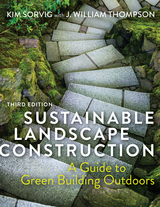
Like its predecessors, the new edition of Sustainable Landscape Construction is organized around principles, recognizing that built environments, and our work in them, pose both pragmatic and ethical challenges. Each chapter focuses on one overarching site goal, such as “Pave Less,” “Heal Injured Sites,” and “Consider Origin and Fate of Materials.” These principles of land sustainability are clearly articulated and developed through specific examples of more than 100 projects from around the world, reflecting both traditions and recent innovations. Expanded coverage of industry trends toward performance monitoring, and of lessons from project failures, form an important enhancement in this edition. New content also details the necessity to plan adaptively, not just preventively, for the realities of changing climate and intensifying weather. Some of the trends covered will shift how landscape architects and contractors will do business in challenging years ahead: to survive, many professionals and clients will focus on restoration projects, motivated by ecosystem services and social justice, and funded by innovative methods.
Sustainable Landscape Construction is part of the canon of landscape construction texts, and with this update, remains a visionary, one of a kind reference for professionals and students.
READERS
Browse our collection.
PUBLISHERS
See BiblioVault's publisher services.
STUDENT SERVICES
Files for college accessibility offices.
RECENTLY PUBLISHED




UChicago Accessibility Resources
home | accessibility | search | about | contact us
BiblioVault ® 2001 - 2026
The University of Chicago Press