
 A SCHOLARLY BOOK REPOSITORY
8 start with S start with S
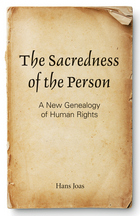
What are the origins of the idea of human rights and universal human dignity? How can we most fully understand—and realize—these rights going into the future? In The Sacredness of the Person, internationally renowned sociologist and social theorist Hans Joas tells a story that differs from conventional narratives by tracing the concept of human rights back to the Judeo-Christian tradition or, alternately, to the secular French Enlightenment. While drawing on sociologists such as Émile Durkheim, Max Weber, and Ernst Troeltsch, Joas sets out a new path, proposing an affirmative genealogy in which human rights are the result of a process of “sacralization” of every human being.
According to Joas, every single human being has increasingly been viewed as sacred. He discusses the abolition of torture and slavery, once common practice in the pre-18th century west, as two milestones in modern human history. The author concludes by portraying the emergence of the UN Declaration of Human Rights of 1948 as a successful process of value generalization. Joas demonstrates that the history of human rights cannot adequately be described as a history of ideas or as legal history, but as a complex transformation in which diverse cultural traditions had to be articulated, legally codified, and assimilated into practices of everyday life. The sacralization of the person and universal human rights will only be secure in the future, warns Joas, through continued support by institutions and society, vigorous discourse in their defense, and their incarnation in everyday life and practice.

Many scientists today think of the universe as essentially purposeless. Likewise, modern and postmodern philosophers have often been suspicious of any religious claims that the natural world embodies and eternal meaning or teleology. Not all scientific thinkers subscribe to this cosmic pessimism, however, and some would even argue that contemporary knowledge is consistent with a religious sense of cosmic purpose.
This stimulating book offers candid reflections on the question of cosmic purpose written both by prominent scientists and by scholars representing the world's religious traditions. Examining the issue from a wide variety of perspectives, this is the only current book to deal with cosmic purpose from an interreligious and interdisciplinary perspective.
Here scientists such as physicist Andrei Linde and biologist Francisco Ayala come face to face with Islamic scholar Seyyed Hossein Nasr, Hindu philosopher Anindita Niyogi Balslev, and others. They examine such perplexing issues as the possible existence of multiple universes and the implications of seemingly purposive features in life. The contributions address the question of whether a religiously-based notion of a purposeful cosmos is consistent with the latest scientific understanding of nature, and whether theology can affirm the presence of divine action without contradicting science.
These essays will challenge readers to ponder their own place in the cosmos as they seek to interpret the visions of the world's great spiritual traditions in the light of natural science.
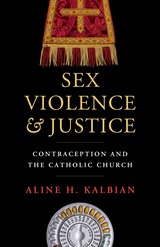
In 1968, Pope Paul VI published Humanae vitae, the encyclical that reaffirmed the Catholic Church’s continued opposition to the use of any form of artificial contraception. In Sex, Violence, and Justice: Contraception and the Catholic Church, Aline Kalbian outlines the Church’s position against artificial contraception as principally rooted in three biblical commandments. In addition, Kalbian shows how discourses about sexuality, both in the Church and in culture, are often tied to discourses of violence, harm and social injustice. These ties reveal that sexual ethics is never just about sex; it is about the vulnerability of the human body and the challenges humans face in trying to maintain just and loving relationships.
As Kalbian explores and contrasts the Catholic Church’s stance toward condoms and HIV/AIDS, emergency contraception in cases of rape, and contraception and population control, she underscores how contraception is not just a private decision, but a deeply social, cultural, and political one, with profound global implications. Kalbian concludes that even the most tradition-bound communities rely on justificatory schemes that are fluid and diverse. Taking this diversity seriously helps us to understand how religious traditions change and develop.
Sex, Violence, and Justice will be of interest to students and scholars of Catholic moral theology, sexual ethics, religion and society, gender and religion, as well as to specialists and practitioners in public health.
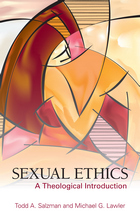
Two principles capture the essence of the Catholic tradition on sexual ethics: that each and every marriage act must remain open to the transmission of life, and that any human genital act must occur within the framework of marriage. In the Catholic tradition, moral sexual activity is institutionalized within the confines of marriage and procreation, and sexual morality is marital morality.
But theologians Todd Salzman and Michael Lawler contend that there is a disconnect between many of the Church’s absolute sexual norms and other theological and intellectual developments explicitly recognized and endorsed in the Catholic tradition, especially since the Second Vatican Council. These developments include the shift from a primary static worldview to a historically conscious worldview, one that recognizes reality as dynamic, evolving, changing, and particular. By employing such a historically conscious worldview, alternative claims about the moral legitimacy of controversial topics such as contraception, artificial reproduction, and homosexual marriage can faithfully emerge within a Catholic context. Convinced of the central role that love, desire, and fertility play in a human life, and also in the life of Christian discipleship, the authors propose an understanding of sexuality that leads to the enhancement of human sexual relationships and flourishing.
This comprehensive introduction to Catholic sexual ethics—complete with thought-provoking study questions at the end of each chapter—will be sure to stimulate dialogue about sexual morality between Catholic laity, theologians, and the hierarchy. Anyone seeking a credible and informed Catholic sexual ethic will welcome this potentially revolutionary book.
Two principles capture the essence of the official Catholic position on the morality of sexuality: first, that any human genital act must occur within the framework of heterosexual marriage; second, each and every marriage act must remain open to the transmission of life. In this comprehensive overview of Catholicism and sexuality, theologians Todd A. Salzman and Michael G. Lawler examine and challenge these principles. Remaining firmly within the Catholic tradition, they contend that the church is being inconsistent in its teaching by adopting a dynamic, historically conscious anthropology and worldview on social ethics and the interpretation of scripture while adopting a static, classicist anthropology and worldview on sexual ethics.
While some documents from Vatican II, like Gaudium et spes ("the marital act promotes self-giving by which spouses enrich each other"), gave hope for a renewed understanding of sexuality, the church has not carried out the full implications of this approach. In short, say Salzman and Lawler: emphasize relationships, not acts, and recognize Christianity's historically and culturally conditioned understanding of human sexuality. The Sexual Person draws historically, methodologically, and anthropologically from the best of Catholic tradition and provides a context for current theological debates between traditionalists and revisionists regarding marriage, cohabitation, homosexuality, reproductive technologies, and what it means to be human. This daring and potentially revolutionary book will be sure to provoke constructive dialogue among theologians, and between theologians and the Magisterium.
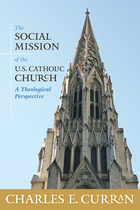
How does the Church function in the world? What is it called to do, and what does it actually do? Charles E. Curran explores the social mission of the U.S. Catholic Church from a theological perspective, analyzing and assessing four aspects: the importance of social mission, who carries it out, how it is carried out, and the roles that the Church and individual Catholics play in supporting these efforts.
In the early and mid-twentieth century the Catholic Church in the United States tended to focus its social mission on its own charities, hospitals, and schools. But the Second Vatican Council called the Church to a new understanding of social mission, deepening its involvement in and commitment to civic, social, and political life in the United States and abroad. Curran devotes particular attention to three issues that have reflected the Church's strong sense of social mission since that time: abortion, war and peace, and labor.
The Social Mission of the U.S. Catholic Church describes the proper role of bishops, institutions, and movements in the Church, but insists that the primary role belongs to all the baptized members of the Church as they live out the social mission in their daily lives.
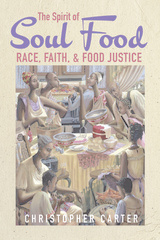
Soul food has played a critical role in preserving Black history, community, and culinary genius. It is also a response to--and marker of--centuries of food injustice. Given the harm that our food production system inflicts upon Black people, what should soul food look like today?
Christopher Carter's answer to that question merges a history of Black American foodways with a Christian ethical response to food injustice. Carter reveals how racism and colonialism have long steered the development of US food policy. The very food we grow, distribute, and eat disproportionately harms Black people specifically and people of color among the global poor in general. Carter reflects on how people of color can eat in a way that reflects their cultural identities while remaining true to the principles of compassion, love, justice, and solidarity with the marginalized.
Both a timely mediation and a call to action, The Spirit of Soul Food places today's Black foodways at the crossroads of food justice and Christian practice.
Winner of the 2022 Catholic Media Association Award in Theology
A new ethics for understanding the social forces that shape moral character.
It is easy to be vicious and difficult to be virtuous in today’s world, especially given that many of the social structures that connect and sustain us enable exploitation and disincentivize justice. There are others, though, that encourage virtue.
In his book Daniel J. Daly uses the lens of virtue and vice to reimagine from the ground up a Catholic ethics that can better scrutinize the social forces that both affect our moral character and contribute to human well-being or human suffering.
Daly’s approach uses both traditional and contemporary sources, drawing on the works of Thomas Aquinas as well as incorporating theories such as critical realist social theory, to illustrate the nature and function of social structures and the factors that transform them. Daly’s ethics focus on the relationship between structure and agency and the different structures that enable and constrain an individual’s pursuit of the virtuous life. His approach defines with unique clarity the virtuous structures that facilitate a love of God, self, neighbor, and creation, and the vicious structures that cultivate hatred, intemperance, and indifference to suffering. In doing so, Daly creates a Catholic ethical framework for responding virtuously to the problems caused by global social systems, from poverty to climate change.
READERS
Browse our collection.
PUBLISHERS
See BiblioVault's publisher services.
STUDENT SERVICES
Files for college accessibility offices.
RECENTLY PUBLISHED


UChicago Accessibility Resources
home | accessibility | search | about | contact us
BiblioVault ® 2001 - 2025
The University of Chicago Press